Rare! Shenzhen, Guangzhou, Dongguan and Foshan have jointly taken measures to compete for talents.
01
The Four Major Cities in Guangdong Are Making a Collective Move
Guangdong, China's province with the largest population, the largest population increment, the largest net inflow of population, the strongest economy, the strongest industrial strength, the strongest industrial capacity, the strongest fiscal strength, the strongest financial strength and the strongest scientific and technological innovation capacity, will continue to attract talents actively.
A few days ago, I wrote that Guangzhou has provided 130,000 job positions, and since September 16, it has launched recruitment activities at 10 universities in Shanghai including Shanghai Jiao Tong University, Fudan University, Tongji University, East China Normal University and Shanghai International Studies University, 6 universities in Nanjing including Nanjing University, Nanjing University of Science and Technology, Southeast University and China Pharmaceutical University, as well as Zhejiang University in Hangzhou.
Guangzhou's move is only one part of Guangdong's "Million Talents Gathering in Guangdong" initiative, and Shenzhen, Dongguan and Foshan have also taken relevant actions.
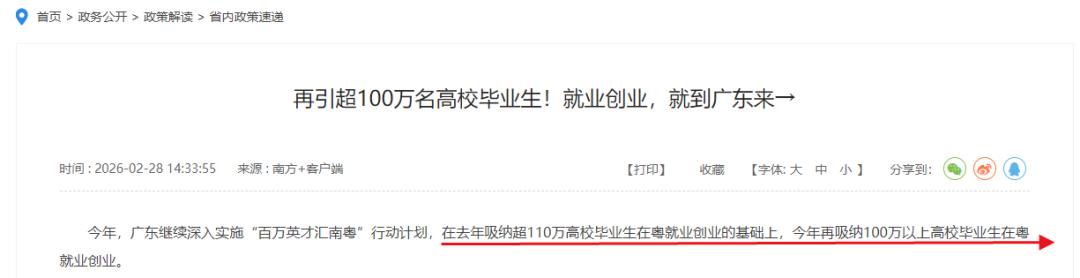
"Million Talents Gathering in Guangdong" is a talent introduction plan put forward by Guangdong Province in 2025, which attracted more than 1.1 million college graduates to find jobs or start businesses in Guangdong last year.
According to Guangdong's plan, the "Million Talents Gathering in Guangdong" initiative will attract another 1 million college graduates to work and start businesses in Guangdong this year.
The overall arrangement is as follows:
Guangzhou will go to universities in Shanghai, Nanjing and Hangzhou for recruitment.
Shenzhen will go to universities in Beijing, Hubei and Anhui for recruitment.
Foshan will launch recruitment activities at Peking University, Renmin University of China, Beijing Normal University, Beijing Institute of Technology, Beihang University, University of Science and Technology Beijing, China University of Political Science and Law, Beijing University of Chemical Technology, Beijing University of Chinese Medicine, Minzu University of China and North China Electric Power University.
Dongguan will carry out recruitment at Nankai University, Tianjin University, Hebei University of Technology, Tiangong University, Tianjin Medical University, as well as Beijing University of Posts and Telecommunications, Beijing Foreign Studies University and Communication University of China in Beijing.
During this "Million Talents Gathering in Guangdong" campaign, Guangdong will provide 400,000 job positions for college graduates.
The job providers include Fortune Global 500 companies, central and provincial state-owned enterprises, listed companies, specialized, refined, differential and innovative "little giant" enterprises, universities and scientific research institutions, etc.
Huawei, Tencent, BYD, GAC Group, Guangzhou Pharmaceutical, Midea, ZTE, China Resources, Ping An of China, CGN, China Guangfa Bank, CITIC Securities, BGI, XPeng Aeroht, Insta360, Sun Yat-sen University, Guangzhou Laboratory, National Supercomputing Center in Shenzhen, Shenzhen Bay Laboratory, Jihua Laboratory, Guangdong Energy Group, Guangdong Guangxin Holdings Group, Guangdong Guangsheng Group and other institutions have become the main forces of talent recruitment.
02
Why Does the Pearl River Delta, Which Boasts the Strongest Population Competitiveness, Still Spare No Efforts to Attract Talents
This highly contrasting scene reminds people of a popular saying on the Internet: "People better than you work harder than you."
The Pearl River Delta has long ranked first in China in terms of population competitiveness, so why is it in such a hurry to attract talents?
Let's set aside the reasons for a moment and first take a look at the current situation of the Pearl River Delta's population competitiveness.
At the provincial level, no one can match Guangdong's population competitiveness.
The data from the 7th National Census shows that from 2010 to 2020, the permanent resident population of Guangdong Province increased by 21.69 million, more than twice that of Zhejiang, which ranked second with an increment of 10.14 million.
In the past five years, except for the special year of 2022 when the return of coastal employees to inland areas led to a negative population growth in Guangdong, the population increment of Guangdong has also been at the forefront in other years, especially in 2025.
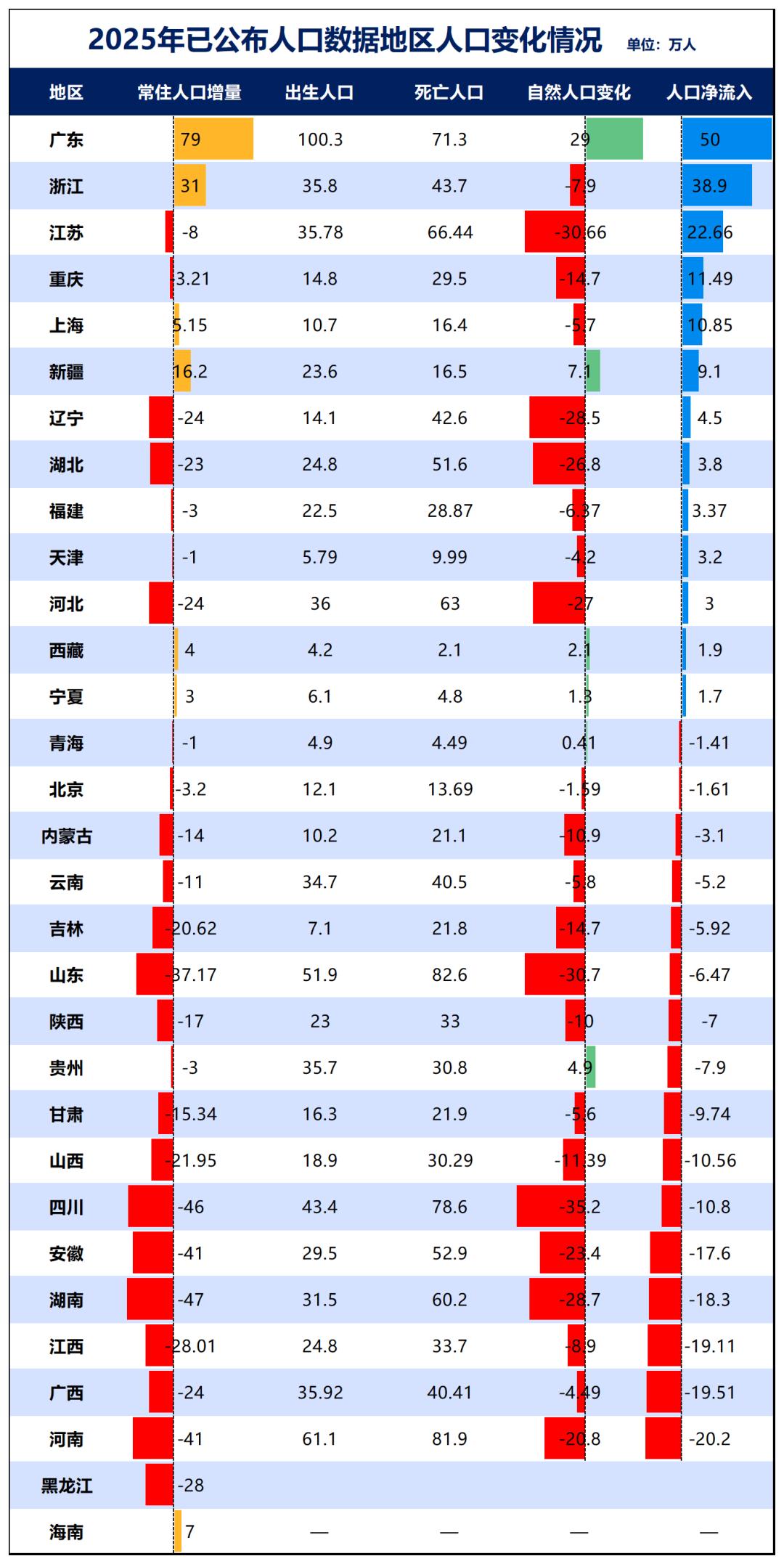
In 2025, the permanent resident population of Guangdong Province increased by 790,000, ranking first in China in terms of increment.
Among the 790,000 increment of permanent resident population, 290,000 was contributed by natural population growth, and the remaining 500,000 was contributed by net population inflow.
The scale of net population inflow also ranks first in China.
Mapping: City Finance; Data: Statistics bureaus of various regions
From the perspective of different cities.
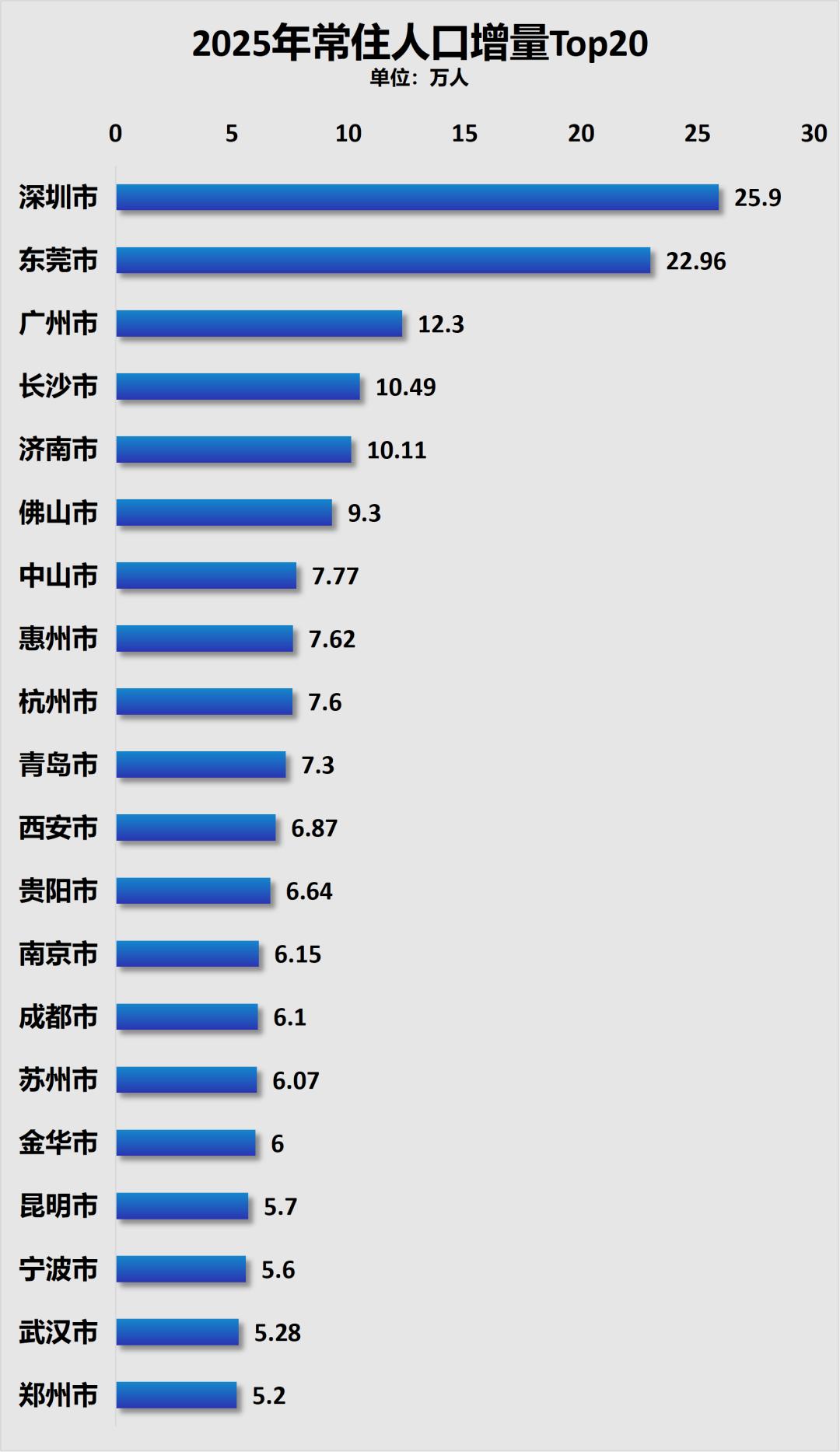
Last year, Shenzhen, Dongguan and Guangzhou under the jurisdiction of Guangdong took the top three spots in terms of population increment. Among the top ten cities with the largest population increment, 6 are located in Guangdong, and all of them are cities in the Pearl River Delta.
Mapping: City Finance; Data: Statistics bureaus of various cities
With such strong population competitiveness, why does the Pearl River Delta still travel to the Yangtze River Delta and Beijing-Tianjin-Hebei region to attract talents?
The reasons are very simple:
First, this campaign is not only for attracting ordinary people, but for grabbing high-end talents. All the destinations they are heading for are top universities in various regions.
Such as Peking University, Shanghai Jiao Tong University, Nanjing University, Fudan University, Zhejiang University, Wuhan University and so on
Second, science and technology are the primary productive forces, and the two key factors supporting the development of science and technology are capital and talents. No one will think they have too much of these two resources.
Moreover, judging from the performance of the capital market and the differentiation of export products in the past two years, an increasingly clear conclusion has emerged:
The competition among Chinese cities today has entered the "era of hard technology".
Only those who can seize the opportunities in chips, biomedicine, artificial intelligence, precision instruments and high-end manufacturing can truly secure their positions in the next round of growth cycle.
Combined with the economic performance of various cities in the first half of the year, we can see that cities that have seized the dividends of the times are still thriving, such as Shenzhen, Beijing, Shanghai, Suzhou, Wuhan, Hangzhou, Chengdu, Wuxi, Hefei, Ningbo and so on.
However, cities that have not yet completed the transformation have encountered development bottlenecks, such as Changchun, Shenyang, Harbin, Changsha, Xi'an, Foshan, Taiyuan, Kunming, Nanning and so on.
Cities that have quickly completed industrial transformation have achieved rapid rebound, such as Guangzhou and Dongguan.
All of these are inseparable from talents.
03
Talents Have Supported the Rapid Development of Shenzhen and Guangzhou for 40 Years
Since the reform and opening up, Shenzhen and Guangzhou have been the two cities with the fastest development speed in China.
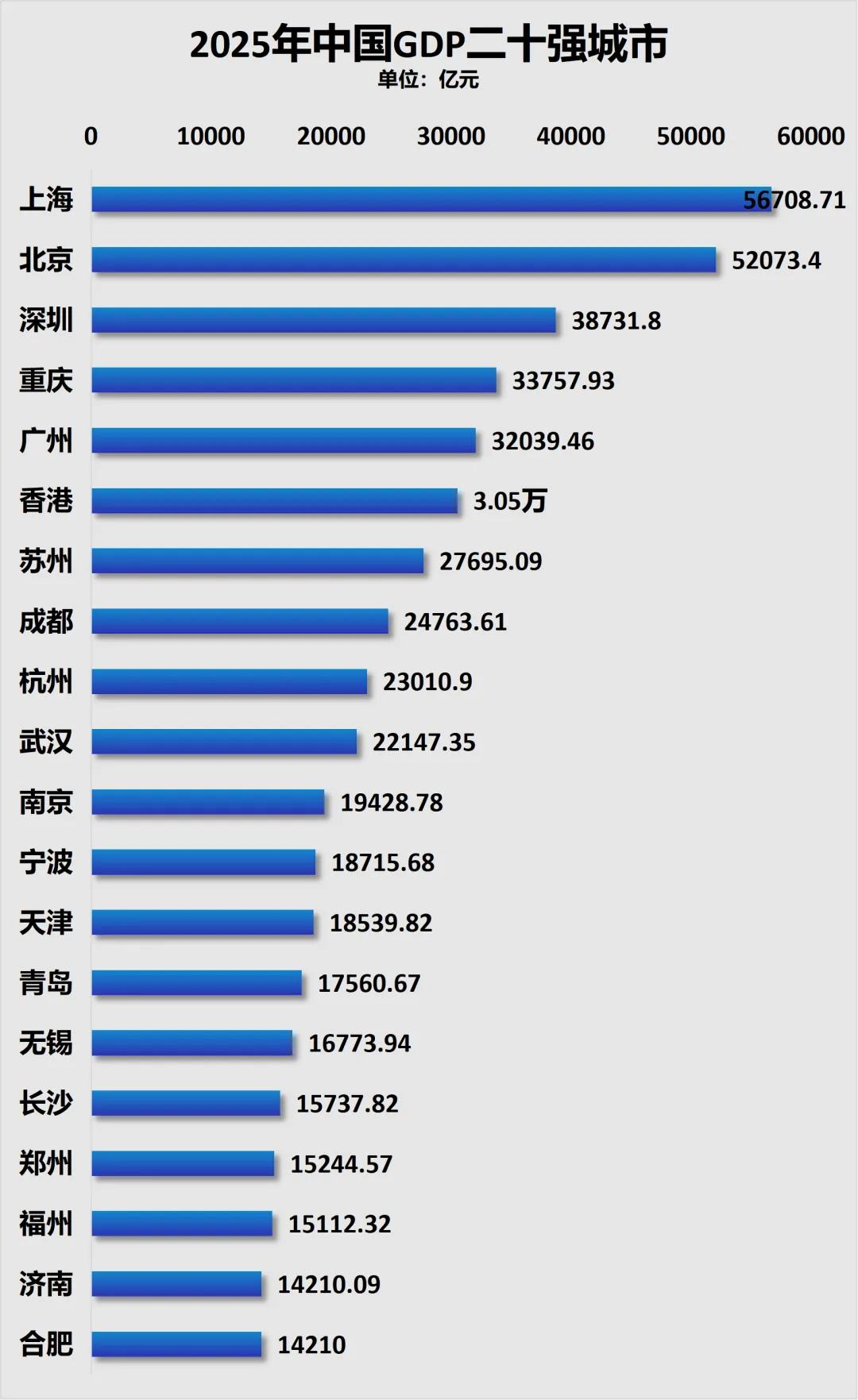
In the past 40 years, the list of top-tier cities in China has evolved from the initial "Beijing, Tianjin and Shanghai" to "Beijing, Shanghai and Guangzhou", and finally settled as the current "Beijing, Shanghai, Guangzhou and Shenzhen".
Mapping: City Finance; Data: Statistics bureaus of various cities
In 1978, Guangzhou's GDP was only 4.309 billion yuan, with a permanent resident population of 4.829 million. In 2025, these two figures increased to 3.203946 trillion yuan and 19.101 million respectively. The GDP is 743.5 times that of 1978, and the population has increased by 14.272 million.
In 1978, Shenzhen was still a county. It was officially established as a city in 1979, and on August 26, 1980, Shenzhen was approved as a national special economic zone. This day is also regarded as the birthday of Shenzhen.
In 1979, Shenzhen's GDP was 196 million yuan, with a permanent resident population of 314,100. In 2025, these two figures increased to 3.87318 trillion yuan and 18.2485 million respectively. The GDP is 19761 times that when the city was established, and the permanent resident population has increased by nearly 18 million.
In addition to the location advantages of coastal cities and policy dividends, the continuous inflow of talents is the biggest driving force for the rapid development of the two cities.
It will also surely be the confidence for the two cities to continue to develop upwards in the future.
Let's look at Shenzhen first.
Shenzhen is very similar to the United States. The United States is an immigrant country, and Shenzhen is an immigrant city. The strength of the United States lies in attracting the most creative people from all over the world, and the strength of Shenzhen also depends on the continuous inflow of talents from all over the country.
Throughout history, prosperity is inevitably the result of the collision of vigorous creativity and free thoughts.
Shenzhen has grown from a small fishing village in the past to today's international metropolis. The main driving forces behind this can be summarized into two points in general:
The first is capital, which is continuously invested in R&D.
Data shows that in 2024, Shenzhen's R&D investment reached 245.307 billion yuan, a year-on-year increase of 9.7%, and the R&D intensity (the ratio of R&D expenditure to GDP) was 6.67%. Both figures ranked first in Guangdong Province.
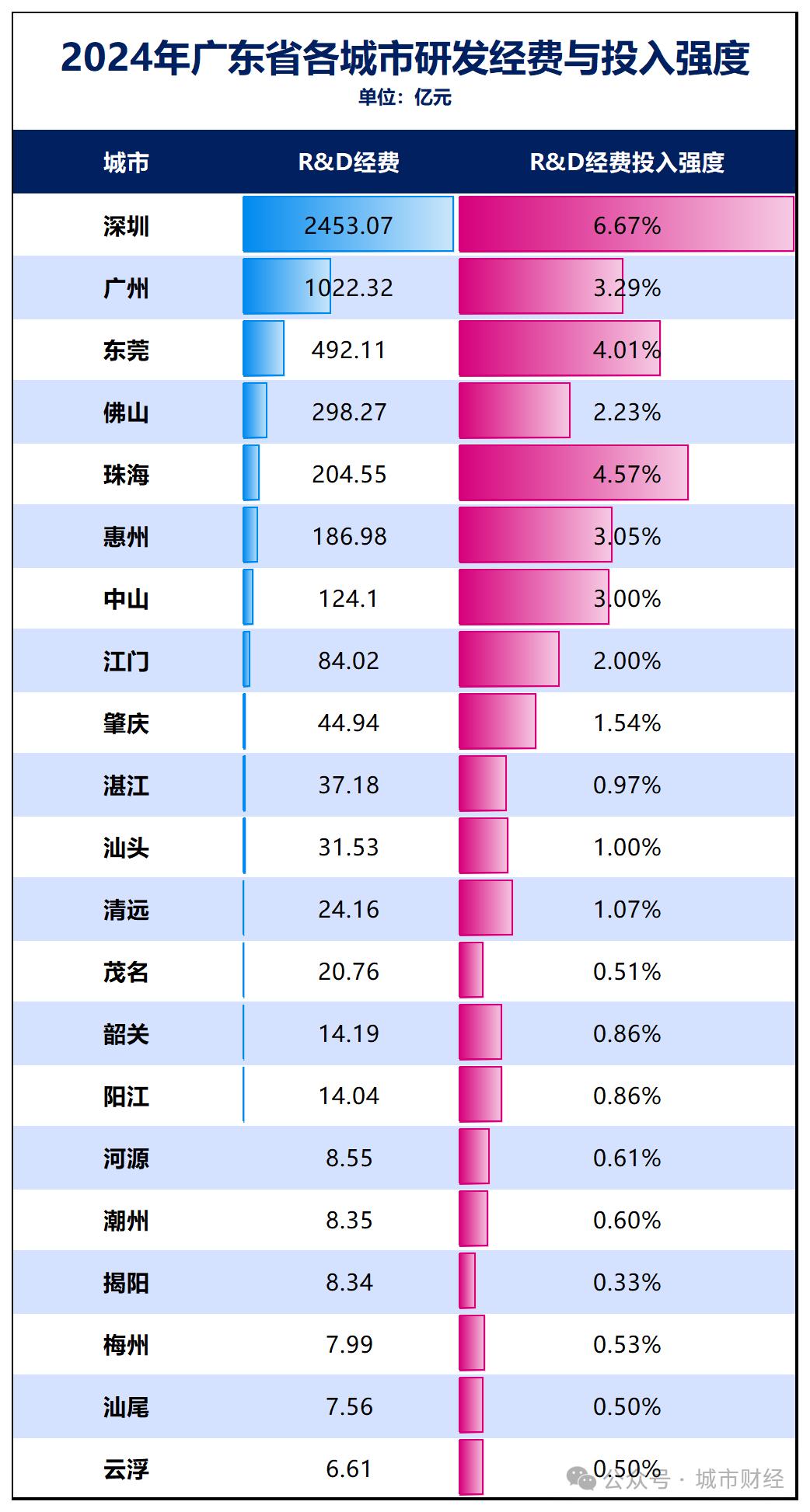
Mapping: City Finance; Data: Statistics Bureau of Guangdong Province
Nationwide, Shenzhen's R&D investment ranks second in China, higher than Shanghai and second only to Beijing, and its R&D investment intensity ranks first in China.
The second is people. The continuous inflow of millions of people from the inland areas, and batches of young talents have continuously contributed their own strength to the construction of Shenzhen.
Only then did we have Shenzhen with a GDP of 3.87 trillion yuan, and Shenzhen that ranks first in China in terms of export volume, total import and export volume, scientific and technological innovation capacity, and industrial scale.
For this reason, Shenzhen will continue to attract high-quality talents.
Because according to the "15th Five-Year Plan" released by Shenzhen, Shenzhen will overcome the most difficult technologies in China's industries in the future, and play the role of China's technological breakthrough, an irreplaceable role.
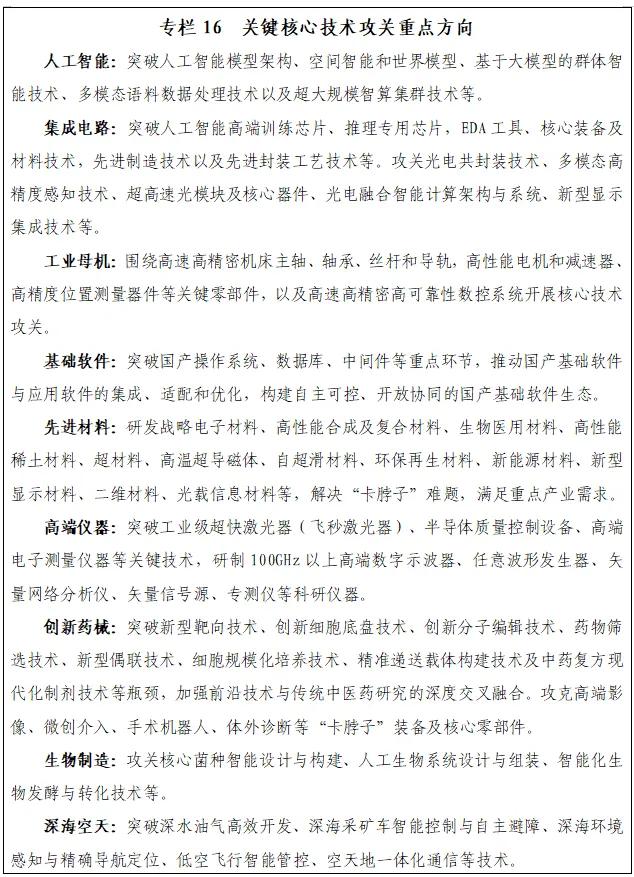
Source: Shenzhen's "15th Five-Year Plan"
Then let's look at Guangzhou.
Guangzhou currently needs talents more than Shenzhen. Although Guangzhou, which has encountered development bottlenecks for two consecutive years, has stabilized its situation this year, it still needs to speed up the layout of emerging industries to cope with the future urban competition.
Guangzhou was greatly affected by its leading automobile industry in the past two years, and the industrial decline led to a significant slowdown in its growth rate.
Fortunately, Guangzhou has made a strong comeback this year, with very impressive growth rate and increment performance.
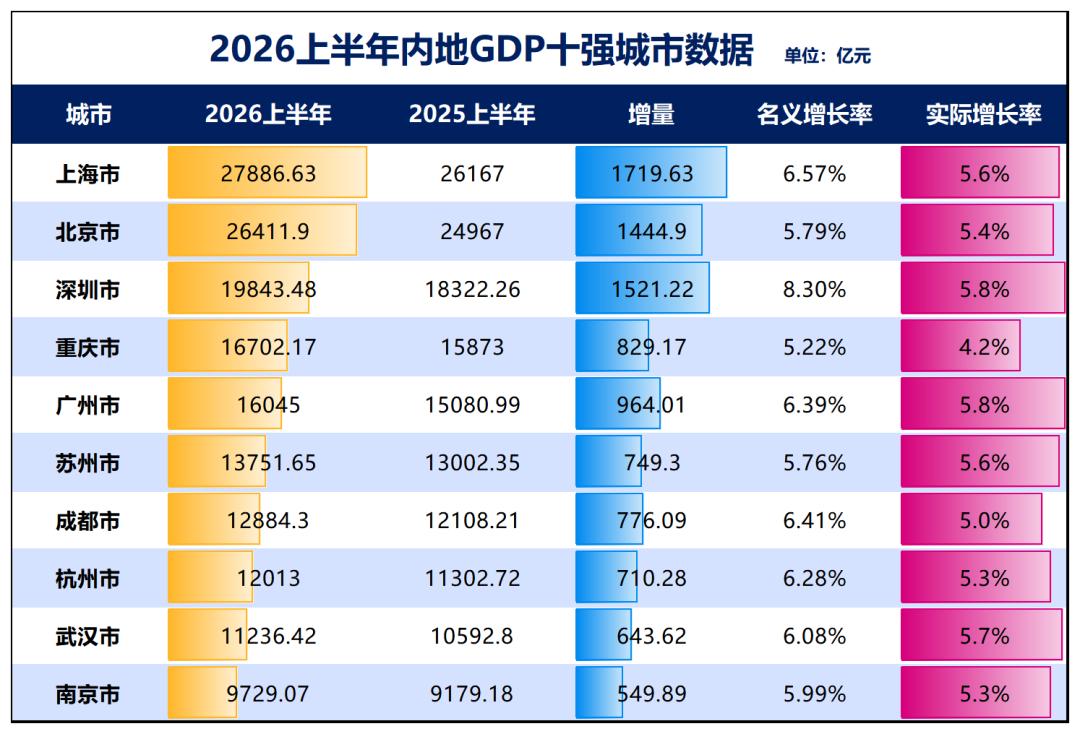
Mapping: City Finance; Data: Statistics bureaus of various cities
Behind the return of growth rate, Guangzhou's three traditional major industries have resumed growth:
The automobile manufacturing industry increased by 9.1%, the electronic product manufacturing industry increased by 11.2%, and the petrochemical manufacturing industry increased by 5.2%.