Everyone wants to learn from BYD to manufacture batteries, but can they really get it right?
If new energy vehicle manufacturers fail to master power battery technology, it is just like the era of traditional fuel vehicles when automakers could not get a grip on engine technology. What is thought-provoking is why few automakers poured money into developing engines in the past, while a large number of car companies are now eager to produce batteries.
Some time ago, two news related to power batteries in the new energy vehicle industry quietly gained traction:
First, Li Auto invested 2.65 billion yuan to participate in the capital increase and share expansion of Sunwoda Electric Vehicle Battery. After the capital increase, it will directly hold 8.79% of the shares of Sunwoda EVB. Combined with the old shares, Li Auto indirectly holds a total of 11.17% of the shares, becoming the second largest shareholder of Sunwoda EVB.
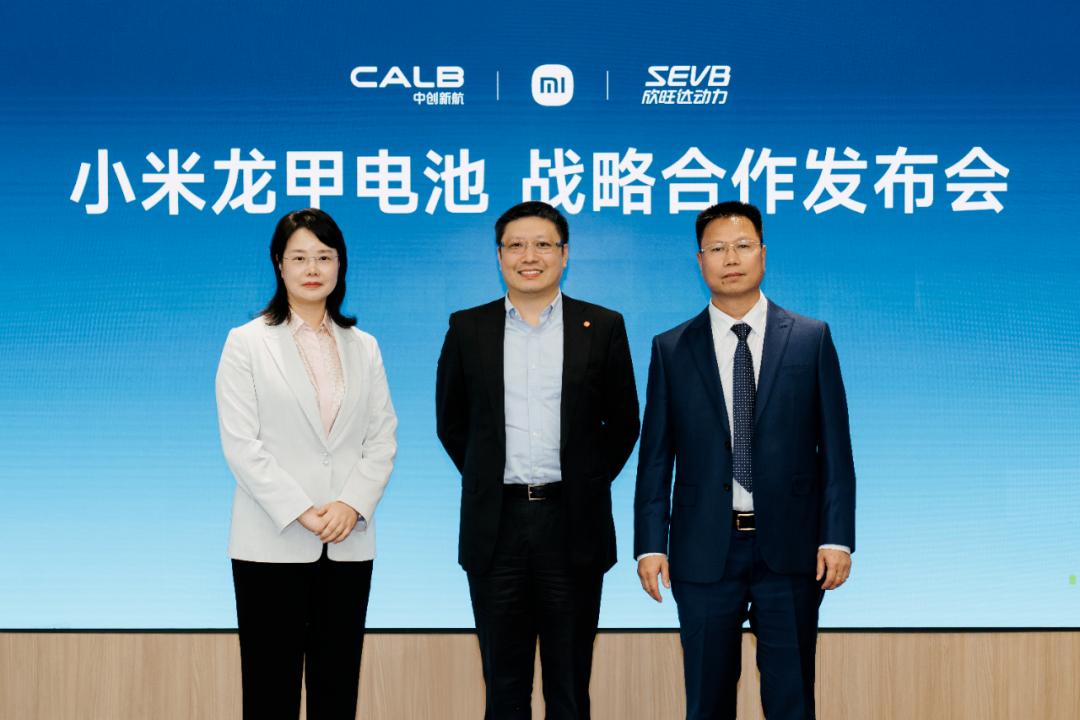
Second, Xiaomi launched its Dragon Armor Battery, with production tied to Sunwoda and CALB. Although it did not take a large equity stake, Xiaomi will take the lead in defining cell formulas, BMS and Pack solutions, while Sunwoda and CALB are responsible for OEM production.
Shifting from purchasing off-the-shelf cells to having automakers define cells, the apparent reason seems to be to reduce costs and improve efficiency. But beneath the surface, the fundamental driver is the intensifying involution in the new energy vehicle industry, as carmakers try to take back control of core components to secure their position in the market.
But is it really that easy for automakers to produce batteries on their own?
01
From the battery shortage era to the present, batteries have always been the core lifeline
If we go back to the early stage of the development of the new energy vehicle industry, the most direct anxiety of automakers about power batteries was actually "not being able to get high-quality batteries".
When the sales of new energy vehicles grew rapidly, the production capacity of power batteries was far less sufficient than it is today, and the prices of raw materials such as lithium, nickel and cobalt experienced drastic fluctuations, giving battery enterprises stronger bargaining power.
For automakers, batteries are not only one of the most core components of new energy vehicles, but also the link in the supply chain that most easily affects the delivery and cost of the whole vehicle.
Therefore, automakers began to reach out to the battery industry chain on a large scale for the first time. But the way of playing at that time was different from now. The 1.0 era of automakers producing batteries was more like "finding a battery factory for themselves".
The most typical example is the "Times" series of cooperation.
In 2017, SAIC Motor and CATL established SAIC-CATL, and incorporated power battery production capacity directly into its own supply system through a joint venture. Similar cooperation kept emerging, and automakers and battery enterprises bound production capacity and supply relations through joint ventures, equity participation and other methods.
Volkswagen took a similar path. In 2020, Volkswagen Group invested in Gotion High-Tech, planning to acquire 26.47% of Gotion High-Tech's shares through an investment of about 1.1 billion euros, becoming its largest shareholder.
For Volkswagen, which was accelerating its new energy transformation at that time, investing in a Chinese power battery enterprise was essentially to grasp an important link of the battery supply chain in its own hands.
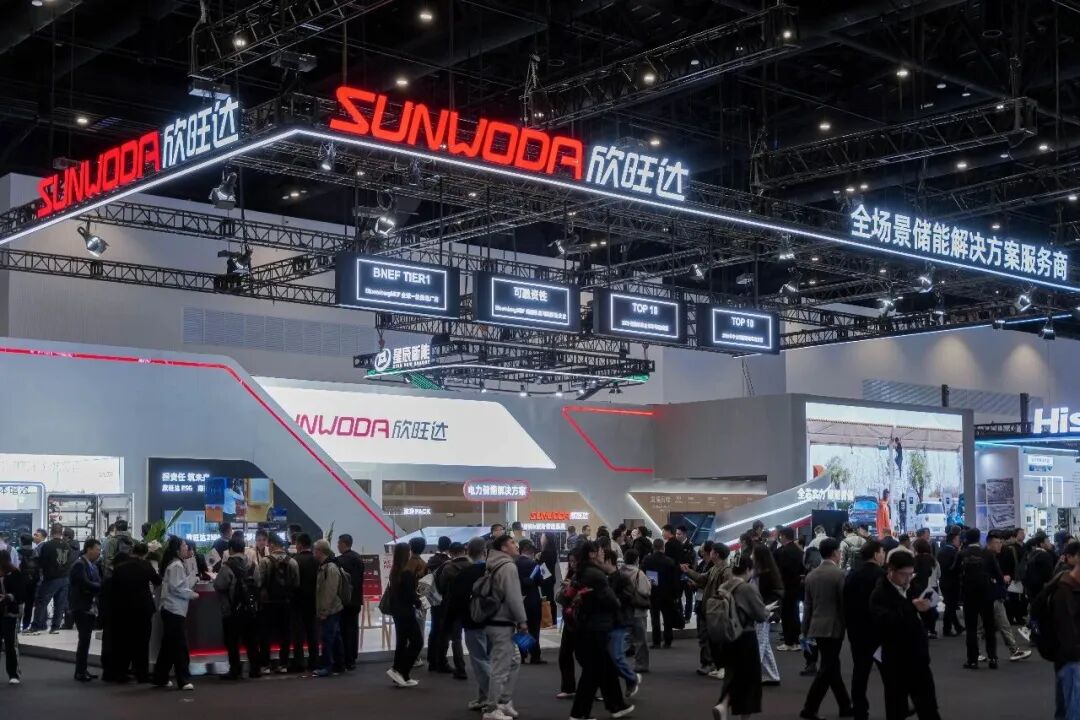
In addition, new car-making forces are also looking for their own battery partners one after another. NIO has made a strategic investment in Welan New Energy, and the three companies of NIO, Li Auto and Xpeng have successively invested in Sunwoda...
At this stage, the idea of automakers is not complicated. They do not have to produce batteries by themselves, but cannot be completely controlled by others. Therefore, the core of the 1.0 era is to bind the supply chain.
No matter it is joint venture, equity participation, or establishing a battery company, the essence is to ensure stable battery supply and reduce dependence on a single supplier at the same time.
But a few years later, the contradiction of the industry has changed. The biggest trouble of power batteries today is no longer "whether there are good batteries available".
After years of capacity expansion, the production capacity of power batteries has been greatly improved, and the industry is even facing overcapacity and price competition. What really troubles automakers has become how to make batteries cheaper, safer and more efficient.
Power batteries have evolved from a supply chain issue to a mandatory question about vehicle cost and product competitiveness. It directly affects the range, fast charging performance, safety, space utilization and service life of vehicles, and is also the core component that accounts for a relatively high proportion of the cost of new energy vehicles.
In short, whether a new energy vehicle is affordable, charges fast, or has a long range is inseparable from power batteries behind the scenes.
As a result, the demands of automakers have changed for the second time, from "I need to ensure battery supply" to the current "I need to directly participate in deciding how this battery is made".
This is the starting point of the 2.0 era of automakers producing batteries.
02
There are still obstacles in the 2.0 era of automakers producing batteries
When it comes to automakers developing batteries on their own, BYD is almost impossible to avoid. Because in the current narrative of China's automotive industry, BYD has proved with practical results that if batteries are truly mastered in their own hands, they can become part of the competitiveness of the whole vehicle.
From Blade Battery, to cells and Packs, and then to materials and complete vehicles, BYD has long been engaged in vertical integration. At BYD, the battery is not an isolated business, but a system embedded in the R&D, manufacturing and supply chain system of the whole vehicle.
So now many automakers want to learn from BYD. But the real difficulty in making a battery is never to build a plant and move equipment into it; what people often see is only the battery factory, but rarely the things behind the factory.
The first threshold lies in the upstream industry.
If key raw materials such as lithium, cathode materials, anode materials and electrolyte still rely heavily on external procurement, then having its own cell factory does not mean that the automaker has truly mastered the battery cost. Once the price of raw materials rises, the cost pressure will still be transmitted downstream.
The second threshold is material and cell R&D.
Power batteries are not as simple as buying ready-made materials and assembling them. From material systems and formulas to powder modification, pole piece manufacturing and cell structure, every link will affect energy density, cycle life, safety and cost.
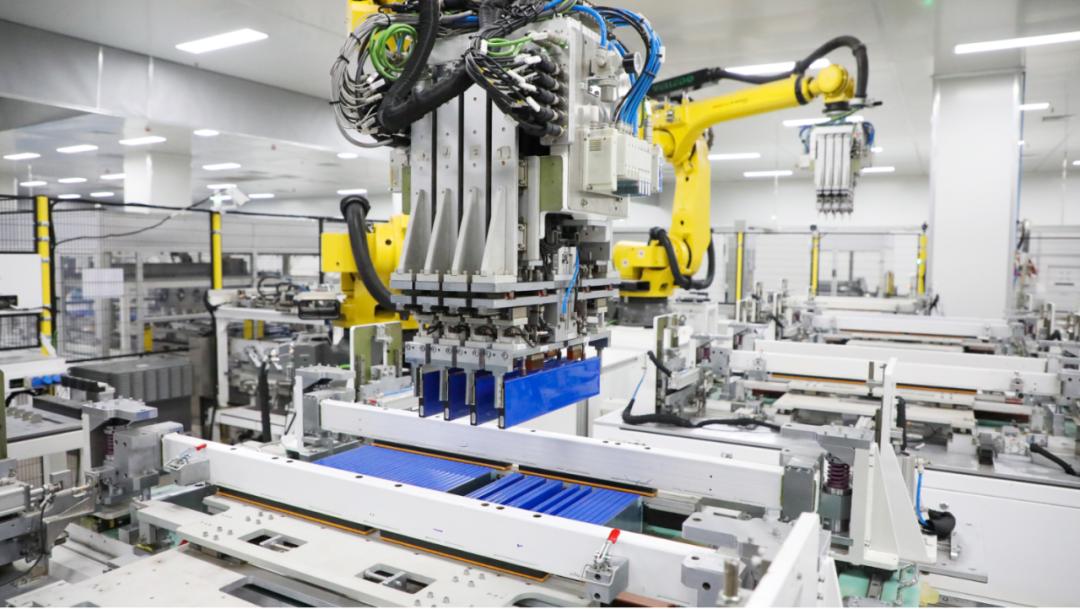
The third threshold is the manufacturing capacity that is most easily ignored.
Power battery manufacturing is a typical large-scale manufacturing industry. A difference of a few percentage points in yield rate, when applied to a production capacity of tens of GWh or even hundreds of GWh, will lead to a very large cost gap. Equipment operation rate, manufacturing rhythm, process consistency and quality control all require a lot of time to polish.
This is also the part of BYD that is really hard to replicate. BYD's advantage never lies in "having a battery factory", but in its interconnected systematic capabilities covering materials, cells, Packs, three electric systems and complete vehicles.
Battery R&D can support vehicle design, and vehicle sales can in turn dilute the R&D and manufacturing costs of batteries. The scale will further promote supply chain optimization, and finally form a positive cycle.
This is completely different from simply building a single battery factory.
There is no doubt that equating "producing batteries on our own" with "mastering battery capabilities" is a foolish act. Under this premise, the reason why Li Auto and Xiaomi are increasing investment and cooperating in depth with battery manufacturers is that they are making further explorations to test the boundary of automakers' battery manufacturing capabilities.
03
There is no shortage of battery production capacity, but high-quality GWh capacity is still scarce
Of course, on the road of automakers producing batteries, there are also players who have gone further. They either have strong backers as endorsement, or have strong sales to support their business.
For example, Geely is expanding its layout of battery business.
Information disclosed in 2026 shows that its Shield Golden Brick Battery has formed a production capacity reserve of 70~80GWh, and plans to reach 200GWh in 2027 and hit 300GWh in 2028. Its business also covers multiple fields such as power batteries, energy storage, lithium batteries and sodium batteries.
This scale is quite considerable across the whole industry.
Another example is Leapmotor, which has jointly built a cell production base with CALB.
The two sides previously announced an investment of 7.5 billion yuan to build an intelligent power battery manufacturing base with a planned production capacity of 33.6GWh. After incorporating cell manufacturing capabilities into its own industrial chain system, Leapmotor has realized 100% self-sufficiency in power battery production and manufacturing.
Hive Energy is another well-known example.
Great Wall Motors spun off its internally incubated battery business into Hive Energy in 2018, with the group holding the shares and supplying products to the external market. In 2019, Hive Energy set up a joint venture factory with Sinowatt, and in 2020 it introduced strategic investment from SDIC Venture Capital, becoming a typical example of "internally generated" power battery business from automakers.
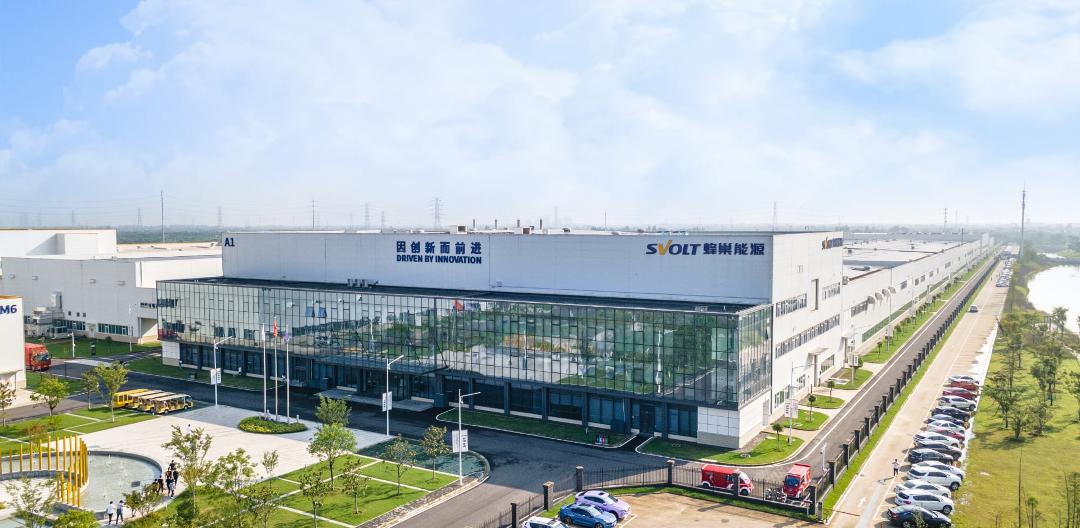
Looking at these cases together, the change is very obvious — what automakers really want to take back is the right to define batteries, including:
First, the underlying right to define cells: finalize the chemical system, size, packaging and material formula of cells, get rid of the off-the-shelf products on battery manufacturers' shelves, and customize cells around the vehicle platform.
Second, the right to define vehicle integration: take the lead in the CTP/CTC/CTB integrated structure, cooling, sealing and body integration solutions, so that the battery becomes a structural part of the vehicle, rather than an independent component.
Third, the right to define BMS and thermal management algorithms: master the underlying algorithms such as SOC estimation, charging and discharging strategies, thermal runaway protection and aging models, and get rid of the black box solutions from suppliers.
Fourth, the right to define supply chain and cost: independently select upstream materials and plan production capacity to hedge against raw material price fluctuations, and control the cost structure and supply rhythm.
Fifth, the right to define safety standards: on the basis of national standards, independently develop test specifications for cells and battery packs to define the safety boundary of batteries.
Sixth, the right to define the rhythm of technology iteration: the battery R&D cycle matches the launch rhythm of new vehicles, and independently decides the launch timing of new battery systems.
Seventh, the right to define multi-scenario reuse: one set of battery technology can be adapted to passenger vehicles, energy storage and other scenarios at the same time, to dilute the fixed investment in R&D and production lines.
What is really scarce in the power battery market is never the number of GWh, but the GWh capacity that can achieve stable production, high yield rate, low cost and reliable quality.
From the perspective of automakers, only by mastering the right to define power batteries can they efficiently mobilize internal resources in the fiercely competitive market, win tough battles, and obtain more benefits at the same time.
Therefore, rather than saying that all automakers are learning from BYD to make batteries, it is better to say that they are all trying to stop the visible "blood loss points".
BYD's answer is to cover the whole industrial chain. Other automakers do not necessarily need to fully replicate this path.
However, in terms of power battery layout, if they only learn to "build a battery factory" without the capabilities of material R&D, supply chain management, manufacturing yield improvement and vehicle coordination, in the end they are likely to only turn the past supply chain pressure into their own asset pressure, which is not worth the loss!
This article is from WeChat official account "Auto Community" (ID: iAUTO2010), written by Zhang Zhidong, edited by He Zengrong, and published with authorization from 36Kr.