5,000 Vietnamese VinFast electric vehicles have been loaded onto ships and dispatched to Europe and Southeast Asia: Chinese automakers should no longer underestimate this competitor.
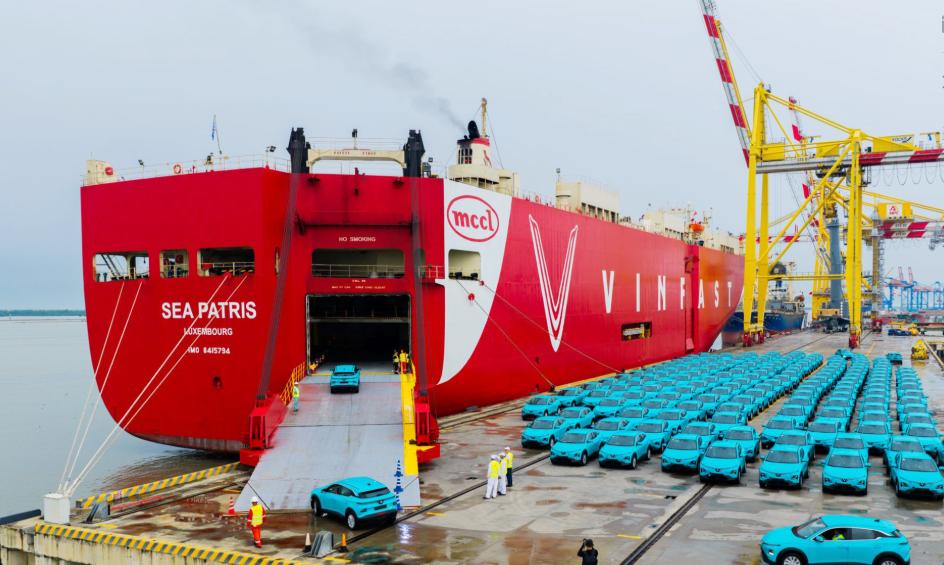
TechNode Global reports that according to a notice from the Industry Administration under Vietnam's Ministry of Industry and Trade on September 12, two international dedicated transport vessels docked at Hai Phong Port at the end of July, shipping more than 5,000 VinFast electric vehicles to Europe and Southeast Asia.
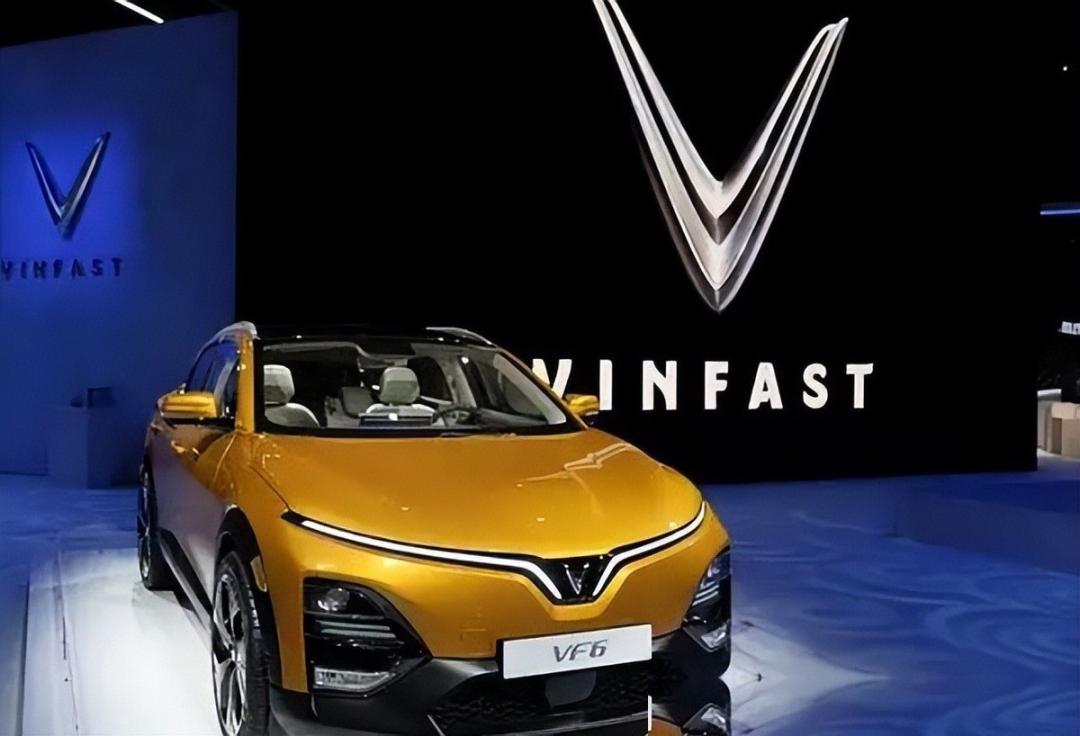
Among them, one vessel carried about 1,500 VF6 units to Europe, and the other shipped more than 3,500 units to the Philippines and Indonesia, totaling over 5,000 vehicles.
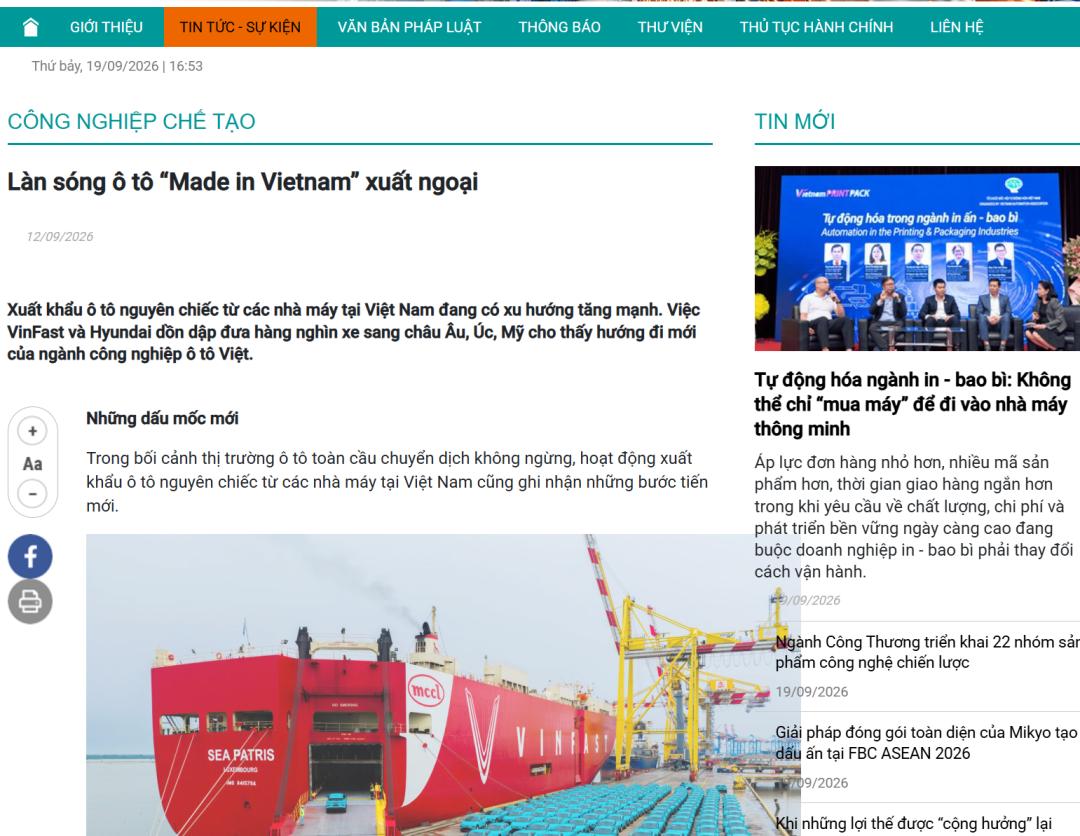
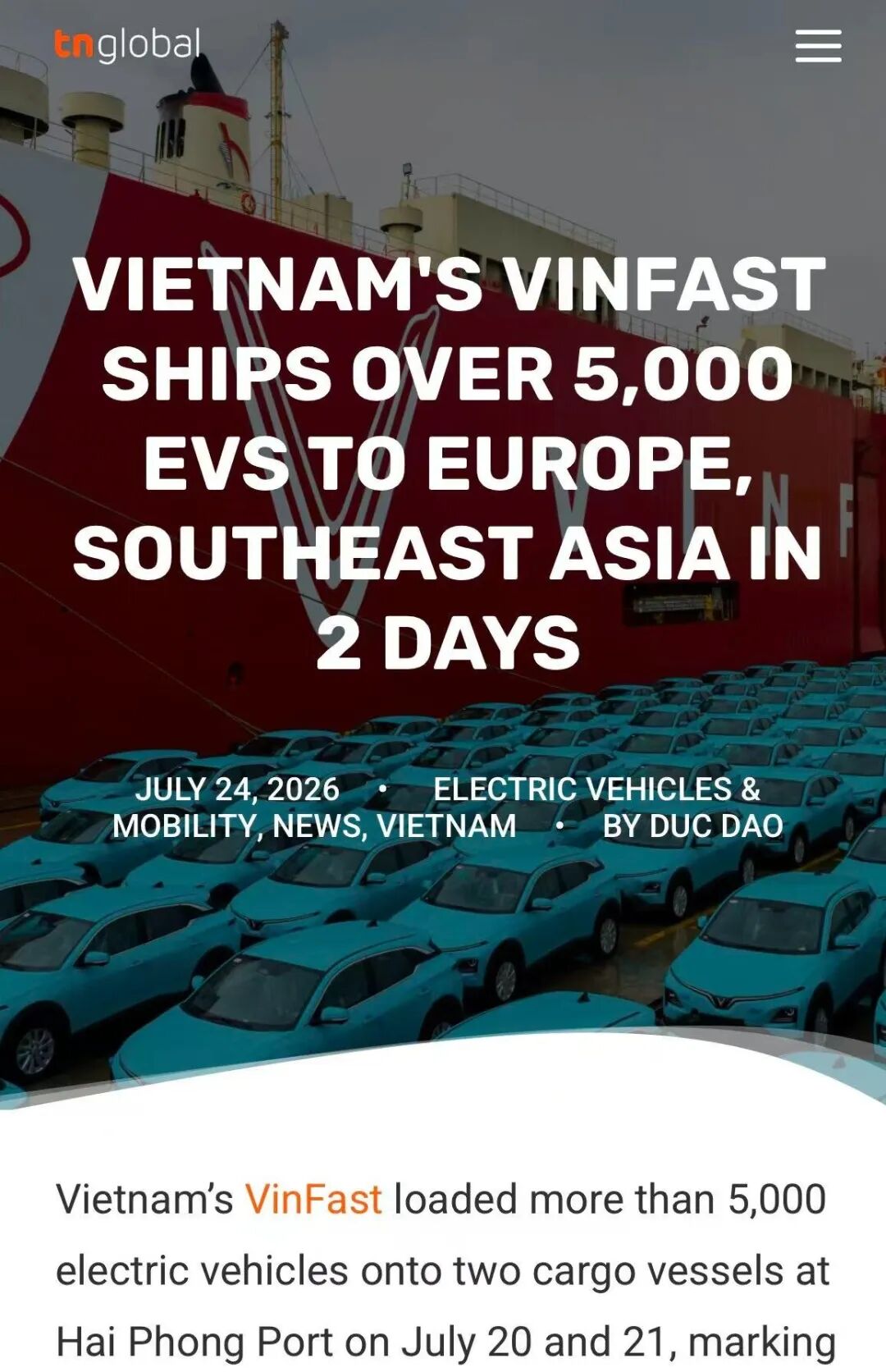
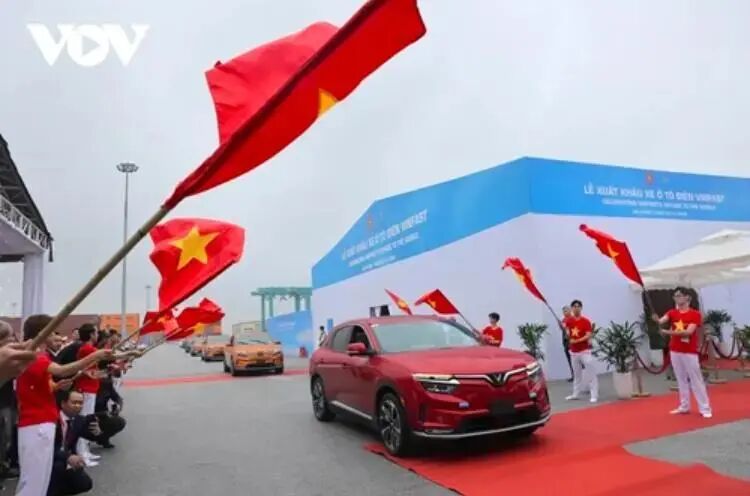
This marks the 37th and 38th export batches of VinFast in less than four years, while its first batch of 999 units was not shipped out until the end of 2022. Today, it has entered more than ten markets including the United States, Canada, Europe, India, Indonesia, the Philippines, and the Middle East. On the local Vietnamese front, another 20,161 units were delivered in August, securing the top sales position for 24 consecutive months.
Chinese automakers have long regarded only Tesla as their overseas rival, and have never taken Vietnam's VinFast seriously.
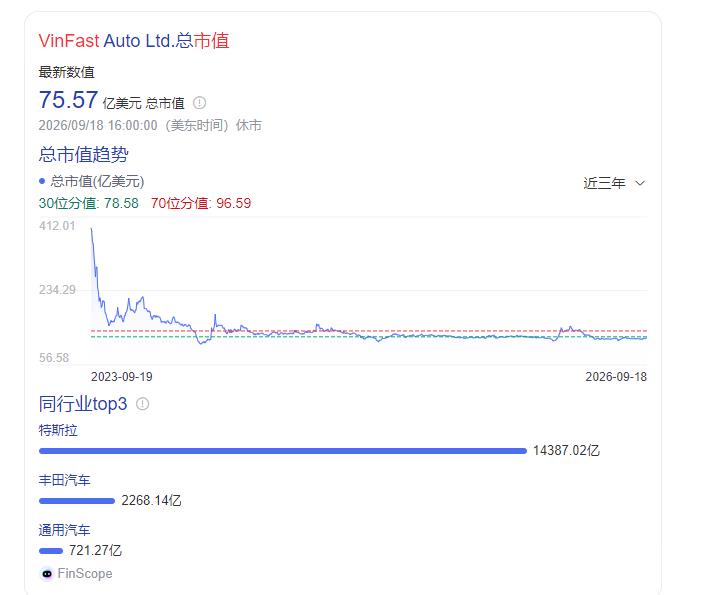
VinFast was listed on the NASDAQ in the United States in 2023, with a market cap exceeding 100 billion U.S. dollars at that time. However, the market value of Vietnamese VinFast has now plummeted to 7.5 billion U.S. dollars, only a tiny fraction of what it was back then.
The reason behind this is that it neither has independent core technologies, nor can its product competitiveness compare with Chinese automakers. Last year, when U.S. media got their first batch of its vehicles, their evaluation after testing was: "This is not a car, it is a semi-finished product." Professional U.S. automotive reviewers and automotive media directly awarded it the title of "the worst quality car".
However, even though Vietnamese EVs have poor quality and are not in the same league as Chinese EVs, both the United States and Europe have opened the door wide for Vietnamese EVs with preferential policies.
At present, electric vehicles represented by VinFast have started to enter the two most important overseas hinterlands that Chinese automakers value most — Southeast Asia and Europe — in large, successive batches. It is time for Chinese automakers to take this rival seriously.
"Made in Vietnam" is largely supported by Chinese supply chains
Vietnam likes to talk about its localization rate, claiming that VinFast has achieved about 60% localization, and the figure can rise to 80% after the Ha Tinh battery plant is put into production. But it is worth noting a reference point: foreign traditional fuel vehicle manufacturers that have operated in Vietnam for decades only have a localization rate of 10% to 15%.
The so-called localization rate in Vietnam never equals independent technology ownership.
The three core electric systems account for the highest value of an EV. For VinFast's batteries, its mid-to-high-end models (VF8, VF9) use batteries from CATL, while its entry-level models and electric mopeds use batteries from Gotion High-Tech. Gotion even established a joint venture battery plant with VinFast in Ha Tinh.
The production lines for drive motors were built by Dalian Harson from China — the motor production lines for Xpeng and Volvo also come from this manufacturer. Most of its electronic control systems, smart cockpits, key materials and production equipment are imported from China.
About 70% of its component procurement comes from China.
Put bluntly, this is an "assembled car" built on the shoulders of the Chinese supply chain. The so-called localization rate only counts "how many processes are carried out within Vietnamese territory", rather than "how many core technologies Vietnam has mastered independently".
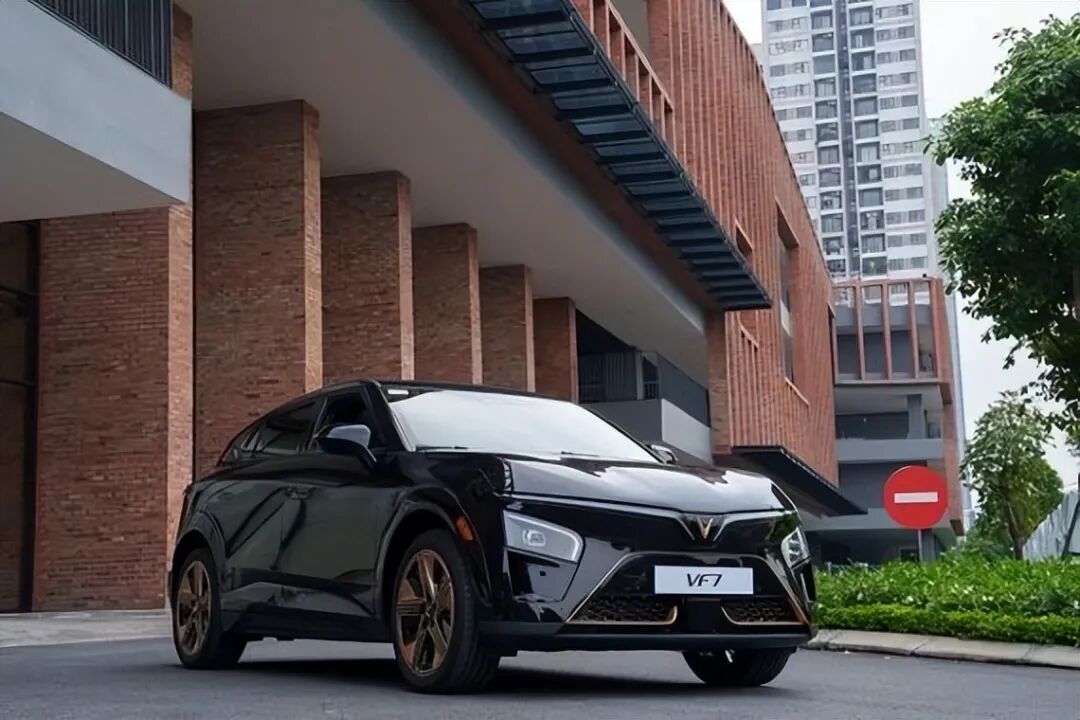
Vietnamese EVs have a bad reputation for quality, so why can they be sold unimpeded to Europe and the United States?
This has to mention VinFast's experience in the U.S. market. In March 2023, the first batch of VF8s was just delivered, and in May, a recall was issued due to sudden black screen failures of the head-up display. The recall reason written by the U.S. National Highway Traffic Safety Administration was straightforward: it may "increase the risk of collision"; later, more than 2,000 units were recalled due to incorrectly installed airbag models.
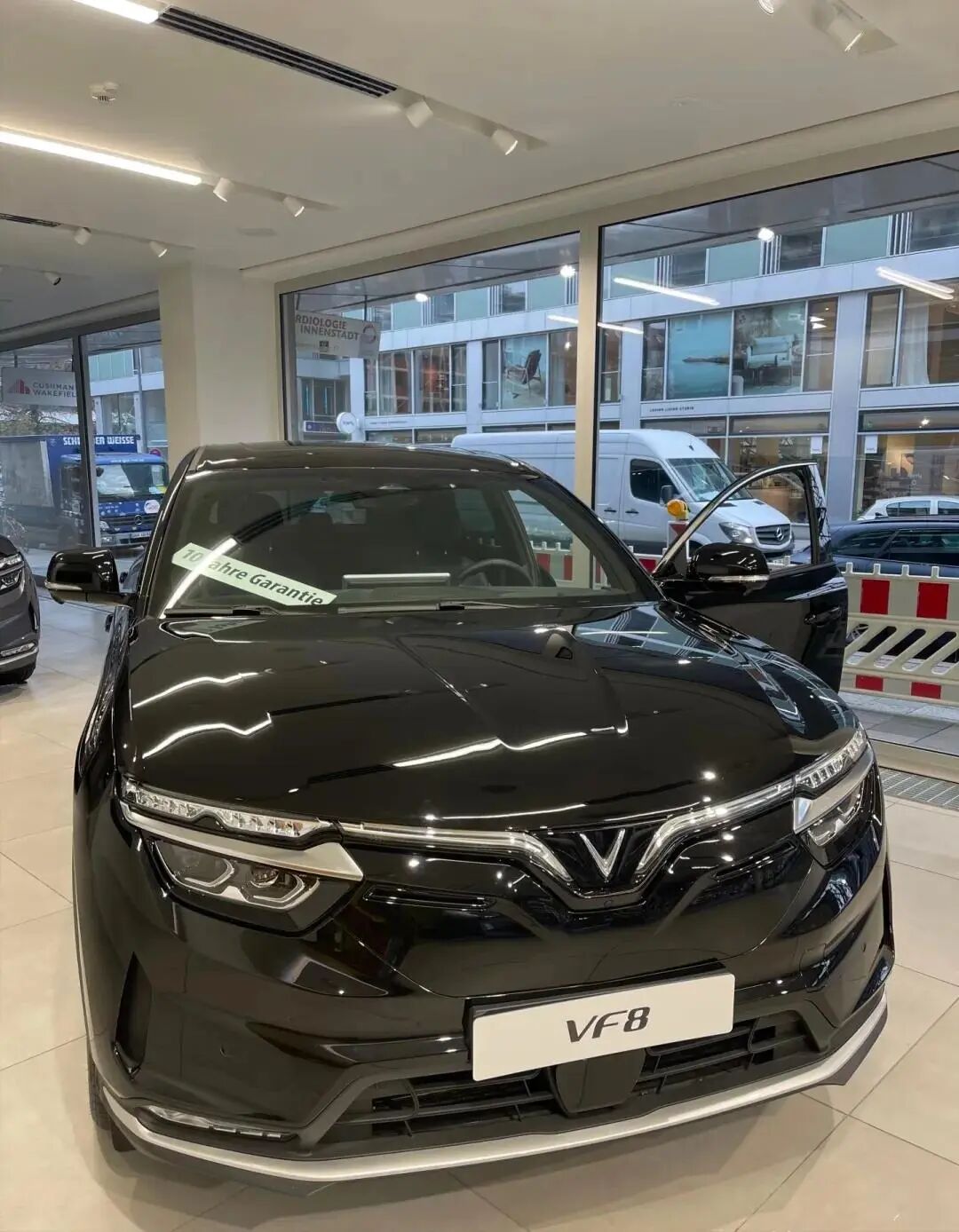
Mainstream automotive media almost unanimously criticized its poor workmanship, software and handling, leading to dismal sales. Its sales model was switched from direct sales to dealerships, and the construction of its North Carolina factory has been delayed again and again.
According to normal business logic, such a product can hardly turn around in a mature market. But in reality, it has swaggered into Europe, and has been signing dealerships one by one in Germany, France, and the Netherlands.
Why? Because what it sells is never cost-effectiveness, but a "politically correct origin".
In recent years, Europe and the United States have been determined to implement the "China + 1" strategy, and are in urgent need of a non-China new energy option to prove that their supply chains can truly be diversified.
Even if this option is more expensive, has worse workmanship, and its components are still made in China when you take it apart, it must be supported. As a result, VinFast enjoys a full set of geopolitical dividend benefits: more favorable tariffs, more lenient access requirements, and more favorable public opinion. It is that indispensable "+1" in the Western supply chain narrative.
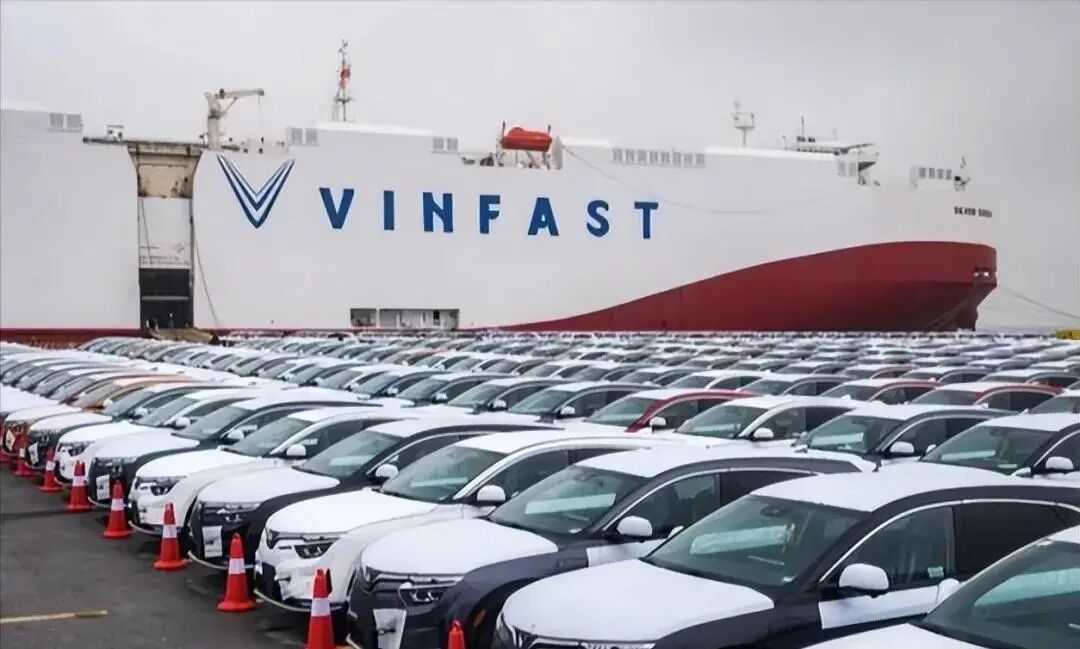
Once you understand this, you will see clearly: when Chinese complete vehicles are besieged by anti-subsidy duties and the "European Priority" procurement law in Europe, a Vietnamese car with a ruined reputation can still move unimpeded — what is being blocked is not the car, but its origin.
The components we supply are being assembled into cars that are stealing our market orders
Thus we see that VinFast uses Chinese batteries, motors, and electronic control systems, assembles them into complete vehicles in Vietnam, sticks a Vietnamese brand label on them, bypasses the numerous barriers faced by Chinese complete vehicles, and sells them to Europe and Southeast Asia to compete with Chinese automakers for the same market.
This situation has both pros and cons. On the positive side, the Chinese supply chain takes away the vast majority of VinFast's profits.
In 2025, VinFast's gross profit margin was -56.2%, and like some Chinese automakers, it is also selling cars at a loss.
The gross profit margin of batteries, motors and electronic control systems provided by Chinese suppliers is usually between 30% and 40%. 70% of VinFast's material procurement comes from the Chinese supply chain, corresponding to a procurement amount of about 21,000 U.S. dollars per vehicle, leaving only meager complete vehicle profits for Vietnamese automakers.
However, the downside is that as automakers' overseas expansion and even supply chain expansion become increasingly competitive, a large number of second- and third-tier component suppliers are still undercutting each other overseas, selling high-quality products at ridiculously low prices, which in disguise reduces costs for rivals like VinFast and supports its so-called "cost-effectiveness".
It is equivalent to us not only acting as suppliers, but also being hit back by the products we supplied ourselves.
We should not underestimate the Vietnamese EV rival
After all that has been said, we cannot underestimate this Vietnamese electric vehicle competitor.
According to statistics, VinFast delivered 70,000 units globally in the second quarter of 2026, nearly doubling year on year; in the first half of the year, it sold 116,000 units in Vietnam alone, a year-on-year increase of 72%.
This growth rate is also in the first echelon of the global EV industry. It has held the top sales position in Vietnam for 24 consecutive months, ranks first among pure electric brands in the Philippines, fourth in India, and eighth in Indonesia.
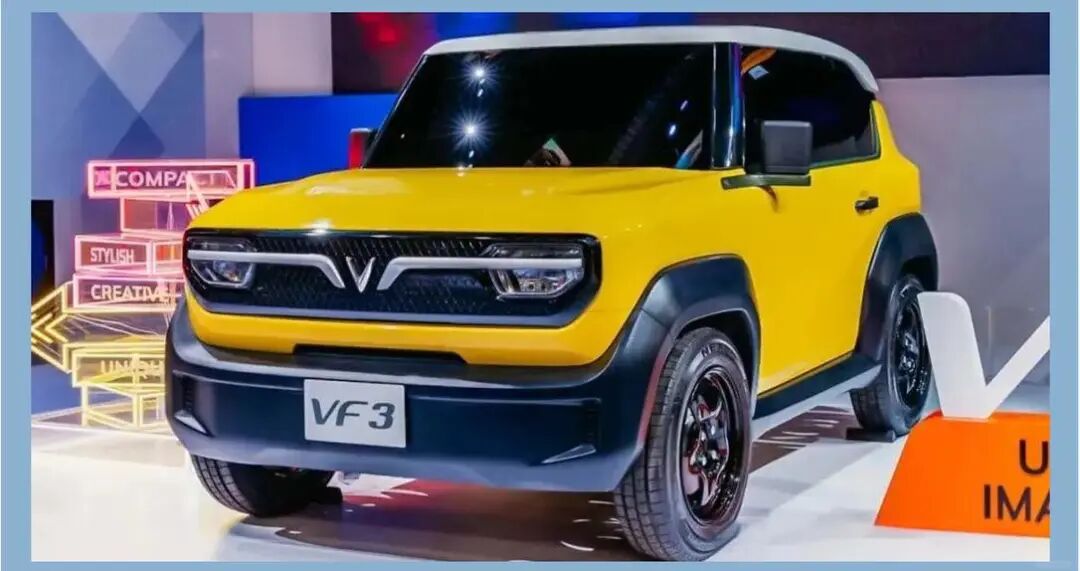
At present, it is no longer only capable of making that VF8 that was scolded by U.S. media and made headlines. A micro pure electric model called VF3 sold more than 15,000 units in the second quarter, and more than 6,000 units in August alone, directly becoming the best-selling model in the local market.
It first boosts sales volume and market penetration with the cheapest small cars — this is the old path that Wuling Hongguang MINI and BYD Seagull have taken, and it has learned it very well.
The cards in VinFast's hand should not be underestimated either: Vietnam's national system and Vingroup's cost-agnostic capital support allow it to afford sustained losses.
The "China + 1" strategy of Western countries has actively handed it preferential tariff and market access tickets, giving it treatment that Chinese automakers do not have; and by standing on the shoulders of the Chinese supply chain, it can directly purchase the most mature batteries and motors, bypassing all the pitfalls that Chinese manufacturers spent ten years stepping into, achieving a steeper and faster growth curve.
The core components of electric vehicles are our unique and scarce advantages. Since this part is in the hands of China, we should have the corresponding pricing power. The worst case is that our own people start a price war, and sell our high-value advantages at a bargain price.
More importantly, we may need to learn to implement a "graduated" supply chain overseas expansion strategy. The top-tier three electric systems, batteries with the highest energy density, and the most mature full-stack intelligent driving solutions should be prioritized to support Chinese domestic automakers, so as to maintain a generational technological gap.
We can supply products to external parties, but we should classify them by generation and tier, and keep some core technologies for ourselves. We must not sell our sharpest spear to potential rivals.
VinFast can sell every car at a loss and still ship vehicles all over the world, relying on two things: the origin pass granted by Western countries, and the tools handed over by the Chinese supply chain.
Back then, joint-venture brands also laughed at BYD for its losses, copycat designs, and low status, but before long, they could no longer laugh. Chinese automakers should not reserve this bitter laugh for themselves ten years later.
Holding pricing power in the supply chain is our source of confidence. But at the end consumer market, while VinFast has not yet mastered independent three-electric core technologies and has not established a solid brand reputation, we should use our advantages in products, brands, channels and especially the supply chain to widen the gap completely, which is the top priority.
This article is from the WeChat Official Account "Hotspot Micro Review" (ID: redianweiping), written by Wang Xinsi, and published with authorization from 36Kr.