Trident Made by JAC? Maserati Enlists HarmonyOS for Electrification, European Carmakers Are Closely Embracing China's New Energy Advantages
Will Maserati cooperate with Huawei and JAC to build new energy vehicles under the Zunjie brand?
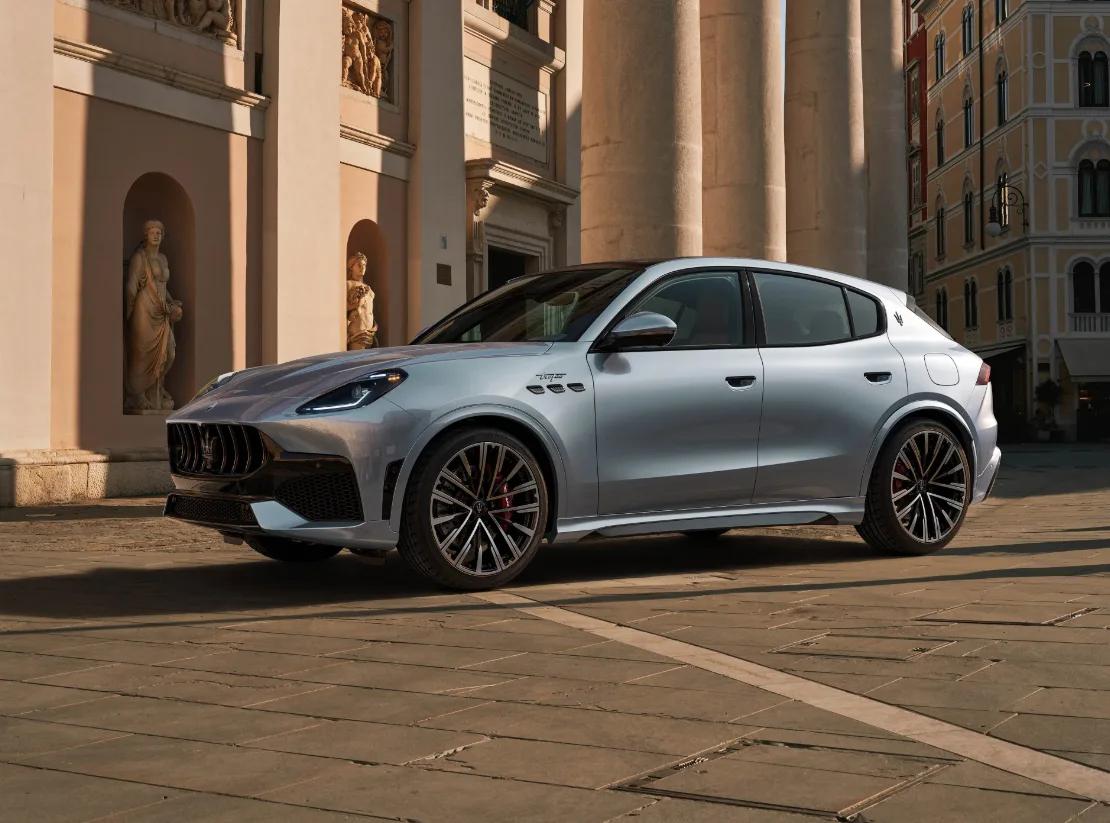
According to the report from media outlet "Auto Future Daily", Maserati has finalized two models in cooperation with Huawei, namely a mid-to-large sized pure electric SUV and a large pure electric GT, with the first model to be the pure electric GT.
In fact, as early as the beginning of this month, foreign media broke the news that Maserati's parent company Stellantis would cooperate with Huawei and JAC. Relevant reports stated that the two sides would develop new vehicles under the Harmony Intelligent Mobility Alliance (HIMA) model, with the first model expected to be launched in 2027, and adopt a sales model where the Zunjie brand is used in the Chinese market and the Maserati brand is used in overseas markets.
(Image source: Maserati)
If the news is true and the cooperation between Huawei, JAC and Maserati can be implemented smoothly, it will not only become a new form of local electrification for overseas brands, but also create a brand new operating model for the Harmony Intelligent Mobility Alliance.
Trident, Made in Anhui?
In fact, there are already precedents for overseas brands to adopt Chinese solutions for vehicle manufacturing, equipped with Huawei's cockpit and intelligent driving systems. For example, GAC Toyota bZ7 with HarmonyOS Cockpit, Chery Jaguar Land Rover Freelander 8 equipped with Huawei ADS 2.0 intelligent driving system, etc.
However, Maserati is the first overseas brand to join the Harmony Intelligent Mobility Alliance, handing over the full process of product definition, design, marketing, retail and services to Huawei, and leaving production to the cooperative automakers of HIMA.
Moreover, the models developed by Maserati in cooperation with HIMA will not use Maserati's own logo in the domestic market, but will bear the Zunjie logo instead.
This means that for the co-developed models with HIMA, Maserati can neither take charge of definition and design, nor affix its own logo. After all the hard work, it ends up making wedding dresses for another brand. What is Maserati aiming for?
Dianchetong (ID: dianchetong233) speculates that the cooperation between the two sides may move in the following two directions:
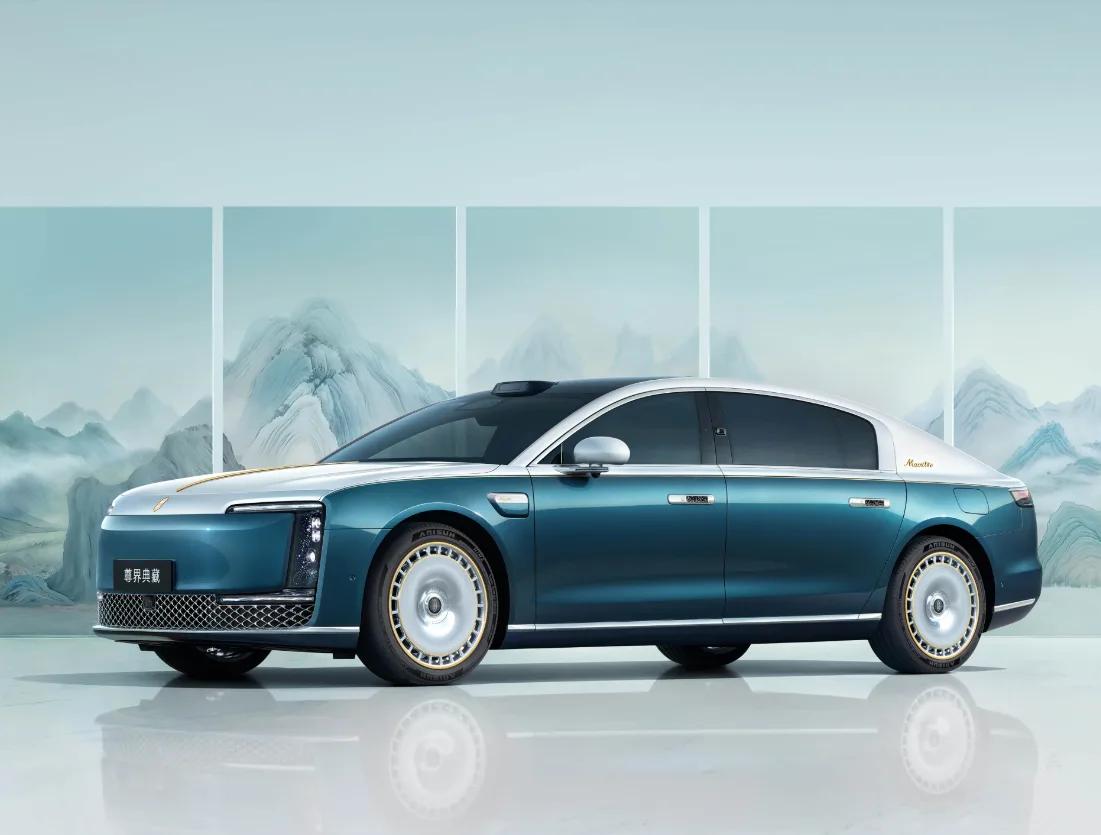
The first possibility is to support Maserati's electrification transformation in its home European market. Through cooperation with HIMA and Zunjie, Maserati can replace some Huawei-related software and hardware in the co-developed Zunjie models and even other existing Zunjie models, then affix the Maserati logo and sell them in the European market.
(Image source: Zunjie)
In fact, this is somewhat similar to the Huawei Smart Selection mobile phone model in the past, that is, by cooperating with third-party companies to produce Huawei Smart Selection mobile phones using third-party brands and sell them in Huawei stores, to mitigate the impact of technical sanctions on terminal businesses such as mobile phones to a certain extent.
In addition, Seres also adopted a similar model when it expanded to the European market a few years ago.
At the Munich Motor Show in 2023, Seres showcased three models: SERES 3, SERES 5 and SERES 7. Among them, SERES 7 is the overseas version of the AITO M7 that was sold in China at that time. The car changed the AITO logo to the Seres logo, the infotainment system was replaced from HarmonyOS Cockpit to a non-HarmonyOS system, and all Huawei elements on the central control screen, audio and other positions were removed. However, at the 2025 Munich Motor Show, Seres participated in the exhibition under the AITO brand, and the situation of AITO being rebadged to Seres did not happen again.
In addition to the possibility of selling Zunjie models back to the European market under the Maserati brand, the cooperation between Maserati and HIMA may also adopt an asset-light model similar to the current AITO model.
In other words, in the cooperation between Maserati and HIMA, Maserati will be responsible for product definition, marketing, retail and other related links, with Huawei providing technical empowerment, and the production process will be entrusted to the Zunjie factory. This can not only promote Maserati's electrification transformation, but also allow Maserati to avoid detours by leveraging Huawei's accumulated experience in chassis, three-electric system and intelligent technology.
However, both of these two directions are speculations based on the currently disclosed information. What kind of cooperation model the three parties of Maserati, HIMA and JAC will adopt in the future remains to be further disclosed with relevant information.
But from the fact that Stellantis seeks cooperation with HIMA and JAC in the field of new energy vehicles, it is clear that Stellantis regards Chinese enterprises as an important support for its new energy transformation.
Holding Tight to the Coattails of China's New Energy Industry
In addition to the recently rumored cooperation between Maserati, Huawei and JAC to build vehicles, Stellantis has long been eyeing Chinese new energy enterprises, and tried to boost its own sales by cooperating with Chinese new energy automakers.
The most well-known cooperation among them is the partnership with Leapmotor.
In October 2023, Stellantis acquired a 21% stake in Leapmotor for about 1.5 billion euros, becoming its largest single shareholder. The two sides also established a joint venture Leapmotor International, responsible for the export, sales and manufacturing of Leapmotor models outside the Greater China region.
In September 2024, with the help of Stellantis's existing channels, Leapmotor T03 and C10 were launched in 9 European countries including France, Germany and Italy. In April 2026, Leapmotor also officially entered the Mexican market.
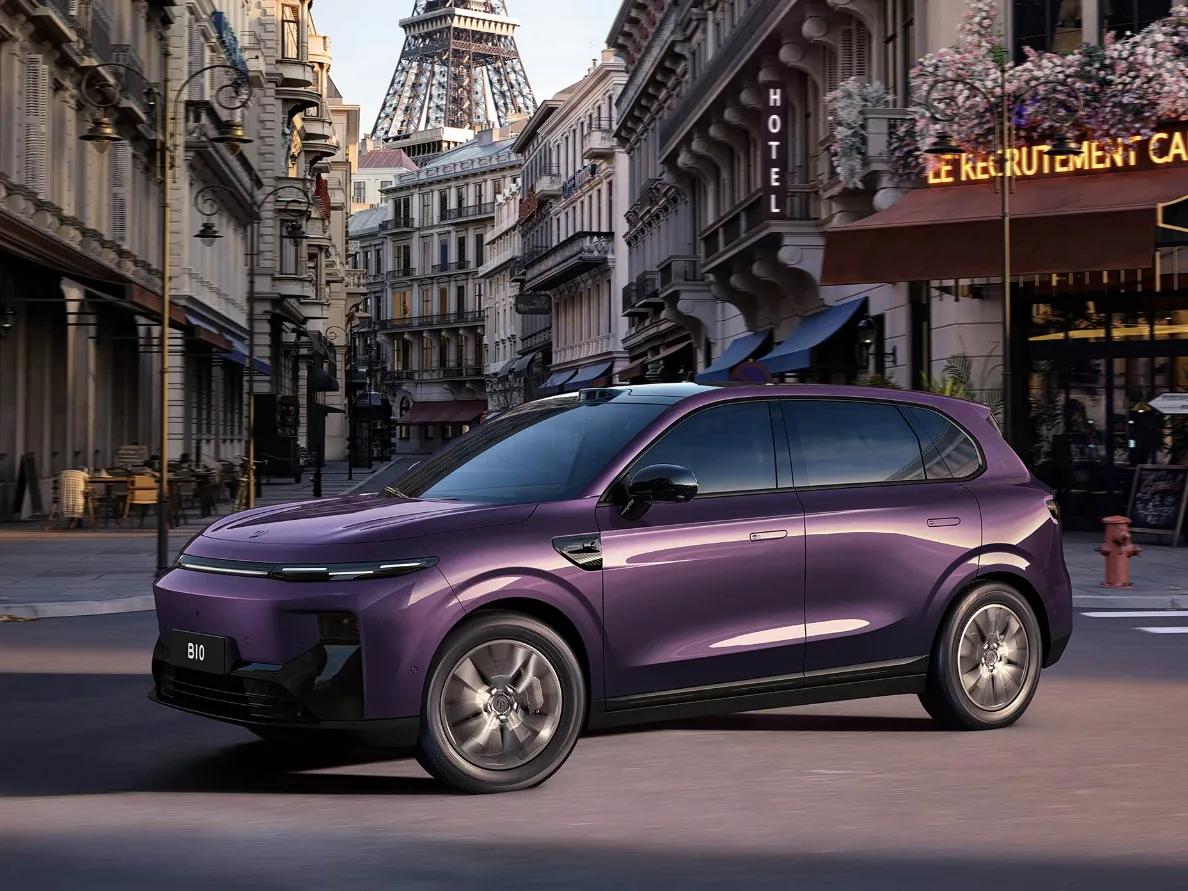
In May this year, Stellantis also announced a new round of cooperation intention with Leapmotor, stating that it will produce the B10 model at Stellantis' Zaragoza plant in Spain this year, and start producing new Leapmotor products at the Madrid plant in Europe from the first half of 2028.
(Image source: Leapmotor)
In the Chinese local market, Stellantis has also deepened its cooperation with its old partner Dongfeng Automobile's Dongfeng-Peugeot Citroen joint venture.
In May this year, Stellantis signed a strategic agreement with Dongfeng. The six parties including the aforementioned two companies jointly invested 8 billion RMB in the newly established Dongfeng-Peugeot Citroen Technology Company to promote the intelligent transformation of Dongfeng-Peugeot Citroen. Among them, Stellantis contributed about 130 million euros (equivalent to about 1 billion RMB). According to the plan, starting from 2027, the Wuhan plant of Dongfeng-Peugeot Citroen will also put into production two new energy Peugeot models and two new energy Jeep models.
In the past, most of the overseas automakers we saw cooperating with Chinese automakers to promote new energy transformation relied on domestic Chinese technology and industrial chains to meet the needs of these brands in the Chinese market, but Stellantis went the opposite way, focusing most of its energy on introducing Chinese new energy vehicles to the European market. Why is that?
In China, For Europe?
Compared with those automakers that vigorously promote new energy transformation in the Chinese market, the biggest difference between Stellantis and them is that their sales volume is no longer in the same order of magnitude.
For mainstream joint-venture automakers such as Toyota, Nissan, Volkswagen and Audi, they were household joint-venture brands for Chinese people in the fuel vehicle era. Even at the moment when the new energy penetration rate exceeds 65%, these joint-venture automakers still have a large number of audiences and certain influence, and maintain high annual sales.
Therefore, in order to attract existing audiences and stabilize their own sales, it is very necessary for these mainstream joint-venture automakers to carry out localized and electrification transformation.
However, the current sales volume of Stellantis' joint-venture brands in China is no longer at the same level as those mainstream joint-venture brands. According to 2025 sales data, the annual sales of Stellantis' two joint-venture brands in the Chinese market, Dongfeng Citroen and Dongfeng Peugeot, were 18,200 units and 17,800 units respectively.
The combined annual sales of these two brands is only equivalent to the monthly sales level of domestic new power automaker brands. Even if Stellantis wants to promote the localized and electrification transformation of Peugeot and Citroen in the Chinese market, seeing such sales performance, it can only sigh in despair.
But completely different from the sluggish sales in the Chinese market, Stellantis still has relatively stable sales performance in its home European market, with annual sales of 2.42 million units in 2025, and remains a mainstream local brand.
Therefore, Stellantis chooses to introduce new energy brands from China, combine its own advantages in the sales system with the advantages of Chinese new energy vehicles in product strength and price, and sell them in the European local market and other overseas markets, so as to improve its own sales and profits. This is a win-win situation for both Stellantis and the cooperating Chinese automakers.
Simply put, under the strong competitiveness of China's new energy vehicle industry, most global automakers choose the path of "In China, For China", while Stellantis chooses the path of "In China, For Europe". But no matter which path they choose, they will eventually integrate deeply with China's new energy industry, forming a pattern of "you have me in you, I have you in me".
In addition to Stellantis, Mercedes-Benz also has a similar "In China, For Europe" cooperation, that is, its cooperation with Geely, allowing Geely to take a stake in smart, adopting the model where Mercedes-Benz is responsible for exterior design and Geely is responsible for the three-electric system technology, to jointly promote the electrification transformation of smart.
Although the scope of cooperation between Mercedes-Benz and Geely on the smart brand covers the global market including China, judging from the products after the electrification transformation of smart, the cooperation between the two sides actually focuses more on the European local market and other overseas markets.
For example, the smart#1 and smart#3 models are both positioned as exquisite pure electric small cars with a certain driving fun. Such models are obviously not very popular in the Chinese market that pursues large size and large space, but in the European market, they can fit the local environment of narrow roads and heavy traffic, and meet the local people's car use needs.
It can be seen from the examples of Stellantis and Mercedes-Benz that through the cooperation between European automakers and Chinese automakers, learning from each other's strengths to make up for their weaknesses, combining the leading three-electric technology of Chinese automakers with the accumulated advantages of established European automakers in design and sales channels to create models that meet the local needs of Europe, is also a very feasible path.
Nowadays, multiple Leapmotor models can already be seen on the streets of Europe, and the models developed by Volkswagen and Xpeng are also gradually recognized in the Chinese market. Perhaps in a few years, we will be able to see the co-developed models of Maserati and Zunjie speeding on the roads of Shenzhen, Hefei and Modena. Such win-win cooperation that drives the global automotive industry to accelerate the transformation to electrification and intelligence is exactly what we are happy to see.
This article comes from "Dianchetong", and is authorized for release by 36Kr.