It has been exposed that LG TVs have been continuously eavesdropping to make advertisements more targeted.
I believe many of you have had similar experiences: right after you finished talking with your friend over the phone about Labubu figurines and Nike sneakers, relevant ads immediately pop up on WeChat, Taobao, and Douyin. The phenomenon of "whatever you talk about gets pushed to you" inevitably makes people wonder if their phones are "eavesdropping" on their daily lives. While the claim that phones eavesdrop on users' conversations still remains an urban legend, the fact that smart TVs secretly record audio has been proven for real.
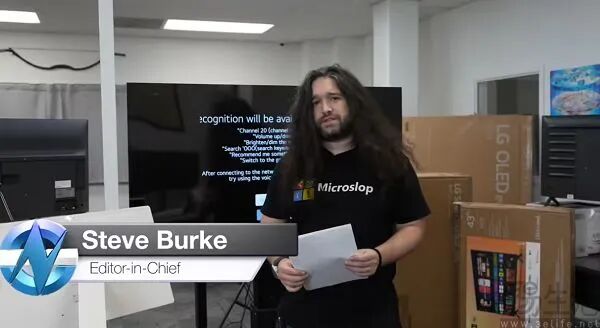
A few days ago, Gamers Nexus, a well-known overseas hardware evaluation media, claimed that LG's smart TVs will continuously scan the network, identify other connected devices, and record the audio collected by the microphone even when they are in standby mode with the screen off. In this 135-minute-long video, Gamers Nexus demonstrated that multiple LG TV models currently on sale including the G5 still locally save recorded audio data after the network connection is disconnected, and upload these audio files once the network connection is restored.
Gamers Nexus stated that LG TVs can clearly collect audio even when they are in standby mode and the screen is turned off. In addition, after capturing network packets via Wireshark, they found that these TVs also actively scan the local area network to look for hardware devices unrelated to the TV, including mobile phones and smart watches. Apart from collecting the IP addresses of devices in the local area network, LG TVs also obtain the names and signal strength of nearby Wi-Fi networks, and collect location data.
According to Gamers Nexus, all this collected data will be provided to LG Ad Solutions, the department of LG in charge of targeted advertising business.
That's right, the root cause of all this is still advertising. Entering the second decade of the 21st century, the TV product category is no longer a profit cow for manufacturers. The previously released financial report of LG shows that the Media Entertainment Solutions company, which is responsible for TVs and related display products, recorded an operating loss of about 750.9 billion won (approximately 550 million US dollars) in 2025.

As this marks LG's first quarterly operating loss since 2016 in the fourth quarter of 2025, some analysts believe this directly reflects the situation that the TV business is dragging down the overall profit structure. While LG explained the sluggish TV sales with "delayed demand recovery", the reality is that the TV industry is facing structural problems, and its neighbor Samsung is also having a hard time.
In fact, the overall growth stagnation of the global TV market and the decline in consumers' willingness to replace TVs are not phenomena unique to China. Even in European and American markets where living room entertainment is more developed, TVs are getting harder and harder to sell. After all, the fragmented entertainment experience provided by smartphones is more in line with modern lifestyles.
To this end, LG chose to open up its ecosystem, opening its own WebOS to third-party brands, and expanding it from TVs to monitors, commercial large screens, and in-vehicle entertainment systems. By the first quarter of 2026, LG's Media Entertainment Solutions company turned losses into profits, which was largely driven by the growth of the WebOS platform business.
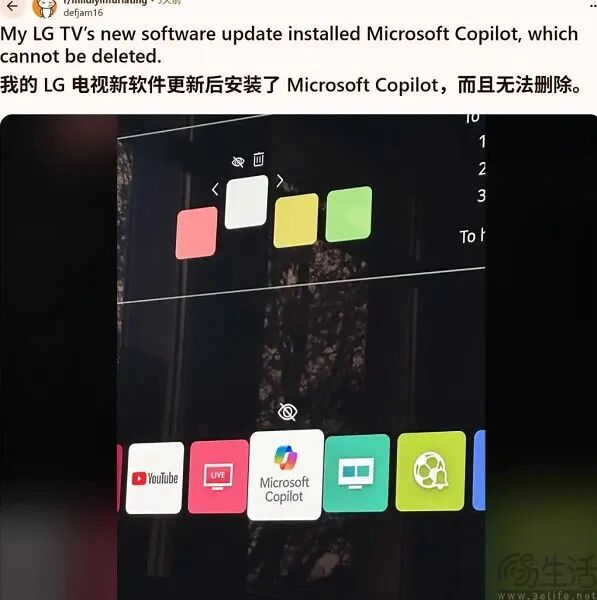
William Cho, CEO of LG Electronics, even publicly cited LG Channels (the free ad-supported streaming service on WebOS) as a model of business transformation. In fact, LG's strategy is very simple: TVs should not be a one-off transaction. Instead, just like smartphones, WebOS can generate revenue from advertising, content and platform services throughout the entire lifecycle of the TV.
In short, advertising has become a new growth engine for LG's TV business, so it certainly has the incentive to collect data to refine user portraits, so as to achieve more efficient targeted push. Then, since both involve eavesdropping on users, why can TVs do it while smartphones cannot? Although both collect data via microphones, the cost difference between smartphones and TVs can be described as huge.
From a technical point of view, current smart TVs and smartphones can completely infer voice content by capturing the signals generated by the vibration of device speakers through motion sensors. However, "technically feasible" does not equal "widely happening in reality". The experimental report previously released by the Evaluation Lab of the Cybersecurity Center of China Electronics Standardization Institute pointed out that continuous background recording will cause the power consumption of mobile phones to be about 27% faster than normal, accompanied by obvious overheating and lag, and users can fully perceive these abnormalities in daily use.
At the same time, both Android and iOS will display the calling status of the microphone in real time through the status bar, and the microphone permission can only be occupied by foreground apps, so multiple apps "eavesdropping" at the same time will interrupt each other. However, the situation of smart TVs is completely different. Since TVs are placed on cabinets or mounted on walls and connected to external power sources, users can hardly perceive the overheating and abnormal power consumption caused by audio collection through the microphone in the background.
Compared with many smart TV operating systems that are deeply modified based on the underlying Android system, LG's WebOS originated from Palm which it acquired, and like Samsung's Tizen, it is an independent self-developed system. When LG acts as both the referee and the player, there is naturally no one to restrict it from pulling tricks.
This article is from the WeChat Official Account "Three Easy Life" (ID: IT-3eLife), written by San Yijun, and authorized for release by 36Kr.