Yangtze Memory Technologies Co., Ltd.'s STAR Market IPO: Cycles and Opportunities Behind Its Single-Quarter Profit of 33.3 Billion Yuan
Recently, the official website of the Shanghai Stock Exchange updated a regulatory review update: Yangtze Memory Technologies Co., Ltd.'s STAR Market IPO status has been changed to "Accepted". The company plans to publicly issue 1.98 billion to 2.43 billion shares, raising 330 billion yuan, of which 208 billion yuan will be invested in technical upgrading of mass production lines, and 122 billion yuan will be invested in R&D projects.
Calculated based on the declared planned fundraising caliber, this is the largest IPO project ever filed on the STAR Market, with CITIC Securities and CITIC Construction Investment Securities as the sponsor institutions.
The operating data disclosed in the prospectus is sufficiently impressive. From 2023 to 2025, Yangtze Memory's operating revenue increased from 187.44 billion yuan to 631.85 billion yuan, with a compound annual growth rate as high as 83.60%; its attributable net profit went from a loss of 191.81 billion yuan in 2023 to a turnaround to a profit of 67.71 billion yuan in 2024, and further reached 142.11 billion yuan in 2025.
In the first quarter of 2026, the company achieved operating revenue of 470.42 billion yuan and attributable net profit of 333.79 billion yuan in a single quarter — the profit of one quarter has already exceeded twice the full-year profit of 2025.
This performance report of Yangtze Memory appears in a special time window. Since the second half of 2025, the global memory industry has entered an upward cycle driven by AI computing power demand, the price of NAND flash has continued to rise, and domestic manufacturers have just encountered the supply gap left by international memory giants that have tilted their production capacity in stages to prioritize ensuring supply to overseas customers.
According to calculations based on TrendForce data, in the first quarter of 2026, Yangtze Memory ranked third globally and first among Chinese NAND Flash manufacturers in terms of both sales revenue and shipment volume worldwide.
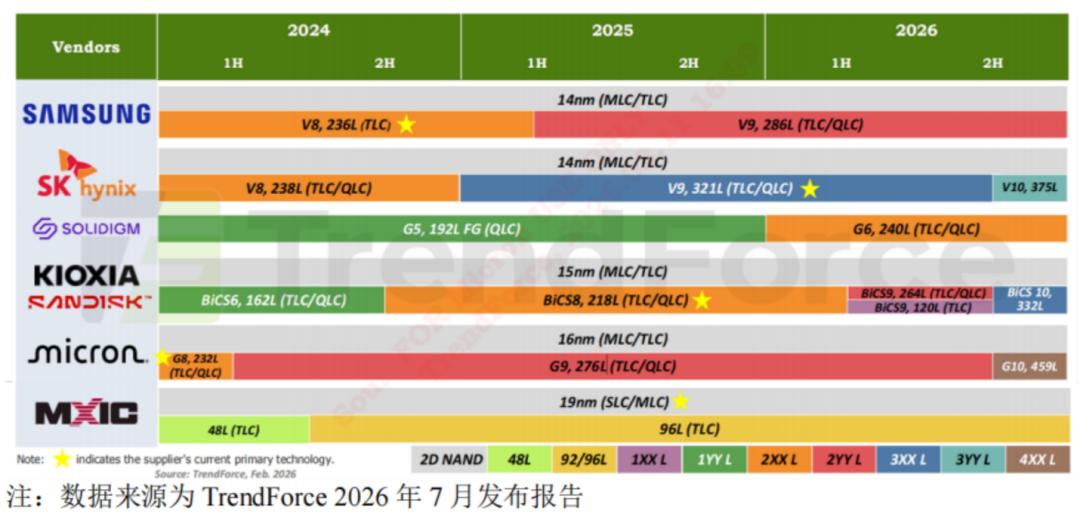
However, questions also arise from this: Is a gross profit margin of 76.77% and a net profit margin of 71% in a single quarter a sustainable normal state for a chip manufacturing enterprise, or a transient snapshot at the top of the cycle? When the price dividend fades, what can this heavy-asset company rely on to support tens of billions of yuan in capital expenditure every year? Behind the 330 billion yuan fundraising stated in the prospectus, is it ammunition for offensive expansion, or a rigid demand for replenishing cash flow?
To answer these questions, we need to disassemble Yangtze Memory's financial statements and return to the essence of the business itself.
I. A Heavy-Asset Business "Dependent on Market Cycles"
Yangtze Memory's business model is not complicated. The company is a memory IDM enterprise that integrates chip design, wafer manufacturing, packaging and testing, and system solutions. Its core product is 3D NAND flash — a type of chip for data storage, whose downstream scenarios cover data centers, enterprise servers, mobile phones, PCs and other fields.
The profit logic can be summarized in one sentence: In the market of standard products whose price is determined by market supply and demand, the company relies on technology iteration and production capacity scale to dilute costs, and earns the difference between selling price and cost. When the market is prosperous, the selling price is far higher than the relatively rigid cost, and the profit multiplies; when the market is sluggish, the high-depreciation cost structure will amplify losses in the same way. This is a typical business that "depends on market cycles".
The revenue structure confirms this logic. In 2025, the revenue from the company's NAND Flash products accounted for 90.77% of the main business revenue, of which memory chips contributed 294.44 billion yuan, accounting for 47.17%, which is a well-deserved core business with a gross profit margin of 44.21%; the revenue from intelligent terminal products integrating main control chips and firmware was 211.91 billion yuan, accounting for 33.95%, with a gross profit margin of 29.83%; the revenue from solid-state drives was 60.25 billion yuan, accounting for 9.65%, with a gross profit margin of 23.75%.
The "other products and services" that are under revenue pressure are marginal businesses such as wafer foundry, NOR Flash, and chip packaging and testing. Their revenue share has shrunk all the way from 23.12% in 2023 to 3.58% in the first quarter of 2026, and their gross profit margin is less than 25% in most reporting periods, which has been clearly marginalized.
The equity structure is another key to understanding Yangtze Memory.
Before the issuance, Yangtze Memory had a total of 29 shareholders, and the top five shareholders are Hubei Changsheng (26.54%), Xinfei Technology (25.35%, formerly known as Hubei Ziguang Guoqi, with Ziguang Group background), China Integrated Circuit Industry Investment Fund Phase I (11.97%), China Integrated Circuit Industry Investment Fund Phase II (11.38%), and Optics Valley Industrial Investment (9.25%). The prospectus clearly discloses that the company has no controlling shareholder and no actual controller.
This structure has three distinct characteristics: First, state-owned capital is deeply leading, and Hubei state-owned capital platforms and the two phases of the National Integrated Circuit Industry Investment Fund jointly hold more than half of the shares;
Second, the shareholder list rarely gathers the debt-to-equity swap implementation institutions of five major state-owned banks: ABC Investment, CCB Investment, BOCOM Investment, BOC Asset, and ICBC Capital, which is the mark left by huge debt financing in the early years;
Third, employee shareholding platforms such as Zhixin Plan No. 1 to No. 6 have entered the shareholder sequence, with a total shareholding ratio not high, but the coverage points to the core technical team.
The combination of dispersed equity and state-owned capital background determines that Yangtze Memory not only undertakes industrial strategic tasks, but also must achieve financial self-sustainment in commercial operations — and the ability to generate cash independently is exactly the part that most needs to be examined in the financial statements.
II. Four Challenges Behind the Impressive Financial Statements
First, look at the quality of profits.
The 333.79 billion yuan attributable net profit in the first quarter of 2026 corresponds to an average unit price of NAND products that has risen by 172.72% compared with the full year of 2025, while the sales volume growth rate in the same period is far less than the price increase.
Looking at a longer time horizon, almost all the profit elasticity of the company is driven by prices: in 2024, the average product price rose by 125.11%, and the company turned losses into profits; in 2025, the average price actually fell by 13.76%, and the profit growth was maintained only by a 64.74% increase in sales volume; in the first quarter of 2026, prices jumped sharply, and profits exploded immediately.
In other words, Yangtze Memory's current net profit margin of more than 70% is built on the historic high of memory prices.
The prospectus also clearly indicates the risks of price fluctuation and decline of gross profit margin in the "Special Risk Factors" — this is not a formal cliché, and 2023 is a ready negative example: in that year, the industry was in a downward cycle, the company's gross profit margin was only 5.45%, the net loss was 191.81 billion yuan, and 113.53 billion yuan of inventory depreciation and contract performance cost impairment losses were accrued. The inventory depreciation reserve accrual ratio at the end of the year reached 23.85%, which was nearly 9 percentage points higher than the average 14.93% of comparable memory companies listed in the prospectus.
According to the explanation in the prospectus, excessive long-term asset investment that pushes up the unit cost of products is the main reason why its impairment burden is heavier than that of its peers.
For the same company, from a huge loss of nearly 200 billion yuan in a single year to a huge profit of more than 300 billion yuan in a single quarter within three years, what fluctuates is not a sudden change in operating capacity, but the pointer of the industry cycle.
The second challenge is hidden in the cost structure.
In Yangtze Memory's operating costs, manufacturing expenses and depreciation account for as high as 69% to 74%, and material costs only account for 21% to 26%. During the reporting period, the company's total depreciation and amortization expenses amounted to about 509.49 billion yuan, and the cumulative cash expenditure for constructing long-term assets was about 963.90 billion yuan.
High fixed costs mean that the leverage effect of profits is two-way: when capacity utilization and selling prices rise, gross profit expands sharply; once prices fall, depreciation will not decrease synchronously, and losses will return at the same speed. In 2023, the main business gross profit margin was only 5.39% during the company's capacity ramp-up period, which is the true performance of this cost structure in the counter-cyclical stage.
After the 208 billion yuan mass production line upgrading project financed by this IPO is completed and put into production, it will be converted into a new round of high depreciation — the company raises funds and expands production at the high point of the cycle, but the peak of depreciation will most likely fall after the cycle peak.
The third challenge is the continuous tension between cash flow and capital expenditure.
In 2025, Yangtze Memory's net cash flow from operating activities was 326.84 billion yuan, which seems sufficient, but the cash paid for the purchase and construction of fixed assets in the same year reached 361.92 billion yuan, and the free cash flow was actually negative.
From 2023 to 2025, the company's monetary funds dropped all the way from 563.22 billion yuan to 347.78 billion yuan. High investment was basically maintained by consuming existing funds, equity financing and bank loans. In 2023, the financial expenses reached as high as 32.26 billion yuan, accounting for 17.21% of the operating revenue of that year.
In the first quarter of 2026, the cash flow suddenly improved to 267.44 billion yuan, but in the same period, accounts receivable surged from 95.41 billion yuan at the end of 2025 to 228.45 billion yuan, an increase of about 133 billion yuan in one quarter, which was far higher than the revenue growth rate — under the price rising market, there is an obvious mismatch between revenue recognition and cash recovery. The concentration of the top five customers accounting for 54.34% of the revenue means that the company's payment collection rhythm largely depends on the bargaining power and credit period arrangement of a few major customers.
The fourth challenge lies in the inventory and procurement links.
As of the end of March 2026, the book balance of the company's inventory was 199.41 billion yuan, of which the accrual ratio of raw material depreciation reserve was as high as 22.36%, which remained above 20% in all periods since 2024, significantly higher than the accrual level of about 7% for finished goods inventory in the same period.
Why do raw materials continue to have large impairment? Combined with the procurement data, a clue can be seen: the proportion of spare parts procurement in the total raw material procurement increased from 40.99% in 2023 to 58.99% in the first quarter of 2026. The largest supplier in the first quarter of 2026 is a trading company, accounting for 23.04% of total procurement.
The fact that equipment spare parts are purchased through trading channels and depreciate rapidly due to technology iteration reflects the real cost of equipment maintenance and spare parts guarantee under the constraints of Yangtze Memory's external supply chain environment. The prospectus also admits that local domestic suppliers are still in the stage of catching up with the international advanced level, and the overall technical level and stability of the supply chain constitute the entry barrier of the industry.
Connecting the above four challenges, the logical chain is clear: Yangtze Memory's profits are determined by the industry cycle, and its cost structure is rigid, so the cash accumulated in the prosperity stage must be immediately invested in the next round of capacity arms race; the competition requires equipment and spare parts, but the supply chain is restricted by the external environment, which invisibly increases the cost of procurement and impairment; the funding gap is finally solved by returning to the capital market — which is exactly the origin of this 330 billion yuan IPO fundraising.
In addition, there is an easily overlooked detail: as of the end of March 2026, Yangtze Memory still had about 34 billion yuan of accumulated unrecovered losses on its books; the R&D expense ratio in the first quarter of 2026 dropped to 3.75%, which is lower than the average 4.95% of comparable memory companies listed in the prospectus.
In the technology competition of over 300-layer generation and new memory architectures, whether the intensity of R&D investment can keep up determines which position Yangtze Memory will sit at the table in the next generation replacement cycle.
III. Positioning and Breakout in the Super Cycle
Objectively speaking, half of Yangtze Memory's current performance explosion comes from the industry trend, and the other half comes from its own technical accumulation.
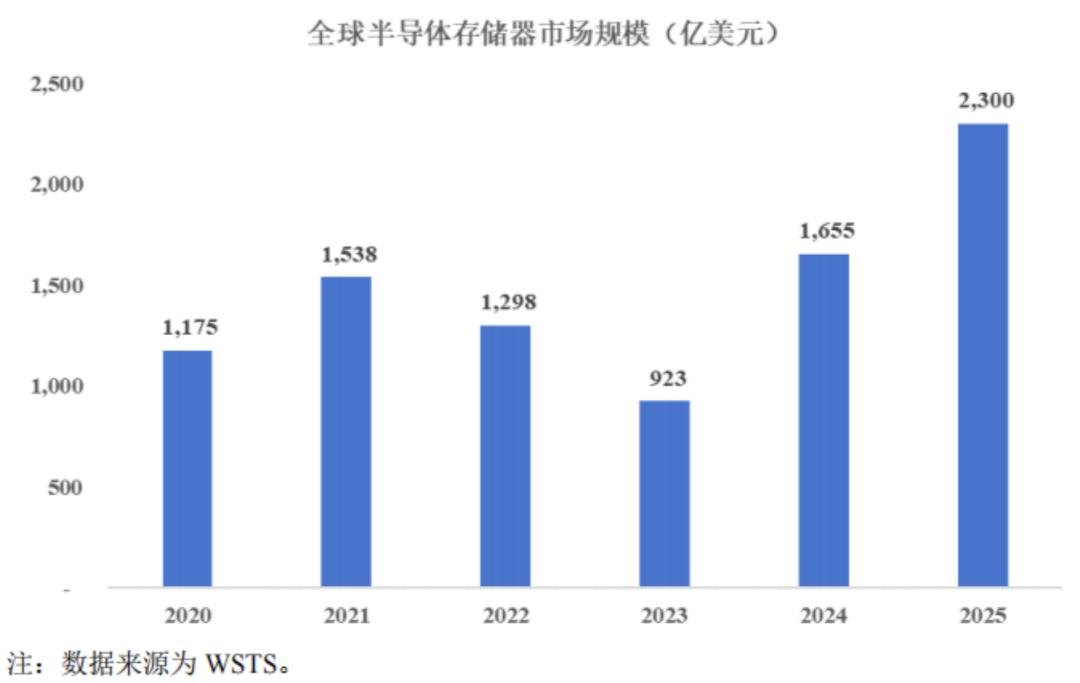
First, look at the industry trend. According to WSTS statistics, the global semiconductor memory market size grew from 117.5 billion US dollars in 2020 to 230 billion US dollars in 2025; TrendForce data shows that the global NAND Flash market size in 2025 was 71.1 billion US dollars.
The difference between this upward cycle and the past lies in the demand structure: AI is moving from training to large-scale inference deployment, cloud service providers continue to increase investment in computing power infrastructure, and enterprise-level storage demand grows exponentially. On the supply side, there is a mismatch that is beneficial to domestic manufacturers — international memory giants prioritize their production capacity to overseas customers in stages, and the current production capacity of domestic memory manufacturers can only cover about half of the local consumer market demand. The gap means orders, which is the external foundation for Yangtze Memory's sales volume growth.
Then look at its own accumulation. Yangtze Memory's gross profit margin in the first quarter of 2026 has exceeded that of Micron, Kioxia and SanDisk, and is close to that of SK Hynix. It should be noted that three years ago, this figure of Yangtze Memory was only a single digit.
At the product level, Yangtze Memory is one of the world's first enterprises to break through 200+ layer 3D NAND. During the reporting period, its main products completed iteration from the third generation to the fourth and fifth generations, and the improvement of storage density and yield directly reduced the unit cost.
At the customer level, enterprise-level memory chips have gradually been recognized by leading domestic data center users, which is a higher-value access breakthrough than the consumer market. Compared with Changxin Technology, the DRAM leader that landed on the STAR Market on July 27, Yangtze Memory's revenue of 470.42 billion yuan in the first quarter is lower than Changxin's 508 billion yuan, but its attributable net profit of 333.79 billion yuan exceeds the latter's 247.6 billion yuan, and its profit efficiency is not inferior.
However, the gap is also clear. The memory business of Samsung and SK Hynix covers a full product portfolio of DRAM, NAND and HBM, and has been operating in the enterprise-level market and global customer system for decades.
Yangtze Memory only focuses on the single NAND category, with no