The Wanwan brand generated 10 million RMB in sales within its first month, and the decade-long "Wan Studies" has finally been monetized.
After being mocked across the internet for a decade, Wanwan entered the women's clothing industry in its coldest year, generating 10 million RMB in sales in the first month.
In 2026, the women's clothing industry is experiencing a rare wave of store closures. "Miss Kekeli" with 20 million followers announced the closure of its store at the end of August, "Jigujigu Family" with 4.67 million followers ceased operations in June, and Zhang Dayi's "My Favorite Wardrobe" suspended new product launches indefinitely.
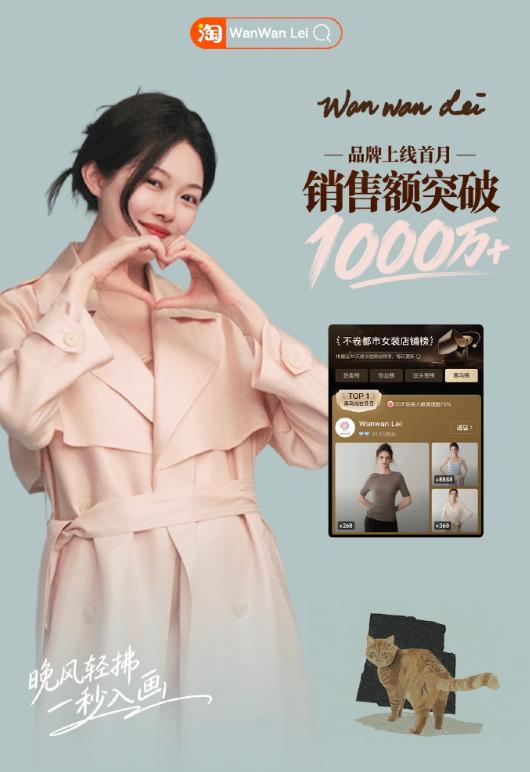
Amid this bleak landscape, the personal apparel brand Wanwan_Lei of the first-generation internet celebrity Wanwan was launched on Taobao. Its estimated sales exceeded 1 million RMB within two days, and the stock prepared for the originally planned one month was sold out quickly. The sales in the first month broke through 10 million RMB, topping Taobao's "Non-overworking Urban Women's Clothing Store List".
Wanwan hit a huge success the first time she ran a brand, but what is really worth questioning is not why she achieved such hot sales, but whether she can sustain this momentum?
Being mocked for ten years is precisely her most solid capital
To be honest, when Wanwan announced that she would launch a personal brand, there were far more naysayers than supporters online.
The famous line back then that "I have no obligation to share" made her miss the decade with the biggest e-commerce dividend. While Taobao store owners accumulated millions of fans and made huge profits by selling clothes in the "Wanwan style", she chose to maintain her aloof, artistic persona and keep a distance from commercialization.
It is also during this decade that controversies surrounding her have never ceased.
From being accused of being a mistress in the early years due to her entanglement with painter Liu Ye, to being exposed after marriage that her luxury house was rented, her luxury car was held under another person's name, and even her Hermès bags were claimed to be shared with her mother-in-law, the label of "pseudo-rich family" was stuck to her more and more tightly.
Until the incident of an exhibition worker falling to death at M Woods Museum, her reputation as the owner plummeted to the bottom, her remarks triggered large-scale condemnation across the internet, and the filter of "artistic socialite" was completely shattered.
Each of these incidents alone is a standard negative news, but accumulated over ten years, they jointly constructed an internet subcultural phenomenon, "Wan Studies".
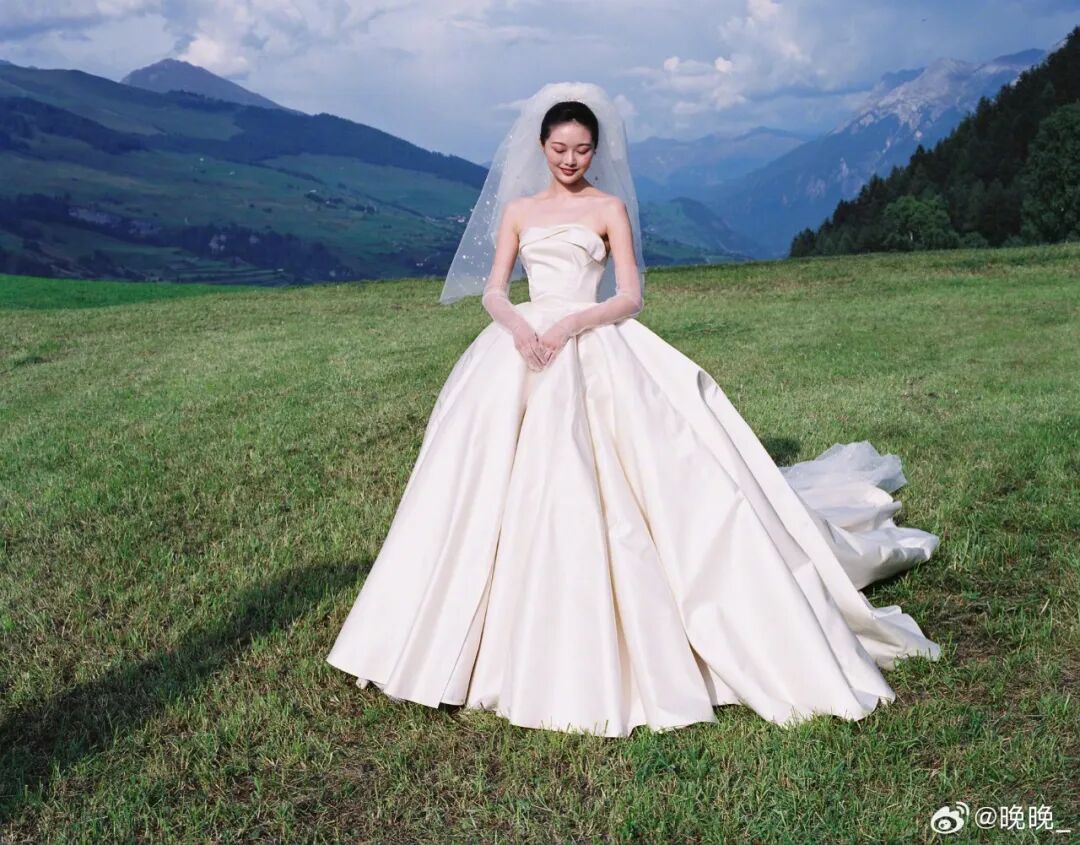
Netizens became "Wan Studies enthusiasts", turning various controversies of the couple into classic courseware for Wan Studies. The total views of multiple related topics on Xiaohongshu exceeded 2 billion times, which means that in the fields of outfit sharing and internet celebrity culture, almost every Chinese netizen has participated in discussions about Wanwan.
More importantly, the carrier of the discussion has always been her aesthetics, the visual presentation of her outfits, color matching and lifestyle. Wan Studies enthusiasts tirelessly analyze her collocations, disassemble her styles, and debate her taste on Xiaohongshu.
These behaviors have reinforced a consensus day after day for ten years: Wanwan's aesthetics are highly recognizable.
This is the path to monetize controversies. Nan Sheng and Zhang Xinyuan are both the three major Douban goddesses, but only Wanwan is still active and maintains topical popularity. The difference does not lie in who is more beautiful or more fashionable, but in the fact that Wanwan's ten years of controversies have kept her in the spotlight, and the discussion volume itself translates to conversion rate.
The brand caused a nationwide stir in discussions as soon as it launched, because she planted this seed ten years ago.
The whole internet is dissecting the "Wanwan Style"
The gold content of the three words "Wanwan Style" goes without saying.
Wanwan entered the Central Academy of Fine Arts at the age of 16 to study art history and art management, and later went to Columbia University to pursue a master's degree in art management. Her formal art training laid a professional foundation for her subsequent sensitivity to colors and aesthetic judgment.
Her dressing style has a very clear aesthetic coordinate: low-saturation Morandi color system, gentle tone dominated by nude and pink colors, relaxed silhouette of cotton and linen long skirts, and lazy vibe of loose ball head. In the era when outfit bloggers had not yet risen, it became the aesthetic enlightenment for many girls.
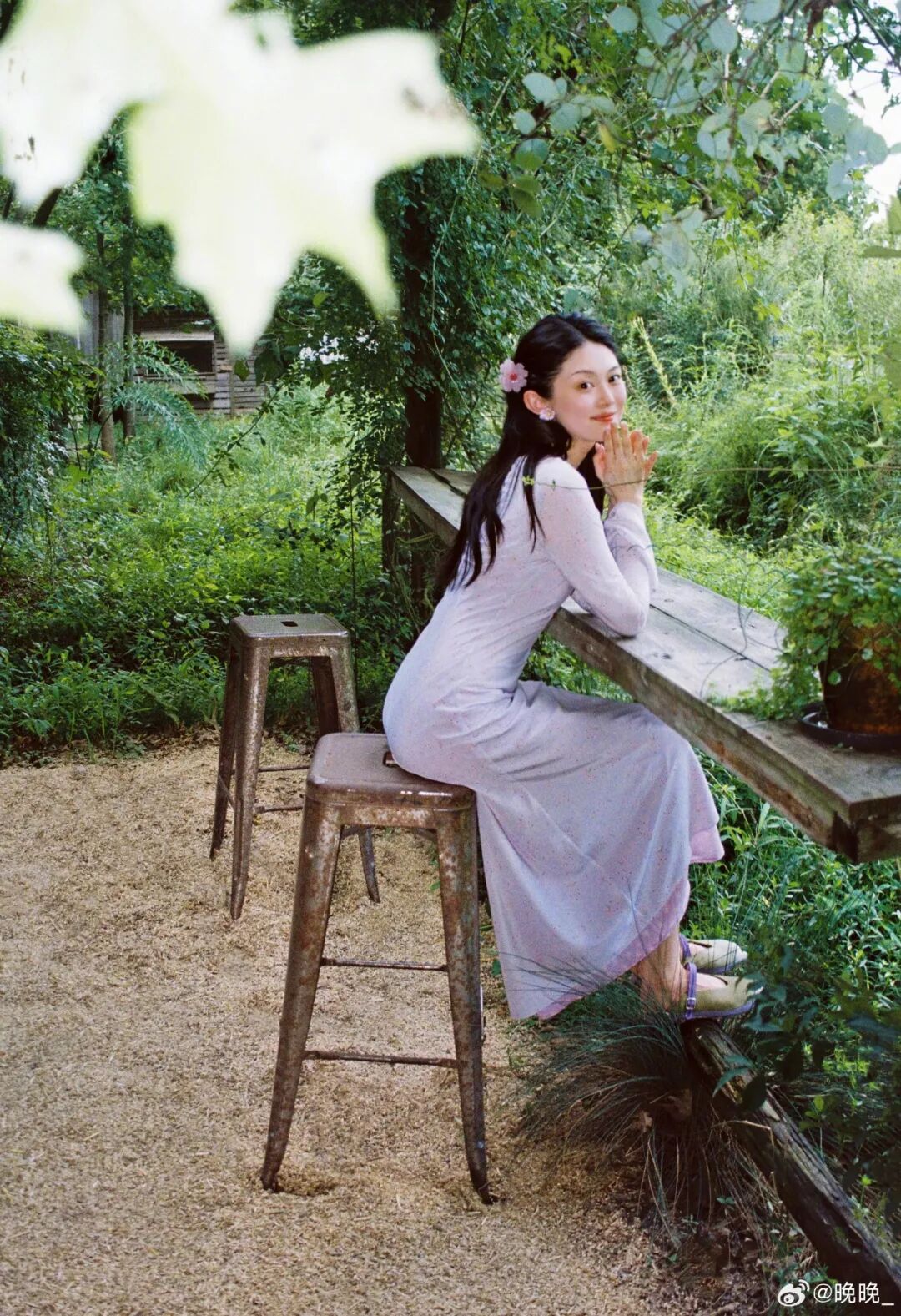
This set of styles was even named "Wanwan Style" and quickly became a public aesthetic label. Unbranded merchants on Taobao began to produce a large number of "Wanwan same style" products, including hair pieces, single shoes, and knitwear, which could achieve tens of thousands of monthly sales just by relying on the three words "Wanwan Style".
Data shows that the cumulative sales of a single "Wanwan Style" hair piece in the past 30 days reached 65,000 units, with a sales volume of 4.623 million RMB. Some store owners even accumulated more than 1.5 million fans by exclusively selling "Wanwan Style" clothes. For more than ten years, countless merchants have made huge profits by imitating her same-style products, while she herself never stepped into this field.
When a style is dissected, copied, and mass-produced by the whole internet to such an extent, the original creator has instead become the scarcest resource.
Unbranded merchants can copy colors, silhouettes, and even use the three words "Wanwan Style" as product labels, but they cannot copy Wanwan herself. When consumers buy unbranded "Wanwan Style" products, they are buying a reference for styling. When Wanwan herself opens a store and all products are labeled as her same style, what consumers get is not only clothes, but also the official certification from the original Wanwan.
Behind this psychological mechanism is the aesthetic consensus that has been repeatedly reinforced over the past decade. When everyone is imitating her, her aesthetics itself has become a trustworthy asset.
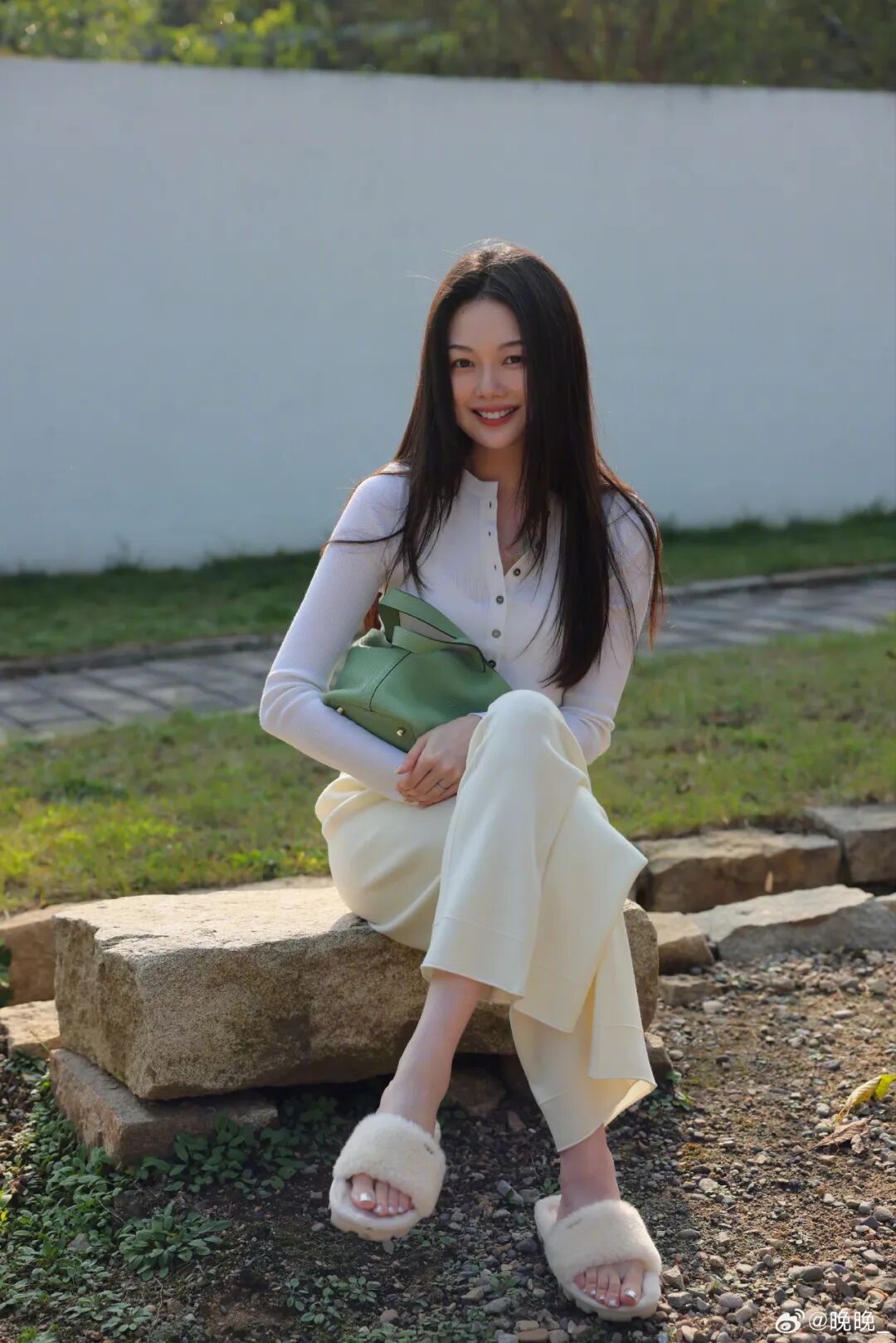
After the brand opened, its pricing strategy also accurately hit this psychological position. The prices range from 39 RMB to 2888 RMB, with the main products concentrated between 139 RMB and 268 RMB. The 39 RMB hair clip lowers the entry threshold, the 268 RMB wool cardigan meets the daily outfit needs, and the 2888 RMB Song brocade long dress highlights the craftsmanship and artistic texture.
However, an unavoidable problem is that styles can be copied, but product strength cannot. Consumers are willing to pay for the atmosphere for the first time, but the real experience after they get the clothes determines whether they will come back to buy again.
The real exam has just begun
In Lin Han's blog post, he mentioned a voice that the couple most often heard: Wanwan, you should have done this ten years ago. If you did it then, you would have long achieved financial freedom. Now that the whole industry is in decline, you are just entering the market. It's too late for everything, just like your name, Wanwan (which literally means "too late" in Chinese).
In fact, this kind of voice is not only aimed at Wanwan personally, this is exactly the current situation of the women's clothing industry.
In 2026, the online return rate of women's clothing has climbed from 50% a few years ago to 70% to 80%, and even exceeded 90% in live streaming scenarios. For each returned order, merchants have to bear the two-way logistics, packaging, sorting and clothing depreciation costs, losing 20 to 30 RMB for each returned item.
The cost of traffic investment is another sword hanging over their heads, whose proportion in the total transaction volume has soared from 10% to 15% in the past to 30% to 40%. Without traffic investment, there will be no orders, but traffic investment will increase costs and leave no profit.

In the same month when Wanwan opened her store, "Miss Kekeli" with 20 million followers announced its closure. One month before the closure, its hot-selling products sold more than 40,000 units, the number of repeat customers exceeded 600,000, the store's comprehensive score was 4.5, and the favorable rate in the past three months was 94%. The data showed no sign of trouble. It's not that the products couldn't be sold, but that every item sold was losing money. One month before the closure of "Jigujigu" with 4.67 million followers, one of its single products just sold 100,000 units, but it still failed to survive.
In fact, these stores did not lack traffic, but they were strangled in the vicious circle formed by the superposition of low customer unit price, high return rate and high traffic investment cost.
Wanwan's situation is more delicate than those failed stores. Her 10 million RMB sales in the first month were built on the concentrated release of ten years of controversial traffic, which is a one-time dividend rather than a sustainable conversion capability.
And whether her operation system can support the brand narrative of "high-end fabrics + intangible cultural heritage craftsmanship" remains a big question mark.
At present, the store has a score of 4.6, only exceeding 35% of its peers, with a delivery score of 4.2, and the logistics speed is marked as "low" by the platform.
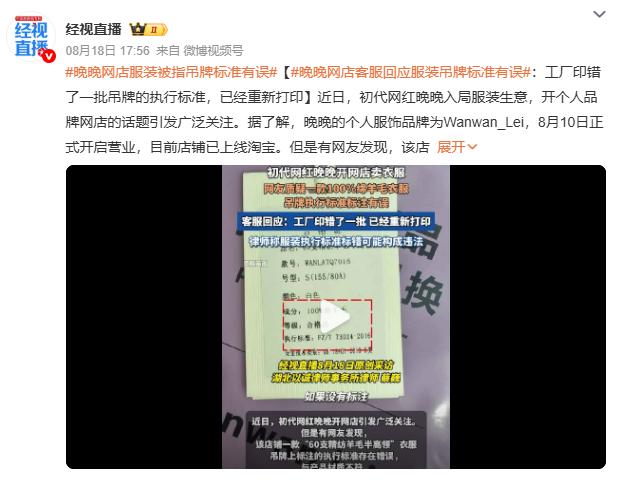
Shortly after the opening, the tag implementation standard of a "60-count fine wool mock neck" garment was pointed out by netizens to be wrong, which did not match the product material. The customer service responded that "the factory printed a batch of wrong tags, and we have reprinted them".
More notably, the brand trademark belongs to Mumu (Beijing) Art Consulting Co., Ltd., which is owned by Wanwan and her husband Lin Han, but the store is operated by Hangzhou Qishuo Brand Operation Co., Ltd. A company established on July 20, 2026 needs to undertake all operational functions from supply chain management to quality control and logistics. It is currently publicly recruiting basic positions such as Taobao graphic designer, operator, and HR & admin specialist, which obviously makes people hard to feel assured.
Wanwan's 10 million RMB sales in the first month is essentially not a proof of brand power, but a one-time monetization of ten years of controversial traffic. It proves that Wanwan's IP has commercial value, but it does not prove that the brand Wanwan_Lei has the ability to survive continuously.
After the first-release dividend is exhausted, what follows is the threshold that all women's clothing brands cannot bypass: are your clothes worthy of consumers buying again?
Traffic allows a person to open a store, but only product strength can keep a store alive.
Wanwan earned her first 10 million RMB with ten years of controversies, but the second 10 million RMB has to be earned by the quality of the clothes themselves.
This article is from the WeChat official account "Mou Yu", author: Mou Yu, published by 36Kr with authorization.