If you keep binging on videos, you will end up seeing eerie spaces and strange content? Is the algorithm black box truly mysterious, or is it entirely just guesswork?
Written by | Skin
On short video platforms, you can access nearly unlimited content: as long as you keep swiping your finger, you can keep watching content nonstop. And under today's algorithmic recommendation system, you will be constantly served all kinds of content that matches your interests.
However, sometimes the content you scroll to may go beyond all your expectations.
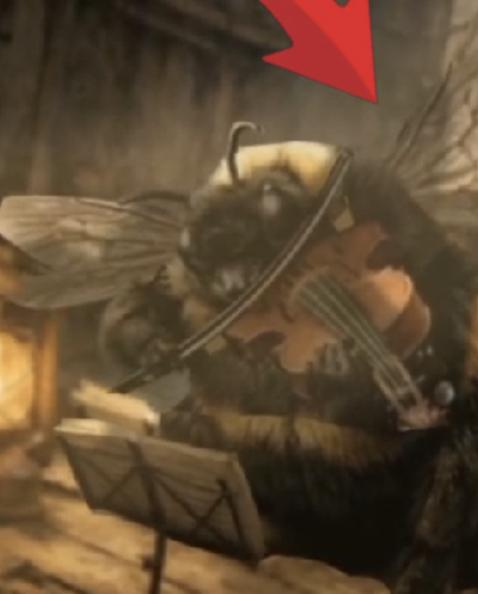
For a period of time, a completely bizarre video of a bee playing the cello on short video platforms suddenly became a widely discussed hot topic. | tiktok
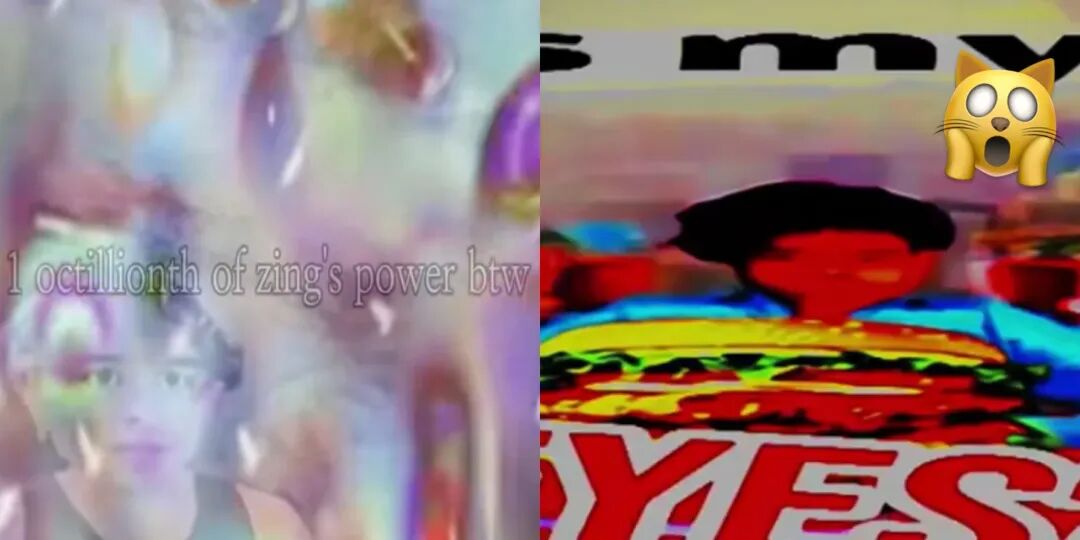
A claim circulating on the internet states that if you spend long enough scrolling on short video platforms at a certain time, you are very likely to see some strange videos you have never encountered before. Some are extremely imaginative, some are considered quite creepy by viewers, some are heavily pixelated, and others show real objects that have been distorted.
The discussion about these strange videos on the internet is called "Farlands". The term Farlands originally refers to a small bug in the game Minecraft: when players walk far enough in the virtual world, they will reach the "boundary": an unpolished world full of weird architectural structures.
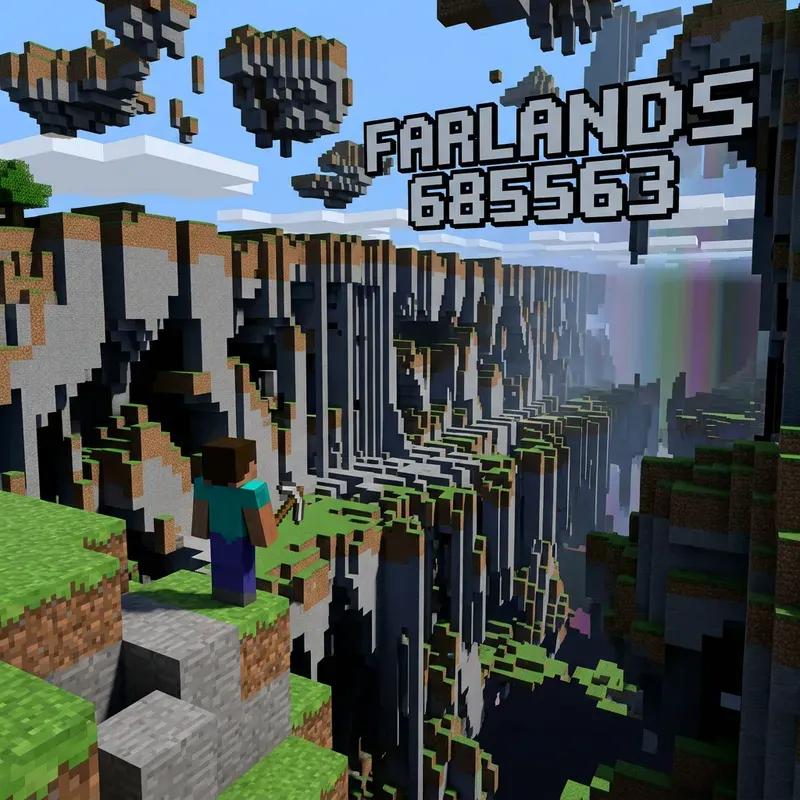
Nowadays, these odd contents that users accidentally stumble across online are also referred to as a type of Farlands. These videos have no specific tags, do not align with user preferences, and look blurry and unclear. People have been discussing them a lot, assuming they come from some unknown corner deep in the internet. But for now, there is no available data to prove that the Farlands on short video platforms is a real feature or bug that exists with a clear technical mechanism.
But from the perspective of the short video recommendation mechanism, when you occasionally scroll to weird videos or content you do not like, you may feel confused. But this does not necessarily mean the algorithm is doing something strange, it is very possible that the algorithm is carrying out another important task: exploration.
A 2024 study from the University of Washington divides the short videos we watch daily into two broad categories: exploration and exploitation.
The "exploitation" type of short videos are the content that exactly hits your interest points. For example, if you have watched a lot of cat videos recently, the algorithm knows you love them, and will push more cat videos to you. The "exploration" type, on the other hand, refers to the algorithm exploring what else you might be interested in.

These "exploration" videos may not be what you like, but any feedback you give will help the algorithm deepen its understanding of you. The research found that among the first 1000 videos users see, the proportion of TikTok's "exploitation" content pushed based on its existing knowledge of user interests is roughly 30% to 50%. The remaining part is new content the platform presents to you.
A 2025 paper from the University of Connecticut also explains how short video algorithms figure out what you like. This uses a classic collaborative filtering logic that is widely applied in recommendation systems.
When you first join a short video platform, the platform knows nothing about you at all, while there are tens of thousands of videos on the platform. At the very beginning, the platform finds that you love watching cat videos. At this point, the platform will look for what other people who also love watching that same cat video also like, such as dogs, other animals, etc. Then these contents will also appear on your recommendation page, and the platform uses this method to predict your preferences.
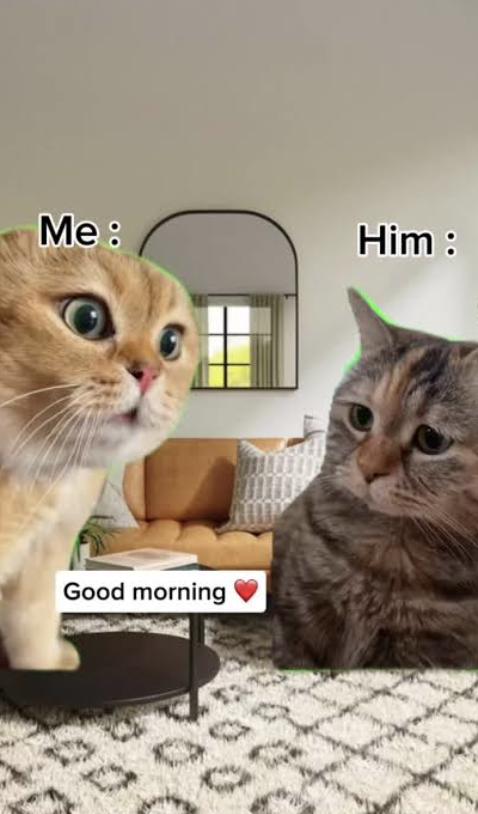
People who love watching cat videos may also like dogs or other animals, so these contents may also appear on their homepage. | tiktok
As you scroll more and more, this judgment will become more and more detailed. Its core logic is to first find a group of people whose behavior patterns are similar to yours, and use their characteristics to guess your characteristics.
Of course, this is just a simplified explanation. The real algorithm will build a huge matrix for both users and videos. As you keep watching videos, some hidden connections will be gradually discovered by the algorithm: if you like Video A, B and C, there is a chance you will also like Video D. Matrix factorization will convert both you and the videos into a set of numbers, and then predict your interests through correlations.

In the algorithm, you and the videos are both strings of numbers, linked together through a series of features. | plannthat
Therefore, for the algorithm, it is not a completely mysterious black box. Those seemingly Farlands videos may not be as mysterious as people discuss. Sometimes, a weird video can also be understood as an imprecise recommendation, showing you the side of the algorithm that is still "uncertain".
And every subsequent view and like you give leaves new clues for the platform's recommendation system.
Of course, this also means you can actively use this feedback mechanism. For example, when you see content you do not want to watch, select "Not Interested" instead of just passively accepting it.
While watching these videos, you can also stop and think: why have I been watching these things nonstop? Is this content pushed to you by the platform, or is it something you are genuinely interested in? Another good method is to actively search for content outside the recommendation page. Because the algorithm can never truly decide what kind of content you like.

You do not have to passively accept every piece of content, you can actively use the platform to find fields you are truly interested in. | brown.edu
References
[1]https://www.washington.edu/news/2024/04/24/tiktok-black-box-algorithm-and-design-user-behavior-recommendation/
[2]https://digitalcommons.lib.uconn.edu/srhonors_theses/1102/
[3]https://sites.brown.edu/publichealthjournal/2021/12/13/tiktok/
[4]https://www.bbc.com/future/article/20260618-the-terrifying-world-of-the-tiktok-farlands
Add "Bring Science Home"
to your starred accounts
So you never miss every interesting science update!
The copyright of all original articles belongs to the WeChat official account "Bring Science Home".
For reprint requests, please contact: bd@wanwuweb.com
The copyright of all articles, images, audio, video and other materials reposted or cited by this official account belongs to their respective copyright holders. All related consequences arising from the use of these materials shall be borne by the copyright owner, original publisher and content provider. If there is any infringement, please contact us for removal.
This article is from the WeChat official account "Bring Science Home" (ID: steamforkids), written by All Magazine, and published by 36Kr with authorization.