Jinlimen's first store in Zhejiang has opened, has the "freshness" account been settled?
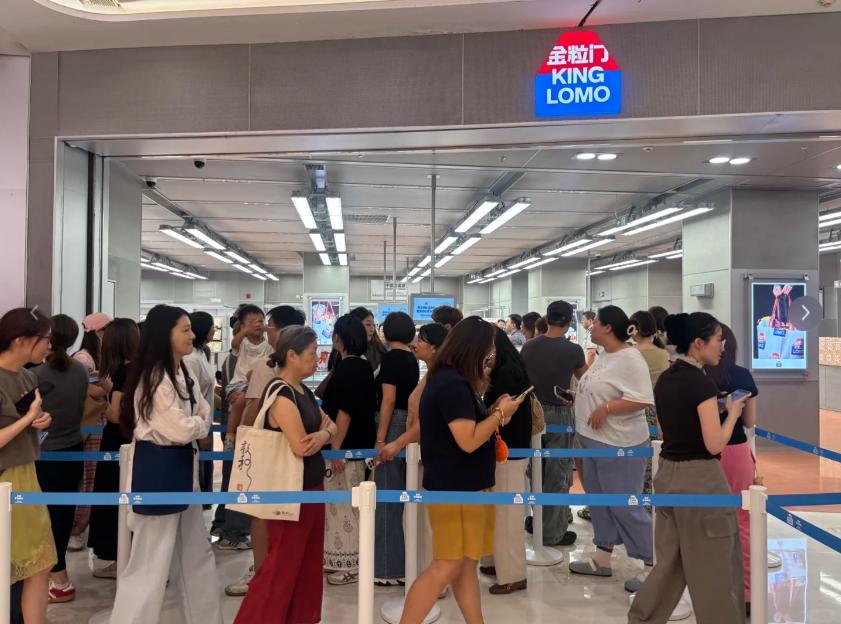
On September 17, Jinlimen's first store in Zhejiang officially opened at Xiaoshan MixC in Hangzhou.
According to Qianjiang Evening News · Chao News, at 9:30 a.m., half an hour before the opening, people had already queued up at the entrance. Fresh braised products, freshly baked pastries, and canned tea drinks fill the shelves, and many products only have a shelf life of one or two days. Hangzhou is just the starting point: the Xixi Impression City store is scheduled to open on September 24, and the Joy City store is also on the agenda.
For Hangzhou consumers, Jinlimen may still be a new name.
But in Changsha, it has been popular for many years. Jinlimen was originally a roasted seeds and nuts brand named "Jinlimen" founded in 2015. Later, it shifted to the "fresh snack" track, integrating fresh braised products, baked goods, dried fruits, drinks and other categories into one store, and differentiated itself from traditional long-shelf-life snacks and bulk discount snacks with short shelf life, on-site production and a "cleaner" product image.
Nowadays, this model is rapidly expanding outward starting from Hunan. According to statistics from Viewwin, since it officially expanded out of Hunan at the end of May this year, Jinlimen has had more than 40 directly-operated stores in less than four months.
If we only look at the number of stores, this is the most prosperous period for the company.
The Nanjing first store in East China achieved sales of more than 1 million yuan within 3 days of opening; industry media cited data from market sources that the average monthly sales of a single Jinlimen store is about 1.5 million to 2 million yuan, and high-performing stores can even reach 4 million yuan, with a gross profit margin of about 35% to 40%. These figures are not audited financial data of the company, but they are enough to explain why capital and shopping malls are all chasing the "fresh snack" track.
The most expensive product Jinlimen sells is never chicken feet, Swiss rolls or a bottle of milk tea, but two words: freshness.
The willingness of consumers to pay for a shorter shelf life essentially reflects their trust in another invisible thing: the brand has taken charge of the production date, factory, cold chain, suppliers and hygiene issues on their behalf in advance.
However, the incident that happened in January this year just broke this trust.
Suppliers with previous records of violations
On January 12, Hunan Metropolitan Channel exposed the production problems of Changsha Yonghong Food Co., Ltd. Yunhong Food Factory, which is the entrusted manufacturer of Jinlimen, through an undercover investigation.
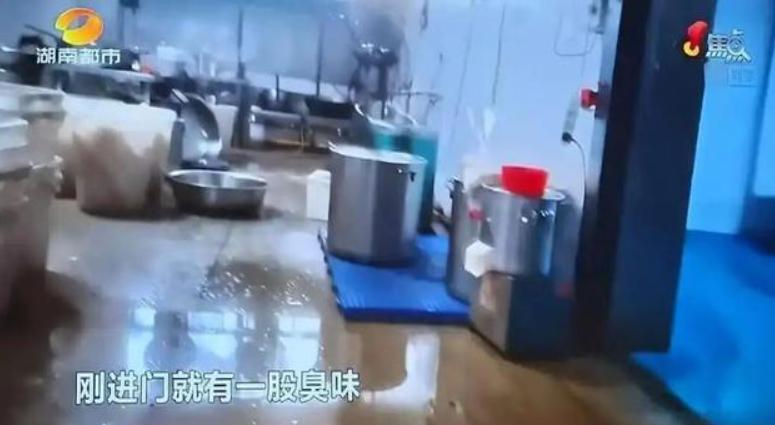
The next day, Jinlimen issued a public response.
The company confirmed that the secondary repackaging of the involved "lemon spicy boneless chicken feet" did happen, and admitted that it violated relevant food safety regulations; but for the media report that "the production date of spicy beef strips was artificially altered", Jinlimen said that "no such situation has been found" after checking the original records, and stated that it will cooperate with the regulatory authorities for further investigation.
Subsequently, the company launched a very rapid crisis handling plan. A total of 64,031 boxes of the involved chicken feet sold from November 1, 2025, with a sales amount of about 1.2678 million yuan; Jinlimen prepared a special fund of 12 million yuan for this, implementing the "one for ten compensation" rule, while suspending production of the involved workshop, re-evaluating the qualifications of all contract manufacturers, and announcing the establishment of an unannounced inspection system.
From the perspective of crisis public relations, this set of actions can even be called decisive.
But what really deserves attention is not how much money was paid as compensation, but why Yunhong Food Factory was able to enter Jinlimen's supplier system in the first place?
Because in the public regulatory records, this enterprise does not have a completely blank resume.
In August 2019, the Hunan Provincial Administration for Market Regulation announced the results of food safety supervision and sampling inspection. The total number of bacterial colonies in the mutton-flavored grilled skewers produced by Yunhong Food Factory was found to not meet the national food safety standards. Just three months later, in another round of sampling inspection, the mutton-flavored grilled skewers and beef-flavored grilled skewers produced by the factory were once again named for failing to meet the total bacterial colony standard.
These records happened seven years ago. Of course, they cannot prove that the factory continued to have similar problems afterwards, let alone directly equate them with the incident in 2026, but they pushed Jinlimen's statement in January that "there were omissions in supplier management and production supervision" one step further.
Unannounced inspections solve the problem of how to manage suppliers after they are admitted, but supplier admission solves the problem of who should not be easily allowed in at the very beginning.
The quality control capability of a food company should not only be reflected in how many suppliers are eliminated after an accident, but more importantly, in what checks have been carried out before cooperation. In particular, when Foodaily's "Food Entrepreneur" conducted a sample disassembly of 107 SKUs in Jinlimen stores in June this year, it found that Yunhong Food Factory was not a marginal supplier, and still corresponded to 6 SKUs in this sample; the entire supply end of Jinlimen is supported by a large number of different factories. The survey also emphasized that these 107 SKUs are only samples and do not represent the entire product structure of Jinlimen.
For a company that sells "freshness" as a brand premium, what does it put in the first place when selecting suppliers?
There is another detail that is easily forgotten: Jinlimen clearly promised at the end of its notice on January 13 that the progress of all rectification and compensation will be announced to the public through official platforms every 10 days.
Compared with 12 million yuan, this sentence actually carries more weight.
However, up to now, in the information retrievable on the public network, a large number of media have repeatedly cited the notice on January 13, but it is difficult to see continuous rectification disclosures corresponding to the "every 10 days" frequency.
How much money you are willing to spend on the day of the crisis is your attitude; whether you can still list the supplier elimination, workshop acceptance, and rectification results item by item eight months later is the real test of your system.
Jinlimen is still a pioneer, but the track is no longer waiting for it
If we look away from Jinlimen, we will find that the fresh snack industry this year has become very crowded.
A June industry report from China Post Securities directly defined 2026 as: the competition in the fresh snack industry has entered the "capital speed race" from "model verification". At that time, the three leading brands Jinlimen, Jiduquan and Yili were all rumored to be in contact for Series A financing. The negotiated valuations given by market sources generally range from 2 billion to 3 billion yuan.
But a few months later, the industry has begun to differentiate, and the most aggressive one is Jiduquan.
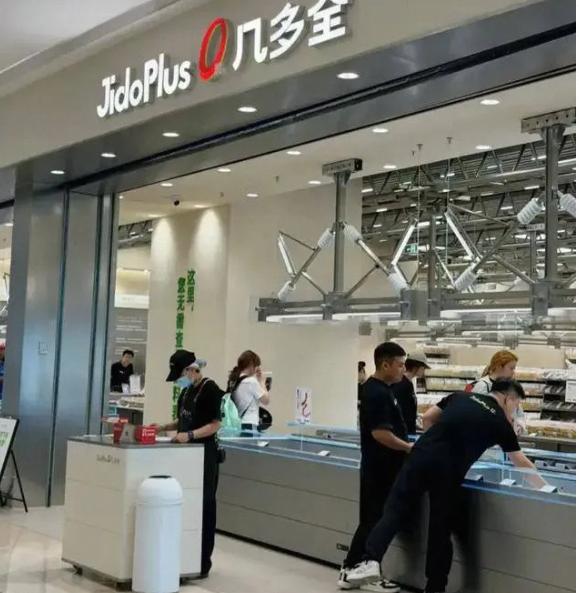
This brand, which opened its first store in March 2025, has more than 200 stores by September this year; its co-founder Li Zongwen publicly stated that the company has a R&D team of more than 200 people, 100% of core products are self-produced, and plans to lay out 20 modern production bases across the country. At present, factories in Guangzhou, Chongqing, Nanjing and other cities have been put into operation one after another.
On the other hand, Yili is not moving that fast, but some people have already started to calculate its profit figures.
According to "Business Observer" citing market sources, Yili's revenue in 2025 is about 500 million yuan, with a net profit margin of about 10% to 15%, and it currently has about 100 stores. This figure has not been publicly confirmed by Yili's official, and Southern Metropolis Bay Financial Club did not get a response when contacting the company for verification earlier, so it can only be used as a market reference.
What is even more interesting is the old player Laiyifen.
This company has thousands of traditional snack stores. In July this year, it also launched a new store format of "Fresh Life", but it did not rush to replicate it nationwide. Yu Ruifen, President of Laiyifen, publicly said that it will first polish the operation standards, management standards and recruitment standards through direct operation. After the single-store model matures, it will first lay out 20 stores in the core business districts of Shanghai, and then consider expanding outward.
With the three routes put together, Jinlimen's current position has become very interesting.
As one of the representative pioneers in this round of "fresh snack" trend, Jinlimen also has very strong single-store efficiency; Huachuang Securities regarded it as a leading industry format in its survey earlier this year, and Guosheng Securities even summarized this model as a "small Sam's Club" with no membership threshold.
But the first-mover advantage is rapidly becoming the public asset of the whole industry: 200 to 400 square meters of shopping mall stores; short-shelf-life baked goods, braised snacks, milk tea, dried fruits; transparent packaging; "wide categories with narrow SKUs"; clean ingredient lists, all of which are being quickly replicated by peers.
There is even a slightly playful term in industry media: "Jinlimenization".
This is actually not bad news for Jinlimen. Being imitated by the whole industry itself shows that it has indeed defined an effective model.
But the most troublesome part for pioneers is exactly this: when others have learned your store format, you must come up with something that others cannot copy.
Jiduquan began to talk about its 200-person R&D team, self-production ratio and 20 production bases; Yili began to be measured by the market in terms of revenue and profit margin; Laiyifen entered the market with 25 years of supply chain foundation and organizational experience of thousands of stores.
At this stage, the most frequently cited data about Jinlimen are still mainly "how long people queue", "monthly sales of a single store" and "4 million yuan for high-performing stores".
These data are very good, but they are not the complete financial portrait of a national food company.
Up to now, Jinlimen has not publicly disclosed complete audited financial data such as revenue, net profit, same-store growth, and loss rate; the market rumors about its 2 billion to 3 billion yuan valuation and contact with China Resources for financing are still only at the level of market sources and media reports, and no formal confirmation has been made by both parties.
Even when Huxiu discussed this track on September 13, it used a very straightforward sentence as the title: "Fresh snacks are popular, but capital has not dared to come in yet."
What Jinlimen really needs to be alert to here is not whether the financing is landed on a certain day, but that the judgment criteria of capital have changed.
When the track was just starting, capital could pay for the imagination brought by queuing crowds, first stores and the explosive power of single stores. However, when peers have expanded to 200 stores and started to build their own national factories, the market will naturally raise questions: after 40 stores, can Jinlimen's revenue growth keep up with the growth of store numbers? And can food safety management keep up with revenue growth?
The former question determines the valuation, and the latter question may directly determine whether the former question still makes sense.
Jinlimen's real barrier is not "freshness", but real freshness
Jinlimen now has another change to face: regulatory requirements for food labels are becoming more and more detailed.
From March 16, 2027, the "Regulations on the Supervision and Administration of Food Labeling" and the new version of "General Standard for the Labeling of Prepackaged Foods" will be officially implemented. The new regulations clearly require that for prepackaged foods produced by entrustment, the entrusting party and the entrusted party shall be marked in adjacent positions; when multiple producer information appears at the same time, the actual producer must be easily identifiable; for repackaged food, the word "repackaged" shall be clearly marked.
The interpretation of the new label standard by the National Health Commission also clearly stipulates that for food additives, no similar expressions such as "zero" or "free of" can be used for special claims; the State Administration for Market Regulation further explained this year that after the implementation of the new regulations, food with prohibited expressions such as "zero addition" on the labels shall not continue to be sold.
These rules are certainly not targeted at Jinlimen, but they are most closely related to brands like Jinlimen. Because traditional snack brands sell taste and price, Jinlimen sells one more layer -- consumers' trust in labels.
Why did the words "own factory, direct daily distribution, self-developed formula" on the chicken feet packaging exposed by Hunan Metropolitan Channel in January cause such a big public reaction? It is not because food companies cannot produce products by entrustment. After all, a large number of brands in the food industry rely on the mature OEM system.
The real problem is that when consumers see "own factory", they will naturally form a judgment on "who is the actual producer"; when they see "direct daily distribution", they will form a judgment on the production date and time; when they see "fresh short shelf life", they will directly convert this judgment into a purchase reason.
Therefore, for Jinlimen, OEM is never the original sin, and the gap between information is the real problem. With the increasingly transparent label supervision, the brand trust that could be quickly established with a few nice words in the past will increasingly need to be supported by supply chain facts.
Who you entrust to produce must be made clear; who is the actual producer must be made clear; whether the product is repackaged must also be made clear. The production date is no longer just a string of numbers on the package, which may be the real exam question for Jinlimen after its national expansion.
The long queue at Xiaoshan MixC in Hangzhou on September 17 shows that Jinlimen still has strong brand momentum, and its product selection, price, store experience and "fresh snack" positioning have indeed hit the current consumer trend.
But the cruelest point in the food industry is that a brand that has accumulated word-of-mouth for half a year may return to zero after only one production accident.
What Jinlimen really needs to guard against is never that Jiduquan, Yili or any other peer copies its white store, transparent packaging and 200 SKUs.
What it should ensure is that "freshness" is not only reflected in a short shelf life, but also gives consumers confidence that the producer is real, the production date is real, the repackaging information is real, and the promised rectification after problems occur is also real.
The 12 million yuan at that time could draw a phased end to a crisis.
But more than 40 stores across the country, dozens of suppliers, and short-shelf-life products that are continuously launched every day are a longer-term test. What Jinlimen needs to answer is not only how to compensate and deal with problems after they happen, but also