Can a handheld game console balance gaming and productivity? Acer's proposition seems a little far-fetched.
What has been the most successful product in the consumer electronics sector over the past few years? It is neither AI glasses nor AI earphones, but the handheld game console that successfully made a stunning comeback after being written off. Back in the autumn of 2020, when Nintendo announced the discontinuation of the 3DS, many netizens lamented that the rise of smartphones had made handheld game consoles completely obsolete.
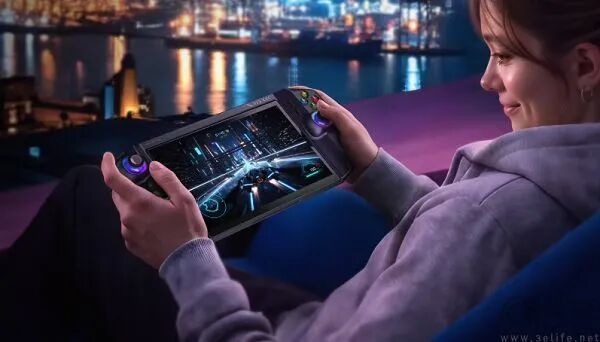
No one expected that Valve would soon revitalize the handheld console market with the Steam Deck, giving it a "second life". Later, ROG, MSI, and Lenovo all entered the market one after another, and nowadays, handheld game consoles have even become a trendy product for a large number of hardware manufacturers. As a leading PC brand, Acer also launched its own handheld console Nitro Blaze 8 in early 2025, but as of today, this product has not been officially released to the market.
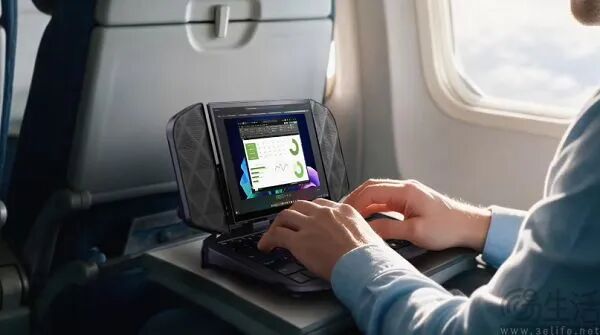
Just as players began to speculate whether Acer would abandon its handheld console business, the company suddenly unveiled a concept product called Project DualPlay Mini, which tries to integrate a keyboard into the handheld device to deliver both gaming performance and mobile productivity.
Under the default configuration, the DualPlay Mini is a typical handheld gaming console, with analog joysticks, D-pads, trigger buttons, and Xbox-style ABXY function keys placed on both sides of its 8-inch screen. However, there is a hidden design on the back of the DualPlay Mini: it is built with a backlit physical keyboard, and can switch to a laptop form factor once the keyboard is flipped open.
01
So, is integrating a handheld console and a laptop into one device a good idea?
The answer is probably no. Looking back at history, this type of consumer electronics product that tries to cover two use cases at the same time rarely ends up with a good market performance.
First of all, the 8-inch screen is destined to deliver a poor mobile office experience. Not to mention the DPI scaling issue of Windows on high-resolution displays, prolonged viewing will cause visual fatigue, and the overly small screen size alone greatly limits its applicable scenarios. Otherwise, mobile phone manufacturers would not be exploring foldable screens as a tool to support mobile office needs.
If users only have light office demands such as typing or filling in forms, they can just take out their smartphones to finish the tasks, so why would they bother using a handheld console? It should be noted that handheld consoles as mobile devices have very high requirements for grip experience, and their weight will directly affect the comfort level during long-time use. If the device is too heavy, users will easily feel hand fatigue after playing for a long time, and may even suffer from soreness, which will further undermine the gaming experience.
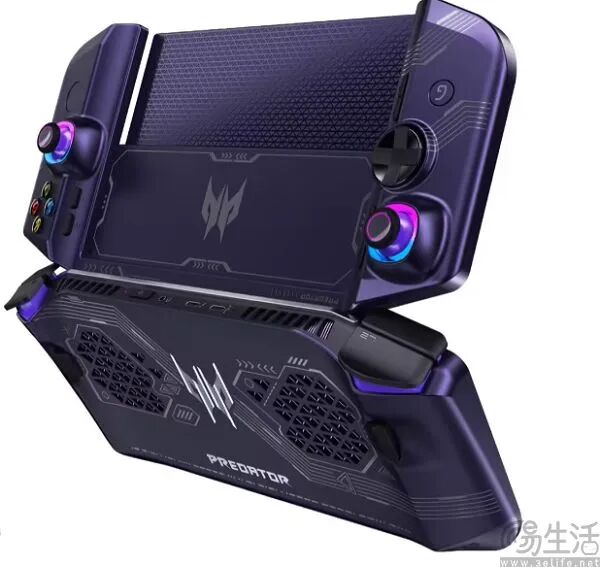
At present, the weight of mainstream handheld consoles is mostly around 800g. With an additional physical keyboard added, the DualPlay Mini will undoubtedly be heavier. This is also the reason why Acer has kept tight-lipped about the size and weight of the DualPlay Mini.
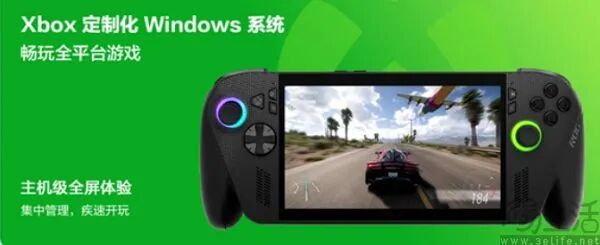
In addition, current Windows handheld consoles are actually products specifically optimized for gaming. The Xbox full-screen mode (Xbox UI), also known as the Windows handheld console mode, does not load the full version of the desktop, limits most background processes, and minimizes notifications and pop-up windows, so as to free up more performance resources for games.
Furthermore, mainstream office software has not been optimized for 8-inch high-resolution screens. Even if you force open the relevant software, it is barely usable. Users who have tried opening Word and Excel on handheld consoles such as the ROG Xbox Ally X and MSI CLAW series must have a deep understanding of this point, and the description of "making your eyes sore" is far from an exaggeration, but a real experience.
Of course, the biggest problem with the DualPlay Mini is that the target audience Acer imagines does not actually exist. The typical profile of handheld console users is multi-device users, and the handheld console is only a tool for them to get high-performance gaming experience in mobile scenarios. If such consumers want both mobile gaming and mobile office capabilities, most of them will not choose to buy the DualPlay Mini, but opt for the combination of a lightweight laptop and a dedicated handheld gaming console.
02
In a sense, it is not that Acer has spotted the opportunity of combining a laptop and a handheld console, but that as of 2026, the traditional handheld gaming console market has already shifted from a blue ocean to a red ocean. The recently released statistics from SteamDB show that as of September 1, 2026, the official game compatibility library of Steam Deck has officially exceeded 30,000 titles.
The dominant position of Steam Deck in the x86 handheld console track is almost unshakable. In the Windows handheld console segment, ROG, with its first-mover advantage, has launched the ROG Xbox Ally X in cooperation with Microsoft, which also boasts strong market competitiveness. In the current era when the cost of components has risen sharply, new entrants obviously cannot compete by offering cost-effective products, so to compete with peer manufacturers that have first-mover advantages, they can only play the differentiation card.
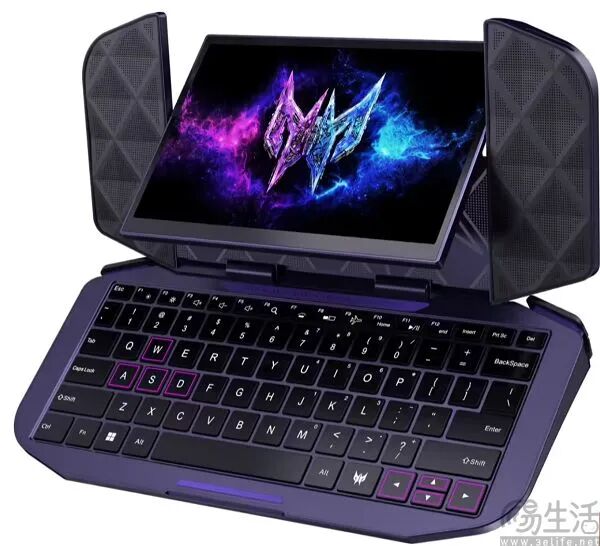
Integrating gaming and productivity capabilities is exactly the differentiation point of the DualPlay Mini in Acer's view. However, as mentioned earlier, pursuing productivity on a handheld console form factor is undoubtedly a false proposition. At the same time, the addition of the keyboard will in turn undermine the grip experience of the handheld console, and reduce its performance in gaming scenarios. As for the end result of trying to take care of both sides at the same time, it can only end up failing in both use cases.
This article is from the WeChat Official Account "Three Easy Life" (ID: IT-3eLife), written by San Yijun, and republished with authorization from 36Kr.