How many Zhong Xuegao ice cream bars is Luo Yonghao's reputation worth?
If Luo Yonghao had not mentioned it, this once "viral" ice cream brand would have long been forgotten by the public.
It is precisely this mention that brought Chicecream back to the public eye for a short time — and by then, it had gone through bankruptcy and liquidation for more than half a year, all its trademarks and patents had been auctioned off, and it had long disappeared from the freezers in supermarkets.
What is more dramatic is that right after the debate, news broke that Chicecream was set to make a comeback. The brand has changed ownership, and the first batch of products is scheduled to hit the market in the fourth quarter of this year. It does not really matter whether this return is a move to leverage public opinion for hype.
Looking back at the rise and fall of Chicecream, the public controversy over the "ice cream assassin" is its most well-known label, but it is far from the whole story.
Behind consumer sentiment lie the deep-rooted supply chain rules in the pre-packaged retail ice cream track, as well as the unbreakable barriers built by industry giants that new brands cannot avoid.
Chicecream is back, but its original high price is gone forever
It is understood that for this restart, the new Chicecream team has chosen to retain the original product form, specifications and formula, and cooperate with experienced OEM manufacturers for production, while the suggested retail price has been lowered to 6.9-7.9 yuan.
The brand revealed that the ex-factory prices of the old and new products are close, and the change is far smaller than the adjustment of the retail price. In other words, this return is not a simple "price clearance sale", but more like a re-pricing based on the existing supply chain system.
However, compared with these behind-the-scenes adjustments, the public is more familiar with Chicecream's past public labels. For most people, the story of Chicecream started with the nationwide complaints about the "ice cream assassin" and ended with the industry news of its bankruptcy and liquidation, and its ups and downs were often attributed to "marketing missteps" and "improper pricing".
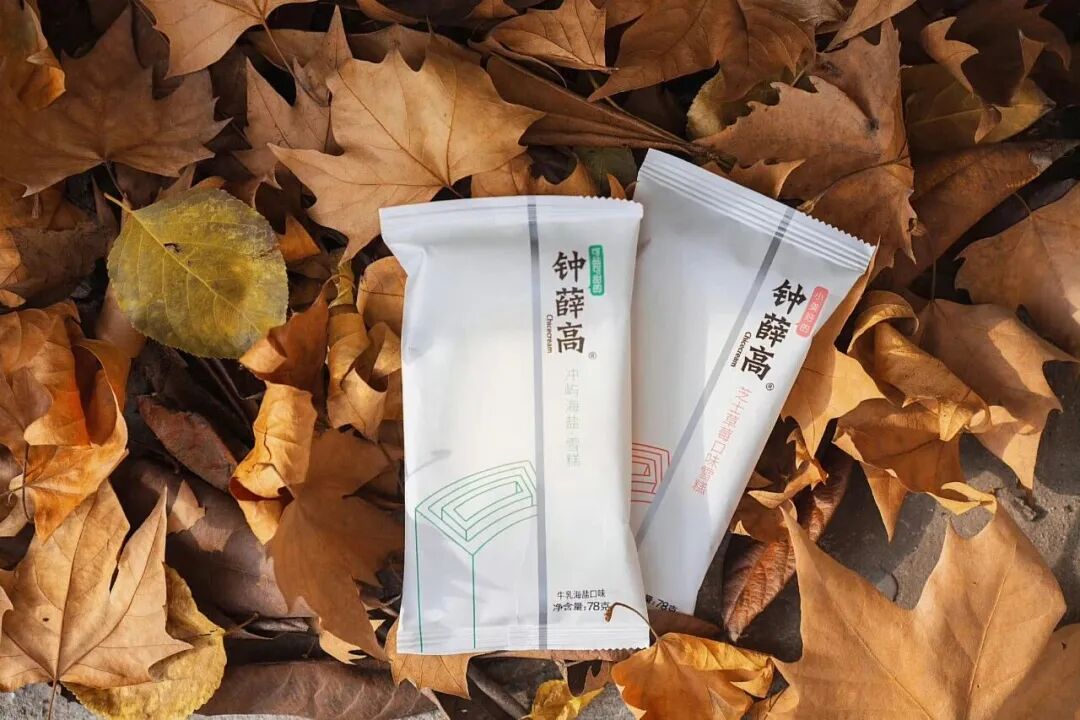
△ Image source: Chicecream official Weibo account
But in the context of China's pre-packaged retail ice cream industrial landscape, the seeds of Chicecream's collapse had long been sown: After opening up the market through online marketing, it gradually stepped into the offline territory that industry giants had operated for many years, and brand expansion turned into a far more expensive competition.
What Chicecream first seized was the online opportunity in the high-end ice cream market.
Before its emergence, the domestic high-end ice cream market was not blank. Foreign brands such as Haagen-Dazs and Baxy had been deployed for many years, but their positions were mainly concentrated in offline boutique supermarkets and specialty stores, with high unit pricing and limited public penetration.
On the "Double 11" shopping festival in 2018, 20,000 limited-edition "Ecuador Pink Diamond" ice cream priced at 66 yuan were sold out within 15 hours.
The highly recognizable tile-shaped appearance and the brand narrative of "high-quality raw materials" allowed this new brand to quickly gain recognition, and even turned domestic high-end ice cream into a business that attracted nationwide attention.
In just a few years, it grew from a niche online brand to a highly talked-about player in the industry, and even raised the overall price expectation of the entire domestic ice cream track.
But the core competitiveness of a brand never lies in its public topic appeal.
E-commerce provided space for this set of strategies, but for most new brands, after gaining sales volume online, further growth inevitably requires penetration into offline terminals. Only by entering convenience stores and supermarkets all over the country can a brand truly support the scale of a national brand.
The offline market is the home field that dairy giants have operated for decades. The capabilities of new brands in content customer acquisition and topic marketing that helped them succeed online are not enough to break through the barriers of terminal channels; to build supply chain capabilities matching the national market requires far more investment and time than expected.
The temptation of growth is right in front of us. Expansion does not necessarily lead to better survival, but no expansion will definitely prevent the brand from growing bigger.
The asset-light OEM model was originally the key to Chicecream's rapid startup. Without building its own factories, it could quickly put products into production by leveraging the production capacity of mature OEM manufacturers, which not only avoided the risk of heavy asset investment, but also caught up with the industry dividend of the gradual improvement of domestic cold chain infrastructure. The popularization of socialized cold chain allowed new brands to reach consumers across the country through e-commerce without building a distribution system from scratch.
But the boundary of this model is also very clear: Asset-light operation reduces the burden of building factories on the production end, but does not exempt the full-link burden of operating a national market.
When the brand shifts from "online product sales" to "omni-channel operation", every link including warehouse layout, inventory management, cold chain distribution, terminal product placement, and dealer maintenance requires corresponding resource investment, and every step tests the operational capability of the supply chain.
After Chicecream fully completed the market education of high-end ice cream, it was almost inevitable that industry giants would enter this track.
Yili launched its high-end ice cream brand "Chijinhuan", Mengniu upgraded the high-end line of its ice cream brand Tilamisu, and Wall's increased its investment in the Magnum series. These high-end brands backed by giants set prices close to Chicecream, but could lower the unit cost relying on their own production capacity, and quickly spread their products to terminals across the country through their channel networks.
In fact, long before the public concentratedly questioned its pricing, Chicecream had already realized that its online success needed to pass another test.
In May 2022, Zhou Bing, then co-founder and vice president of Chicecream, said in an interview that the brand was entering the "traditional territory of giants". At that time, this ice cream company that started with online sales was accelerating its expansion offline. According to him, Chicecream had established a terminal retail system in more than 200 cities across the country, and had begun to encounter obstacles such as the "exclusive dealership" requirement in channels.
In addition to channels, high-end pricing added another restriction to Chicecream's expansion.
Higher selling prices can leave room for promotion and circulation, but also require more consumers to accept the premium. The more Chicecream wants to expand its sales, the more it needs to reach out to groups beyond the initial crowd that recognized its brand story. In ordinary retail terminals, consumers may not know how expensive the so-called Japanese yuzu is, but they can directly see the price gap between Chicecream and other products in the same freezer.
Not all the money the enterprise spends can become a reason why consumers are willing to pay extra.
As this trend continued, Chicecream's living space was continuously squeezed: it had no say in cost control at the upstream end, no control over channels at the downstream end, and had to bear high marketing costs in the middle. Its seemingly glamorous high-end positioning was actually at a disadvantage in every link of the supply chain.
The public opinion storm of the "ice cream assassin" was more like a pre-lit fuse. It amplified consumers' doubts about pricing and eroded the public's favorability towards the brand, but it was not the fundamental force that crushed Chicecream.
The real collapse happened under the surface. The failure of Chicecream is essentially the inevitable result of using marketing logic to challenge industrial logic. After all, in the retail ice cream track, even if you win the pricing power through products and marketing, you may not have the ability to maintain this high-priced business for a long time.
Two types of ice cream, two different businesses
Luo Yonghao's complaint that "Mr. Wilden's ice cream is not as good as Chicecream" accidentally brought two completely different ice cream businesses into the same public opinion field.
But it is not objective to measure two ice cream products with completely different development paths with the same standard.
From the perspective of the production chain, all production links of pre-packaged retail ice cream represented by Chicecream are completed in a closed loop in the factory: raw material deployment, sterilization, freezing, forming, and packaging are completed in one go, and the final product that can be directly placed on shelves for sale is delivered when leaving the factory.
Even under the OEM model, production standards and quality control processes are all concentrated on the factory side, and terminal channels only undertake the functions of storage, display and sales, without participating in any production links.
The chain gelato model of Mr. Wilden usually adopts the process that the central factory uniformly completes pre-procedures such as basic milk slurry deployment and raw material pretreatment, and after being delivered to each store through cold chain, the store completes the final steps of freezing, portioning and serving.
Although it is not the "fully handmade in-store" model in the public perception, retaining the final production process in the store makes "freshly made" part of the consumption experience, which not only ensures the consistency of quality control during chain expansion, but also retains the freshness characteristics of freshly made products.
The difference between these two models in production nodes has actually determined the divergence of their cost structures.
The cost focus of pre-packaged retail ice cream is concentrated on the circulation link after leaving the factory.
From the factory warehouse to the hands of consumers, products have to go through warehousing, multi-level distribution, and terminal distribution. Behind this link are the full-process cold chain warehousing and transportation costs, the markup of all levels of distribution, and the entry fees and display fees of terminal stores, which together constitute the non-production costs that account for a very high proportion of the selling price.
This is also the core reason for the high cost of Chicecream during its offline expansion in the past: The more you want to penetrate into sinking terminals, the higher the proportion of circulation and channel costs, and the stricter the requirements for inventory turnover.
The cost focus of the in-store fresh-made model falls on the scenario operation of the terminal.
According to a report by National Business Daily, some dealers estimate that the ingredient cost of a single scoop of vanilla-flavored Italian ice cream is about 4 yuan, and flavors such as chocolate and pistachio are more expensive.
The gap between the ingredient cost and the selling price makes gelato look like a highly profitable business.
But in fact, the depreciation and amortization of commercial ice cream equipment, the rent of stores in core business districts, the labor cost of on-site production and sales, and the loss of unsold freshly made products on the same day, these expenditures with distinct catering attributes, all need to be covered by the store's sales revenue.
The efficiency improvement brought by chain expansion still has its limits at the store end. The headquarters can purchase raw materials centrally, but every additional store needs to be equipped with corresponding production equipment and staff, and the operating pressure caused by insufficient sales of a single store can hardly be offset by the headquarters' procurement advantages.
Although pre-packaged retail ice cream can rely on one factory to supply a large number of sales outlets, centralized production can spread equipment and manufacturing costs.
But this scale advantage can only be realized through continuous sales at the terminal. If product placement increases while sales turnover slows down, expanding production volume may turn into expanding inventory.
Both models have to pay the price to get close to consumers, but the sales conditions they purchase are different.
All in all, there is no absolute distinction between the two models in terms of superiority, and there is no absolute answer to which one is "more conscientious". One sells standardized products and brands, reaching more people through circulation efficiency; the other sells instant experience and services, supporting premium through scenario experience.
From production to consumption, they are essentially two different accounting systems.
The brand still has to pass the channel test
New investors have appeared behind Chicecream for this restart.
According to The Paper, one of the shareholders of the new operating entity is Changsha Hujia Food Technology Co., Ltd., which is behind the brand Royal Xiaohu, holding 40% of the shares. However, the two parties are currently only in a financial investment relationship, the new team operates independently, there is no business overlap for the time being, and cooperation in supply chain, production and fulfillment may be carried out in the future.
But the transfer of brand assets does not mean that the former sales network will be automatically restored.
What Chicecream needs to win back are dealers and retailers.
When Chicecream expanded offline in the past, it was not unaware of the importance of channels. Around 2022, it quickly promoted the layout of national terminals and entered convenience stores and supermarket systems in more than 200 cities.
In order to quickly spread its products to the market, it needed to pay high entry fees and display fees, and leave sufficient profit margins for dealers; at the same time, high-end pricing limited the consumer group, and also increased the sales difficulty in ordinary terminals.
Simply put, if sales volume cannot keep up, dealers will not dare to stock up, and the manufacturer will find it difficult to expand its scale; if the scale cannot be increased, the cost of purchasing goods cannot be reduced, and the support for channels will be limited.
By 2024, this negative cycle had become clearly visible. Lin Sheng, founder of Chicecream, once said that in order to control costs, the number of warehouses had been reduced to three or four, which could not cover some regions for the time being. At that time, reporters from Yicai found that many products were out of stock in online orders in Wuhan, Chongqing and other places; in some cold drink wholesale departments, convenience stores and supermarkets visited in Shanghai, Chicecream products were rarely seen, and some individual stores were still selling low-priced near-expiry inventory.
Trust in channels is extremely fragile.
Once there are signs of slow-moving sales and unstable supply of the brand, dealers will have reasons to reduce orders, and retailers will reconsider their display positions. After all, they do not need to pay for the brand's story, but only need to be responsible for their own inventory and sales per unit area.
By cutting prices in this restart, Chicecream chooses to directly enter the mainstream mass price range. In addition to attracting more consumers, it also needs to alleviate the sales pressure of channels. The closer the price is to mass consumption, the higher the acceptance of terminals in theory.
But as Chicecream itself said, "the ex-factory prices of the old and new products are actually similar", which will definitely require the new team to rethink the distribution of costs and profits.
The past promotion methods, channel levels and operating investments cannot be directly applied to a product with a lower selling price without any changes. If only the terminal price is lowered without improving operational efficiency, the pressure will eventually remain on the brand or its partners.
Price cuts will also change Chicecream's competitors. After returning to the single-digit price range, it will have to face more mature mass products.
Consumer sentiment will fade, brand memory will dilute, but the bills of dealers and retailers will always be clear.
This article is from the WeChat official account "Red Food Supply Chain", the author is a professional focusing on catering supply chains, and is republished with authorization from 36Kr.