The biggest bet in ByteDance's history
Many people feel sorry for Xie Xin.
Feishu, which has operated for ten years and was once an independent business unit on par with Douyin, has been merged into Doubao. Xie Xin has gone from being a senior executive in charge of a major business line to a product manager; his reporting line has also changed from Liang Rubo, the co-founder, to Zhao Qi, the head of Doubao.
Organizations are built for compliance. Zhang Yiming, the boss, shows no mercy. All personnel changes and organizational adjustments are aimed at advancing the strategic goal in his mind: to seize the super entry of the AI era, a universal Agent.
This important mission has been assigned to Doubao. It is not just a chatbot, but also an office Agent. Tencent and Alibaba have already taken the lead in laying out the latter track.
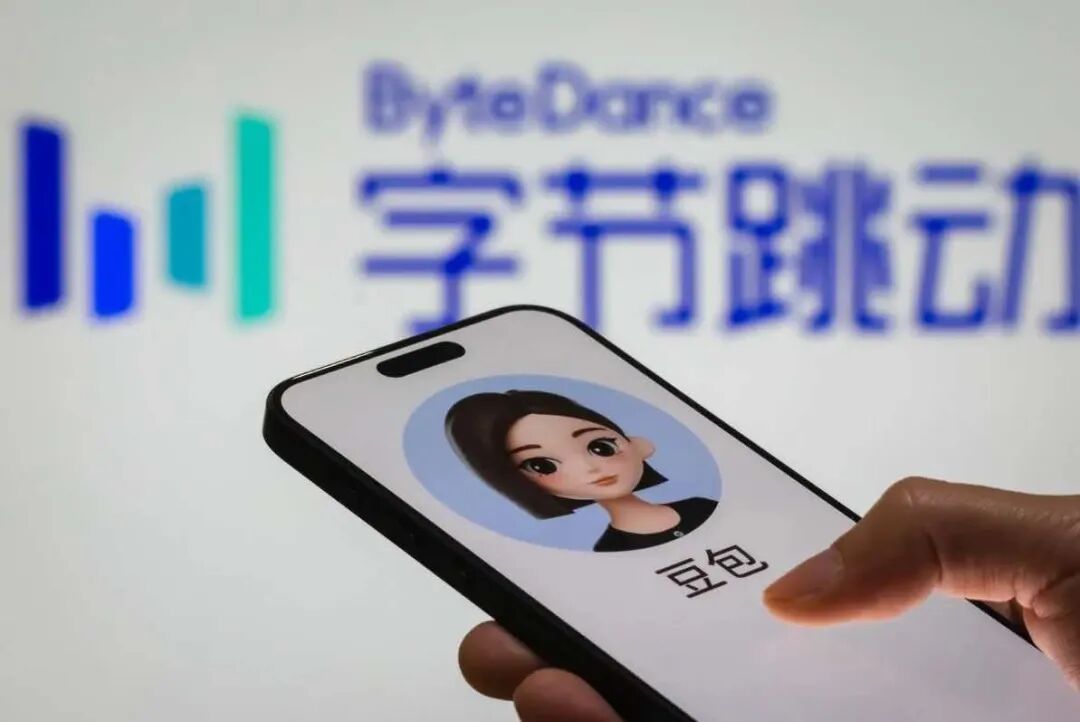
While carrying out internal reforms, ByteDance's new ammunition depot is also fully prepared for battle. In early September, Bloomberg reported that ByteDance would sign a syndicated loan of nearly 30 billion US dollars. The cash flow of this giant is no longer sufficient to support the huge AI spending.
As is known to all, ByteDance has become the most aggressive Chinese tech giant in AI investment at present, leaving Alibaba and Tencent far behind.
The 43-year-old Zhang Yiming has launched the biggest high-stakes bet in his life. The king of asset-light operations who made his fortune with algorithms and advertising is now fighting a heavy-asset war that he is not good at.
AI investment is increasingly similar to real estate and has become a capital-intensive industry. Capital expenditures of hundreds of billions of yuan a year will bring severe tests to ByteDance's cash flow and capital chain.
Zhang Yiming has resolutely embarked on a path of no return.
01
On September 15, at the 2026 Feishu Future Infinite Conference & Doubao Work Launch Event, the integrated Doubao Work made its debut for the first time, and Feishu released version 8.0. The joint move marked ByteDance's high-profile entry into the giant office Agent battle.
It is a bit unexpected that Xie Xin showed up, but Zhao Qi did not. What is more surprising is that Liang Rubo, who rarely appears in public, personally attended the event, which shows how much importance ByteDance attaches to Doubao.
To prepare for this battle, over the past month or more, Zhang Yiming and Liang Rubo have made drastic internal adjustments.
At the end of July, an internal email circulated among 20,000 ByteDance employees, announcing that the Feishu product team would be merged into Doubao.
Xie Xin, the head of Feishu, now reports to Zhao Qi, the head of Doubao, while the Feishu GTM (marketing, sales, customer service) team is merged with Volcano Engine, under the unified management of Tan Dai, the head of Volcano Engine.
Feishu has been developing for ten years and has grown into one of China's top ToB collaborative office tools. Now it has been integrated into Doubao as a data pool; in late August, the AI programming tools TRAE and Coze were also merged into the system.
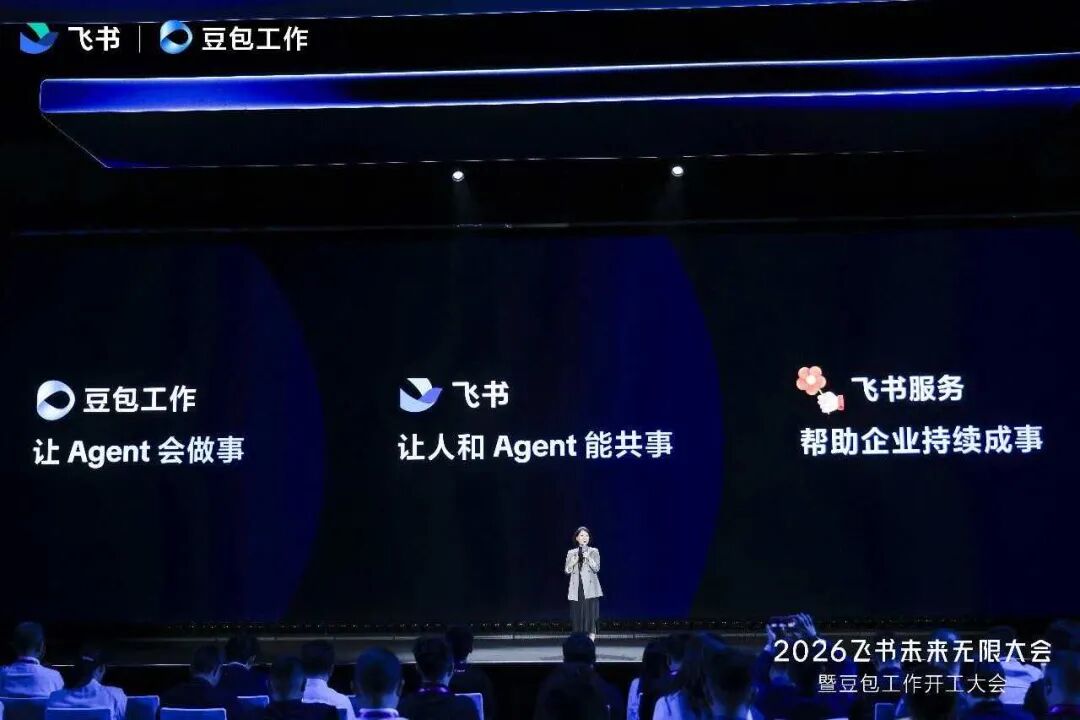
This is ByteDance's largest AI-focused organizational restructuring since 2021. Zhang Yiming wants to pool the strength of the entire company to bet on AI. Doubao, which has already attracted 380 million users on the C-end, has been pushed to the core position.
"Doubao Work" is competing head-on with Tencent's WoorkBuddy and Alibaba's Qianwen Office. Although it has been repeatedly criticized for its excessive entertainment orientation and frequent errors, Zhang Yiming still hopes that Doubao will take on the important role of the office Agent entry.
After merging Feishu, TRAE and Coze, Doubao has evolved from a C-end chat assistant to a core AI productivity platform, realizing the integrated connection from C-end to B-end.
In the current domestic AI track, ByteDance's video generation model Seedance ranks first in the global list, and Doubao has 380 million monthly active users, making it the AI product with the largest number of users in China.
However, ByteDance does not take the lead in the foundational large models that determine the final outcome, nor in the Agent office track that is currently in fierce competition.
At present, ByteDance's Seed 2.0 / 2.1 Pro only ranks 21st in the global LLM ranking. Liang Rubo also admitted at the all-hands meeting on August 6 that the large model lags behind for the time being.
Office Agent is regarded as one of the relatively clear paths for AI commercialization at present, which can bring tangible revenue. Compared with WoorkBuddy, which was launched as early as March, and Qianwen Office, which has tens of millions of enterprise users, Doubao Work, which enters the market later, does not have an advantage.
The merger of Xie Xin's team and Liang Rubo's public appearance both show how much importance ByteDance attaches to the office Agent business.
02
While rushing to lead the office Agent track, ByteDance is also mobilizing all funds to support this unprecedented AI war.
In the past two years, ByteDance is the Chinese tech giant with the largest AI capital expenditure. The expenditure reached 150 billion yuan in 2025, and has been further raised to 200 billion yuan this year, or even higher.
Most of this money has been invested in chips, computing power and data centers, all of which are heavy assets.
Doubao with 380 million monthly active users seems to be doing well, but it is also extremely money-burning. Its Token consumption exceeded 120 trillion in March 2026, a thousandfold increase compared with the initial launch period. It is estimated that it burns tens of millions of yuan every day, while the revenue it brings is less than one million yuan.
In June this year, Doubao announced that it would charge membership fees, and in late July it charged commissions for hotel orders, both of which caused huge controversy. The actual revenue is far from satisfactory.
The only AI business of ByteDance that generates revenue is the Seedance video generation model. Its annualized revenue has reached about 2 billion US dollars, with monthly revenue exceeding 1 billion yuan, but it is far from enough to cover the capital expenditure of hundreds of billions of yuan.
ByteDance has used the cash flow from its mature businesses to support its AI development in the past two years. According to institutional estimates, ByteDance's final net profit in 2025 was only 9 billion US dollars, compared with 33 billion US dollars the previous year, a decline of more than 70% in 2025.
In other words, the capital ByteDance accumulated in the era of asset-light operations is being converted in batches into GPUs, computer rooms, power and depreciation, and there is no guarantee that there will be a good outcome.
Since the beginning of this year, ByteDance's e-commerce and local life businesses have been required to prioritize cash flow and profits, and are no longer allowed to burn money for growth as before.
ByteDance, which generates huge revenue every day, cannot keep up with the money-burning speed of AI. The internet company that used to have the most abundant cash has also started to borrow huge sums of money.
In early September, ByteDance's largest financing in history was exposed. The 29.6 billion US dollar syndicated loan is the second largest in Asia this year, second only to SoftBank's 40 billion US dollar. The funds are mainly used for data center expansion, chip procurement and other AI infrastructure construction.
Coincidentally, Alibaba also recently raised 80 billion Hong Kong dollars through share placement in Hong Kong for AI investment. The tight cash flow of large tech giants has become a common situation.
What is more difficult is that Zhang Yiming proposed that large model R&D should not use distillation, and it is said that he will also launch a large model with 5 trillion parameters, which makes ByteDance's money-burning speed and uncertainty higher than other companies.
The 29.6 billion US dollars of real money is the pricing of ByteDance's AI strategy by banks through interest spreads. No matter the capital expenditure is 200 billion or 400 billion yuan, Zhang Yiming has placed the biggest bet. ByteDance is carrying out a difficult balance between money burning and profitability.
03
This is not Zhang Yiming's first bet.
Over the past ten years, from Toutiao, Douyin to TikTok, ByteDance has grown into a global giant amid the fierce competition from Alibaba, Tencent and Meta.
Along the way, he has been following the same strategy: asset-light, focus on operations. ByteDance uses algorithms to leverage traffic. The more traffic it gets, the more users it has, and the lower the marginal cost of servers will be.
Advertising and e-commerce are ByteDance's core revenue sources. Its annual net profit is tens of billions of US dollars, almost catching up with Meta. Zhang Yiming, who has been China's richest man for several years, has just been named the richest man in Asia.
But this time, ByteDance has left the battlefield it is most familiar with. The AI track has overturned the entire business model.
Large model development is a heavy-asset computing power competition. GPUs, data centers and power all require huge capital expenditures.
Under the export control, it is difficult and expensive to purchase high-end chips. For this reason, ByteDance has also launched self-developed chips and self-developed CPUs, and invested billions of dollars in Southeast Asia to lock in gigawatt-level power supply.
What is more critical is that the cost structure has changed: in the past, ByteDance did not spend much for each additional user; now, every additional round of dialogue requires real money to be paid. With hundreds of millions of monthly active users, ByteDance used to collect rents, but now it is buying land with full payment.
This input-output model is very similar to real estate: capital-intensive and heavy-asset. Once leverage is increased, it will bring huge risks.
Due to its sufficient cash flow, ByteDance's current asset-liability ratio is expected to be not high, but its net profit has been genuinely affected.
Behind Doubao's 324 million users is a 70% drop in profits last year. Coupled with the non-distillation route set by Zhang Yiming, the training cycle is longer and the capital consumption has multiplied.
ByteDance believes that great efforts will bring miracles. In the past, it won many battles relying on manpower and organizational efficiency, but this time, it is different.
This is the most expensive high-stakes bet in ByteDance's history, and it is also a war fought in a way that ByteDance is least good at.
04
No one is more sensitive than Zhang Yiming.
ByteDance is the final king of the mobile internet era.
In July this year, Douyin's single-app usage time share reached 19.4%, surpassing WeChat's 18.8% for the first time. Including Hongguo, Toutiao, Fanqie and the Lite version, ByteDance's products account for 40.9% of the Top 50 mobile apps, surpassing Tencent's 29.1%, and its throne has just been firmly established.
He knows best what will happen when the entry is replaced. If Doubao wins, ByteDance will remain dominant; if Doubao loses, no matter how well Douyin performs, it is only the harvest of the previous era.
Instead of waiting for others to revolutionize themselves, it is better to take the initiative to reform, which is the underlying logic of ByteDance's high-stakes bet on AI. From Douyin to Doubao, what he is seizing is the ecological niche.
Doubao has secured the C-end entry, Feishu is merged into Doubao Office, Volcano Engine provides model-as-a-service, and even mobile phones are equipped with Doubao's agent. Models, computing power, cloud and terminals are all connected to the main axis of Doubao, betting that ByteDance can still reign in the AI era.
Other giants will certainly not sit back and ignore it. Alibaba and Tencent have also deployed troops in the AI computing power field.
Anxiety is also being amplified by the outside world. Recently, global tech giants have been caught up in a huge debate over AI R&D and security issues. Different companies have different views on whether to accelerate or pause AI R&D.
OpenAI is releasing new models on the one hand, and on the other hand, its chief scientist Ilya Sutskever published an article saying that the basis for continuing to quickly train stronger models is to build a defense system to resist threats brought by other AI. If you don't conduct research, others will, and others will use it against you.
Liu Sheng, the person in charge of the main Attention operator of DeepSeek v4.1, believes that the most cutting-edge intelligence should be supplied to everyone in an open and cheap way.
He does not trust that Anthropic or OpenAI can do this, and especially does not want Anthropic to master the most advanced artificial intelligence or AGI. So "if I have to be revolutionized, I hope the person who revolutionizes me is myself".
This is a zero-sum game. Everyone knows there is danger, but no one dares to stop first.
Domestic large models, including ByteDance's, have not yet reached the threshold of recursive self-improvement. To compete head-on with opponents like OpenAI and Anthropic, ByteDance does not have a full chance of winning, but it can no longer back down.
So there is no need to feel sorry for people like Xie Xin. Everyone is striving for the final outcome.
In the past ten years, ByteDance has been the most successful internet company in China, with a stronger momentum than Alibaba and Tencent. Five years ago, Zhang Yiming stepped down from his position at the peak of his career and handed over daily management to CEO Liang Rubo.
But in the past two years, Zhang Yiming has personally taken charge of ByteDance's AI business. Now, Liang Rubo has also rarely appeared to support Doubao. They are also anxious.
All because the stakes of this bet are too high. It is equivalent to pushing all the chips ByteDance has won on the Chinese internet battlefield over the past ten years to the center of the table at once.
This battle must not be lost.
This article is from the WeChat official account "Future Land", written by Zhai Zong, and published with authorization from 36Kr.