CICC claims that "the A-share market is at its best in the past five years", how much of this statement can we trust this time?
The A-share market (hereinafter referred to as "Big A") never lacks the slogan that "a bull market is coming".
Recently, China International Capital Corporation (CICC) delivered a relatively positive performance transcript to the market, which has sparked widespread attention across the entire network.
The year-on-year profit growth rate in 2026 is expected to reach 6.3%, and the profit growth rate of the non-financial sector is expected to hit 9.9%. Both forecasts are expected to reach a relatively high level since 2022.
In other words, the "profit inflection point" that the market has been waiting for repeatedly in the past few years may be shifting from expectations to actual financial statements.
However, this statement cannot be simply interpreted as "all companies are about to make profits".
Big A has never been a neatly running train, but more like a city undergoing power reallocation.
Some have obtained the power supply for computing power and technology, some are riding the trend of rising resource prices, and others are still searching for a way out amid weak consumption, real estate adjustment and price competition.
This is exactly what makes CICC's view worth discussing this time: it is not optimistic about a general rise in all sectors, but the repair of profit structure.
Why is CICC optimistic about the fundamentals of Big A at this moment
The core of CICC's judgment does not lie in the rise and fall of the index, but in whether the continuous improvement of corporate earnings can be sustained. Its logic can be roughly divided into four layers.
First, the macro profit environment has already improved. Data from the National Bureau of Statistics shows that from January to June 2026, the total profit of industrial enterprises above designated size across the country increased by 18.7% year on year, and the operating revenue profit margin reached 5.76%, up 0.59 percentage points year on year.
In particular, the profit of non-ferrous metal smelting and rolling processing industry increased by 99.4% year on year, and the profit of manufacturing industry also saw obvious repair. The data of industrial enterprises is not equivalent to the data of listed companies in Big A, but it at least proves that price, demand and profit margin are forming a joint force in some industries.
Second, the AI industrial chain has become an important source of profit increment. The research judgment disclosed by CICC shows that the profit of the AI industrial chain at the listed company level in the first quarter of 2026 increased by more than 70% year on year, the profit of all non-financial enterprises increased by about 12%, and the AI industrial chain contributed about 4 percentage points to the profit growth rate of non-financial enterprises.
This figure is very impressive, but it also reminds investors that the market is concentrating more profits in a small number of high-prosperity tracks.
Third, price repair has emerged in cyclical industries. For industries such as industrial metals, minor metals, oil and gas chemicals, if the rise in product prices can be transmitted to corporate statements, inventory gains and gross margin improvement will bring relatively fast profit elasticity.
However, the advantage of cyclical stocks lies in large profit elasticity, and its disadvantage also lies in large profit elasticity. Rising prices represent opportunities, while peaking prices will quickly change the market narrative.
Fourth, the financial sector, especially non-bank finance, may benefit from the improvement of market activity.
The total trading volume, balance of margin trading and securities lending, IPO and refinancing rhythm, and the performance of the equity market will all affect the revenue structure of securities firms and some insurance companies.
The financial sector may not have the highest growth rate, but it is likely to provide a more stable profit base.
First-half performance of Big A: who is making profits and who is still under pressure
From the perspective of market performance, not all stocks in Big A rose in the first half of 2026.
Statistics from CLSA show that the Shanghai Composite Index rose by 3.16% in the first half of the year, the Shenzhen Component Index rose by 19.82%, the ChiNext Index rose by 35.58%, and the Science and Technology Innovation 50 Index rose by 64.25%. However, nearly 70% of stocks in the Shanghai, Shenzhen and Beijing bourses fell, and the median rise and fall of individual stocks was about -15.5%.
The bustling index and uneven performance of individual stocks are the most intuitive annotation of the market in the first half of the year.
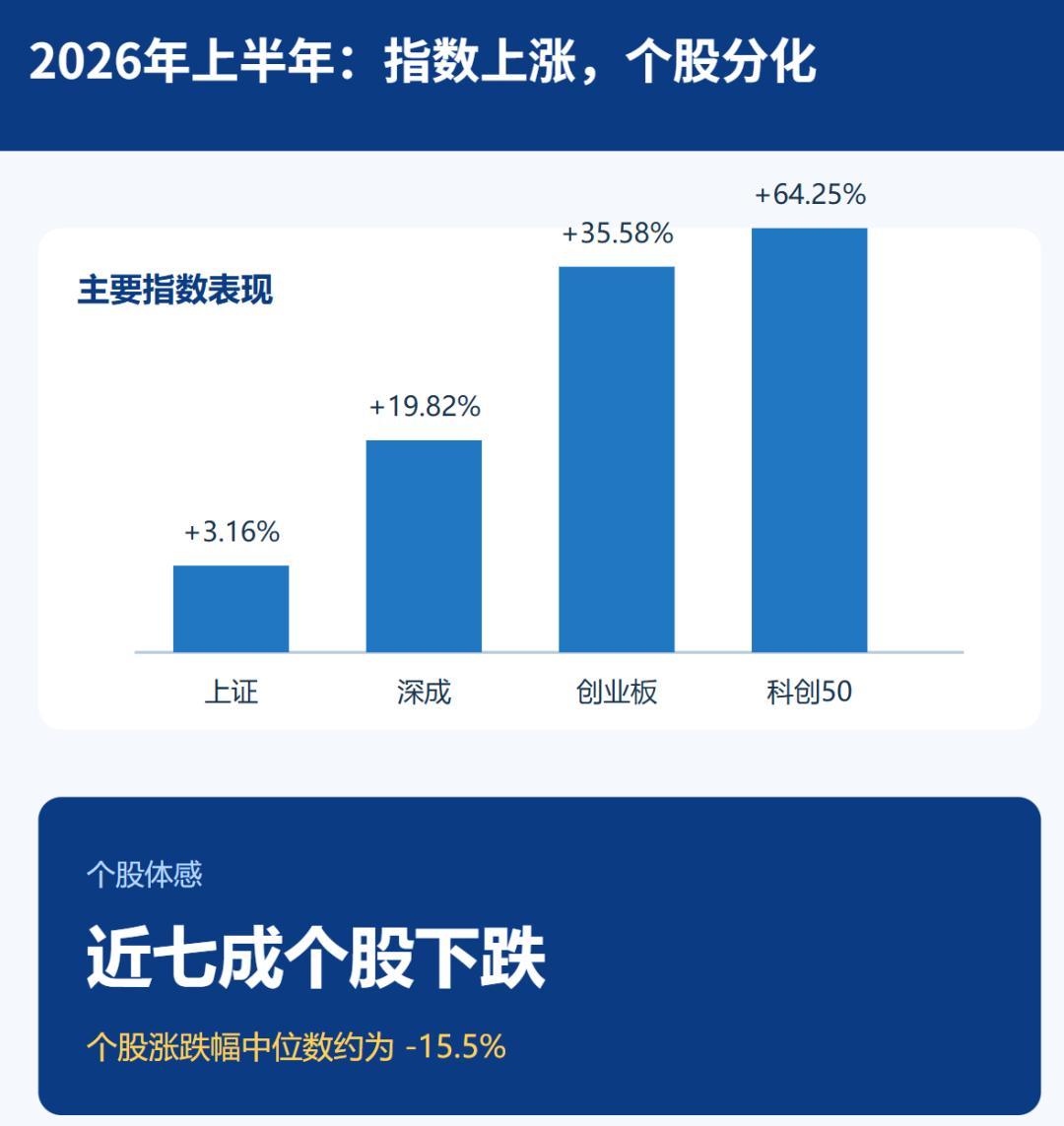
From the perspective of profit clues, there are mainly three types of industries that performed well in the first half of the year.
The first is the AI hardware and computing power industrial chain. Servers, PCB, electronic special gases, liquid cooling, optical modules and some equipment and material enterprises have benefited from the concentrated release of computing power capital expenditure and orders.
Among the stocks with the highest increase in the first half of the year, the computing power industrial chain accounts for a large proportion, which indicates that capital is looking for certainty around real orders and industrial trends.
The second category is resource products. For industries represented by non-ferrous metals, profit improvement comes from both price factors, as well as supply constraint and inventory change factors.
The sharp growth of non-ferrous smelting profit disclosed by the National Bureau of Statistics reflects the important role of resource products in the repair of industrial profits.
The third category is non-bank finance such as securities firms and insurance. After the increase of market activity, brokerage, proprietary trading, investment banking and asset management businesses all have opportunities for improvement.
It is worth noting that the profit improvement of non-bank finance is relatively sensitive to market trading and risk preference, so we cannot only look at the performance of a single quarter.
Industries under relatively high pressure are also very clear.
The real estate chain is still facing slow demand repair, asset impairment and cash flow pressure.
Traditional consumer industries are affected by income expectations, channel inventory and price competition. The revenue of some companies can still grow, but the profit has not grown synchronously.
There are also huge internal differences in industries such as medicine, home appliances and auto parts. Companies with real product upgrading, overseas markets or cost advantages are no longer on the same track as companies that only rely on price competition.
Industry differentiation is the most noteworthy point of this interim report.
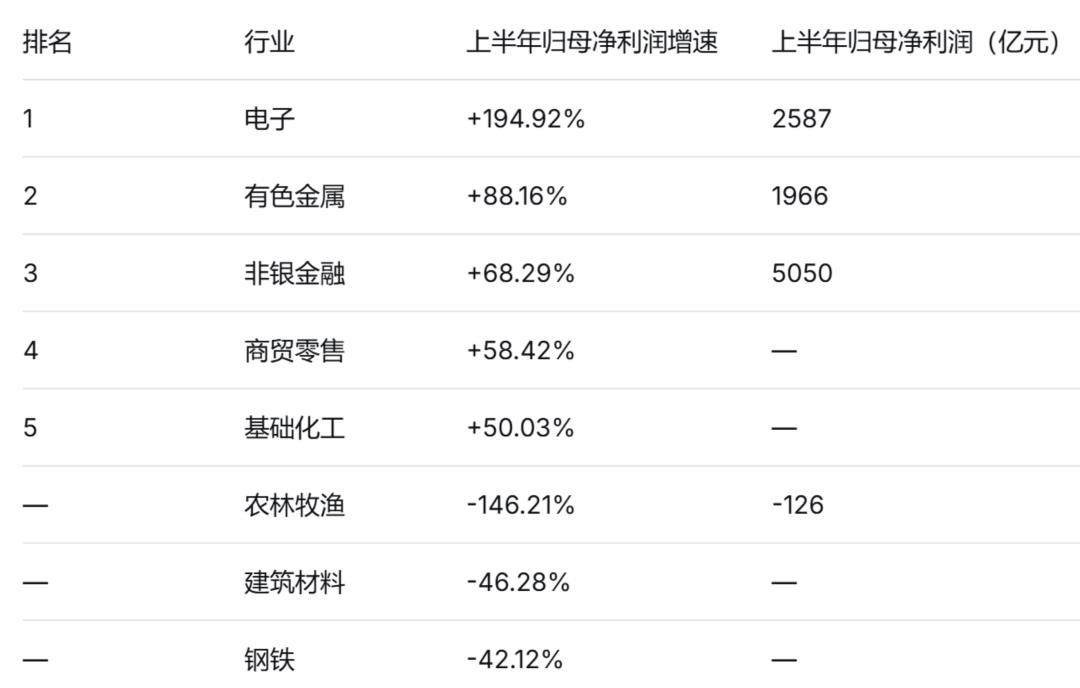
Data source: East Money Choice, as of August 31, 2026
How to evaluate the accuracy of CICC's past judgments
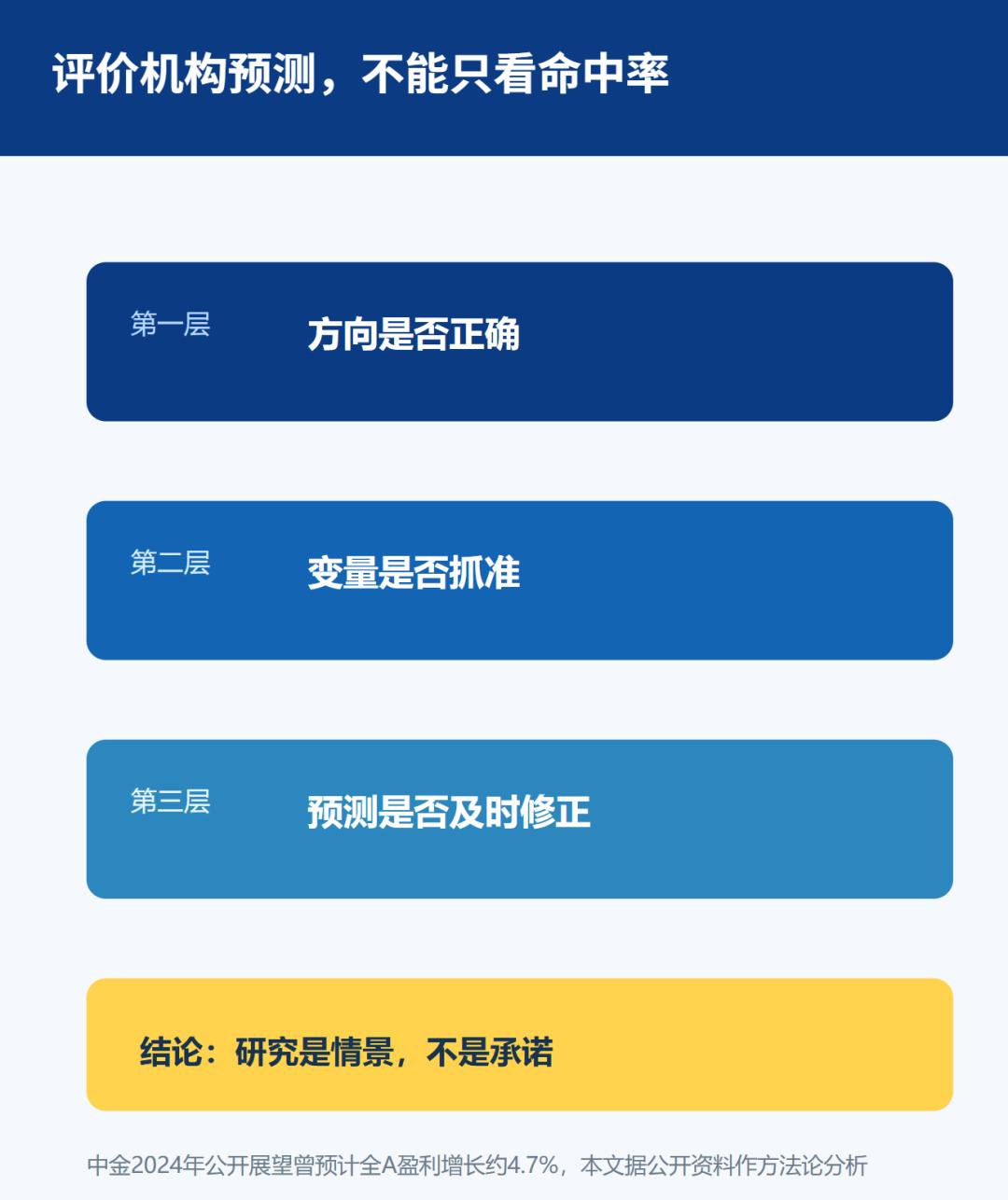
To evaluate the forecast of an institution, we should not only see whether it has bet on the rising industries, but also focus on three issues: whether the forecast direction is correct, whether the key variables are captured, and whether the final figures can stand backtesting.
Public information shows that in its 2024 Big A outlook, CICC predicted that the annual revenue of non-financial listed companies would increase by about 4.9%, the net profit would increase by about 5.1%, and the profit growth of all A-share listed companies would be about 4.7%.
This kind of forecast has grasped the general direction of "profit repair", but the actual market operation is not linearly improving. The pressure from real estate, price and demand makes the realization degree of different sectors vary greatly.

Therefore, institutional forecasts are more suitable for scenario analysis, and should not be regarded as definite results.
The judgment for 2026 has similar characteristics. CICC splits the profit growth rate into all A shares, non-financial sector, AI industrial chain and cyclical sectors, instead of only giving a single index target.
The advantage of this method is that it can explain where the profits come from, while the disadvantage is that it is highly sensitive to industry weight and price changes.
If AI capital expenditure slows down, or resource prices fall rapidly, the non-financial profit growth rate may be lower than the baseline scenario.
More notably, CICC's research does not always present static figures.
Taking public research reports as examples, the research team will continuously adjust profit forecasts according to quarterly data, corporate orders and price changes.
For investors, what really deserves attention is not whether a single forecast hits the exact decimal point, but whether it corrects wrong assumptions in a timely manner.

Therefore, CICC's view this time can be scored 70 points.
The direction is supported by macro profit and industrial data, and the structural judgment is also in line with the market characteristics of the first half of the year, but the expectation of "expected to be the best in the past five years" is still a baseline scenario, not a realized annual report conclusion.
Among the 40 forecasts from 2016 to 2019, CICC got 31 right, with an average hit rate of 77.5%.
This figure is not bad in the securities firm industry, but the problem is: you never know whether next year will be the CICC with 90% accuracy or the CICC with 40% accuracy.
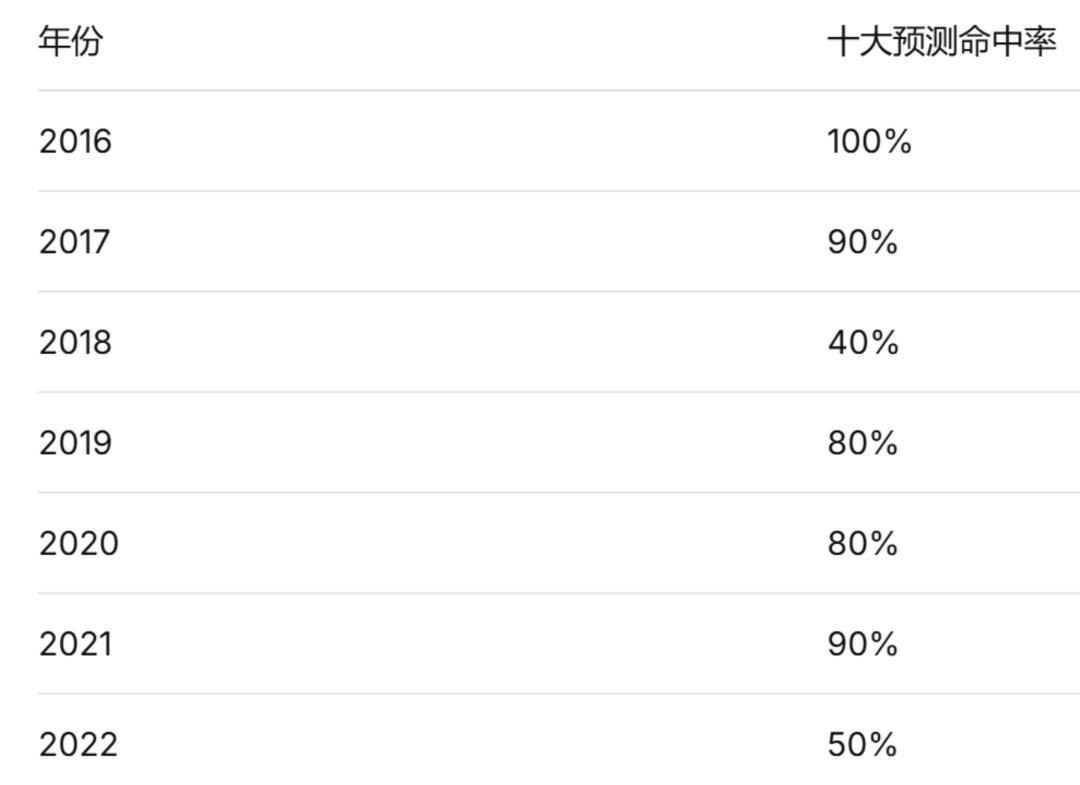
Data source: sorted out from public reports such as CLSA and Shangyou News
Can this round of fundamental improvement turn into a real bull market
The most common mistake the market makes is equating profit improvement with stock price rise.
In fact, stock prices are determined jointly by profit, valuation and capital. If the profit grows by 6.3% but the valuation has risen by 30% in advance, investors may still face large fluctuations.
Conversely, if profits continue to exceed expectations, stock prices may be supported by profit growth even if valuation does not expand.
Four signals need to be observed next.
First, whether the high growth of the AI industrial chain can spread from a few leading enterprises to more suppliers. Only when orders and profits are widely spread can we confirm the industrial prosperity, rather than the beautiful statements of just a few companies.
Second, whether the rise of resource product prices can be converted into cash flow, rather than only staying at inventory gains and book profits.
Third, whether the consumer and real estate chain can see real demand repair. Without end demand, it is difficult to bring sustainable profits by simply relying on price cuts to boost sales.
Fourth, whether the prosperity of non-bank finance can evolve from active trading to long-term growth of capital market service revenue.
The author's judgment is that the "fundamental improvement" that CICC is optimistic about has factual basis, but it is more like a structural repair, rather than a general turnaround for all companies.
Big A may usher in a better profit year in recent years, but it does not necessarily mean that buying any stock can share this improvement.
What really deserves attention is not the phrase "the best performance growth rate in the past five years" itself, but that profit growth has begun to have clear sources again: technology comes from orders, resources come from prices, finance comes from activity, and manufacturing comes from efficiency.
Only when the source of profits becomes clear in a market can valuation have reasons to move up further.
Therefore, in the face of this optimistic judgment, the most rational attitude is neither blind excitement nor habitual suspicion, but to return to the statements, focus on cash flow, orders, gross margin and balance sheet.
When the wind blows, the first thing to confirm is whether the wind is driving the profits of enterprises, or just the sentiment of the market.
This article is from WeChat official account "Investment Banking Circle", author: Senior Sister from Investment Banking, authorized for release by 36Kr.