What impact does the Federal Reserve's interest rate hike have on the real estate sector?
On September 16 local time, the Federal Reserve announced a 25 basis point hike in the federal funds rate, lifting its target range to 3.75%-4.00%.
This marks the first rate hike since July 2023.
What impact will the Fed's rate hike have on the real estate sector?
The most direct impact is that the China-US interest rate differential will further invert after the rate hike. Currently, China's 5-year LPR stands at 3.50%, and after this Fed rate hike, the room for the central bank to cut interest rates has been narrowed. However, for the real estate sector, the lower limit of mortgage interest rates has been lifted in most cities at present. Under the general trend of "deleveraging", the truly critical factors are income and housing price expectations rather than the specific level of interest rates.
Therefore, it barely has any impact from the perspective of home buyers. From the perspective of enterprises, the Fed's rate hike will have a certain impact on dollar bond financing, but the overall impact is limited judging from the overseas financing scale of key real estate enterprises in the first eight months of 2026.
01
Synchronized Rate Hikes in the US, Europe and Japan
China Remains in the Easing Policy Channel
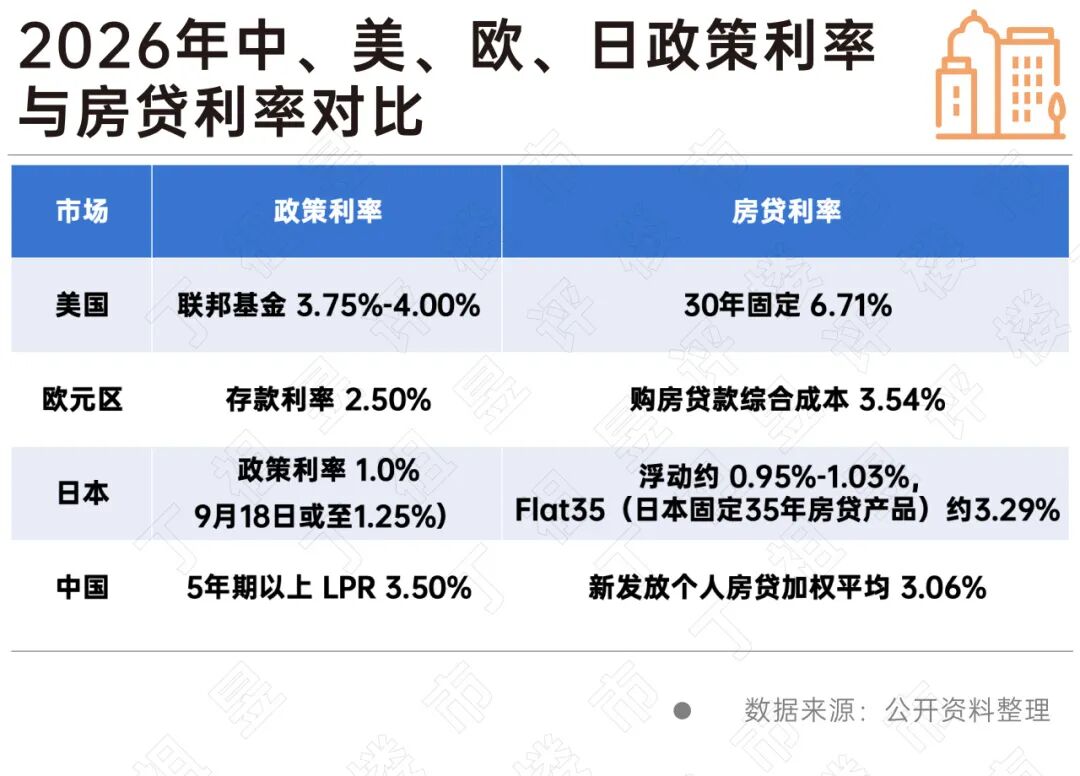
On September 16 local time, the Federal Reserve announced that it would raise the target range of the federal funds rate by 25 basis points, lifting the benchmark funds rate from 3.50%-3.75% to 3.75%-4%.
This is the Fed's first rate hike in more than three years since July 2023.
Prior to the Fed's rate hike, the European Central Bank announced on September 10 that it would raise the three key interest rates in the euro area by 25 basis points respectively, with the deposit facility rate, main refinancing operations rate and marginal lending facility rate standing at 2.50%, 2.65% and 2.90% respectively. This is the second rate hike in the euro area this year.
Moreover, the Bank of Japan has raised its policy rate from 0.75% to 1% in June. Meanwhile, the Bank of Japan will hold its interest rate meeting on September 18, and the market generally expects the rate to be raised from 1.0% to 1.25%, if the expectation is realized, it will hit the highest level since April 1995.
The US, Europe and Japan are all in the rate hike cycle, while China is moving in the opposite direction and is still in the easing channel. The Political Bureau meeting in July clearly proposed to implement "a more proactive fiscal policy and a moderately loose monetary policy", and Pan Gongsheng, Governor of the People's Bank of China, also reiterated at the G20 meeting that China will continue to implement the moderately loose monetary policy. The goal of easing is still to boost domestic demand and support the real economy.
02
Inverted China-US Interest Rate Differential
The Central Bank's Room for Interest Rate Cuts Is Narrowed
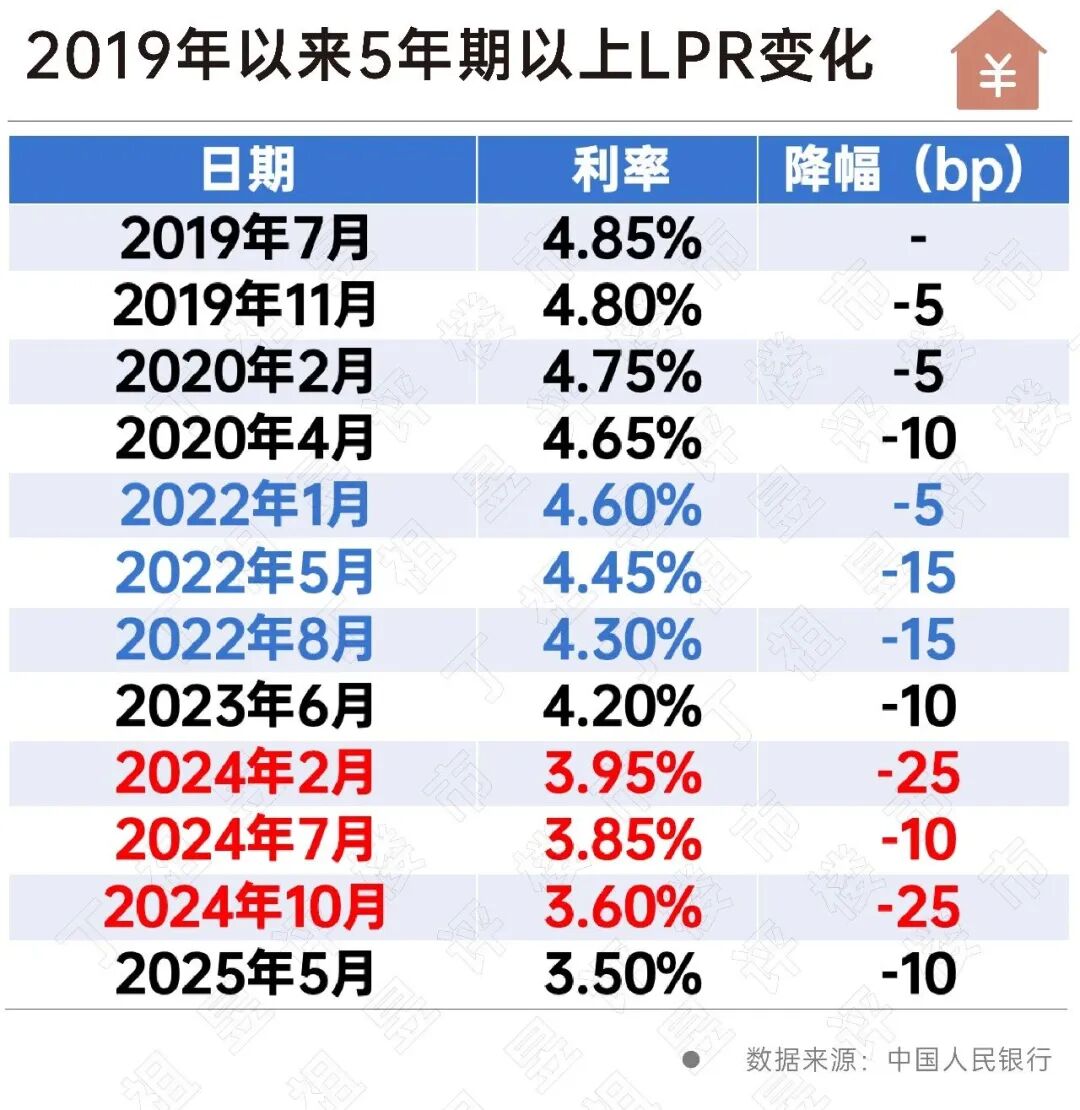
After this rate hike, the target range of the US federal funds rate is 3.75%-4.00%, while China's LPR for a term of over 5 years stands at 3.50%, which has remained unchanged for 15 consecutive months.
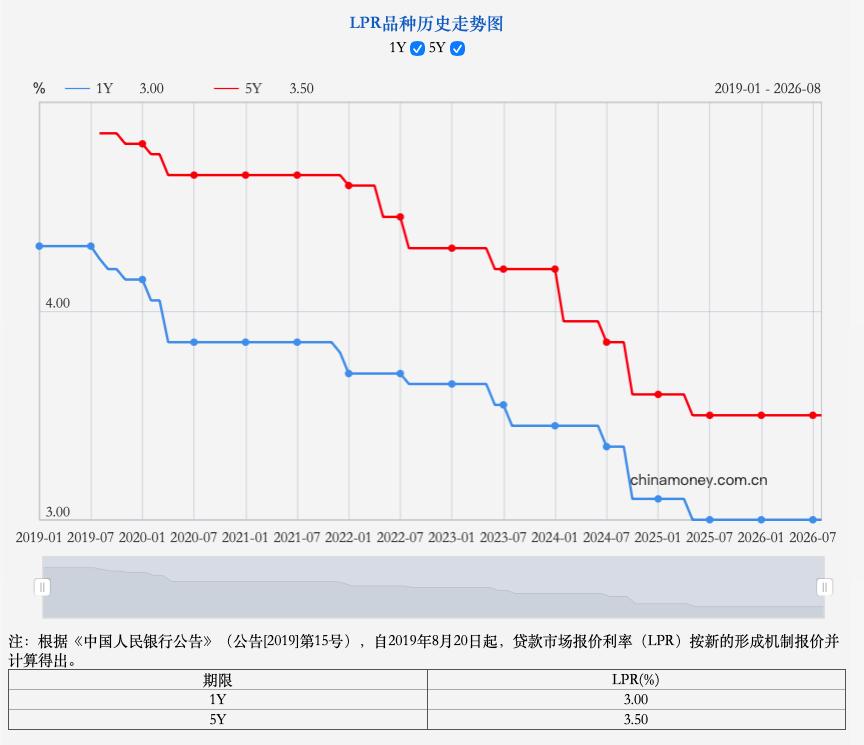
Looking at the historical trend chart of LPR, 2022 and 2024 are the periods with frequent LPR adjustments. Especially in 2024, LPR was adjusted 3 times within the year, with a cumulative adjustment range of 0.6 percentage points.
In 2025, after multiple large adjustments in 2024, LPR was adjusted only once on May 20, with the 1-year LPR and the 5-year-plus LPR both cut by 0.1 percentage points, and have remained unchanged ever since.
At the end of 2025, the Central Economic Work Conference pointed out that for the economic work in 2026, China should pursue progress while ensuring stability, improve quality and efficiency, continue to implement the moderately loose monetary policy, flexibly and efficiently use various policy tools such as RRR cuts and interest rate cuts, and maintain ample liquidity.
Since 2026, the "interest rate cut expectation" has not been realized. On the one hand, the current interest rate is already at a historically low level, on the other hand, the net interest margin of commercial banks has dropped to 1.40%, and banks lack the motivation to lower the LPR quotation.
Now, after the Fed's rate hike, the China-US interest rate differential has further inverted, the central bank's room for interest rate cuts has been narrowed, and it is expected that the 5-year-plus LPR will remain unchanged in the short term.
Focusing on the real estate sector, there are already multiple response paths at present.
The first is that the new 8·28 policy opens the door for negotiated modification of existing housing loans. On August 28, the People's Bank of China and the State Administration of Financial Regulation issued the Opinions on Reforming and Improving Real Estate Credit Management and Promoting the Accelerated Construction of a New Real Estate Development Model, allowing existing housing loan borrowers to negotiate to modify the agreed interest rate or apply for loan replacement when the deviation meets the conditions. At the same time, the maximum term of individual housing loans is extended from 30 years to 40 years, and the upper limit of income-debt service ratio is increased from 55% to 60%. Banks have published the national average interest rate of newly issued housing loans on a monthly basis since September 1 as a reference for negotiation. At present, the interest rate of first-home loans in some banks in Shenzhen has dropped to 3.05%, and the markup in Wuhan, Chengdu and Zhengzhou has generally been reduced by 10 to 15 basis points. This path bypasses LPR, and the markup is modified through independent negotiation between existing housing loan borrowers and banks.
The second is the optimization of provident fund, which has two paths. The first is financial interest discount, for example, Dalian currently gives a 15% interest discount for second-home provident fund loans for 3 years, and Nanjing's "Six New Policies for the Real Estate Sector" gives a 1% interest discount of the total loan amount for households that sell their old homes to buy new ones (see more details in The Arrival of Provident Fund Loan Interest Discount: The Signal Meaning Outweighs the Burden Reduction Effect). The second is to lower the provident fund interest rate. On May 7, 2025, the People's Bank of China adjusted the interest rate of first-home individual housing provident fund loans to 2.6%, and that of second-home provident fund loans to 3.075%. At present, the commercial loan interest rate for second homes in some cities has reached 3.0%, which is lower than the interest rate of second-home provident fund loans.
03
Overseas Financing of Real Estate Enterprises
Only Accounts for 12%
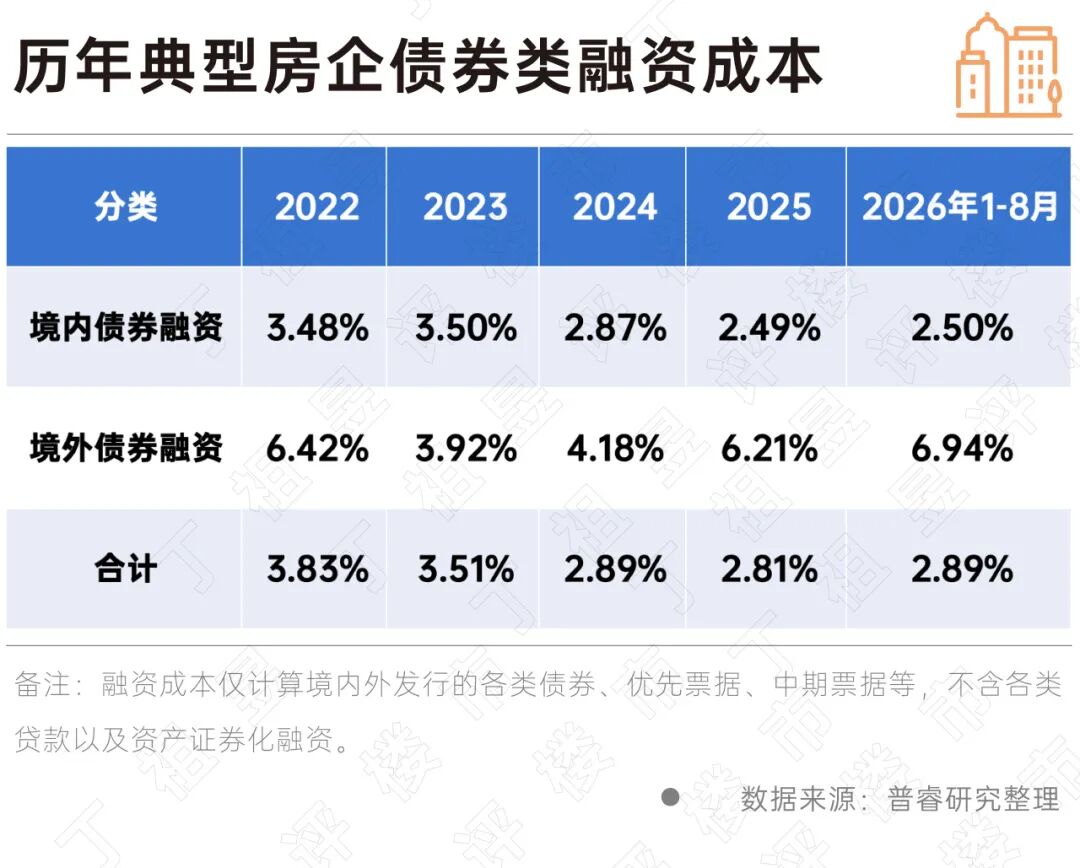
Theoretically, the only impact of the Fed's rate hike on real estate enterprises is on their dollar bonds. However, judging from the overseas financing scale of key real estate enterprises in the first eight months of 2026, the overall impact is relatively limited.
From January to August 2026, the total financing volume of 50 typical real estate enterprises under the key monitoring of Puru Digital Intelligence reached 192.132 billion yuan, down 33.1% year on year. Among them, domestic debt financing was 142.035 billion yuan, accounting for 73.9%; overseas debt financing was 23.65 billion yuan, accounting for 12.3%; asset securitization was 26.015 billion yuan, accounting for 13.5%; equity financing was 431 million yuan, accounting for 0.2%.
In terms of new increments in August, the total financing volume of the 50 real estate enterprises in August was 17.657 billion yuan, down 30.1% month on month and 54.7% year on year. Overseas debt financing reached 3.191 billion yuan, up 165.9% month on month. The high growth was caused by the low base. More importantly, there was only one single overseas financing transaction worth 3.191 billion yuan in the whole month, which was the overseas green dim sum bond issued by China Overseas Land & Investment, with an interest rate of 2.2%.
It is worth noting that dim sum bonds are offshore RMB bonds, whose pricing anchor is RMB interest rate rather than US dollar interest rate. The Fed's rate hike cannot be transmitted to them. That is why the cost of the only overseas financing transaction in August can be as low as 2.2%, which is even cheaper than the 2.50% domestic bond financing cost in the same period.
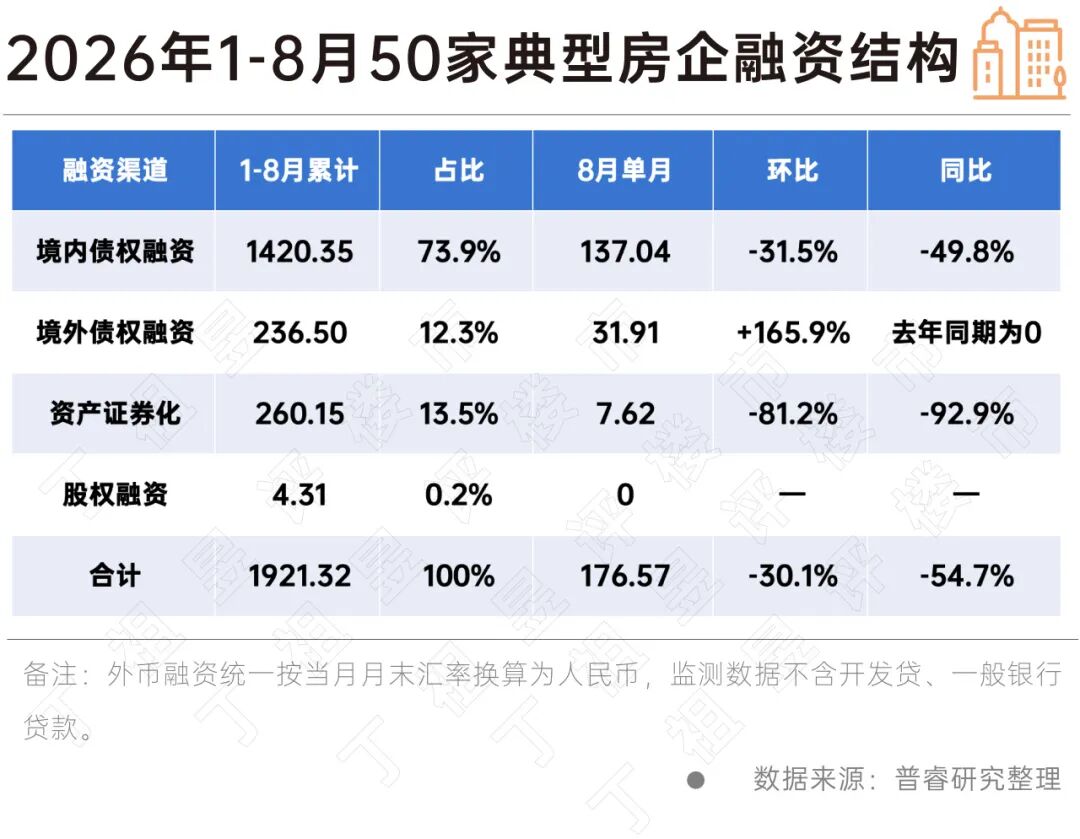
Since 2026, only 3 real estate enterprises have issued overseas US dollar senior notes for 4 times in total, with a total amount of only 1.105 billion US dollars, and the interest rates range from 7% to 11.8%.
In other words, the small part that the Fed's rate hike can actually affect only accounts for about one third of overseas debt financing, and only accounts for 4% of the total 192.132 billion yuan financing volume.
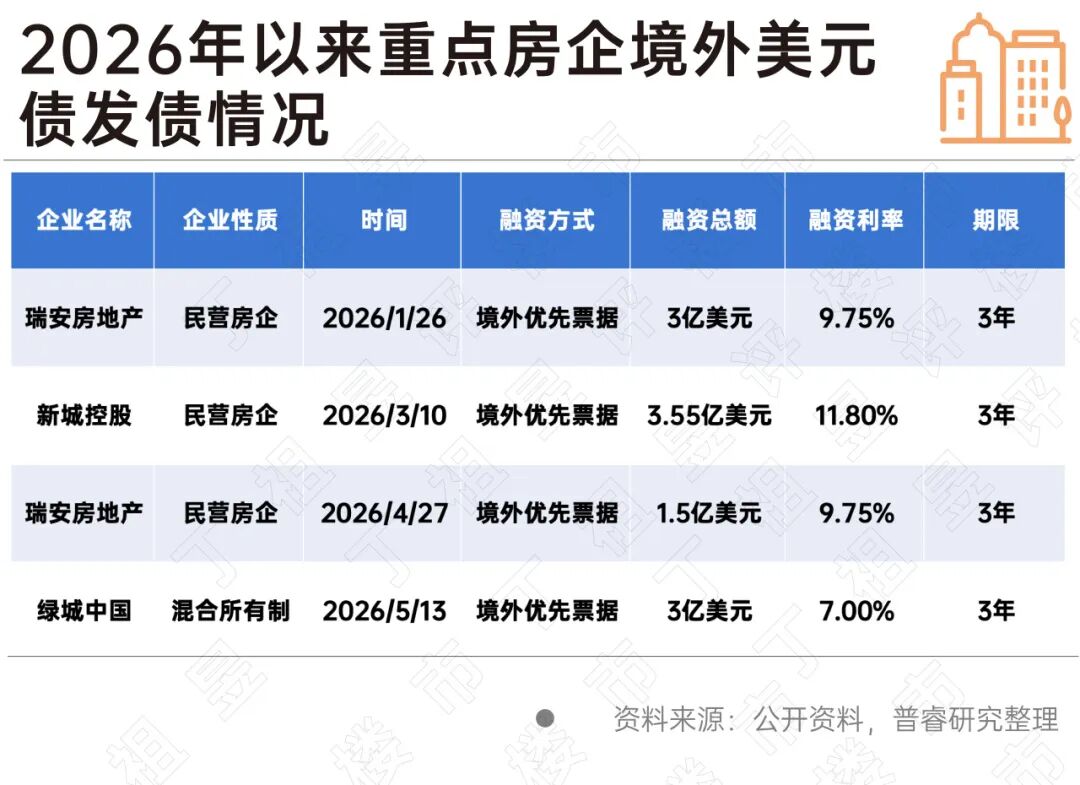
Therefore, although the Fed's rate hike does increase the cost of dollar bonds for real estate enterprises, only a few enterprises are still issuing dollar bonds, and the volume is too small to shake the overall market. Moreover, the only overseas financing transaction in the whole month of August was an RMB dim sum bond with an interest rate of 2.2%. The transmission chain can hardly carry large capital flow now.
Conclusion
On the whole, this Fed rate hike barely has any impact on domestic home buyers. For real estate enterprises, the transmission chain does exist, but it is so weak that it can be ignored, and cannot shake the overall size of the industry. What is really narrowed is the policy space.
China's confidence to maintain an easing policy in the "global rate hike tide" comes from low inflation and the dislocation of economic cycles. China's manufacturing added value accounts for about 30% of the global total, and can continuously supply high cost-effective commodities. This not only hedges the global inflation pressure, but also provides solid physical support for the stability of RMB value, making China one of the few major economies that can maintain monetary policy independence in this round of rate hike tide.
The Fed needs to raise interest rates due to inflation pressure, while China needs to cut interest rates to stabilize growth. It is a normal phenomenon that all countries maintain different policy rhythms.
This article is from the WeChat Official Account "Ding Zuyu Comments on the Real Estate Market", written by the editorial department, and authorized for release by 36Kr.