It's open! Another city with a metro system is born.
01
A New Metro City Is Born
Precisely speaking, this is the latest newly established metro city in the strict sense since Nantong opened its metro in 2022.
Of course, different from Nantong, which applied for, constructed and opened its metro independently, this newly added city gains its metro access through the extension of the metro lines from a central city.
This city is Zhangzhou, Fujian Province.
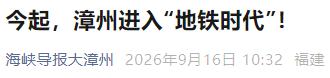
On September 16, the Phase 1 of Xiamen Metro Line 4 and Phase 1 of Line 6 started trial operation, among which the Phase 1 of Line 6 spans two cities of Xiamen and Zhangzhou.
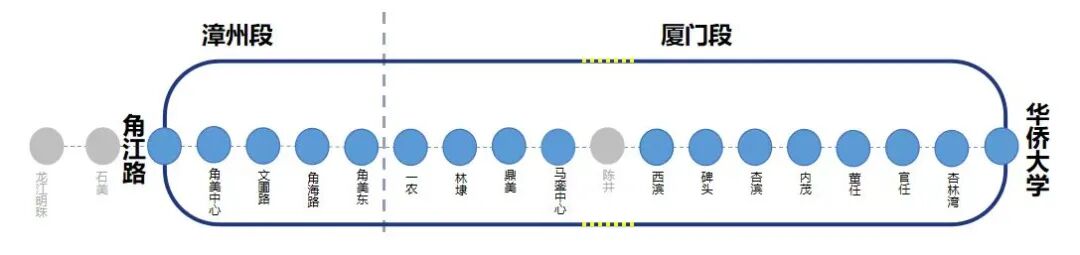
The entire line has 37 stations in total, 7 of which are located in Zhangzhou. At present, Jiaomeidong, Jiaohai Road, Wenpu Road, Jiaomei Center and Jiaojiang Road stations are open, while Shimei Station and Longjiang Mingzhu Station are temporarily suspended from operation.
This is the first cross-city metro line in Fujian Province, and also the first cross-city metro line within the Xiamen Metropolitan Area.
The reason why we emphasize "precisely" and "in the strict sense" is that if we do not follow the strict standard, Ma'anshan would have joined the metro city family when Nanjing Metro Line S2 opened in the first half of this year.
But as I have emphasized many times, no matter the metro lines that have extended to Jurong of Zhenjiang and Ma'anshan of Anhui, the lines connecting the far suburbs of Gaochun and Lishui, or the lines that will extend to Yangzhou and Chuzhou in the future, are not metros in the strict sense. These lines starting with the letter "S" are intercity railways that operate in metro mode.
If we do not follow the strict standard, Zhuzhou and Xiangtan would also be counted as members of the metro city family when the Phase 1 of Changzhutan West Ring Line opened in 2023, because although the Changzhutan West Ring Line is an intercity railway, it adopts the metro system.
If we do not follow the strict standard, Xuchang of Henan would also be counted as a metro city, as the Zhengzhou-Xuchang Intercity Line opened in 2023, which adopts the metro system and metro-style operation.
If we do not follow the strict standard, Zhaoqing and Huizhou would also be counted as cities that have joined the metro city family.
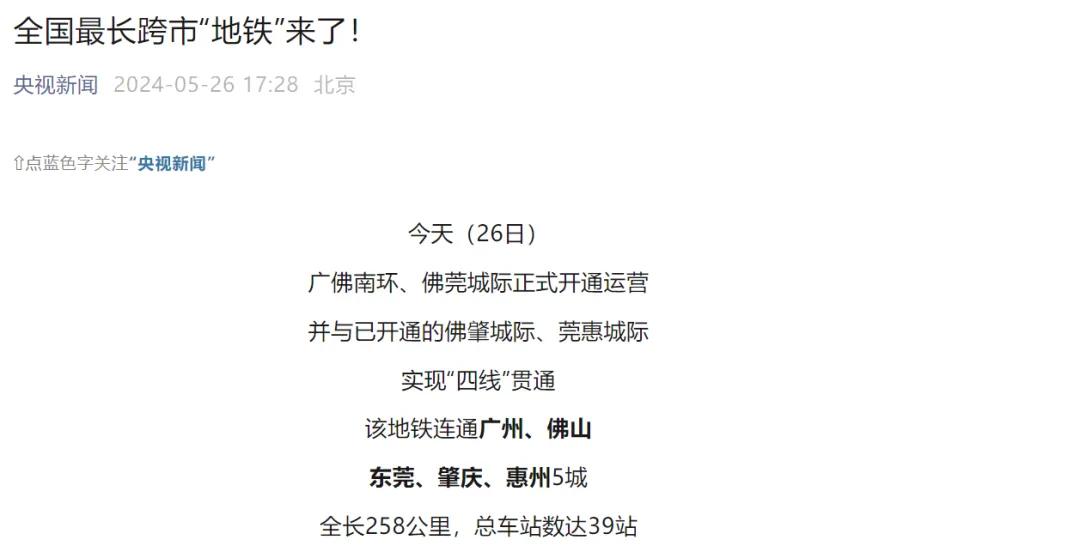
In 2024, the Guangzhou-Foshan South Ring Intercity (West Foshan Station - Panyu Station) and Foshan-Dongguan Intercity (Panyu Station - West Dongguan Station) were put into operation, and connected with Foshan-Zhaoqing Intercity (West Foshan Station - Zhaoqing Station) and Dongguan-Huizhou Intercity (West Dongguan Station - Xiaojinkou Station) to form a 258-kilometer-long east-west transportation artery.
Strictly speaking, these lines are all intercity railways, but they adopt metro-style operation, so they are also regarded as metros in the broad sense.
At that time, China Central Television News even used the headline "The country's longest cross-city 'metro' is coming" to draw a final conclusion on this matter.
02
Who Will Be the Next Metro City
Isn't it said that the metro development has entered a stock era? Isn't it said that the threshold for metro application is getting stricter and stricter? How can new metro cities still be born?
It needs to be emphasized here that Zhangzhou joining the metro city family, as well as some other cities that will join the family in the future, are all included in the projects applied for by central cities before the threshold was tightened, and the projects are already under construction.
For example, Xiamen Metro Line 6 is part of Xiamen's second-phase rail transit plan, which was approved as early as 2016 and started construction in the same year. In 2020, the second-phase rail transit plan of Xiamen was revised to increase the length of Line 3, and the revised plan was also approved.
Before Zhangzhou, Ezhou and Xianyang were the first cities to gain metro access through the extension of metro lines from central cities in the strict sense.
Ezhou, Hubei: On January 2, 2021, the Phase 3 Gedian section of Wuhan Metro Line 11 was put into operation. This is the first metro line in Wuhan that extends outside the administrative boundary of the city, marking that Ezhou has entered the "metro era".
Xianyang, Shaanxi: Due to the integration of Xi'an and Xianyang and the fact that Xi'an Xianyang International Airport is located in Xianyang, Xianyang fully benefits from the spillover of Xi'an's metro network, with Xi'an Metro Line 1, Line 14, and Line 11 to be built in the future covering its territory.
Of course, in the broad sense of metro, Zhaoqing and Huizhou in Guangdong, Xuchang in Henan, Zhenjiang in Jiangsu, and Ma'anshan in Anhui are all counted as metro cities.
Here comes the key question: which other cities will join the metro city family?
In the strict sense, Langfang is confirmed to be the next member, while Huizhou remains uncertain.
Beijing Metro Line 22 was approved back in 2015, started construction at the end of 2016, and is expected to be put into operation at the end of this year.
This line starts from Dongdaqiao Station in Chaoyang District, Beijing in the west, and ends at Pinggu Station in Pinggu District in the east [50]. From west to east, it passes through Chaoyang District of Beijing, Tongzhou District of Beijing, Sanhe City of Langfang, Hebei Province, Pinggu District of Beijing and other areas, connecting the Beijing Central Business District, Dingfuzhuang Cluster, Beijing Municipal Administrative Center, Yanjiao High-tech Industrial Development Zone of Sanhe City, Gaolou Town of Sanhe City, Qixinzhuang Town of Sanhe City, Pinggu New Town and other functional zones.
It is a real metro in the strict sense.
The uncertainty over Huizhou mainly lies in the fact that it is not yet confirmed whether Shenzhen Metro Line 14 can extend to Huizhou.
In September 2020, the "Opinions of the Ministry of Transport on Carrying out Pilot Work for Building a High-quality and Innovative International Aviation Hub and Other Tasks for Building a Strong Transportation Country in Shenzhen" issued by the Ministry of Transport of the People's Republic of China clearly stated:
The east extension of Shenzhen Metro Line 14 will reach Huiyang, Huizhou.
In 2021, Huizhou issued the "Action Plan for Huizhou to Seize the Major Opportunity of the 'Dual Zones' Construction and Deeply Integrate into the Shenzhen Metropolitan Area (2021-2023)". The plan clearly points out:
Accelerate the preliminary work of the Shenzhen-Huizhou Intercity Project, promote the construction of the Xiaojinkou-Huizhou North section of the Dongguan-Huizhou Intercity, and support Shenzhen to extend its urban rail transit to the areas adjacent to Shenzhen. Coordinate and promote the construction of the Ganzhou-Shenzhen Railway, Shenzhen-Shanwei Railway and Guangzhou-Shanwei Railway, and jointly build a "Guangdong-Hong Kong-Macao Greater Bay Area on tracks".
However, although both the national transport department's documents and the local documents of Shenzhen and Huizhou have confirmed the extension of Shenzhen Metro Line 14 to Huizhou, the project has not yet started construction formally because Huizhou itself does not meet the conditions for metro construction.
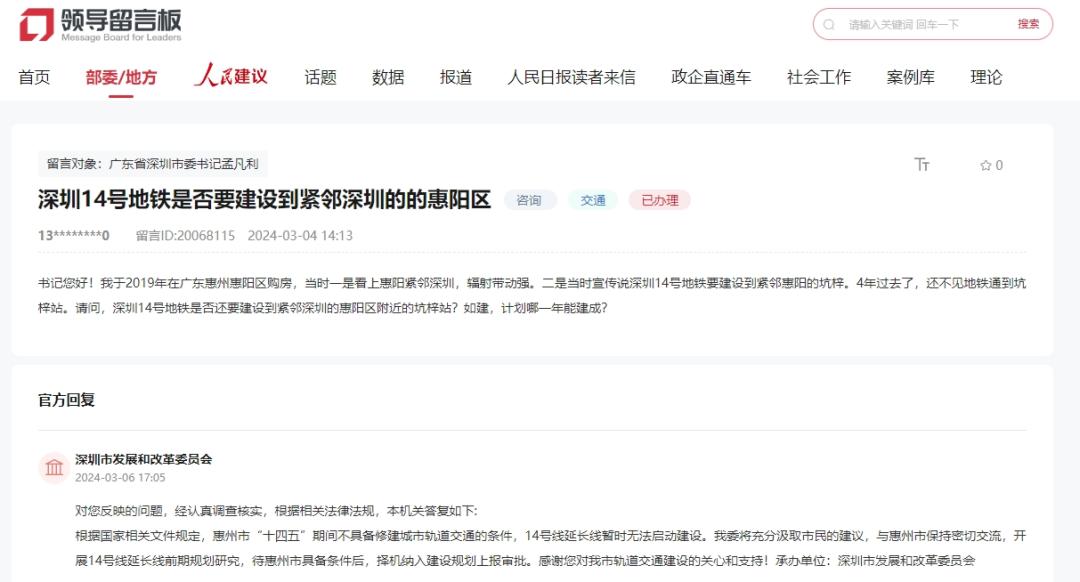
In March 2024, a property owner who purchased a house in Huiyang, Huizhou left a message on the message board of People's Daily, inquiring about whether Shenzhen Metro Line 14 will be extended to Huizhou.
The reply from the Shenzhen Municipal Development and Reform Commission is as follows:
According to the relevant provisions of national documents, Huizhou City does not have the conditions to build urban rail transit during the "14th Five-Year Plan" period, so the extension of Line 14 cannot be started for the time being. Shenzhen will fully absorb the suggestions of citizens, maintain close communication with Huizhou City, carry out preliminary planning and research on the extension of Line 14, and select the right time to include it in the construction plan for approval after Huizhou meets the relevant conditions.
But last year, the Shenzhen Municipal Transport Bureau released a "Procurement Announcement for the Research Project on the Implementation Plan of Cross-city Rail Transits Including the North Extension of Shenzhen Urban Rail Transit Line 13, East Extension of Line 14, North Extension of Line 20, North Extension of Line 22, etc."
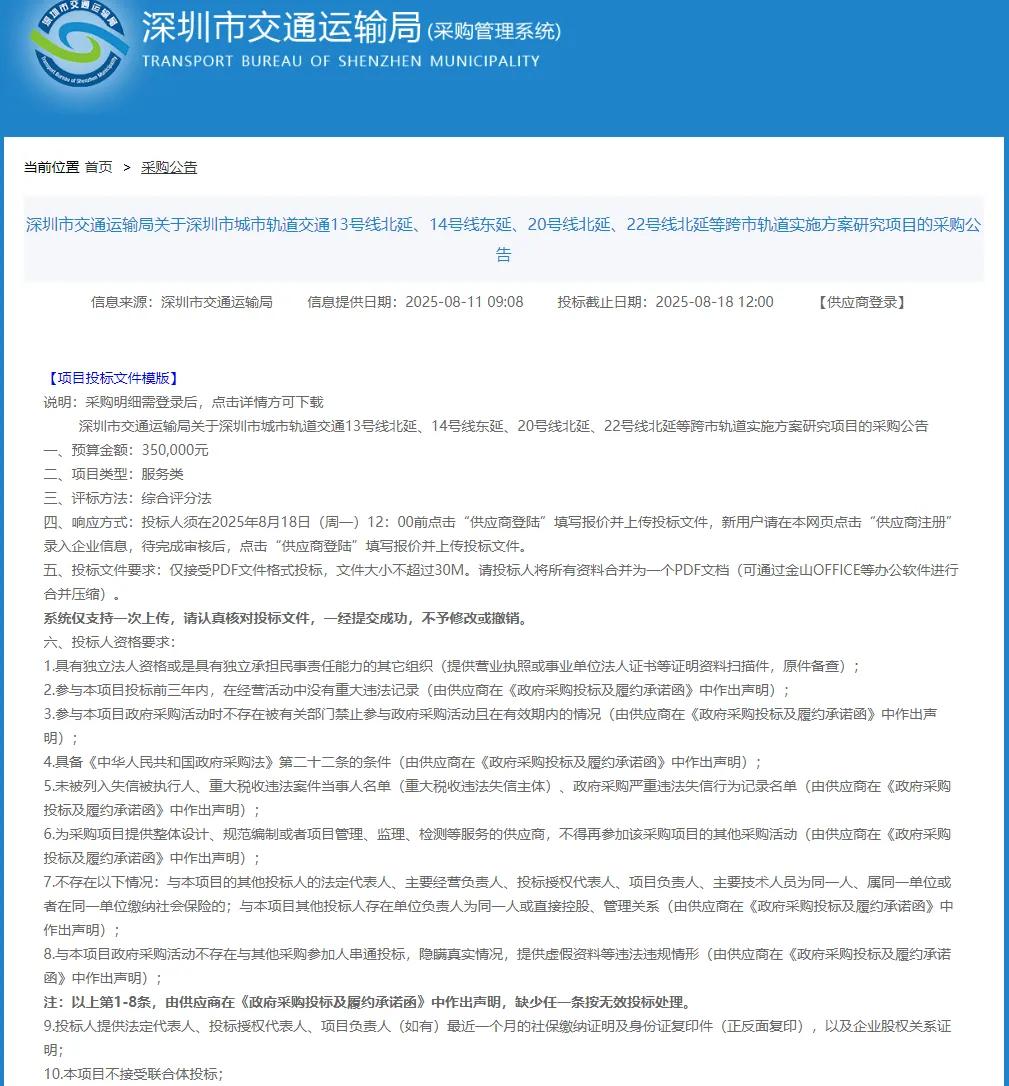
Source: Shenzhen Municipal Transport Bureau
This makes the extension of Shenzhen Metro Line 14 seem possible again.
In the broad sense, other prefecture-level cities that can join the metro city family in the future include Chuzhou, Yangzhou, Meishan, Deyang, Quanzhou, etc.
Chuzhou: Nanjing Metro Line S4 is under construction, which will reach Chuzhou in the future.
Yangzhou: Nanjing Metro Line S5 is under construction, which will reach Yangzhou in the future.
For Meishan and Deyang, they will gain metro access through Chengdu's suburban railways.
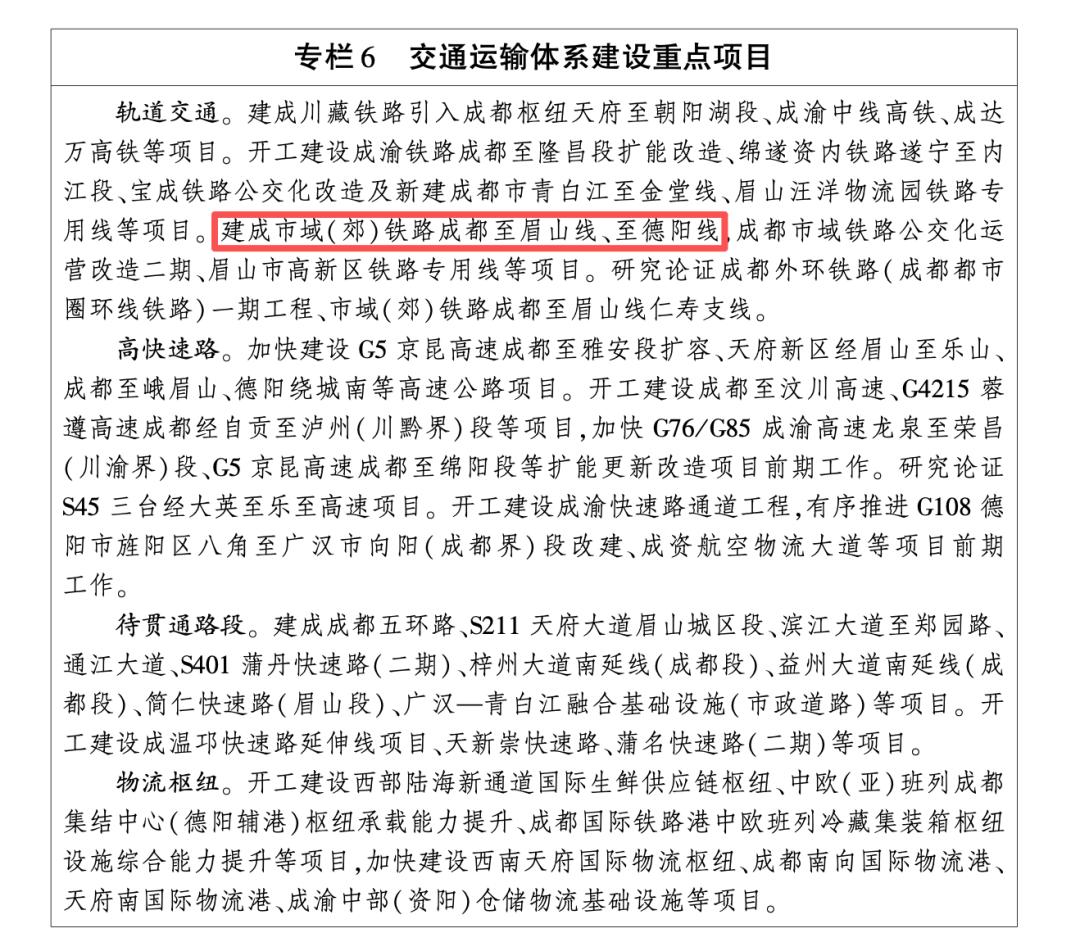
The "15th Five-Year Plan for the Integrated Development of Chengdu Metropolitan Area" recently issued by Sichuan Province mentions:
The Chengdu-Meishan line and Chengdu-Deyang line of suburban railways will be completed.
This means that after the Chengdu-Ziyang line was officially put into operation in September 2024, Meishan and Deyang will also join the metro city family in the broad sense in the future.
Another city is Quanzhou.
Before Yantai's GDP exceeded the trillion-yuan mark, Quanzhou was the only trillion-yuan GDP city in China that did not have a metro.
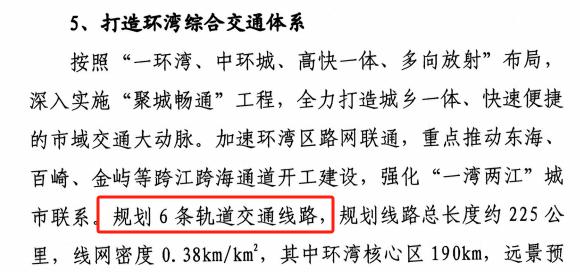
As early as in the "Overall Urban Planning of Quanzhou (2008-2030)", Quanzhou planned 6 rail transit lines.
In subsequent government planning documents related to metro, the 6 lines have always been retained.
For example, the "New Urbanization Plan of Quanzhou (2021-2035)" issued in 2021 still states that "6 rail transit lines are planned".
The fundamental reason why Quanzhou has never been able to apply for metro construction is that its population does not meet the requirements.
Quanzhou has a strong economy, but it is a typical case of "prosperous branches with weak trunk": its economy, industries and population are mainly concentrated in its administered county-level cities such as Jinjiang, Shishi, Nan'an and Huian, and the population in the urban area is less than 3 million.
Now the state has clearly stipulated that it will no longer accept the first-round metro planning applications from ordinary prefecture-level cities, so it is impossible for Quanzhou to realize its metro dream through independent application.
The only hope is the Xiamen-Zhangzhou-Quanzhou Intercity Metro Line R1.
If the Xiamen-Zhangzhou-Quanzhou Intercity Line R1 to be opened in the future adopts metro-style operation like Guangzhou does, Quanzhou will realize its metro dream in an indirect way.
If this happens, the Xiamen Metropolitan Area will also become the first national-level metropolitan area in China that has "metro access for all its administered cities" in the broad sense.
03
Metro Development Has Entered the Stock Era
To emphasize again.
From the perspective of the strict definition of metro, whether it is Kunshan, Ezhou, Xianyang and Zhangzhou that have already joined the metro city family, or Langfang that is about to join, all their metro projects were applied for, approved and started construction by central cities before the metro access threshold was tightened.
In the future, the number of metro cities in the strict sense will no longer increase.
The logic is very simple: the metro access threshold has been raised to the strictest level in history. There are four supporting pieces of evidence:
First, the state will no longer accept the first-round metro planning applications from ordinary prefecture-level cities.
In recent years, as the real estate crisis and local debt problems have become prominent, the authorities have clearly emphasized that they will no longer accept the first-round metro planning applications from ordinary prefecture-level cities.
In 2022, the reply from Weifang Municipal Transport Bureau to citizens' questions stated: At present, the National Development and Reform Commission still does not accept the first-round construction planning applications from ordinary prefecture-level