Why do we have to "buy" the hardware that has already been installed in the vehicle a second time?
Everything can be connected to the internet, and any connected function can be charged for.
An old piece of news from three years ago went viral again in a small way on this Monday morning.
Early on Monday morning, when the editorial department was holding its regular daily meeting, a screenshot from a certain X platform suddenly popped up in the group chat that the team frequents: a user posted a video screenshot marked "The brake function of the 9th generation Camry requires payment", and commented: Just in case you have never seen such a shameless thing of epic proportions.
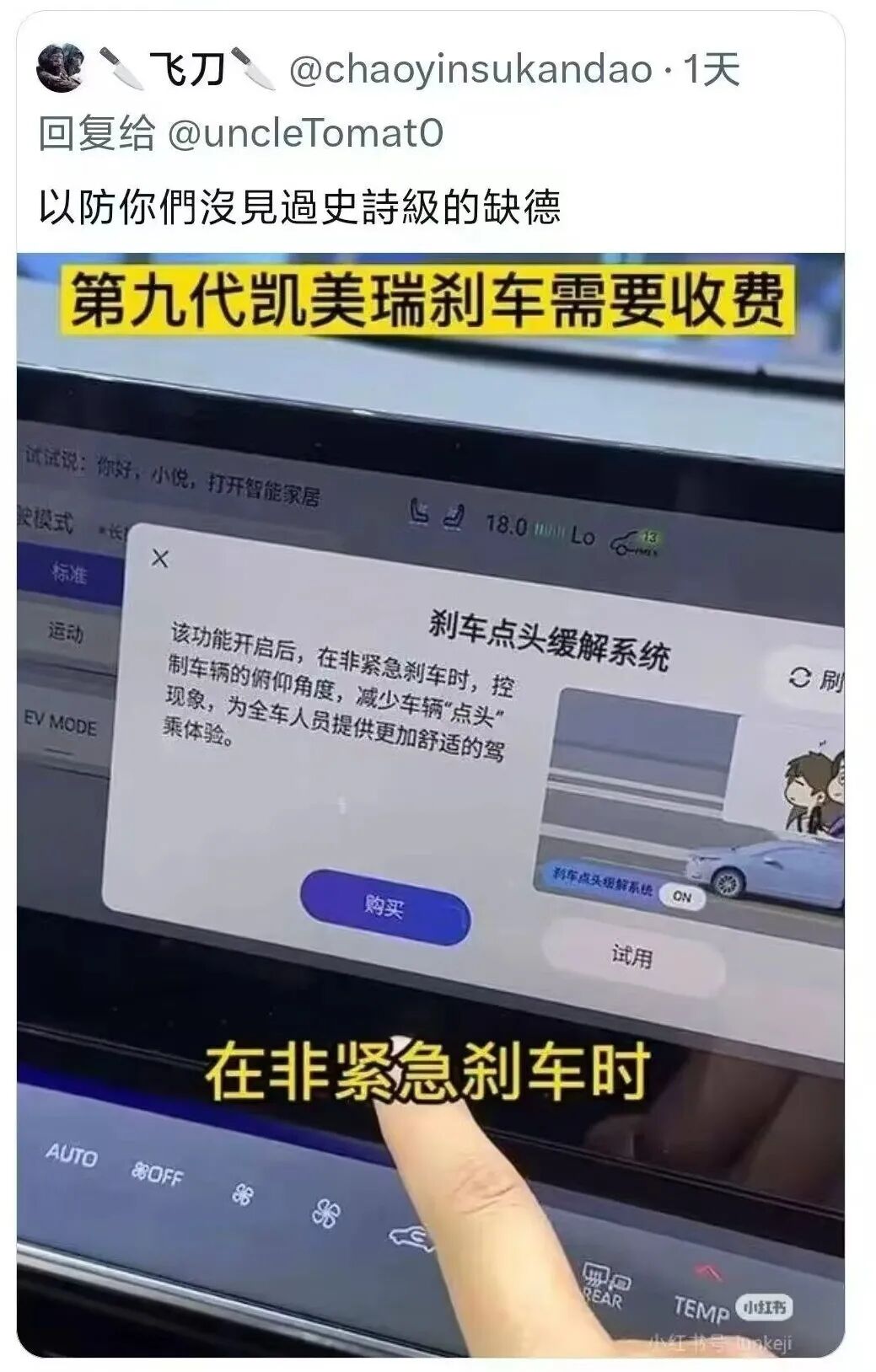
Such a dramatic scene immediately sparked a flood of complaints in the group. Some people exclaimed that the old joke of "charging by the number of brake presses" had come true, while others discussed seriously, "Is the next step to charge you every time you step on the accelerator?"
However, the author spotted something wrong at the first time: isn't this the rehash of the "old news" from three years ago? Not only is it old news, it is also a standard long-standing rumor.
During the Guangzhou Auto Show in November 2023, GAC Toyota was once involved in a so-called "brake payment" controversy. After the public opinion of the incident fermented, the manufacturer gave an official response, stating that the system "is not the brake itself, but uses additional software algorithms during non-emergency braking to distribute braking force between different wheels, so as to suppress body pitch and reduce the nodding phenomenon." In short, it is essentially just an extra comfort function.
At the same time, the official further emphasized that the vehicles at the auto show were pre-production prototypes, and the content displayed on the car infotainment screen was all test pages, which did not represent the mass production state. The specific equipped models are subject to mass-produced vehicles. The 9th generation Camry that was subsequently mass-produced and delivered did, as the official stated, provide this function as a free configuration in the mass-produced version without additional charges.
As a practitioner who understands the situation, after the author gave a brief explanation, everyone in the group immediately calmed down. Some people searched the Internet specifically and found that this old rumor has been repeatedly hyped in the past three years. But it is exactly this point that is the most thought-provoking part.

Official rumor refutation from three years ago
Why is everyone's first reaction to believe a statement that was clearly falsified at the first time before? Why does it get rehashed every once in a while, and every time it still manages to convince a lot of people? This cannot be explained by the extreme spread trend of the internet. Until a group member suddenly ended the discussion with one sentence —
"Wait a minute, I'm thinking... If there hadn't been that 'rumor' back then, would this function have ended up being charged for instead of being provided for free with the car?"
SOA architecture, why has no one talked about it in recent years?
Let's go back to 2021. The most popular buzzword in the automotive industry that year was "Software Defined Vehicle".
In April of that year, SAIC held the world's first automotive SOA platform developer conference, and launched a full-stack solution named Galaxy. SOA is a service-oriented architecture, which sounds extremely technical, but its underlying business implication is very clear.
The statement from SAIC Zeros at that time was that the central centralized electronic architecture realizes pluggable, removable and expandable hardware, the SOA software platform realizes purchasable, sellable and subscribable software, and the data factory realizes self-learning, self-growth and self-evolution of vehicles.
Don't be surprised, because five years ago, the whole industry generally had such a vision for the future. The SOA architecture was regarded as the hope of the industry's future. One evidence is that at that launch event, all mainstream Chinese technology companies including Baidu, Alibaba, Tencent, JD, and Huawei were present. Of course, SAIC was far from the only one with similar plans at that time. Changan launched its Zhuge Smart system and SDA architecture, setting a goal of launching more than 30 new intelligent connected products by 2025. GAC, Voyah, and the once-active WM Motor and Hozon Auto at that time were also all talking about SOA.
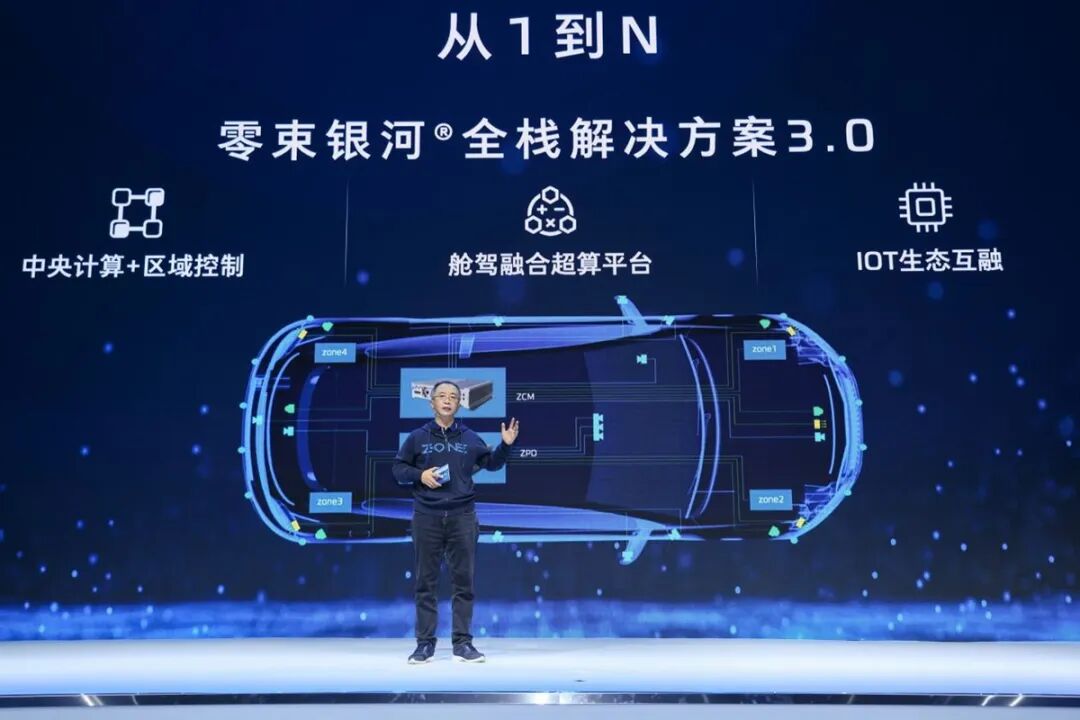
The 2nd SAIC Zeros SOA Platform Developer Conference, November 4, 2022
This narrative gave automakers a very handy weapon. In the past, the functions of a car were fixed the moment it left the factory: if it was installed, it was there, if not, it was not. SOA abstracts all sensors, actuators, computing power and control algorithms into callable services, and then connects them to accounts, permissions and billing systems. In this way, the same piece of hardware can be divided into different price tiers, and the division can be done long after the vehicle is delivered, for as many times as you want.
Every manufacturer has a clear calculation behind this logic. GAC NIO once broke down the cost of components in the early days, saying that the comprehensive net profit margin of hardware is no higher than 1%. When the profit of vehicle manufacturing is drained by rounds of price wars, software has become the most attractive incremental revenue source. Elon Musk put it more bluntly: the future profit growth point of the automotive industry does not lie in selling cars, but in autonomous driving mobility services and software payment.
No matter how appealing the story is, it depends on whether consumers will buy it. Ordinary car owners may not understand what "service-oriented architecture" means, but if you tell them that they need to pay, or even pay a monthly subscription fee, to activate a certain function, how could they not get upset?
BMW was the first to hit a wall. In 2022, BMW launched subscription services for seat heating and steering wheel heating in multiple markets including the UK, Germany, and South Korea. The monthly fee for seat heating is about $18, the monthly fee for steering wheel heating is about $12, the annual fee is $176, and users can also pay $406 for permanent access, with a 1-month free trial provided.
BMW's calculation was actually very sophisticated: since about 90% of car owners would originally choose to install seat heating, it is better to install it on all models. Unified production can save a lot of costs on materials, wiring harnesses, assembly and verification, and car owners who do not need it can activate the function on demand later. It sounds like a win-win solution. The logic was impeccable, but the result was a disaster.
The complaints from car owners around the world were almost identical: the hardware has already been installed in the seat when the car left the factory, why do we still need to rent it? The public outcry at that time was so huge that Peter Nota, BMW's board member responsible for marketing and sales, rarely apologized later: Car owners feel that they have paid twice for this configuration, which is not the case in fact, but perception is reality, as I always say, so we stopped the service.
In September 2023, BMW completely canceled this subscription service, and changed it to a one-time optional installation at the time of delivery. The head of product communications at BMW later added that basic comfort functions such as seat heating are most likely to cause public resentment, and this is indeed not a good start.
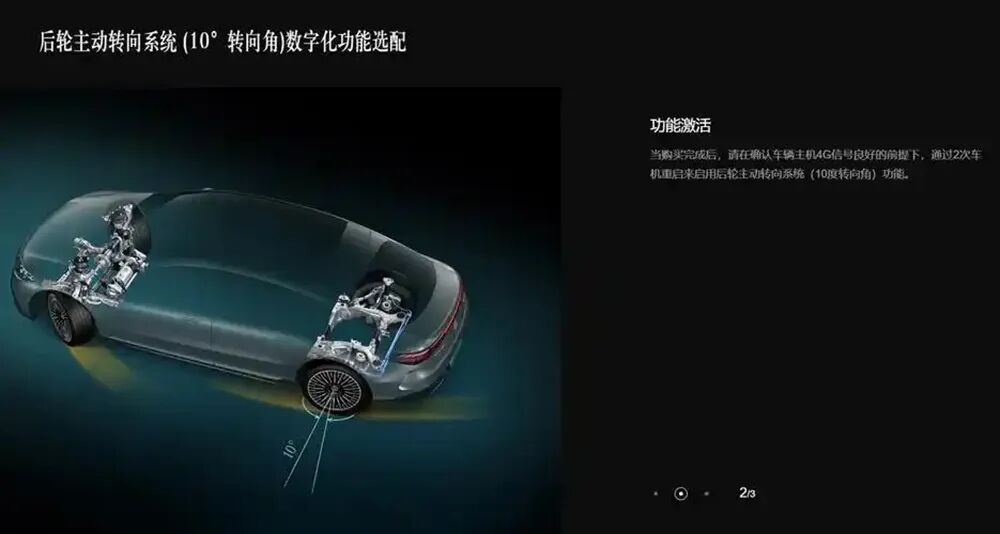
The rear-wheel active steering function is very useful, but users will accept it if it is provided as an optional configuration, while monthly subscription will inevitably cause public criticism
Almost at the same time, Mercedes-Benz also suffered a setback. In June 2022, the official account of Mercedes-Benz China published an article titled "4.5°, it can now be 10°", announcing that owners of the EQS 450+ Pioneer Edition can pay 4998 RMB per year to remotely upgrade the rear-wheel active steering angle from 4.5° to 10° via OTA, and the turning diameter will be shortened to 10.9 meters.
Even to attract more people to pay for the subscription, Mercedes-Benz gave a 3-month free trial. And the same article clearly stated that all other versions of the EQS come standard with 10° rear-wheel steering. That means the mechanical structure that can turn 10 degrees was already installed in this car worth more than one million RMB. The only thing missing was a single line of code.
Another round of public opinion swept the internet at that time, and finally forced Mercedes-Benz to admit its mistake. Mercedes-Benz China later canceled this subscription service. It is reported that very few users chose to pay for this function at that time, and after that, Mercedes-Benz's subscription services were narrowed down to software-only functions.
Apart from luxury brands, the mass market was not peaceful either. The four words "disguised charging" were prominently listed in the annual keywords of automotive complaints in 2022. According to statistics from a third-party complaint platform, Great Wall Motors alone accounted for 81% of the relevant complaint index, and the problems were concentrated on models such as Haval F7 and Haval F7x. Car owners reported that the infotainment system, which was originally standard and promised to be permanently free, suddenly required payment to be used.
A more recent example happened at the end of 2022, when smart announced a steering wheel heating subscription package that once supported monthly or annual payment. After causing controversy, it canceled the subscription model in early 2023 and changed it to one-time flexible purchase. When some media commented on the Camry controversy at that time, they specifically used it as a comparison, saying that the steering wheel heating of smart next door could be paid on a monthly basis.
Is the car you bought really completely yours?
What really annoys consumers is never the phrase "software charging" itself, but three major gaps.
One end of the gap lies in promotion and contracts. The manufacturer says on the launch event that the car has a certain capability, the contract does not state that this capability requires additional payment, but after delivery, a payment page pops up on the infotainment screen. Each of these three parts is reasonable on its own, but when put together, the whole thing goes wrong.
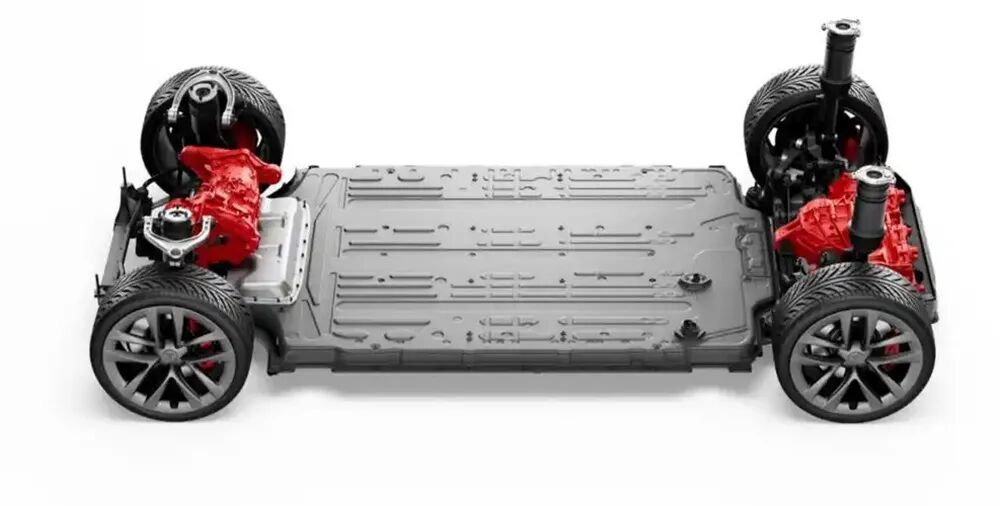
It should be noted that Tesla was actually the first to launch the paid unlock mode for pre-installed automotive hardware. In the early days before the lithium price surge, both Model S and Model X were equipped with the same battery configuration, and car owners could pay extra to unlock more battery capacity as needed
The other end of the gap lies in hardware and licensing. Car owners buy the whole vehicle, including every screw and every wiring harness in the car, but the right to use the function is separately taken away and put into an account that can be shut down at any time. Ownership and right to use are separated into two parts for the first time by software. Some car owners put it harshly: if I never use these pre-installed hardware for my whole life, it means part of the car payment has gone down the drain. Will the company consider refunding that part of the money?
There is also a gap between public perception and corporate explanation. Companies have repeatedly emphasized that pre-installing hardware reduces manufacturing costs, but these saved costs have never been reflected in the car price. What consumers see is that I paid for a bunch of parts that I cannot use, and I have to pay a second time if I want to use them.
Data is more honest than any excuse. A global survey by Deloitte covered 26,000 people, and the results showed that most respondents prefer to pay in full at the time of car purchase or pay per use, rather than paying monthly subscriptions. This attitude is particularly obvious in the Chinese market: among 707 respondents, 54% chose one-time payment, 39% accepted pay-per-use, and only 8% were willing to pay monthly subscriptions. A survey by Cox Automotive in early 2022 also showed that among 217 consumers who planned to buy a car within two years, 75% were not interested in any form of in-car subscription.
There is a clear line in consumers' attitude. Users are willing to pay for cloud services that require continuous investment, such as map updates, computing power support, and algorithm iteration, because these services cost money every day and keep getting better with use. But charging for static hardware that is fixed on the car at the time of delivery and will not get better over time triggers an almost instinctive resistance. A widely spread metaphor from netizens goes like this: you buy a mobile phone with a top-tier processor and a top-tier screen, but you have to pay monthly to let the processor run at full capacity and unlock the high resolution of the screen. Anyone would get upset about this.
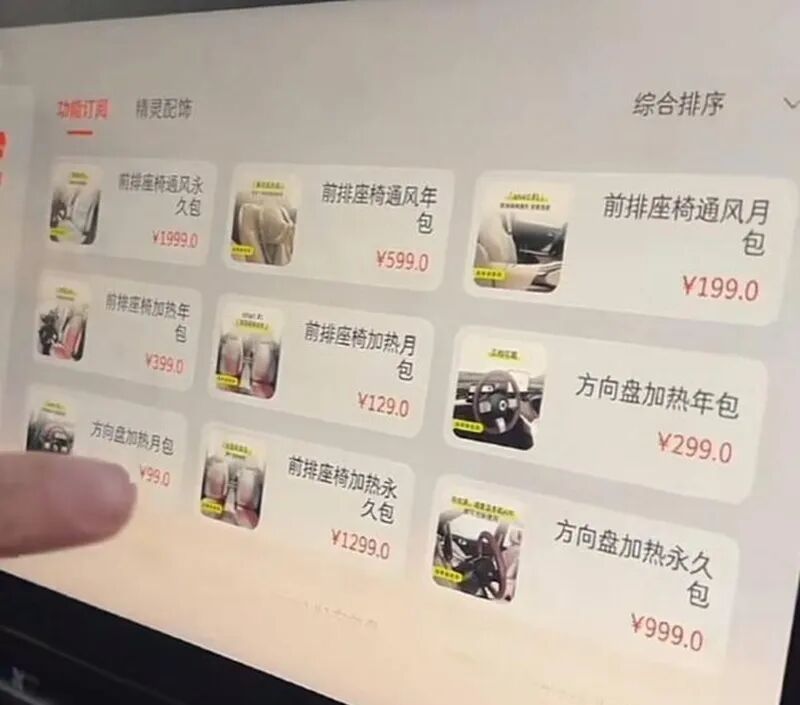
Although purchasing services is not mandatory, it still makes many people sigh "what's your problem"
BMW has figured out this problem. They retained software-only subscriptions such as driving assistance and parking services, but withdrew from monthly charging for hardware functions, and clearly promised that they will not unlock power or battery range via payment, and core performance will not be locked.
However, a few companies figuring it out does not mean the problem has been completely solved, because this line has long been drawn by the companies themselves. Functions such as steering wheel heating, seat ventilation, rear-wheel steering, trace-back reversing, and remote vehicle control — there has never been a unified answer to whether these are value-added services or basic capabilities that a car should have. So the controversy continues.
In September 2025, a survey by CCTV pushed this issue back to the spotlight. The infotainment screen of some car owners kept popping up prompts saying that the steering wheel heating function required a paid subscription, while the salesperson promised free activation later at the time of purchase. Some car owners found that the trace-back reversing and remote parking functions were locked, and the permanent activation price was 1998 RMB. When they asked the 4S store how to use them, the answer they got was that the manufacturer had not trained the staff, and it was recommended not to buy them for the time being.
In the report of the Legal Daily in the same period, some brands even set the four-wheel drive function as a monthly charge of 350 RMB, reclassified voice assistants and online navigation into entertainment data plans, and even excluded the SOS emergency rescue from the basic data plan.