You even have to search for tutorials online just to watch TV, but it's really not your fault.
It's 2026, is there anyone who still doesn't know how to turn on a TV?
Sorry, that person might be me...
Here's the thing: I went back to my hometown some time ago, wanting to tune to CCTV-8 for my grandma. I fumbled back and forth with two remote controls, flipped through the main page again and again after the screen lit up, but just couldn't find the entry for live TV.
At first I thought it was just that I hadn't turned on a TV for too long and got rusty, but after searching online, I found that this problem really can't be entirely blamed on Shi Chao.
There are plenty of people who look up tutorials online because they don't know how to turn on their TV, and I'm not the only one complaining that it's too hard to get the TV working...
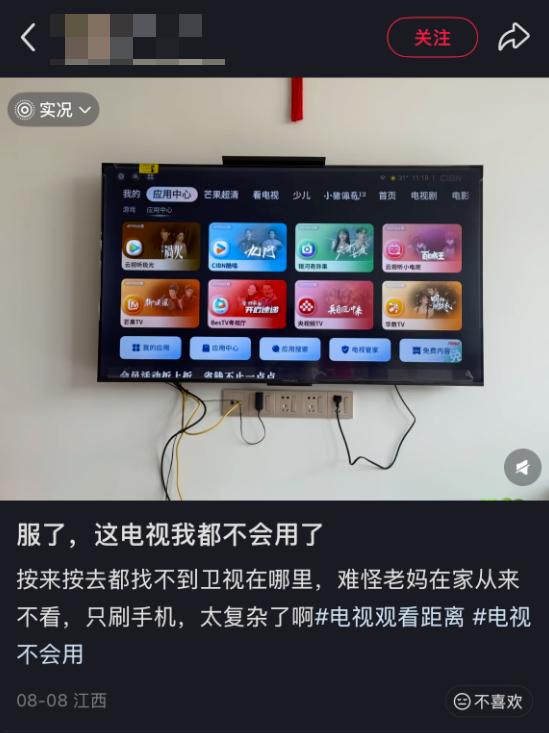
After dealing with the boot-up ad, you still have to rummage through all the recommendations on the screen. Even when the set-top box is turned on, you have to manually switch the signal source, then find the live entry on the set-top box's page.
Not to mention the elderly, even young people might be confused by this...
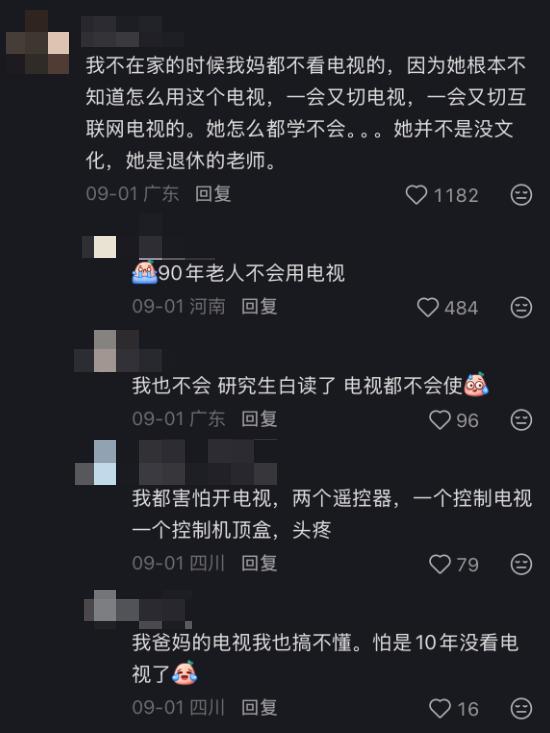
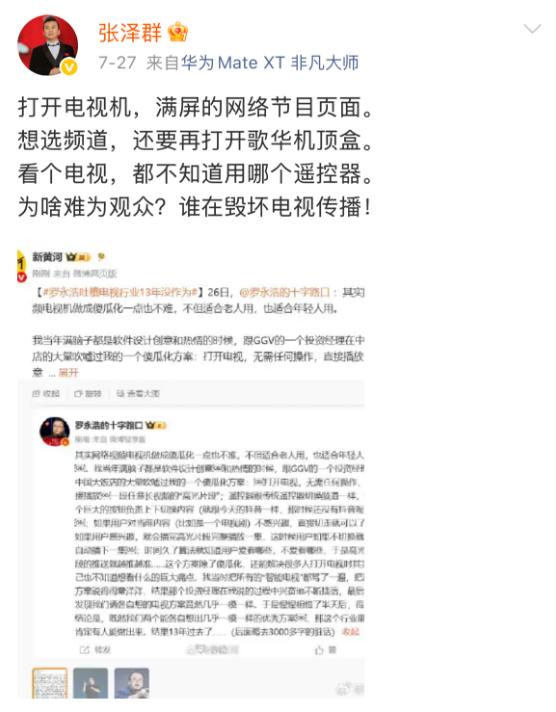
Anyway, Luo Yonghao has spoken out about this more than once. Zhang Zekun, a former CCTV host who has worked as a TV host for many years, also complained about this issue.
The good news is that the National Radio and Television Administration has decided to take action again.
At today's "15th Five-Year Plan" press conference, the National Radio and Television Administration stated that it will promote integrated TVs, and plans to integrate the set-top box directly into the TV.
This is a good thing, but Shi Chao wonders why, even in 2026, making it easier for people to watch TV has become a problem that needs to be solved specifically?
I remember that when I was little, there were programs on as soon as I turned on the TV, and the channel you left it on when you turned it off would still be there when you turned it back on. Now the screens are getting bigger and bigger, and there are more and more functions, but turning on a TV requires going through so many obstacles.
I just want to turn on the TV and watch programs, why on earth is it so complicated?
Let's get straight to the point: after doing some research, Shi Chao found that it's not that a certain TV manufacturer is deliberately making trouble for users.
This may date back to the No. 181 document.
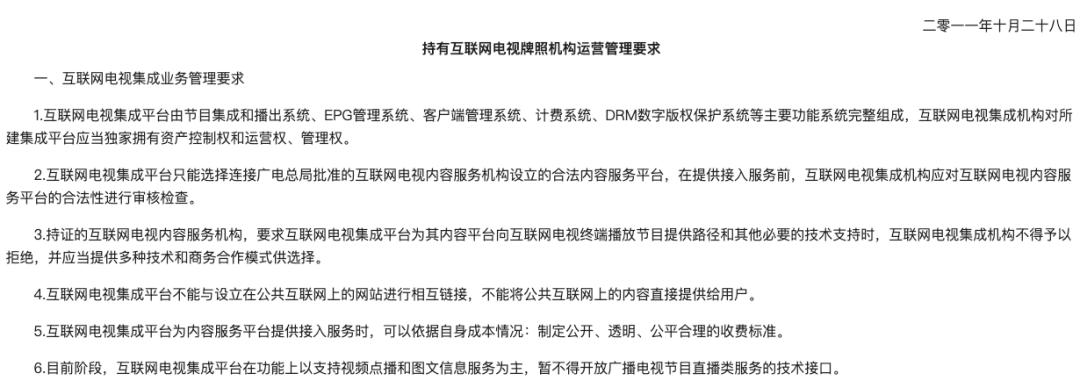
In 2011, the National Radio and Television Administration issued the "Regulations on Operation Management of Institutions Holding Internet TV Licenses", which is the No. 181 document, and there is a key sentence in it:
The Internet TV integration platform is mainly based on video on demand and graphic information services, and is temporarily not allowed to open technical interfaces for live broadcast services of radio and television programs.
What does that mean?
There are roughly three ways for us to watch TV: cable TV, IPTV, and Internet TV that provides videos through the public Internet, which is OTT.
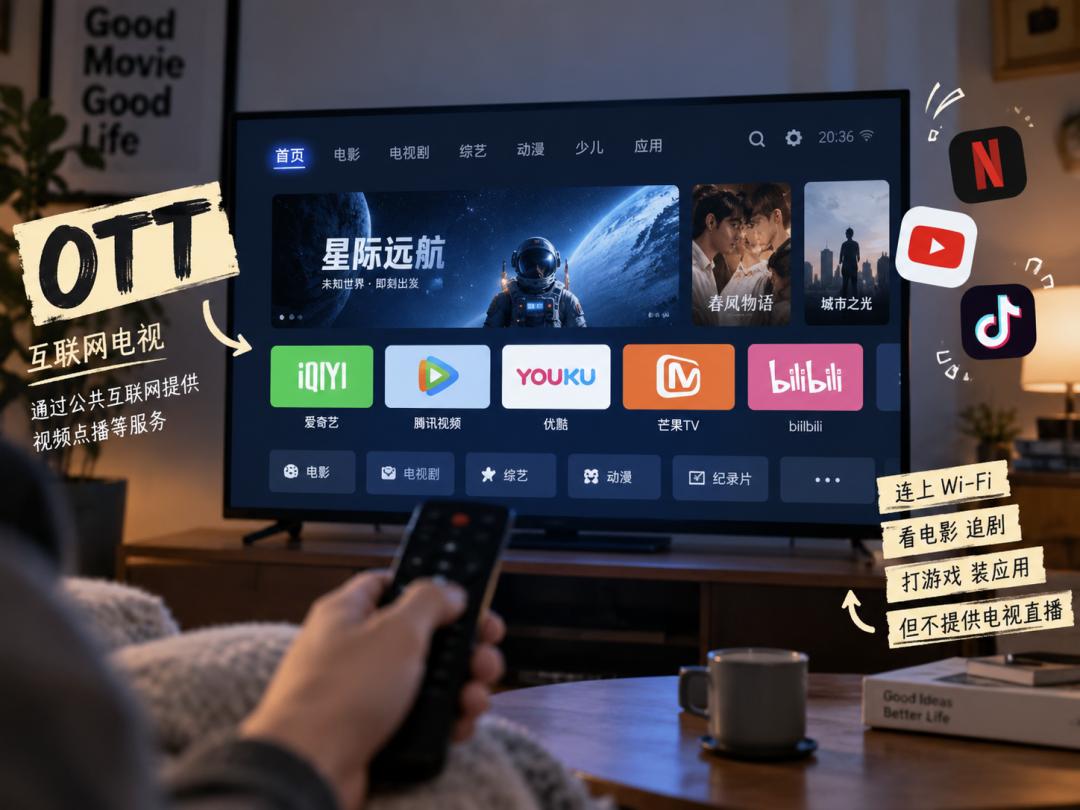
Cable TV runs on the cable TV network of the radio and television system. In the past, you could watch it just by connecting a signal cable. IPTV runs on the operator's private network and can also provide live TV.
But according to the regulations, Internet TV OTT cannot do this.
Of course, people have tried to find unofficial ways to watch TV.
Since the TV can connect to the Internet, why not just install an app to watch CCTV? That's why live streaming apps like TV Home were very popular a few years ago.
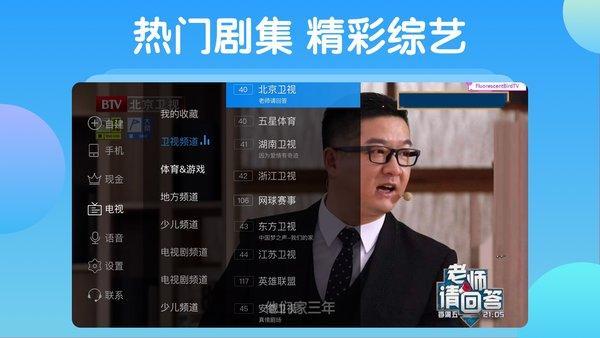
The problem is that this seemingly most convenient way is not very compliant...
In 2023, while the radio and television authorities were addressing the nested payment issues and complicated operations of TV services, they were also cracking down on illegal Internet TV applications and standardizing Internet TV live broadcast services.
Then the TV Home app stopped its service.
After that, the regulatory authorities also required TV manufacturers to put a "TV Viewing Clear Card" on product packaging, e-commerce pages, offline sales and installation links.
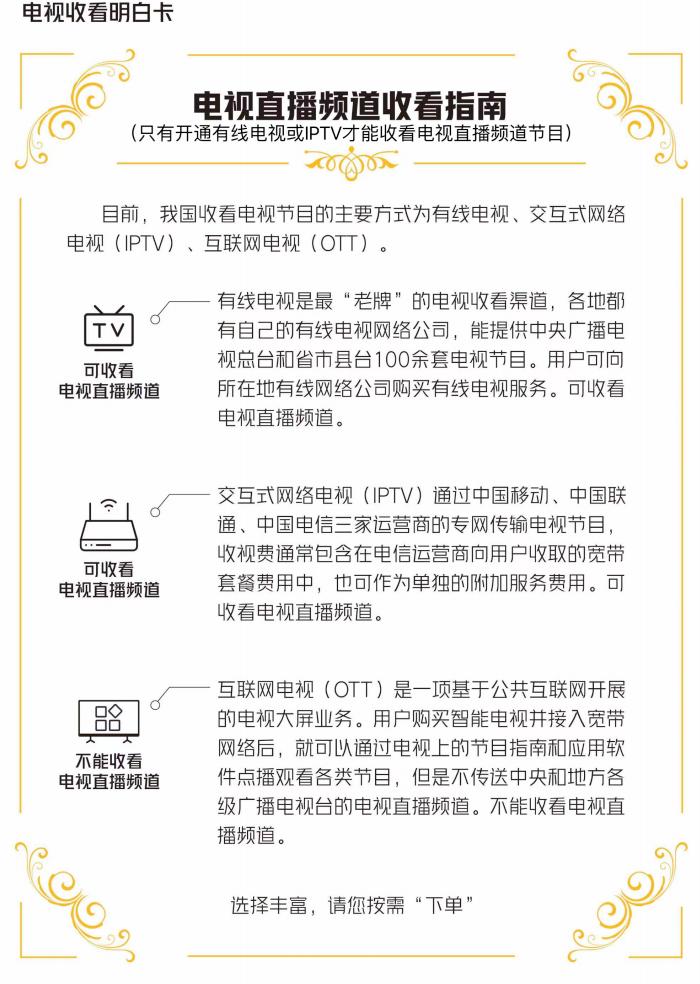
So if you want to watch live channels such as CCTV and satellite TV in a compliant way, you still need to connect to IPTV or cable TV separately. The most common solution in the past was to equip an additional set-top box.
Then things started to get troublesome... When you turn on the TV, the two sets of systems operate independently.
For TV manufacturers, the home page is obviously not just a menu to help users find functions, but also an entry that can generate continuous revenue. Boot-up ads, content recommendations, application distribution, video memberships... can all generate continuous income.
How profitable can this be?
When Xinhua News Agency investigated the boot-up ads of smart TVs in 2020, it mentioned that a certain smart TV manufacturer could earn 1.7 million yuan per day from boot-up ads.
Although this is data from previous years and cannot represent the current situation, Shi Chao checked the financial report of TCL Electronics. In the first half of 2026, the revenue of its large-size display business was 35.25 billion Hong Kong dollars, and the revenue of its Internet business was 1.69 billion Hong Kong dollars.
The figure is not large by comparison, but the gross profit of the Internet business is 1.03 billion Hong Kong dollars, with a gross profit margin of 61.1%. In contrast, the gross profit margin of TCL's entire display business in the same period is only about 18.5%.
The revenue of the Internet business is not large, but it is a very high-margin profit source.
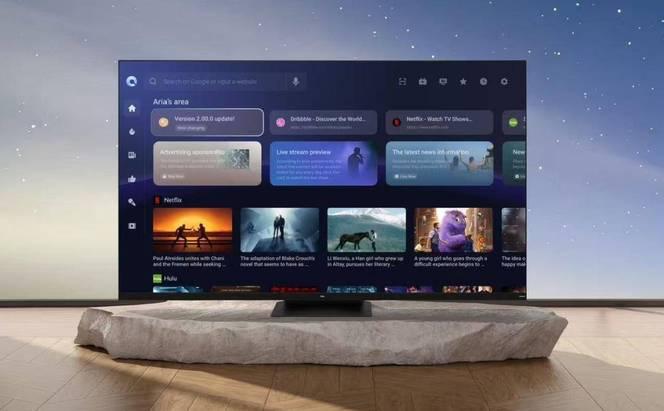
Moreover, not only TV manufacturers are placing ads, cable TV and IPTV service providers are also doing this.
Here is a brief popular science: IPTV is a business jointly operated by radio and television authorities and operators. The radio and television side is responsible for content integration and broadcast control, the operators are responsible for the network, users and charging, and the revenue is divided according to the agreement.
Only a fixed fee can be charged for basic viewing per household, but on-demand and membership content such as movies, children's programs, and sports can be charged additionally.
Take Guangdong as an example. In 2025, the IPTV basic business revenue of New Media Co., Ltd. under Guangdong Radio and Television was about 830 million yuan, while the IPTV value-added business revenue reached 416 million yuan, almost half of the basic business revenue.
The same goes for cable TV. After digitization, value-added services were launched very early.
Looking back now, you can understand why it is so difficult to watch TV.
One screen, two groups of people doing business. Everyone is trying to put ads in it, and only you are afraid of missing the 8 o'clock show tonight.
In fact, three years ago, the new regulations directly set "full-screen live broadcast on boot" as the default option for cable TV and IPTV terminals.
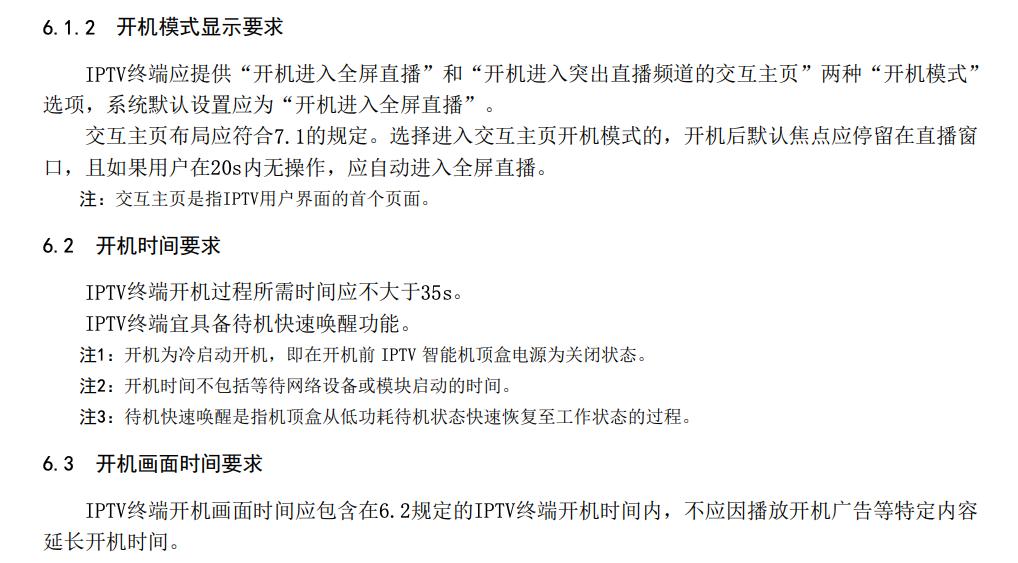
If you don't want to enter live broadcast directly, you can choose the interactive home page by yourself, but the live broadcast window must be placed in a prominent position. If there is no operation for 20 seconds, it will automatically switch back to full-screen live broadcast.
To put it bluntly, the goal is to simplify the operation steps as much as possible.
The elder mode launched by many TV manufacturers follows a similar idea: enlarge the fonts and icons, simplify the pages, some settings are pre-configured, and you can even reach the commonly used content directly with one click after booting.
As for the two remote controls, it is best to combine them into one.
At first, infrared learning technology was used to make the set-top box remote control control the power on/off and volume keys of the TV. Later, the three-mode universal remote control was promoted .
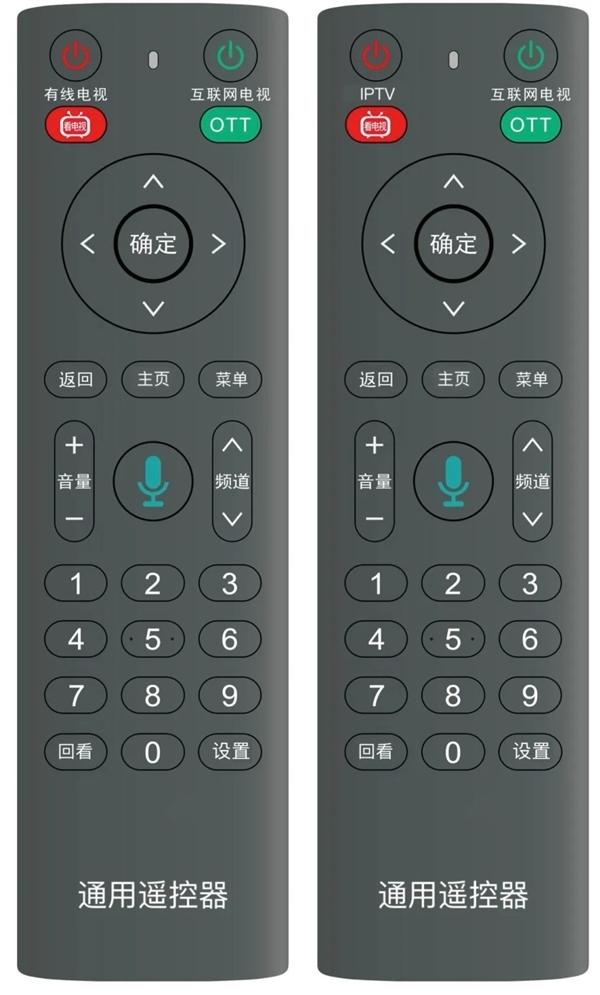
Changes have indeed been made, but the effect is really slow to show.
On the one hand, there are too many existing devices. More importantly, the solution is essentially patching the old system, which only treats the symptoms but not the root cause.
If I have to say it, the product that does best in the "open and watch" experience is still Douyin...
So three years later, we can still see a lot of complaints about "why it is so hard to watch TV".
Is there no more thorough solution?
Yes, there is.
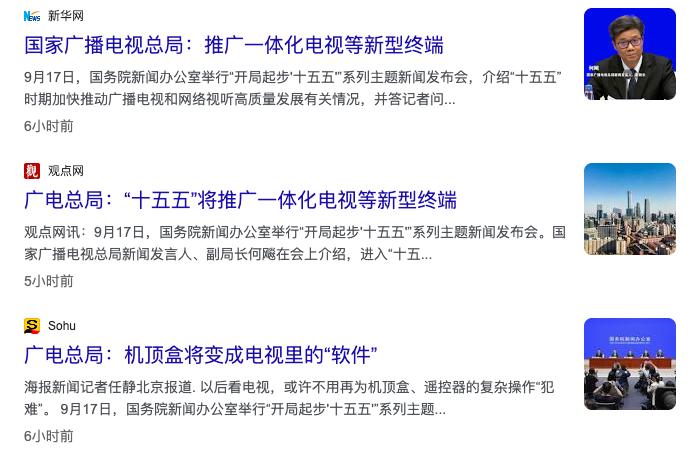
The integrated TV that is said to be promoted nationwide this time is to integrate the original IPTV and cable TV systems into the TV in the form of software.
There is no need for an external set-top box, no need to switch HDMI back and forth. One TV, one remote control, you can watch live TV as soon as you turn it on.
For old TVs that have already been bought home, you can replace the set-top box with a plug-in micro set-top box as small as a USB flash drive, hide it behind the TV, and equip it with a universal remote control.
Not long ago, the centralized procurement announcement for integrated TV adapters was released, with a total of 8.18 million units.
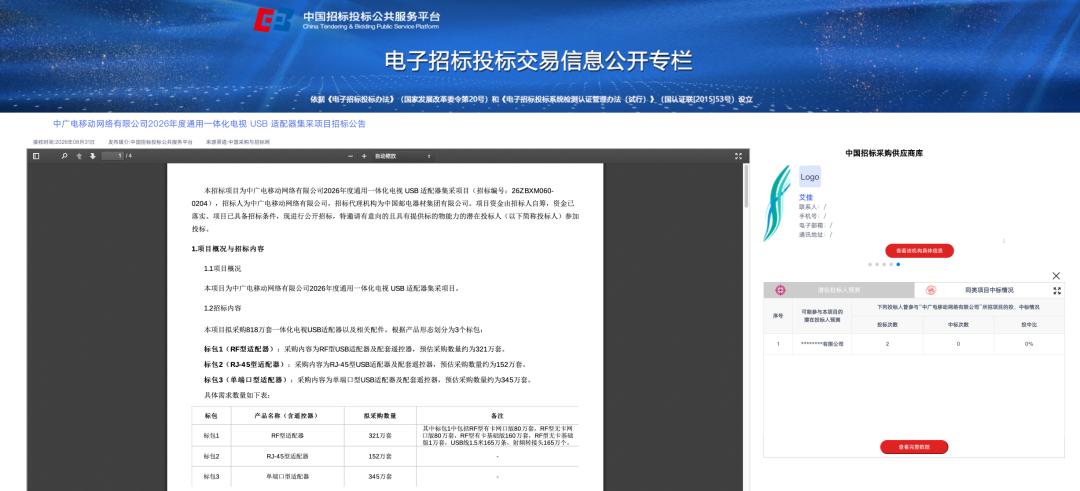
As for how much it will be popularized in the end and what the actual experience will be like, it is really hard to say now.
But at the very least, we don't have to toss back and forth between the two original systems.
Shi Chao doesn't object to TVs becoming smarter, but the original intention has never changed — I just want to watch TV programs.
Image and data sources:
National Radio and Television Administration, China Bidding Public Service Platform
Weibo, Xiaohongshu
Xinhua News Agency, The "Nail Households" in Smart TVs, How to Remove Them? — Tracking the First Month