GAC and FAW are forging a strategic alliance, Zotye and Haima's shares have hit the daily trading limit, is a new wave of automaker mergers and acquisitions around the corner?
Many years later, when we look back at 2026, the most important moment for the automotive industry this year may not be the launch of any hit new model, nor the implementation of any new technology, but the release of an announcement that carries huge implications despite its brief wording.
On September 14, GAC announced that it would temporarily suspend trading on the Shanghai Stock Exchange due to "planning major asset restructuring matters", which immediately attracted nationwide attention. When the details of the restructuring were disclosed, it even set off a huge stir — GAC and FAW signed a letter of intent to purchase the shares of a joint-venture automaker held by FAW by issuing shares. At the same time, FAW will become the second-largest shareholder of GAC!
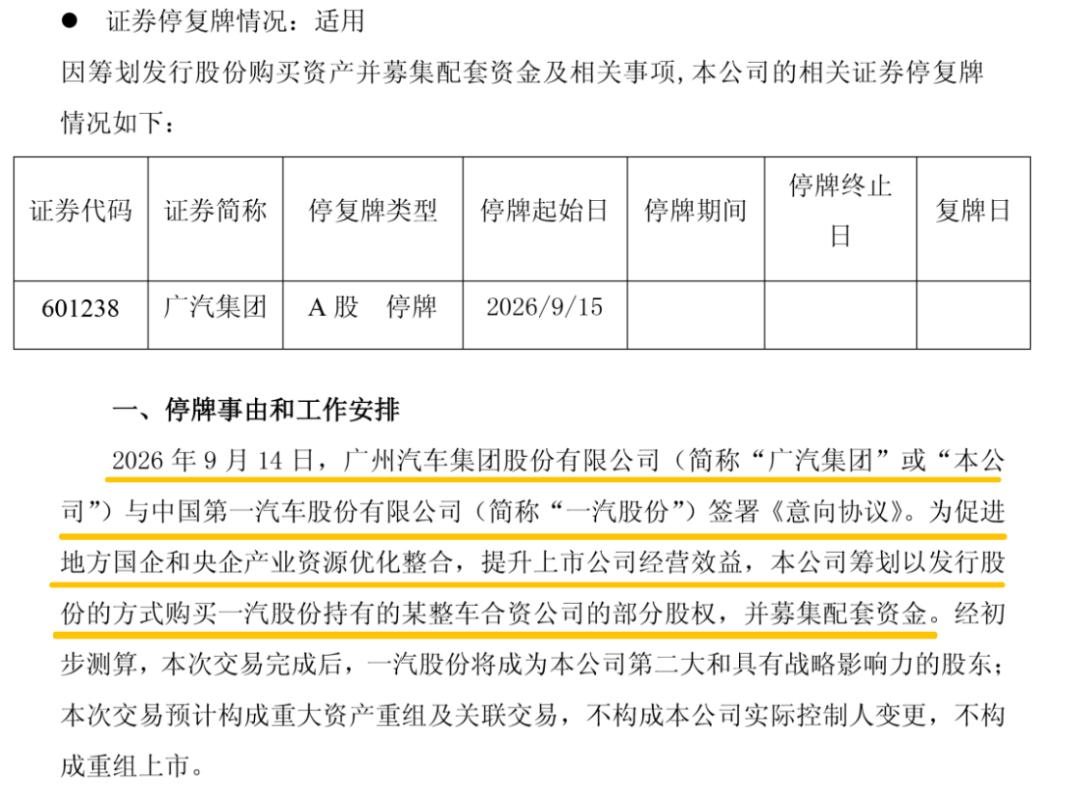
Nanfang Metropolis Daily
01 From the North-South Rivalry to the North-South Alliance
This alliance is beyond everyone's expectation.
One is the eldest son of the republic born in the old industrial base in Northeast China, and the other is a local backbone enterprise that grew up in the forefront of the reform and opening up. They are not only thousands of miles apart geographically, but also have very different corporate cultures; one is a central enterprise directly under the State-owned Assets Supervision and Administration Commission of the State Council, the other is a state-owned enterprise under the jurisdiction of Guangzhou Municipality, with a big gap in administrative hierarchy; one has not yet been listed as a whole, the other is listed on both the A-share and H-share markets, and the latter has a more market-oriented equity structure.
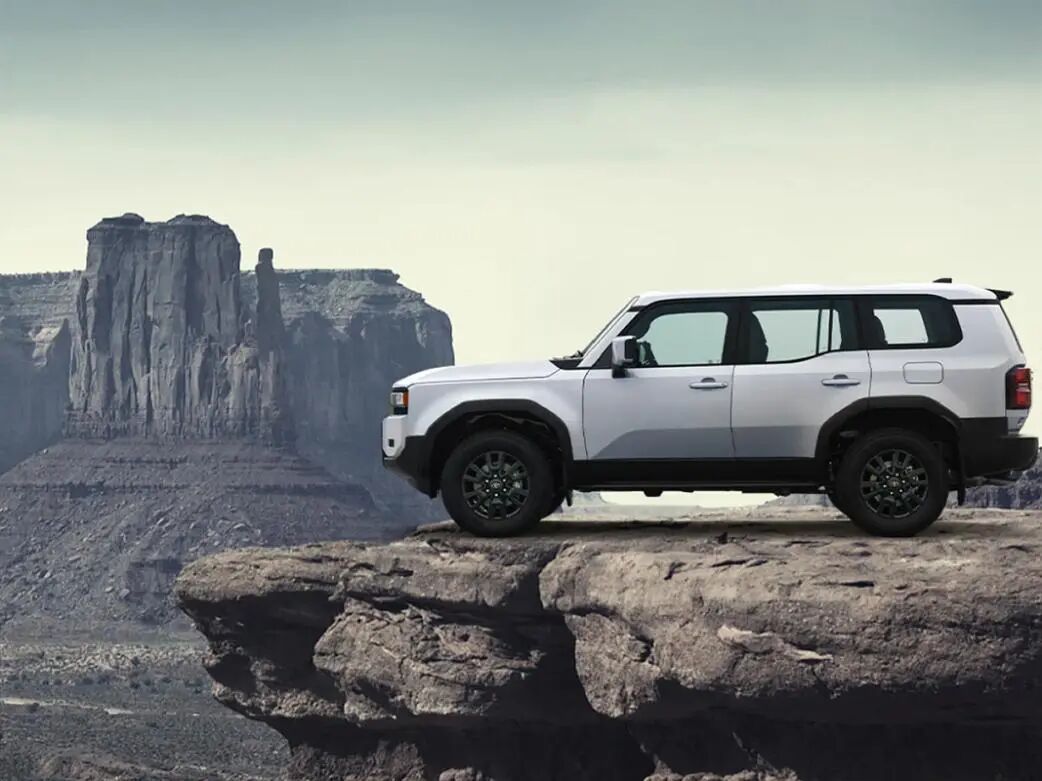
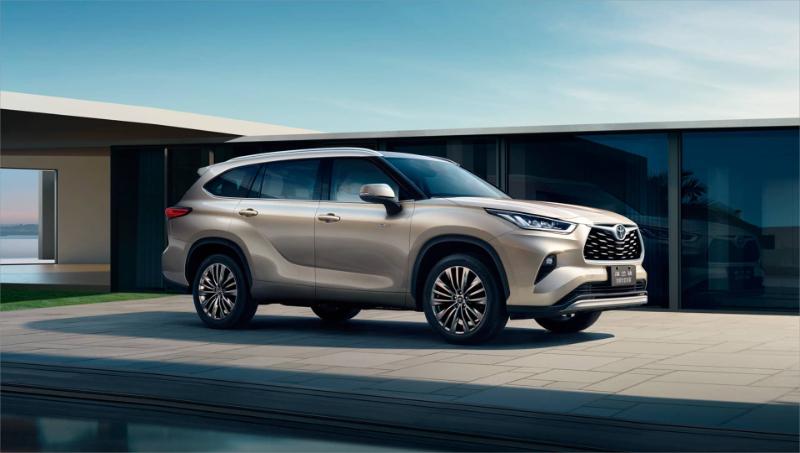
The two even have a lot of "old grudges", because they have the same joint venture partner, Toyota. Whenever a new Toyota model is about to be launched in China, FAW and GAC will fight fiercely for the right to introduce it. If Highlander goes to you, Prado must go to me; if you take Camry, you can't even touch my Crown.
In short, there is no sense of partnership between them at all, and they seem impossible to get along with.
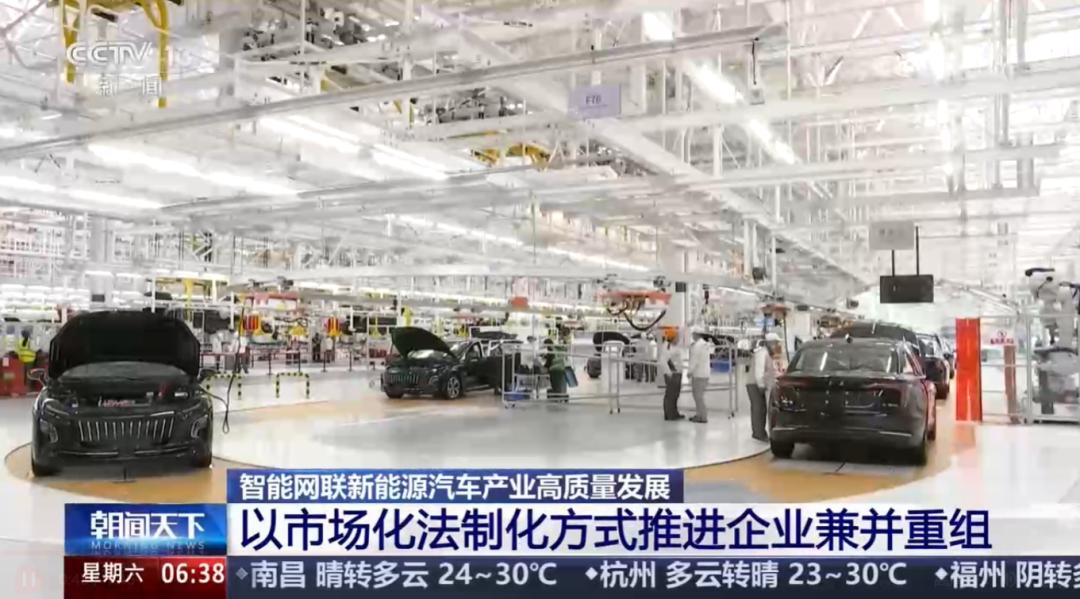
The flash marriage of these two giants is actually driven by policy guidance and the general trend of the market. On September 11, nine departments including the Ministry of Industry and Information Technology jointly issued the "15th Five-Year Plan" for the Development of Intelligent Connected New Energy Vehicle Industry, which clearly proposes to "increase the intensity of legal merger, reorganization and cross-regional integration of automobile enterprises, and further promote the collectivization management reform of automobile manufacturers". On the same day, the National Development and Reform Commission publicly stated that the state will promote mergers and reorganizations between enterprises in a market-oriented and legalized manner, support backbone enterprises to integrate R&D and production resources, so as to reduce homogeneous competition in product design and technology R&D.
CCTV
Only three days later, GAC and FAW reached a cooperation. This cannot be a coincidence, and there is obviously a strong force behind it pushing forward.
The marriage of the two is not just to set an example for the whole industry, but also has real benefits for each of them. According to the announcement, the core of this cooperation is to swap the equity of a certain joint venture company, and there is no need to guess what this "certain" refers to — it is FAW Toyota. In those years, in order to expand rapidly, Toyota operated two independent systems of FAW Toyota and GAC Toyota in parallel, each with its own sales channels and producing different models. By the way, the two giants were caught in a fight against each other, so that Toyota could bargain on both sides and firmly hold the initiative of the joint venture in its own hands.
When cars were selling well, this model worked fine and no problems occurred. But now Toyota's overall sales are declining, and the hidden problems have surfaced. Since 2021, Toyota has experienced four consecutive years of decline, with sales dropping from 1.94 million units to 1.77 million units. It barely maintained its position in 2025 only by launching price wars. However, the good times didn't last long, and its performance slumped again in 2026. From January to August, Toyota's cumulative sales in China were only 927,900 units, a year-on-year drop of 19%.
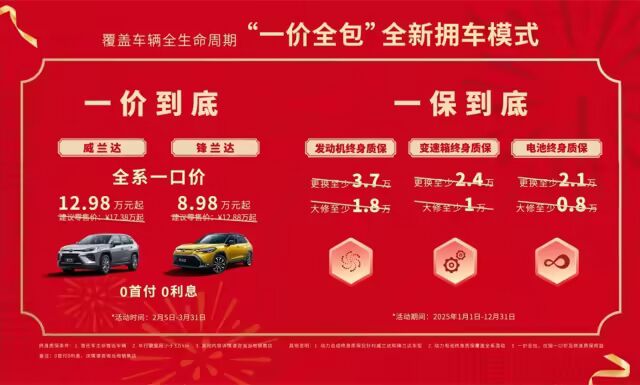
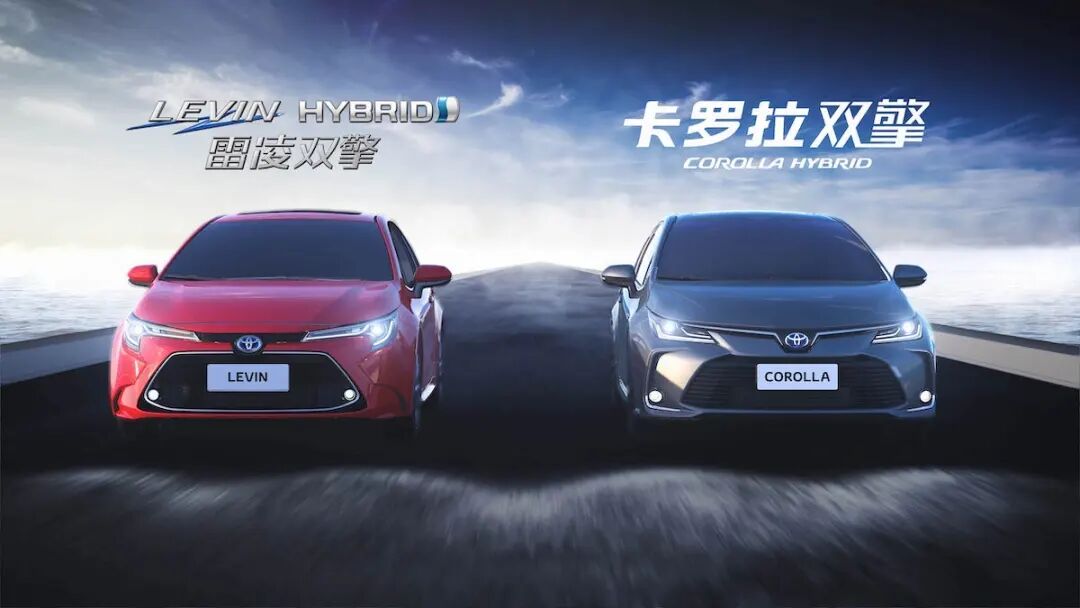
At this point, people find that the north-south dual strategy is no longer suitable. The two joint ventures have highly overlapping models, and some of them are purely rebadged cars — such as Levin/Corolla, Highlander/Crown Kluger, these sibling models are undercutting each other at the terminal. Coupled with the repeated construction of 4S store channels, profits have been severely eroded. This not only makes Toyota itself suffer, but also puts FAW and GAC in a difficult position, as they used to regard the joint ventures as cash cows. Therefore, integration has become a natural and logical choice.
However, integration means giving up and making sacrifices. Both GAC and FAW definitely want to prioritize preserving their own production capacity and channels to maintain their right to speak, which makes it very difficult to reach an agreement.
This asset restructuring can solve the problem. After the equity is connected, the FAW Toyota joint venture will be jointly managed by FAW, GAC and Toyota, and FAW will become a major shareholder of GAC. With cross-shareholding, the two are closely connected with shared interests. This binding relationship will force the two giants to consider issues from a holistic perspective, so as to quickly eliminate overlapping product lines. Then Toyota's dealer channels will be integrated, large-scale centralized procurement of spare parts will be realized, and marketing resources will be merged, which will significantly enhance the overall profitability of the enterprise.
If the cooperation between the two is further deepened, as a giant alliance with a total annual sales volume of 5 million units, the imagination space will be even greater. FAW's core market is mainly concentrated in the north, while its layout in the south is relatively weak, which is exactly the opposite of GAC, so the two can complement each other. On the other hand, FAW's electrification process is relatively slow, with a penetration rate of only 13.5%, while electric vehicles account for more than half of GAC's total sales, so the two can share technologies. FAW's overseas expansion is also relatively difficult, while GAC has achieved steady annual exports of more than 100,000 units, which can also complement each other.
Conversely, FAW owns Hongqi, a symbolic high-end brand, while GAC has never made breakthroughs in the high-end market. In addition to passenger vehicles, FAW also manages a large number of commercial vehicle factories, which can make up for GAC's shortcomings.
Therefore, the marriage of these two automakers faces many obstacles, but will also bring extremely high value. The country's firm implementation of this plan undoubtedly demonstrates its determination to promote large-scale integration and restructuring of the automotive manufacturing industry to the whole industry.
02 The Era of Grand Integration
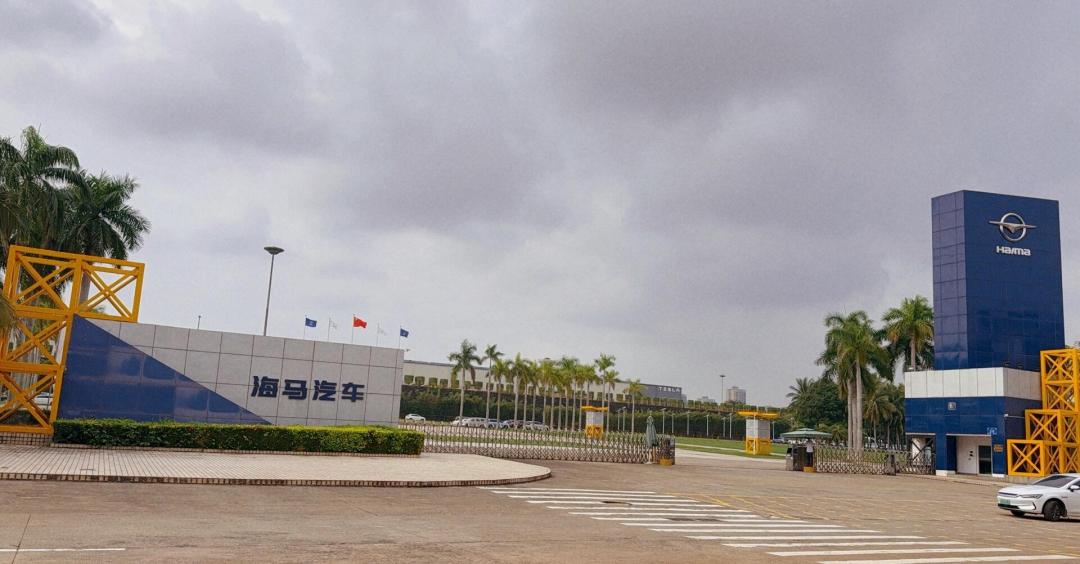
In addition to GAC, Haima and Zotye also saw abnormal stock price movements after the release of the Plan. These two once "comatose" enterprises, which were already on the verge of collapse, surprisingly suddenly bounced back and both hit the daily 10% limit up on September 14. Among them, Zotye, which is famous for copying other car designs, even notched up 4 limit-up increases in 5 trading days.
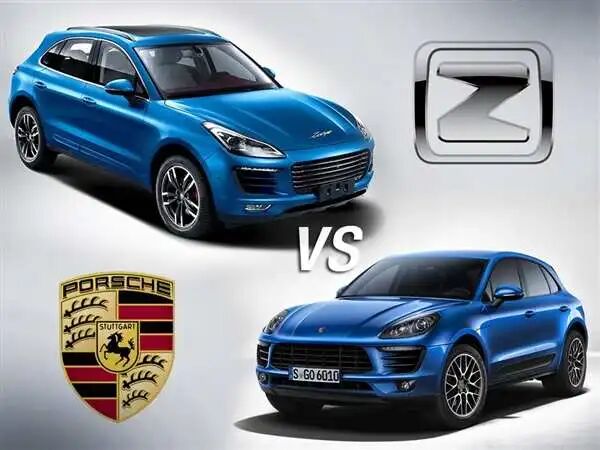
The market's sudden optimism about them does not stem from the fantasy that these two outdated eliminated enterprises can suddenly launch any hit models, but from the perception of policy dividends, expecting Haima and Zotye to be acquired by other giants. Since 2022, the National Development and Reform Commission and the Ministry of Industry and Information Technology have stopped issuing new manufacturing qualifications for pure electric passenger vehicles in principle to avoid savage expansion of the industry. Many giant automakers already have qualifications, but these qualifications are usually bound to specific factories, regions or specific production capacity. If a giant wants to build a factory elsewhere for expansion, it still needs a new license. At this time, it is very likely to choose to acquire the automakers that are already on the verge of bankruptcy, since the qualifications are ready-made, and the factories and land are also ready-made. Acquiring them is also in line with the national policy orientation.
Since even Zotye has the hope of reviving through restructuring, some of the absurd rumors spread in the past year... may be partially true?
In June this year, the Changchun Municipal Bureau of Industry and Information Technology released the draft for comments on the 15th Five-Year Plan for the automotive industry, which mentioned: ... Mergers and reorganizations of high-quality enterprises and the exit of unviable enterprises will become the main trend. It is expected that the number of domestic vehicle enterprise groups will be reduced from 71 to about 15 by 2030... In recent years, the production and sales of our city's FAW have declined, and it may face the pressure of strategic restructuring of central enterprises in the future.
The pressure of strategic restructuring has indeed come true. Will the number of 71 really be reduced to 15?
At the beginning of 2025, there were rumors that Dongfeng and Changan might merge. The two enterprises also issued announcements at the same time confirming that they were planning restructuring matters, but the plan was not finally implemented. Instead, Changan was separated from the China South Industries Group and promoted to a central enterprise.
