AI Enters the Era of Intelligent Mining: Unmanned Mining Trucks Bid Farewell to "Demonstration Projects" and Usher in Large-Scale Commercial Application
"The overall efficiency of leading autonomous driving technologies has reached 85%-95% of that of human operators, and even surpassed 100% of human efficiency in some scenarios." This statement from Tian Ye, Co-Founder of Foresight Tech, at the 2026 China (Taiyuan) Energy Industry Expo reflects that after years of pilot demonstrations in China's domestic mine autonomous driving sector, the domestic autonomous mining truck industry has officially bid farewell to the experimental engineering phase and entered the large-scale commercialization period.
Compared with the previous model projects dominated by single-vehicle demonstration, closed scenarios and small-batch verification, operation projects with 100+ units, normal continuous operation and settlement based on transportation effect are becoming the new industry evaluation standard. For enterprises across the industrial chain, autonomous mining trucks are moving from concept verification to performance realization.
Technological iteration, explosive scale growth, and completed business model verification
The outbreak of the autonomous mining truck industry is fundamentally driven by the practical demands of mines for safety, labor optimization and cost control. On one hand, a single fatal accident in traditional mines can lead to production shutdown for several months, and the direct and indirect losses caused by safety incidents and occupational diseases exceed 25 billion yuan annually. On the other hand, the average age of on-duty drivers is relatively high, and the crisis of labor gap is increasingly severe.
Just like autonomous passenger vehicles, the technologies in the autonomous mining truck industry have also gone through three generations of evolution: the first generation relying on high-precision maps, the second generation adopting the BEV+Transformer architecture and getting rid of high-precision map dependence, and the third generation introducing "end-to-end" large models and simulation closed loops in the past two years.
Li Jinke, Secretary-General of the Low-Speed Autonomous Driving Industry Alliance, said that under the industry consensus of "fewer personnel means safer, no personnel means absolute safety", autonomous mining trucks are transforming from marginal auxiliary tools to core productivity of mine production, and the industry has shown an accelerated upward trend in the past two years. In 2025, about 4,100 sets of autonomous transport vehicles for domestic mining areas were delivered, a year-on-year increase of 192.9%; the sales volume reached 5.88 billion yuan, a year-on-year increase of 163.7%. By the end of June 2026, the cumulative shipment has approached 8,500 sets; coupled with the orders in hand, the total size of autonomous mining trucks in 2026 is expected to exceed 10,000 units.
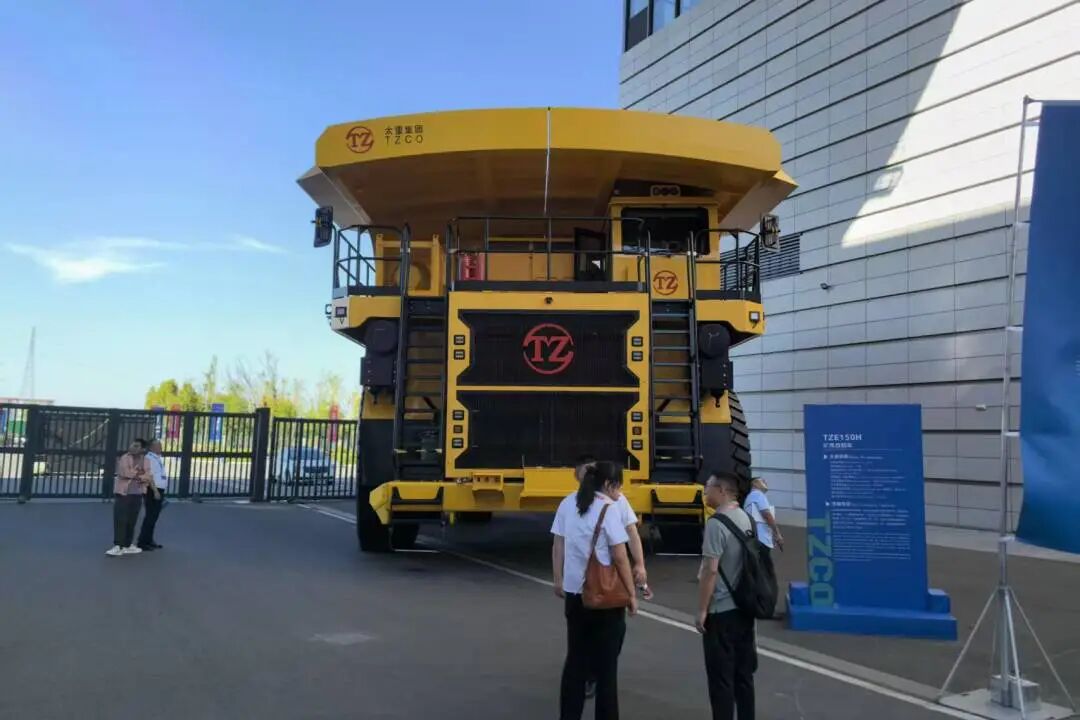
Large mining trucks manufactured by a certain company (Photo by a reporter from The Chinese Securities Journal)
Most of the domestic projects are currently concentrated in Xinjiang and Inner Mongolia, with Xinjiang accounting for about 51% and Inner Mongolia about 28%, making up nearly 80% in total across the two regions. More than 30 mining areas nationwide have deployed over 10 units of autonomous mining trucks, more than 50 mining areas have deployed over 5 units, and nearly 20 mining areas have reached the 100-unit deployment scale. The largest single project appears in Xinjiang's mining areas: the Malang Open-pit Coal Mine has more than 600 units, and the Baishihu Open-pit Coal Mine has nearly 700 units, including 566 units from In-Driving, 90 units from Sany Mining, and 21 units from IDRIVERPLUS.
"We have carried out many projects with 10 or 20 units in various mines, but we will not showcase them here, because we believe those are not operational projects, but only model projects; real large mines will deploy more than 100 units, which are production-oriented projects." A staff member at Huawei's booth at the 2026 China International Mining Conference told The Chinese Securities Journal, and this statement basically summarizes the current development stage of the autonomous mining truck industry: single-vehicle demonstration, closed scenarios and small-batch verification with dozens of units are becoming a thing of the past, and operation projects with 100+ units, normal continuous operation and settlement based on transportation effect have become the new standard to test the real strength of enterprises.
With the maturity of technologies, the economic advantages of autonomous mining trucks are gradually emerging.
The staff member at Huawei's booth took the project of Huaneng Yimin in Inner Mongolia as an example: in an environment of minus 40 degrees Celsius (with a perceived temperature of minus 50 degrees Celsius), the vehicles are designed with an 8-year service life, 100% localization rate, full load of 90 tons, the heavy-load running speed increased from 25 km/h to 35 km/h, the single-cycle operation time is shortened to 5-8 minutes, the 568 kWh battery only takes 6 minutes for a single battery swap, and the vehicles can operate for more than 22 hours excluding shift handover time. The project party stated that the overall transportation efficiency reaches 120% of that of human operators, putting 100 units into operation can reduce the number of drivers by 136, save about 27.2 million yuan in annual labor costs, the overall operation and maintenance cost is 15% lower than that of other similar domestic mines, and the failure rate is more than 30% lower than that of traditional vehicles.
Huang Liming, Deputy General Manager and Chief Technology Officer of Sany Mining, said at the 2026 China (Taiyuan) Energy Industry Expo that the company has achieved more than 13 million kilometers of autonomous driving operation mileage and over 41 million cubic meters of earthwork stripping volume; 120 autonomous mining vehicles have been deployed in the Baishihu mining area in Xinjiang, which were safely put into operation and ran normally last September, and have accumulated 3.55 million kilometers of driving and 14.7 million cubic meters of earthwork transportation by July this year. Huang Liming said: "Conservatively speaking, the transportation efficiency can reach more than 90% of that of human operators, the attendance rate is over 90%, and the energy consumption is saved by at least 10%."
Dong Wensheng, Information Director of Zijin Mining, said in his speech at the 2026 China International Mining Conference that the company has deployed large models independently and landed 27 scenarios. He said: "The essence of AI-driven intelligent and unmanned transformation of metal mineral mining is to realize the systematic reform of production modes relying on full-process intelligent equipment."
Industrial chain enterprises are accelerating performance growth, with the second phase targeting overseas markets
Autonomous mining trucks have moved from concept to actual implementation, generating substantial driving effects on the performance of listed companies across the industrial chain. However, the performance logic of enterprises in different links of the industrial chain varies significantly: autonomous driving solution providers focus on revenue elasticity, core equipment manufacturers focus on the penetration rate growth of electrification, and operation service providers are tested on cash flow management capabilities.
On the autonomous driving solution side, the revenue and gross profit margin of leading enterprises both rose in the first half of this year. Data for the first half/mid-term of 2026 shows: In-Driving achieved a revenue of 549 million yuan, operated more than 3,100 autonomous mining trucks with a target of over 3,500 units, and its gross profit margin is about 17%-18.9%, with the proportion of pure electric vehicles at about 40% and a target of 100%; IDRIVERPLUS achieved a revenue of 804 million yuan, a year-on-year increase of 97.06%, with cumulative shipments of more than 1,900 units, and its gross profit margin is about 17.1%-26.4%.
The orders of mining truck manufacturers have also seen significant growth. Tongli Co., Ltd. has shipped more than 3,000 autonomous mining trucks. The company's total revenue in the first half of the year reached 3.563 billion yuan, a year-on-year increase of 12.13%. The company's representatives previously stated that it is expected that by June 2026, the proportion of its new energy products will reach 60%, the proportion of autonomous driving products will reach 40%, and the proportion of overseas sales has exceeded 50%. Northern Heavy Industries Group Co., Ltd. achieved a revenue of 1.743 billion yuan in the first half of 2026, a slight increase of 3.16%, but its contract liabilities amounted to about 1.672 billion yuan, up 51.64% from the end of last year. The company stated that this is mainly due to the advance payments received for mining vehicle product contracts.
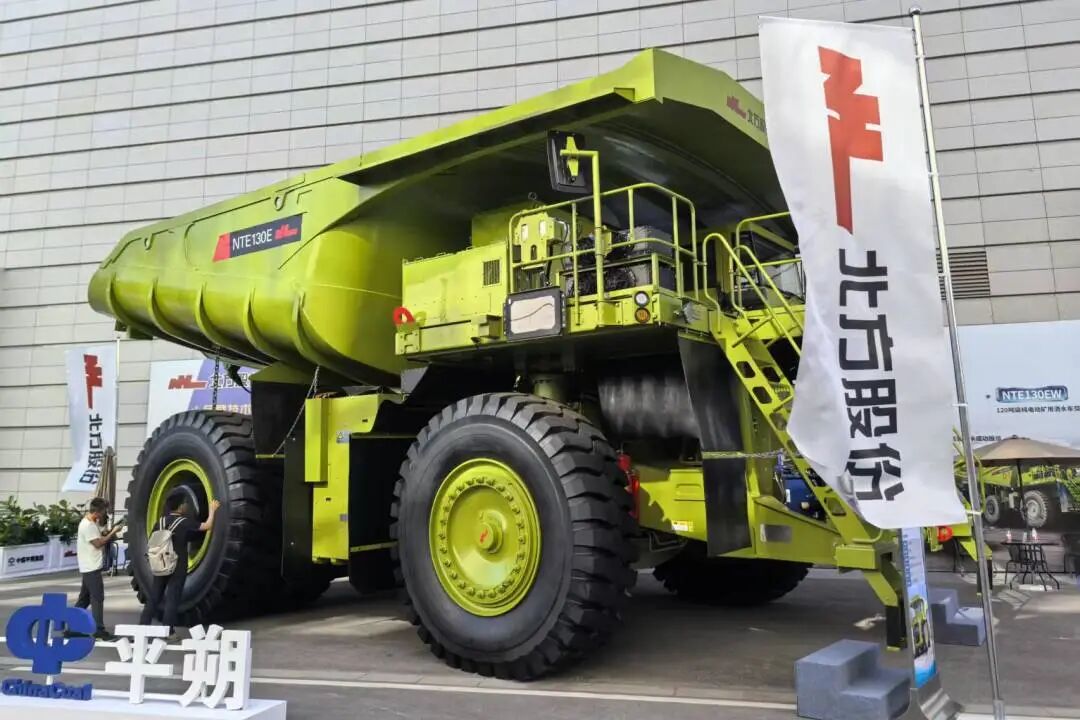
Mining trucks of Northern Heavy Industries (Photo by a reporter from The Chinese Securities Journal)
The key point of the financial data of the above listed companies does not lie in the absolute profit, but in the verification of the business model: first, the revenue grows with the volume of 100+ unit projects; second, large-scale deployment spreads out R&D and on-site service costs; third, the increasing proportion of pure electric models improves the full life cycle economy of each vehicle.
Compared with the domestic market where most open-pit mines that use a large number of autonomous mining trucks are coal mines and concentrated in a few western provinces, the overseas market of the autonomous mining truck industry has more attractive development space. At the China Mining Conference and the China (Taiyuan) Energy Industry Expo, markets including Pilbara in Australia, the Democratic Republic of the Congo in Africa, Latin America, Serbia, and Namibia were frequently mentioned by relevant enterprises. Compared with the domestic market, the return model of the overseas mining market is different: the overseas labor cost is higher, and theoretically the benefit of unmanned transformation is higher.
Domestic enterprises have already targeted overseas business. Taking Bolear Tech as an example, the Vale project has completed about half a year of testing, and the Rio Tinto Australia project is following the schedule of "planning this year, verification next year, and volume release the year after". For all enterprises, overseas business is not a simple replication of domestic 100-unit projects, but takes the certification of large clients such as BHP, Rio Tinto and Vale as the access threshold.
With the improvement of autonomous driving technology, after the autonomous mining truck industry enters the large-scale commercialization phase, industry insiders are also considering the core competitiveness of the sector. As Dong Wensheng summarized, the direction in the next 10 years is "from single-person unmanned operation and single-machine unmanned operation to full-domain equipment intelligence", but it needs to go through multiple phases including single-point technology popularization, system integration pilot, full integration and autonomous intelligence.
The first phase of the commercialization of autonomous mining trucks was ignited by policy support and safety rigid demands, while the second phase needs to be proven by normal continuous operation data. The industry will enter the competition of "systematic capabilities" in the future, pushing the mining industry to truly enter the full-domain unmanned production phase.
This article is from the WeChat Official Account "ChiNext Observer", authors: Zhang Liangde, Liang Xiangcai, published with authorization from 36Kr.