Both Bilibili and Douyin are creating "AI idols", who will build the "fan economy" for virtual idols?
This summer, AI idols have begun to enter the public eye in the form of full-length programs. Bilibili launched the "AI Idol Debut Season", attracting nearly 10,000 creators to participate and generating a total of 160 million views; Douyin launched the "AI Idol Starlight Plan", and continuous content such as "12-star trainees" has also emerged. Virtual characters have their own names, personalities and theme songs, and will also go through training, rating, voting and debut, with support activities, vote canvassing and fan-created secondary content appearing in the comment sections accordingly.
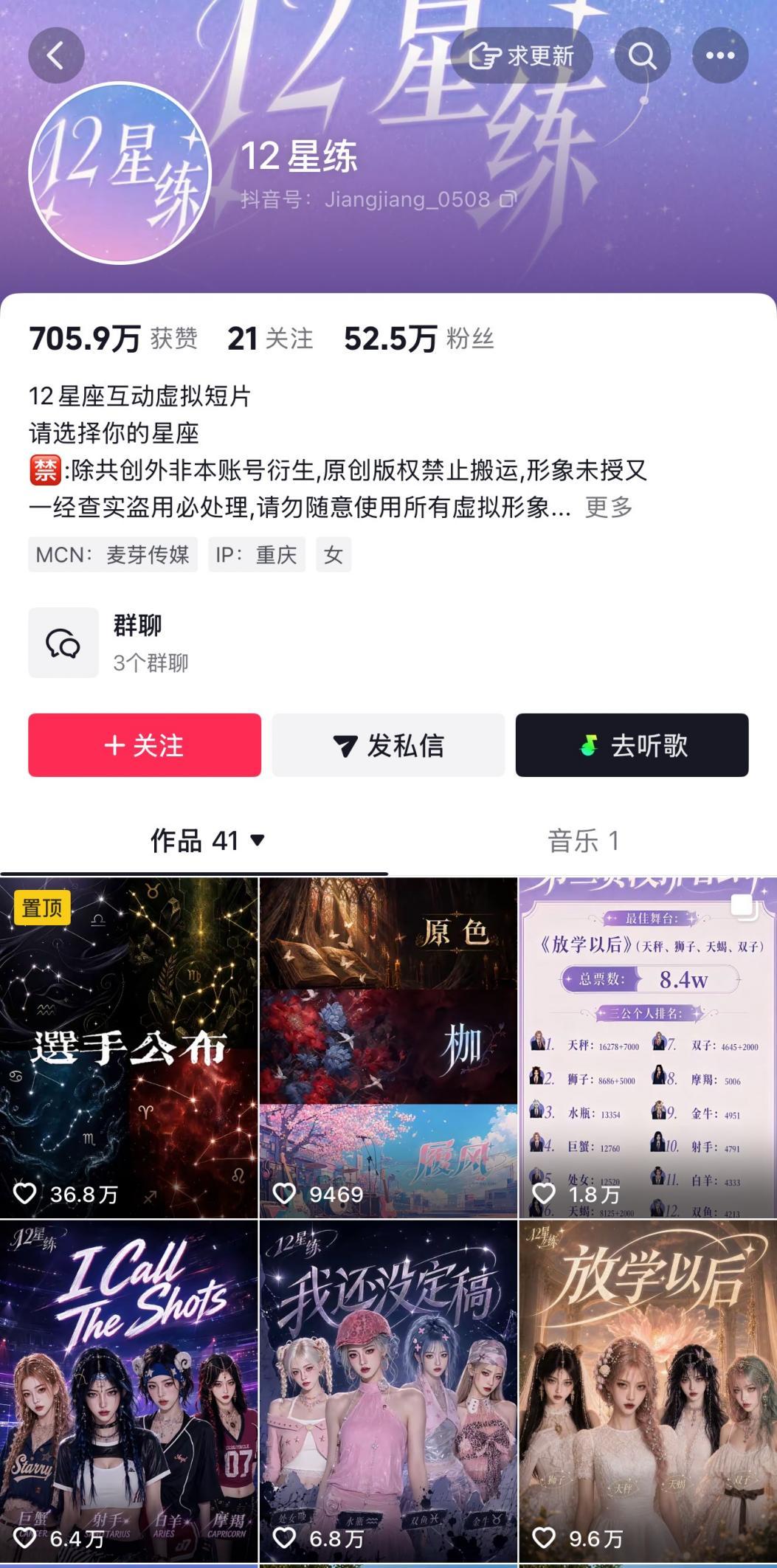
The change of this type of content lies in the fact that it has begun to operate in a way close to the idol industry. Characters need personal accounts and growth stories, programs need continuous updates, fans need participation channels, and platforms also need to reserve entrances for subsequent music, games and commercial cooperation. The AI-generated images are only the most visible part, and what is truly being rebuilt is a set of content relationships centered around virtual characters.
The concentrated promotion of AI idols by platforms is also related to the unstable supply of real-life celebrities. There are practical restrictions on the schedules, works and program opportunities of real entertainers, while virtual characters can be produced and updated according to the rhythm of the platform. A single character can also be split into different accounts, undertaking plot, stage, music and interactive functions respectively. In this way, the platform obtains more continuous content supply and can also transform users from viewers to participants.
However, the increase in the number of characters does not mean that idols can be born in batches. Whether a virtual character can be remembered depends on whether it has a stable personality and a continuous story; whether fans are willing to stay depends on whether the character can provide long-term emotional connections beyond voting and secondary creation; whether brands are willing to pay for it depends on whether the traffic can be converted into real consumption.
What makes AI idols truly worthy of attention is this whole process from character generation to fan operation and then to commercial monetization. Platforms want to gain new content entrances through it, creators hope to incubate IPs with it, and users have begun to participate in the growth of virtual characters. AI lowers the starting point of star-making, but brings long-term operation, persona maintenance and commercial conversion to the forefront.
Platforms Begin to Compete for New Star-Making Entrances
The concentrated emergence of AI idols is related to the platforms' demand for continuous content. Real-life celebrities rely on works, schedules and programs, while virtual characters can be updated repeatedly according to the platform's rhythm. After a character has a fixed appearance, it can be extended with personal accounts, theme songs, plots, stages and game settings.
Platforms set update reasons for characters through talent shows and activities. Characters need to practice to release training content, rank to generate voting and discussions, and have competitive relationships with each other to continuously create new plots. In this way, the platform obtains a continuously operating content mechanism.
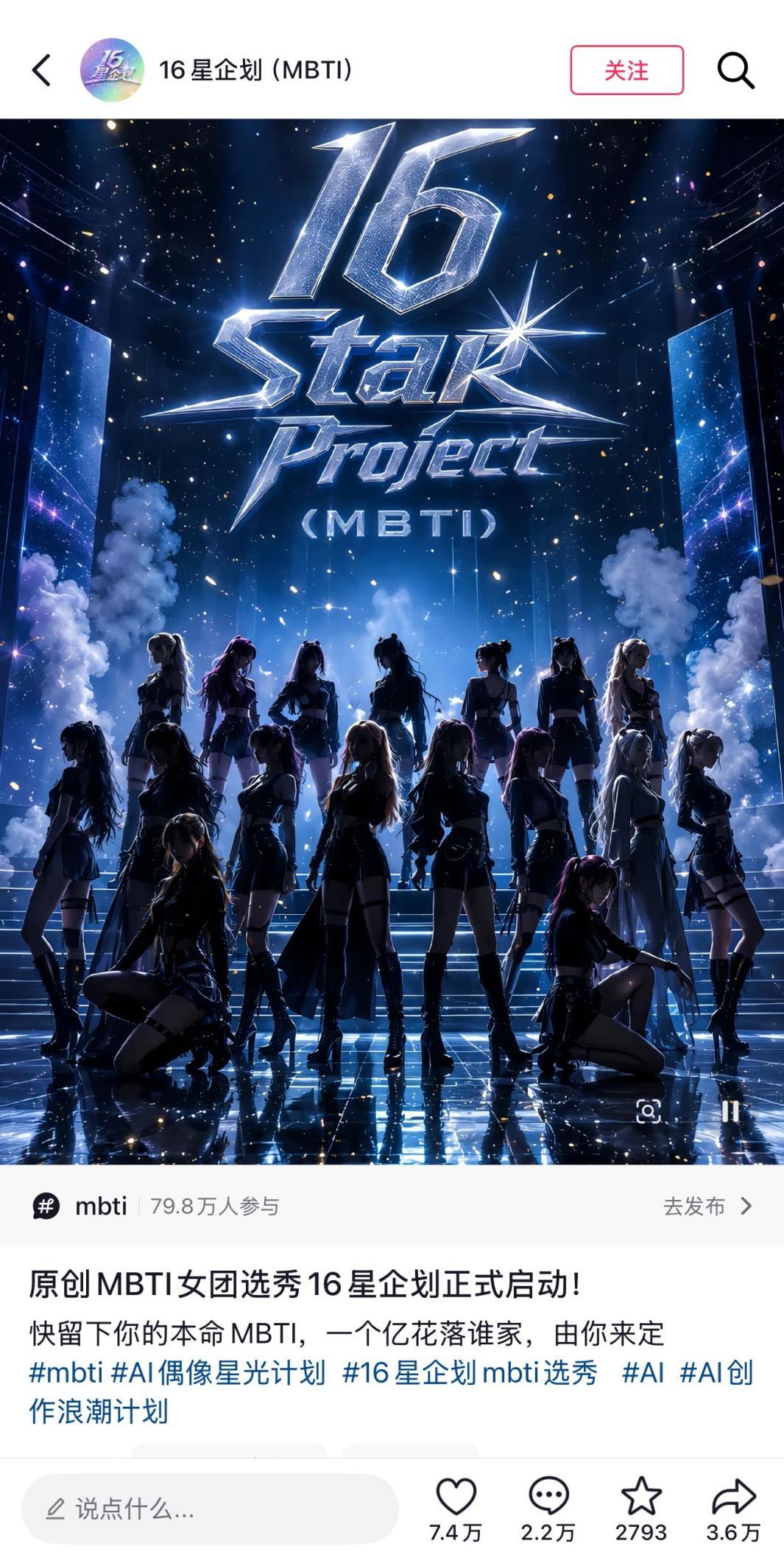
Xiao Yu, head of Product and Commercialization of the "16 Stars Project" account, mentioned that the team's initial attention to AI idols was related to the company's original game and interactive content business. They hope to test user responses through virtual characters, and then judge whether the characters are suitable for integration into games and other interactive products.
The value of AI idols is not limited to the account itself, and it may also become a pre-entrance for game characters, music projects and brand content. By supporting AI idols, platforms are also observing which characters can carry more content.
It took about a week for the "16 Stars Project" team to determine the direction and release the first batch of content. The first piece of content received more than 70,000 likes, and gained more than 20,000 followers in three days. Such a fast growth rate makes AI idols seem very lightweight, but the production process behind them is not simple.
Xiao Ya, head of Content and IP Marketing of the "16 Stars Project", introduced that the project requires planning the worldview and program rules, as well as character design, content generation, editing, account operation and fan maintenance. The low cost of AI idols mainly occurs at the front end, where characters and images can be generated quickly, while subsequent character management, content screening and user operation still require human involvement. AI compresses the shooting and production links, but does not eliminate the organizational capabilities required for content companies.
What platforms are competing for is not just traffic. They need more creators to enter the AI content field, and also need to keep the characters produced by these creators in their own content systems. AI idols are more suitable for achieving this goal than single videos, because characters can be updated continuously, and users have the opportunity to form long-term relationships around the characters.
Bilibili and Douyin adopt different approaches. Douyin emphasizes high-frequency updates, instant interaction and fan group operation, while Bilibili is more suitable for long videos, music and stage content. Xiao Ya observed that Douyin users are more willing to comment, repost and produce secondary creative content, while Bilibili users prefer watching and interacting through bullet comments.
The differences in platform content structures will directly affect the growth mode of AI idols. Short-video platforms are more like practice rooms where characters need to appear constantly; Bilibili is more like a work library where characters need to build awareness through complete content. What platforms are testing are different ways of producing virtual characters.
This is also the deep reason why platforms are intensively laying out AI idols. Platforms hope to obtain more stable content supply, creators hope to get new IP opportunities, and users are invited to participate in star-making. Virtual characters are only the surface, and what is being competed for behind the scenes is the entrance to content production and user relationships.
What Makes Users Stay for AI Idols
AI idols need to borrow the nurturing sense of real-life idols, but cannot only copy the forms of training, rating and debut. Real idols have real growth experiences, while virtual characters do not have natural life experiences, so the team must fill in these through content.
The 16 Stars Project chose MBTI as the entry point for character design, precisely to allow users to first find characters that are relevant to themselves. Xiao Ya explained that the team will first observe the perception of different MBTI types among young users, and then determine the character's personality, stage positioning and story direction.
The role of MBTI is not to put a label on the character, but to provide users with a way to enter the relationship. Users can first find the character of the same type as themselves, and then pay attention to her ranking, performance and plot. Before the character's story even starts, users have completed their first self-projection.
This kind of projection makes AI idols closer to game characters. Users are not paying attention to a finished star, but also what the character will become in the future. The team sets growth experiences, surreal abilities and character relationships, all to give the characters reasons for continuous updates.
Xiao Ya mentioned that the team will present the characters' growth experiences through texts, images and animations, and also incorporate opinions from users in comment sections, private messages and fan groups into subsequent planning. Some character developments and plot changes will be adjusted according to user feedback.
Users take on two identities here: they watch the content, and they also participate in content creation. Fan votes determine the character rankings, secondary creations help spread the characters, and comments and private messages will affect subsequent stories. Thus, AI idols form a cycle: the team produces content, users participate in rewriting, and new feedback is sent back to the team.
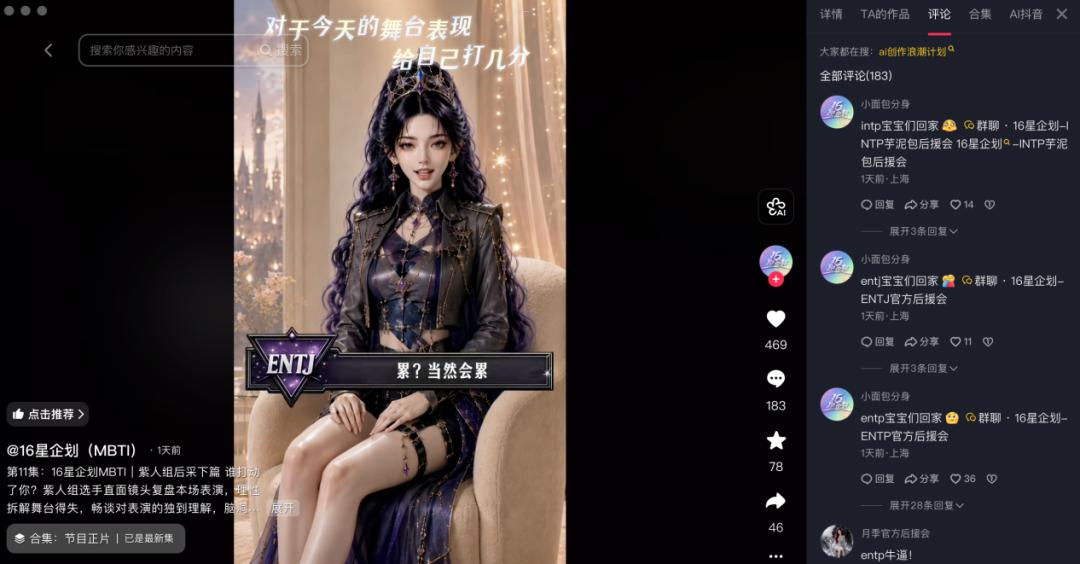
This is also the watershed between AI idols and AI short dramas. AI short dramas rely on a relatively complete story, while AI idols need to maintain a continuous relationship. Characters cannot only fulfill their missions in one video, but also maintain consistent personalities and memories across different content.
Platform activities can quickly create interactions, but they may not automatically form a fan base. A single vote brings instant participation, while long-term following means the character is truly remembered. The willingness of users to create secondary content does not mean they are willing to buy music, peripheral products or games for the character.
The fan relationship of AI idols is essentially a deliberately designed relationship. The character's personality, growth experience and interaction mechanism are all planned, and user participation will also be incorporated into the content production process. Whether it can succeed depends on whether the designed relationship can arouse real feelings from users.
This puts higher requirements on the team: if the character is too fixed, it will be difficult for users to participate; if the character changes too fast, it may lose recognition. Character relationships need to be continuously promoted, the plot cannot only rely on rankings and voting, and fans also need to see the characters continue to live outside of activities.
What AI idols ultimately need is not a more realistic face, but a more stable content identity. Technology is responsible for making the character appear, while stories and relationships are responsible for making the character stay.
After Debut, Who Will Pay for AI Idols
Brand cooperation is the earliest business model of AI idols. The clients that the 16 Stars Project team has contacted so far mainly come from categories such as food, beverages, color cosmetics, skin care products and women's clothing. Brands can select cooperation objects according to the character settings, and then integrate their products into the plot, costume change videos or daily content.
Xiao Ya introduced that food and beverages are suitable for being added to the rest plots after characters finish training, clothing can be included in costume change content, and skin care products are suitable for being placed in the characters' daily vlogs. If brands need stronger communication effects, the team can also customize surreal content.
AI idols do provide brands with greater content space: they do not have the schedule restrictions of real entertainers, nor are they constrained by on-site shooting, so products can be placed in scenes that are difficult to achieve in reality.
However, conversion is still the top concern for brands. Xiao Ya mentioned that brands will pay attention to exposure and interaction, and fans will also mention partners in the comment sections or leave messages on the brand accounts. This means that the commercial data of AI idols still stays at the communication level. Brands can see that users are discussing the characters, but it is difficult to confirm whether users have completed purchases because of the characters. The support from fans for idols has not yet been fully converted into consumption behavior.
The real commercial space for AI idols may also come from outside short videos. The 16 Stars Project team is advancing music cooperation, and also plans to extend the character appearances and superpower settings to mini-games. If the characters enter the game, users will change from viewers to players; if music can be released, the fan relationship will also gain a new carrier.
This path is closer to IP development, rather than simple account advertising. AI idols need to first build their characters through content, and then complete monetization through music, games, peripheral products or authorization. Short videos are responsible for gaining attention, while other products are responsible for extending the lifespan of the characters.
The industry also needs to face the issues of identity and copyright. In June this year, the Beijing Economic and Technological Development Zone issued the country's first "Digital Artist Card" for the AI virtual idol Youli, and put forward requirements such as identity and ownership certification, large model content security review and on-site security management.
After AI idols enter commercial performances and brand cooperation, the ownership of appearance, voice, character settings and user-created secondary content may affect subsequent authorization. The closer a character is to a real entertainment entity, the more management responsibilities the operator will bear.
Platforms can collect AI idols in batches, and teams can also produce characters quickly, but this does not mean that virtual idols can have a fan base in batches. The number of characters can increase rapidly, but users' attention remains limited.
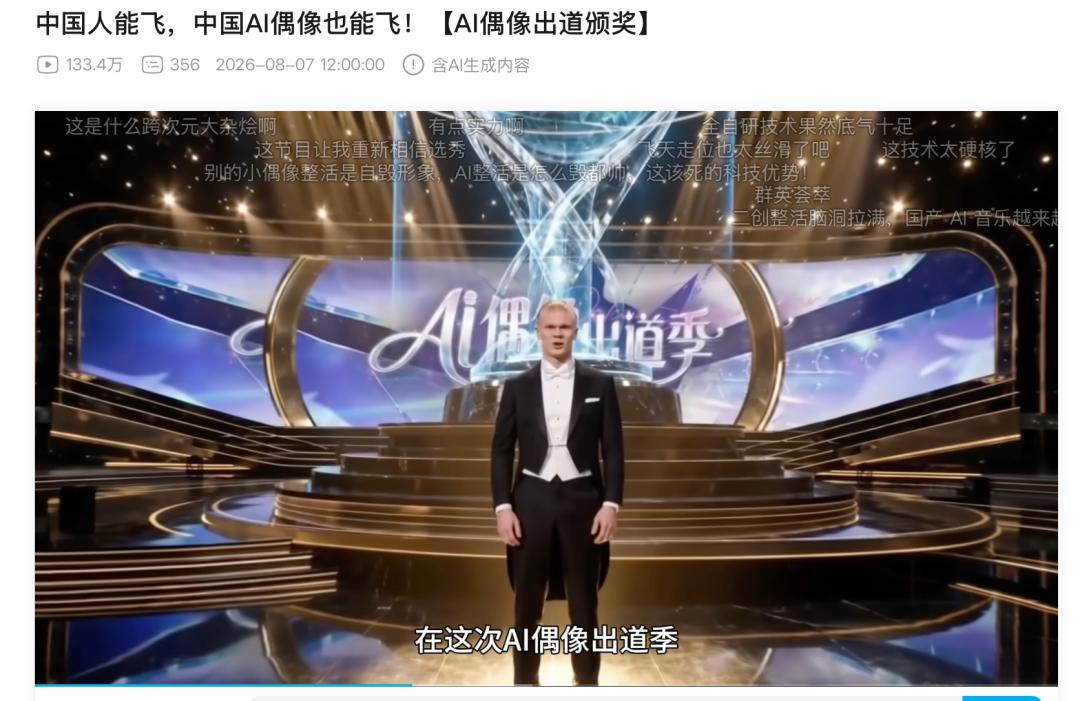
What is truly worthy of attention in this wave of AI idol craze is that platforms have begun to break down star-making into a participatory content process. Platforms provide activities and traffic, teams provide characters and stories, users participate in communication and growth, and brands wait to see if this relationship can be converted into commercial value.
The threshold for AI idols has been lowered, but the problems of the idol economy still exist. For a virtual character to gain long-term attention, it must make users willing to come back repeatedly, and the team must have the ability to operate it continuously.
Platforms are trying to produce characters in batches, but the ones that can truly stay are still those characters with stable personalities, continuous content and clear commercial paths.
This article is from the WeChat Official Account "Entertainment Unicorn" (ID: yuledujiaoshou), written by Qing Hong, and published with authorization from 36Kr.