The second-generation Doubao smartphone that has learned to "knock on the door": is it trying to exchange 380 million monthly active users for ecological openness and scheduling rights?
On the afternoon of September 16, the second-generation Doubao phone was officially released, with a starting price of 5,999 yuan, and the actual price after national subsidy starts from 5,499 yuan.
This is the Nubia NaviX Ultra jointly built by ZTE and ByteDance again following the Nubia M153 (the first-generation Doubao phone). Before its official release, the number of reservations for this product on JD had approached 400,000, and its official positioning is the world's first AI agent phone.
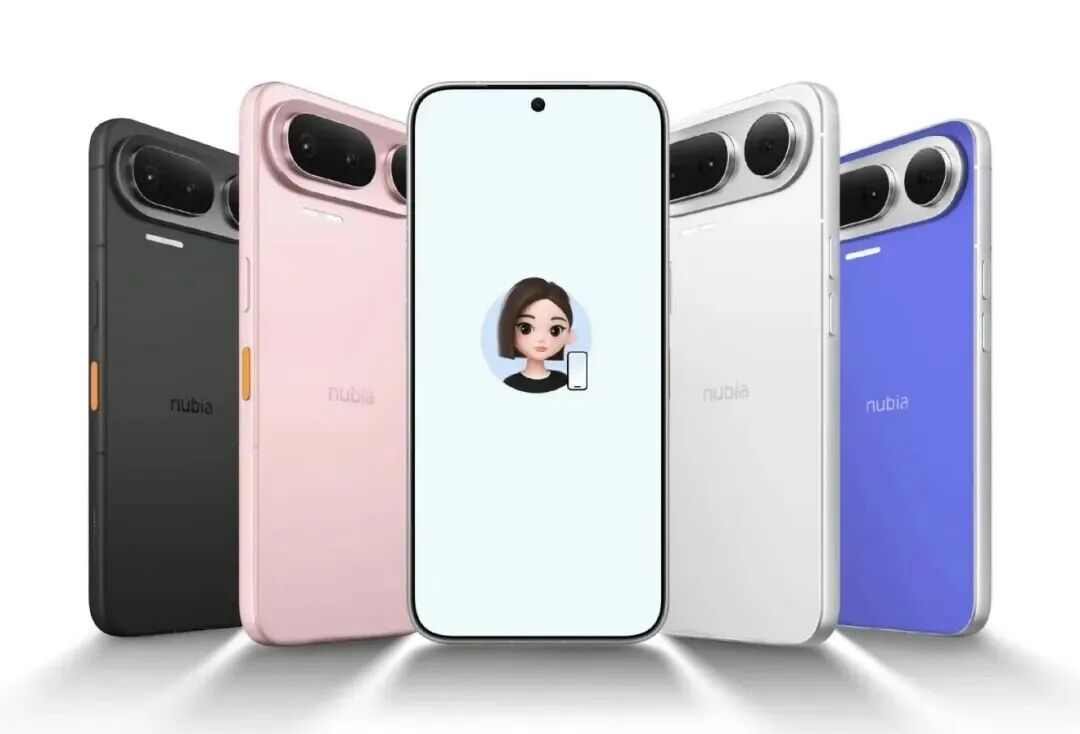
Compared with traditional smartphones, the core selling point of the Doubao phone is "One command to get things done", which means the AI can complete a series of operations across apps according to user instructions, such as booking air tickets, sending messages, hailing a taxi, etc. In fact, the technical verification of this process was completed when the first-generation Doubao phone was launched, and there is already a consensus in the industry that the completion degree of "One command to get things done" will continue to improve with the continuous development of AI. Even, in order to experience this capability, the first-generation Doubao phone was once speculated to sell for more than 13,000 yuan.
However, things did not develop in the direction people expected. When super apps blocked the ecology and operation permissions, and mobile phone manufacturers blocked the system-level scheduling, the first-generation Doubao phone soon became a "brick" in the hands of early adopters. Now, the second-generation Doubao phone makes a comeback, but the products that "one command" can mobilize are concentrated in the ByteDance system and a small number of third-party applications that open permissions to it, and the core contradiction has not been completely resolved.
From "Breaking in" to "Knocking on the door", what compromises has the second-generation Doubao phone made?
From the perspective of product innovation direction, the second-generation Doubao phone mainly has two changes. One is to set an AI wake-up key, that is, add the function of waking up the AI assistant by pressing the fingerprint unlock key on the right side of the phone, placing the AI wake-up entrance before the user accesses the mobile app.
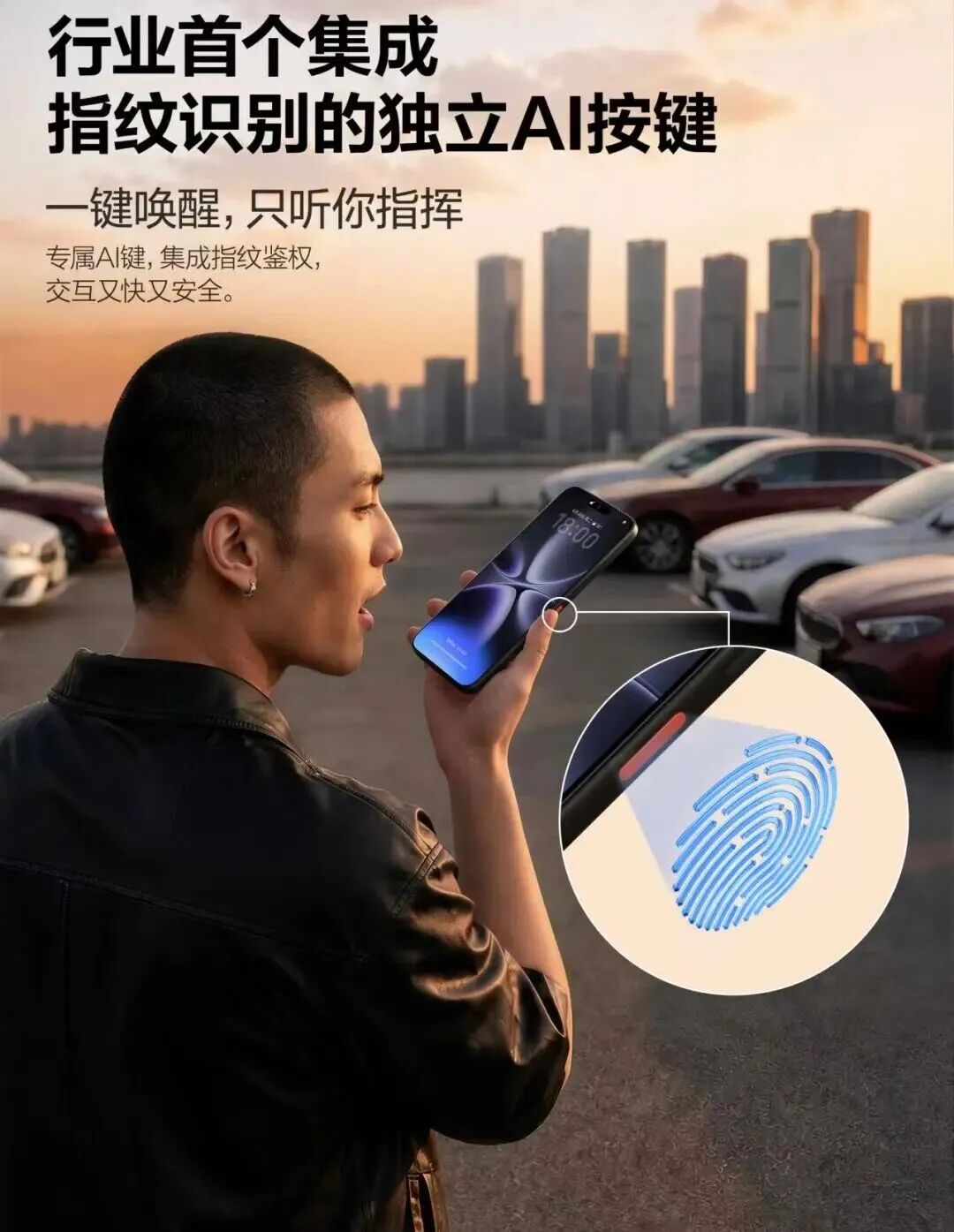
The other is that the execution process of Agent has changed.
It should be understood that the core of "One command to get things done" is "Let the phone do the work for people through Agent", but the entire operation process still needs to be completed in multiple apps. The approach of the first-generation Doubao phone was to simulate clicks through GUI, allowing AI to enter the corresponding app instead of people to complete the instructions. As a result, it quickly triggered risk warnings from super apps such as WeChat, Taobao, and Alipay, and was jointly countered by related products.
The reason is that the AI automated service has not obtained the permission of the corresponding app, and related operations are similar to "viruses", which belong to "forced intrusion". More deeply, most Internet platforms are in the attention business. For example, the advertising services that account for the majority of revenue on most platforms are built on the attention generated by user browsing, and the Agent's alternative operations "kill" this attention. The resulting possibility of impacting the original business model is the key for platforms to take countermeasures.
Therefore, the biggest change of the second-generation Doubao phone lies here. The way Agent executes user instructions has turned to the combination of protocol calls such as MCP and A2A and GUI, with clear priority of protocols. In short, it has changed from Doubao completing the task alone to Doubao cooperating with the Agents of other apps to complete it. That is, Doubao "knocks on the door" before entering the relevant app, does the task by itself if it is allowed to enter, and can forward the user's instruction if it is not allowed to enter, which will be completed by the Agent of the corresponding app based on the protocol. Tasks cannot be completed for apps that have not reached an agreement.
At present, super apps are more inclined to the A2A model, that is, to fully control the Agent operations within the platform in their own hands. For example, there were news in June this year that WeChat is cooperating with mobile phone manufacturers such as Huawei, Honor, Xiaomi, and OPPO to launch A2A assistant capabilities. At that time, Tencent customer service confirmed that many manufacturers had completed access.
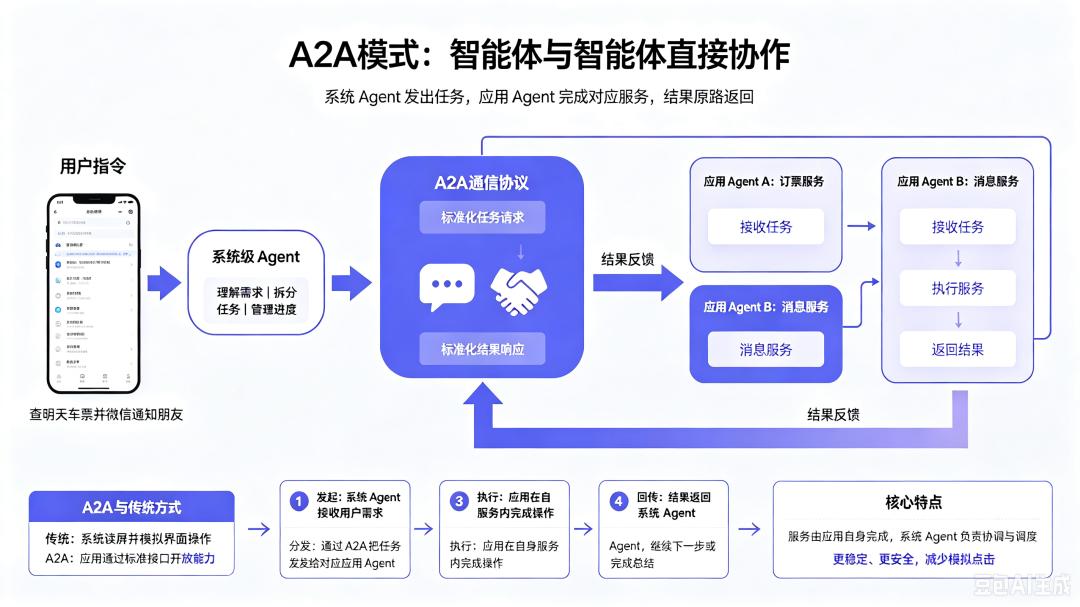
This also directly reflects that the "ecosystem wall" problem faced by the first-generation Doubao phone has not been solved. Its essence is the game between Agent seizing the user entrance and super apps defending traffic sovereignty.
However, the second-generation Doubao phone has also put forward a new coping strategy. On September 14, the official launched the SAEP (Screen Automated Operation Statement Protocol), which states that apps will not be operated by GUI Agents during the 30-day public notice period in advance, unless they actively declare acceptance. If the relevant app does not notify via email and declare refusal through the SAEP protocol after the public notice period expires, Doubao will open the capability of GUI Agent to operate the app.
To a certain extent, this is more like a retreat for progress. With the second-generation Doubao phone moving to mass production, this declarative protocol means that apps that do not refuse will further enrich their product capabilities. If they refuse, they will also send a signal at the same time: it is not that the Doubao phone cannot do it, but that the relevant app does not allow it. The change is that Doubao stands on the side of users. After the agent phone has a specific reference, if more and more users expect Doubao to do more things, the resulting increased demand expectation may force the industry ecology to open up.
The scramble for scheduling rights derives three development trends
In addition, as difficult as the ecological access qualification is, the system-level scheduling right of mobile phones is also hard to obtain.
That is, after the user issues an instruction, who is the first to receive the instruction, schedule the app, and make overall arrangements. What Doubao wants most is this permission. The reason why it chooses to cooperate with ZTE is that ZTE is willing to open system scheduling to it, while manufacturers such as Huawei, Xiaomi, OPPO and Vivo with hundreds of millions of users prefer to leave system scheduling to their own AI assistants.
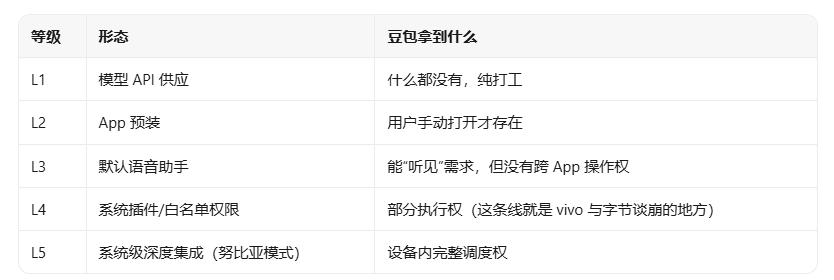
Generated by workbuddy
The reason can be explained from two aspects. First, there are new business opportunities hidden in it: the necessary Token consumption in the Agent era may derive paid subscriptions; the AI assistant with system scheduling right can determine the priority of app calls. For example, after receiving the instruction of "order milk tea", the system-level AI decides to open Taobao Flash Purchase or Meituan by default. This change may drive a new round of "bidding ranking".
Second, another selling point of AI phones is local memory. That is, after a user uses a certain agent for a long time, preferences, habits and memories are stored in this system, forming a closed loop where the mobile phone understands the user better and better, and the user becomes more and more dependent. The confidentiality of this memory stored locally is extremely high, and it can only be migrated through the system's own phone transfer service, which virtually increases the cost for users to change phones across brands. The reason why mobile phone manufacturers are unwilling to hand over system-level permissions is to firmly control the local memory formed by AI interaction in their own hands.
Under such a development situation, three exploration directions have emerged in the industry at present.
1) Model manufacturers cooperate directly with mobile phone manufacturers, exchanging model strength and market influence for system scheduling rights, just like the second-generation Doubao phone.
However, judging from the current stock of 200,000 units, the second-generation Doubao phone is still in the verification stage. The more direct impact of this step is to turn the conceptual product into an end-side AI entity that users can truly see and feel, prove that "One command to get things done" can be realized, create demand expectations, and thus increase its right to speak in the game of scheduling rights.
2) Mobile phone manufacturers hold the system scheduling right firmly and take the A2A route.
The day before the second-generation Doubao phone was officially released, Honor released MagicOS 11. Its official positioning is the world's first mobile operating system that realizes the commercial implementation of system-level Agent Harness. This system is based on the base of Alibaba's Qwen model, and the system scheduling right belongs to Honor's self-developed voice assistant YOYO, which can perform long-distance tasks of more than 100 steps. At present, it has accessed 700 tools and 500 open Skills, and active services cover more than 1,000 scenarios.
In contrast, leading mobile phone manufacturers such as Honor focus more on scheduling, and model capabilities and app execution can be completed through cooperation, which is the difference from the second-generation Doubao phone.
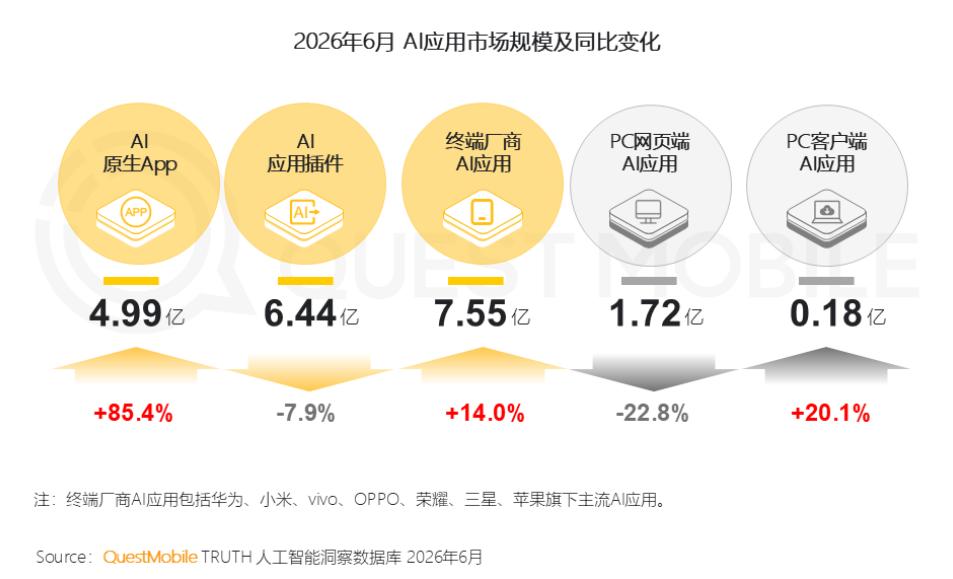
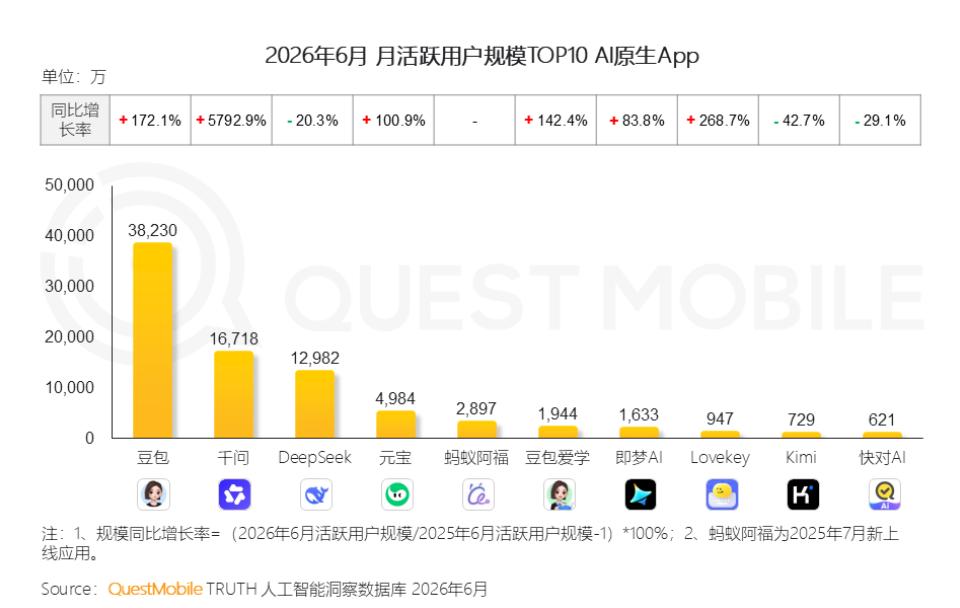
The underlying reason is that ByteDance does not have hardware products, but Doubao's market foundation has formed a crushing advantage. According to the data of "2026 H1 AI Application Market Development Insight Report" released by QuestMobile, in June this year, the monthly active scale of terminal manufacturers' AI applications was 755 million, a year-on-year increase of 14%, while the monthly active scale of AI native applications was 499 million, with a growth rate as high as 85.4%. Among them, Doubao takes the lead in AI native applications with a monthly active of 380 million, leaving others far behind. This is also the key for ByteDance to dare to try to force ecological opening and system scheduling with demand expectations.
3) Model manufacturers make hardware by themselves to master scheduling rights from the bottom layer.
On July 13, the model manufacturer StepFun released its first large model native AI terminal brand STEPX, and simultaneously launched the native agent phone STEPX Neo. The company's goal is to open up the complete chain of base model, agent system and hardware terminal. At present, this is the most radical play of model manufacturers, and its commercial link and market recognition remain to be seen.
More manufacturers join, information security and practical demands are worth discussing
More and more players are joining, and the AI-oriented development of smartphones has become an irreversible trend.
In July this year, the cyberspace administration department carried out the first separate filing and publicity for "mobile end-side generative AI services", covering the end-side large models of seven mobile phone brands: Apple, Huawei, OPPO, Vivo, Xiaomi, Samsung and Nubia. It can be predicted that mobile phone manufacturers will further accelerate their layout in this regard.
However, it should be noted that this round of technological upgrading and product landing is not driven by the demand side. The demand expectation that the second-generation Doubao phone values has not yet fully emerged. From the perspective of consumers, whether "AI doing things" is safe is still a concern for many people, especially when it involves transaction links, it is not completely reassuring to let AI obtain payment permissions.
In addition, it is also questionable how many people really need an AI assistant that can get things done. On the one hand, compared with simple app wake-up, whether letting AI complete relatively complex instructions is more efficient and convenient than doing it by oneself? On the other hand, on the premise that many people regard "playing with mobile phones" as a pleasure itself, is the imagination space of needing AI to do things large enough? Excluding entertainment scenarios such as watching videos, playing games, and socializing, can AI have sufficient capabilities to solve those annoying and tedious things?
These are all problems that need to be repeatedly verified in the initial stage of the industry, and also reflect that the market demand has not yet been released, and the current development of the industry is more inclined to forced popularization on the supply side.
The reason is not difficult to understand. For model manufacturers, the huge upfront investment needs realization scenarios. In the Agent era, end-side AI is one of the landing directions. For mobile phone manufacturers, mobile smart devices have reached a stage where there is no room for further innovation through volume, and the industry needs new stories to drive consumption and capital growth.
More intuitively, the decline in smartphone sales has become a global trend. According to the latest data from Counterpoint Research, a market research firm, in the 20th week of 2026, total global smartphone sales fell by 8% year-on-year, which is the ninth consecutive week of year-on-year decline in the global mobile phone market. However, the price of smartphones is rising. With the continuous increase in demand for storage resources in AI-related industries, the cost of smartphones has risen, and many manufacturers have already raised prices. Not long ago, during the school opening season, the phenomenon of multiple brands raising prices simultaneously rarely appeared in the domestic smartphone market.
Based on this situation, even if the market demand has not yet emerged on a large scale, manufacturers and platforms will continue to tell new stories, and in this process, users will be gradually cultivated through waves of technological iterations. From this perspective, the second-generation Doubao phone that has entered mass production has already pushed down the first domino of the commercialization of AI agent phones.
This article is from the WeChat official account "New Game Brand Trend", author: New Game, published with authorization from 36Kr.