After two decades of being disrupted by e-commerce, shopping malls in the United States have staged a comeback.
American shopping malls are valuable again.
Data from Green Street, a commercial real estate research institution, shows that the property value of U.S. shopping malls has risen by 13% in the past year, making it the best-performing category among the 10 types of commercial real estate it tracks.
The stock price of Simon Property Group, the largest shopping mall operator in the United States, also hit an all-time high this year.
URW, the French commercial real estate company that was selling U.S. assets and planning to shrink a few years ago, spent nearly 1 billion U.S. dollars this year to buy back the equity of two U.S. shopping malls.
Ten years ago, this scenario was almost unimaginable.
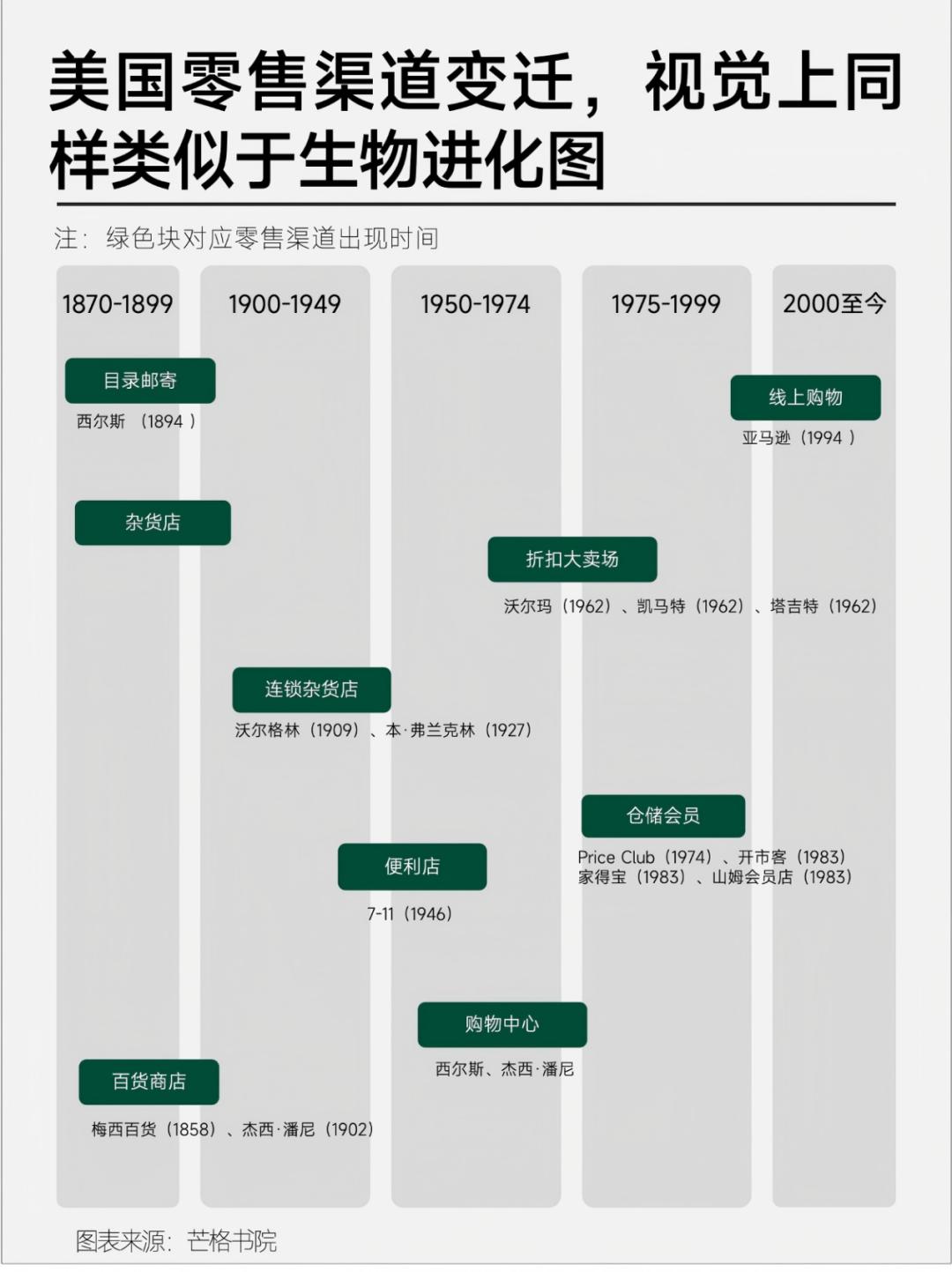
Image | Source from the Internet
After the rise of Amazon, U.S. department stores and shopping malls were once the two types of physical businesses most severely impacted by e-commerce. In 2018, Sears filed for bankruptcy; subsequently, Macy's and JCPenney also kept closing their stores.
"Retail Apocalypse" was once a common term used by U.S. media to describe physical businesses. Since 2008, about 200 shopping malls in the United States have been closed.
But shopping malls have not completely disappeared as many people expected.
1
The United States has not built new enclosed shopping malls on a large scale for many years.
In 2025, the new floor area of shopping malls in the United States dropped to a historical low, and the projects under construction only accounted for 0.3% of the existing stock. While new malls are barely being built, poorly operated old malls are continuing to exit the market, and the remaining high-quality malls have begun to become scarce assets.
This round of price increases for shopping mall assets is therefore not a universal "mall renaissance".
For example, the San Francisco Centre in downtown San Francisco was valued at about 1.2 billion U.S. dollars ten years ago, but now the market expects its selling price to be less than 130 million U.S. dollars.
Therefore, after two decades of being impacted by e-commerce, the United States has not returned to the era when shopping malls made money everywhere, but has left a smaller number of more valuable malls.
These remaining malls are also very different from what they were 20 years ago.
The Brea Mall in Orange County, California, once had a huge Sears department store.
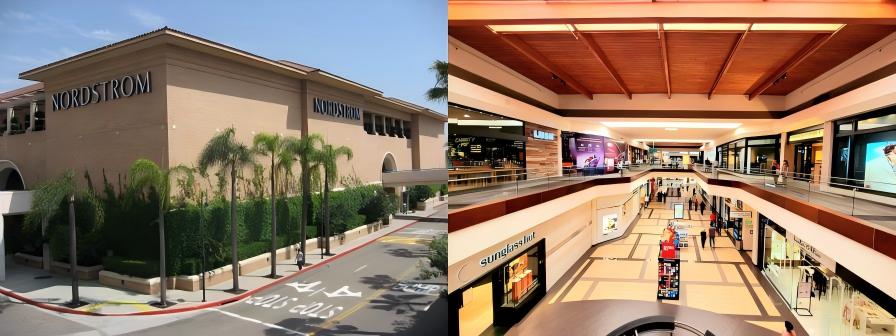
Image | Source from the Internet
This is the most typical combination of the older generation of shopping malls in the United States. Department stores occupy the largest storefronts, gathering clothing, home appliances, furniture and daily necessities in one building. Consumers come to the mall for these goods, and the surrounding small stores share the foot traffic brought by the department stores.
After Sears went bankrupt, this store also closed.
A few years ago, Simon Property Group demolished the original Sears building and started a renovation project costing about 300 million U.S. dollars. Now this area has a high-end fitness club of more than 10,000 square meters, 377 residential units are under construction, and new outdoor spaces, restaurants and shops are coming in one after another, including the Chinese catering brand Din Tai Fung.
This is not the only choice for Brea Mall.
Over the past decade or so, U.S. shopping malls have been continuously adding catering, fitness and entertainment facilities. A study by the International Council of Shopping Centers once calculated that the area allocated to food and catering in shopping malls increased from about 5% to 10%-15% over roughly ten years. Restaurants used to be supporting facilities in shopping malls, where consumers ate casually after getting tired from shopping; now some restaurants themselves are the reason why consumers go to the mall.
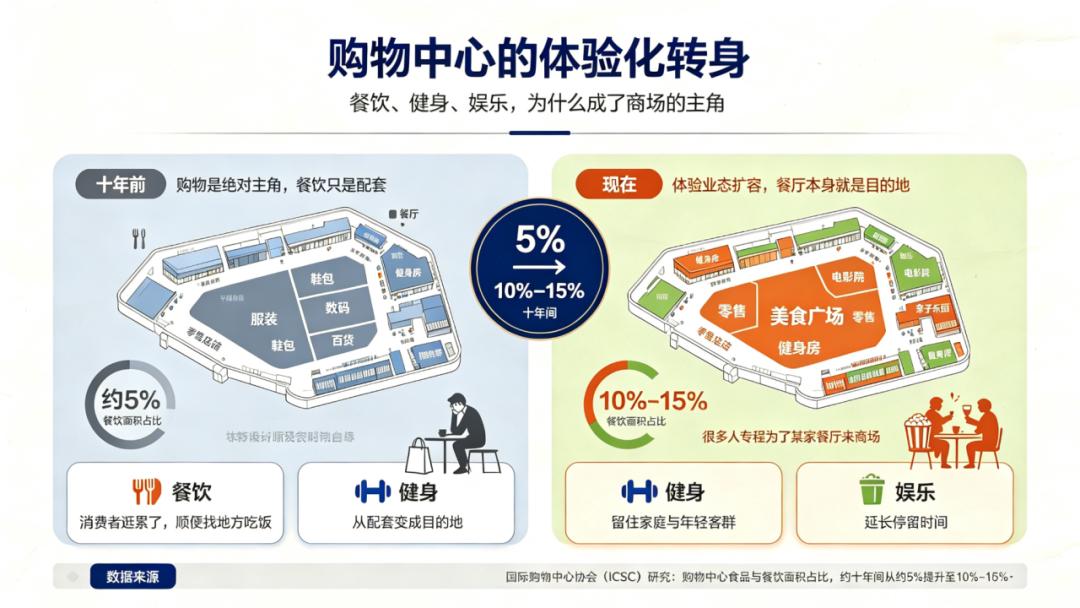
Image | Source from the Internet
Chinese catering companies have also begun to enter this new U.S. shopping mall system.
In September this year, Chef Fei opened its first store in the United States, choosing not Chinatown but Westfield UTC in San Diego. It is already surrounded by Asian restaurants such as Din Tai Fung and Haidilao.
The most important anchor stores in U.S. malls used to be department stores like Sears and Macy's. Now, a single restaurant certainly cannot replace a department store of hundreds of thousands of square feet, but malls no longer need to allocate such a large area to department store merchandise.
2
Supermarkets are another type of change.
Prickett Preserve, a shopping mall built in recent years in Pennsylvania, has Wegmans, a U.S. supermarket chain, as its largest anchor store instead of a department store. The entire project currently has an occupancy rate of about 98%, and Wegmans alone contributes about 38% of the rental income, with a lease term of more than 20 years remaining.
When this project entered the trading market this year, JLL, which was responsible for the sale, put Wegmans at the top of the investment selling points.
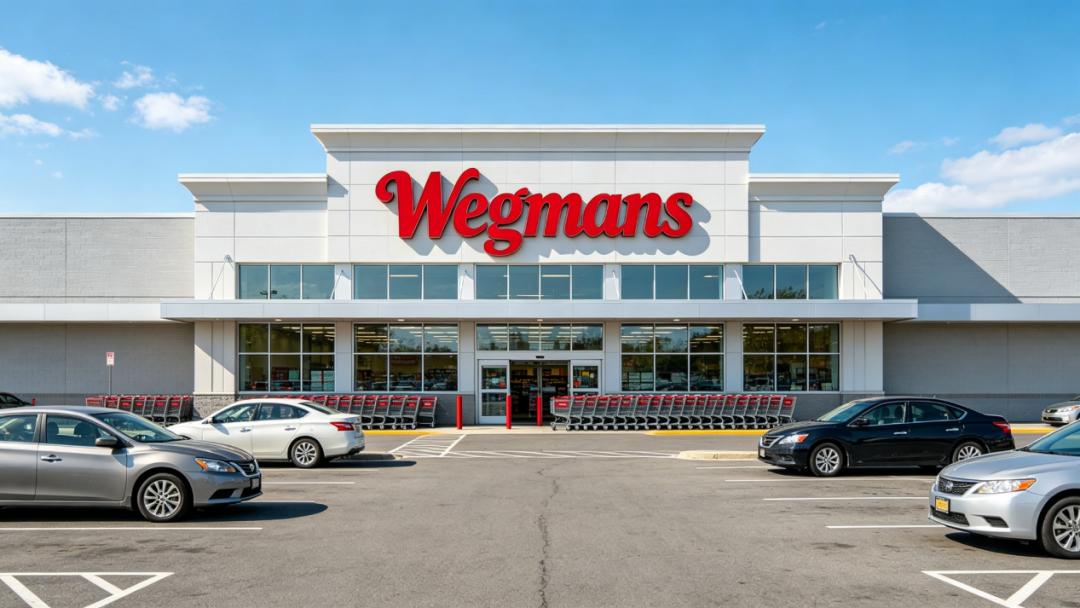
Image | Source from the Internet
It is not difficult to understand why supermarkets are popular among investors.
A household only changes its TV every few years and may buy clothes several times a quarter, but it buys food every week. For a shopping mall, this means a far more stable foot traffic frequency. When consumers go to the supermarket to buy milk and vegetables, they will also go to have a coffee, eat a meal or visit other shops nearby.
Thus, a very interesting contrast has emerged in the U.S. commercial real estate market.
One of the most important anchor stores 20 years ago was department stores, but today community shopping malls with supermarkets as anchor stores are the retail properties that investors are most willing to purchase.
U.S. retail food has not been free from the impact of e-commerce either.
U.S. consumers have long been accustomed to buying groceries online through Instacart, Amazon and Walmart, and large supermarkets generally provide delivery and in-store pickup services. But after years of development of food e-commerce, offline supermarkets have not disappeared on a large scale like department stores.
Supermarkets themselves are also changing.
Supermarkets like Wegmans are constantly adding more cooked food, bakery, ready-to-eat and on-site dining options. Consumers can come to buy groceries for a whole week, or take away a meal for that night. The stores also serve as picking and fulfillment points for online orders.
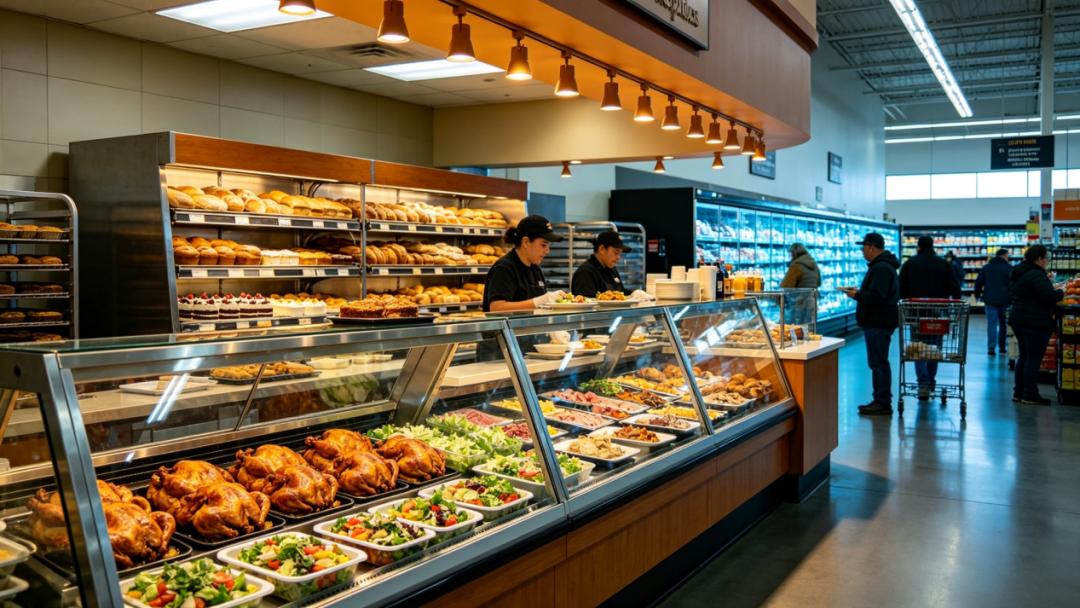
Image | Source from the Internet
The same goes for catering. Food delivery can deliver a basket of steamed dumplings to your home, but it does not make Din Tai Fung lose the need to open large stores. Consumers are not always buying a deliverable product, and sometimes they are buying the experience of where and with whom the meal takes place.
After 20 years of being impacted by e-commerce, the businesses that remain in U.S. malls are increasingly of this exact type.
Malls have not won back the consumption that has already moved online. They just allocate more space to businesses that still require consumers to be present in person.
3
This is also the part of today's changes in U.S. malls that is worth learning from for China.
In the past few years, Chinese physical retailers have become increasingly dissatisfied with e-commerce. Price wars, platform subsidies, traffic fees and return policies are constantly changing the original operating environment of physical stores.
The impact on the food industry is more complex than many other industries.
Taobao, JD.com and Pinduoduo first moved a large number of standardized products such as packaged food, alcohol, grain and oil online; food delivery moved part of the in-store dining of restaurants to people's homes; now, Meituan, Taobao Flash Purchase and JD.com have pushed the competition further into fresh produce, fruits, beverages, snacks and convenience store products.
Traditional e-commerce solves the problem of "is it necessary to go to the store to buy", and instant retail has gone a step further.
In the past, a convenience store 200 meters away from consumers was a competitive advantage in itself. No matter how cheap a bottle of beer is online, if you want to drink it right now, going downstairs to buy it is the fastest way.
Now delivery riders can complete this 200-meter errand for consumers.
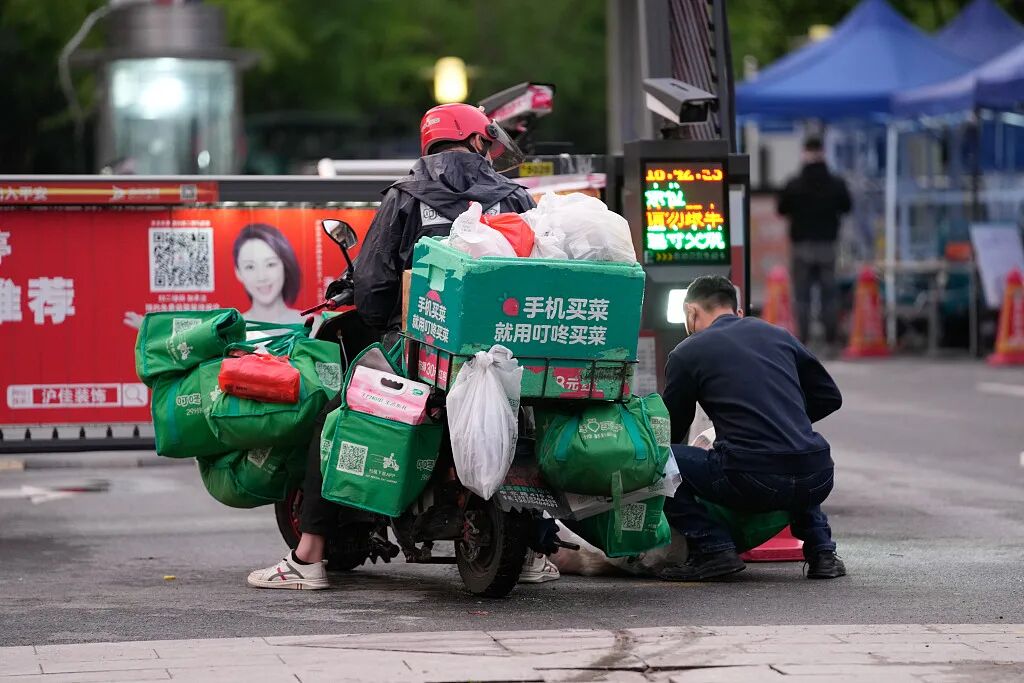
Image | Source from the Internet
This is also the new problem that Chinese physical food retailers are facing today. High-frequency and instant consumption, which was the hardest to be taken away by traditional e-commerce in the past, has also begun to enter the delivery network of platforms.
China has not gone through exactly the same stage. U.S. cities have lower population density and higher delivery costs. The scale and intensity of competition of half-hour retail in China today can hardly be directly compared with that in the United States.
But what has happened in the United States over the past two decades at least illustrates one result after e-commerce impacts physical businesses.
About 200 shopping malls have disappeared, department stores like Sears have collapsed, and more poorly operated malls are still exiting the market. At the same time, the remaining high-quality malls are getting more and more expensive, with restaurants, supermarkets, fitness and entertainment taking up more space.
E-commerce has not brought offline businesses back to their original state, nor has it completely replaced them. It has only continuously changed the logic of why consumers still need to go to a physical store to consume.
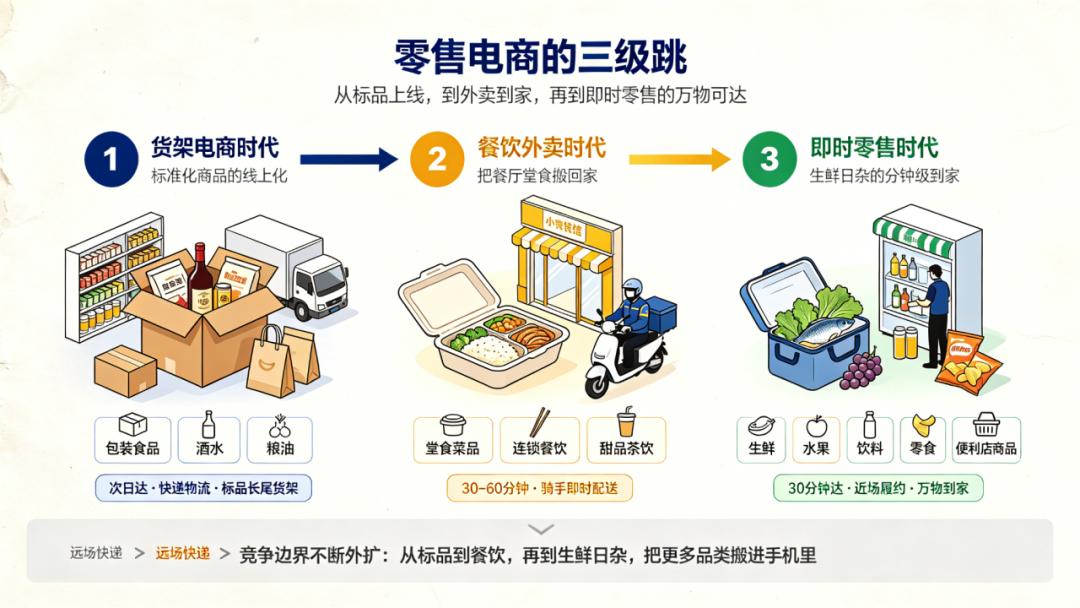
Image | Source from the Internet
It took the United States 20 years for a number of shopping malls to find the answer again.
This round of adjustment of China's physical retail industry may have just begun.