Why did the frugal Nagoya Asian Games choose to invest more "costly" funds in stadiums?
The Nagoya Asian Games are just around the corner. The style of this edition of the Games, in the words of Japanese media themselves, is defined by a strong emphasis on "frugality": among the 54 competition venues, the vast majority are renovated existing facilities, no new athletes' village will be built, and competitors will be accommodated in hotels, containers and cruise ships.
The only large-scale newly built venue in the true sense is the "Aichi International Arena" located in Meijo Park, Kita Ward, Nagoya City, Aichi Prefecture. After the British financial firm IG Securities purchased the naming rights, it is now called IG Arena. The basketball and judo competitions of this Asian Games will be held here.
The financial accounts of this venue are more interesting than its design concept that interweaves wood and steel.
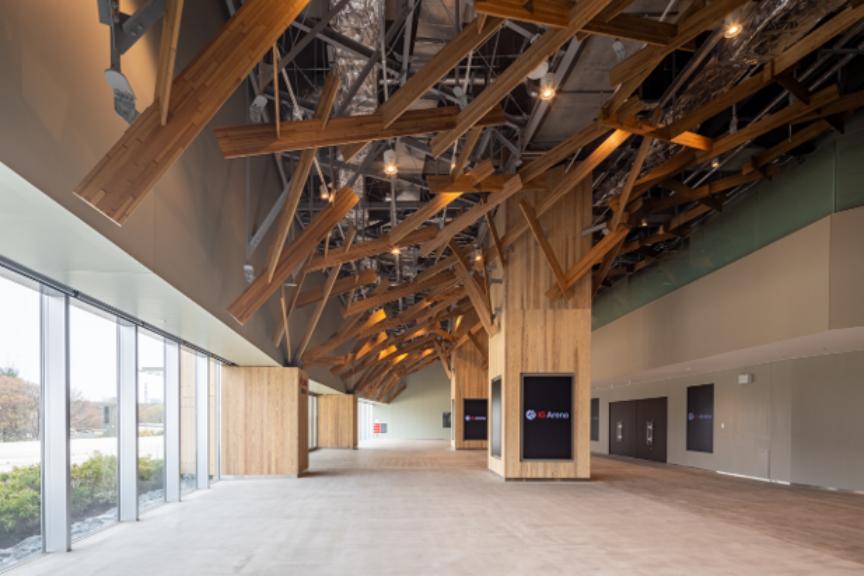
IG Arena's design concept of interweaving wood and steel
The total design and construction cost of the entire project is about 46.4 billion yen (approximately 2 billion RMB), which was fully financed and advanced by the winning consortium during the construction period, and Aichi Prefecture did not spend a single penny during the construction phase. After the venue is delivered and the ownership is transferred to the prefectural government, the prefectural finance will start to make payments: the service purchase fee will be paid year by year for a total of 30 years, with a cap of 26.4 billion yen, calculated as "(design and construction cost + 30-year operation and maintenance cost) - the consortium's expected operating revenue".
Calculated accordingly, of the 46.4 billion yen advanced by the consortium, about 20 billion yen needs to be recouped through the 30-year franchise contract.
Anyone familiar with Japan's fiscal environment knows that in the era of low interest rates and even negative interest rates that has lasted for more than 20 years, the financing cost of the Japanese government is almost the lowest among the world's major economies, and the long-term national debt interest rate has long been kept at around 1%. The financing interest rate of private capital needs to add a risk spread on top of the benchmark interest rate. If a 30-year fixed interest rate is locked, the capital cost may be several times that of government financing.
Why would a country where borrowing costs are almost negligible use more expensive capital to build an arena? This account has to be traced back to the Tokyo Olympic Games.
Tokyo first proved that "operation rights can be monetized", so Aichi Prefecture dared to "offset costs with operation rights"
To welcome the 2020 Tokyo Olympic Games, Tokyo built two landmark new venues: Ariake Arena and the New National Stadium. Both were newly built with government investment, no different from the traditional model. The real change took place after the completion of construction.
According to convention, such venues are usually handed over to "designated managers" for operation after the Games: the government entrusts a third party to manage the facility, and the manager provides services as required by the owner, with a cooperation period of generally around five years. Under this model, operators have very limited autonomy and vitality, which is no different from the entrusted operation of most domestic venues in China.
However, during the preparation for the Tokyo Olympic Games, the "white elephant trap" became a sword hanging over everyone's head. The 2004 Athens venue group was abandoned and turned into a ghost town, serving as a stark warning: no one wants a bunch of financial black holes that drain public funds. Ariake Arena was built by the Tokyo Metropolitan Government with an investment of 37 billion yen. If it followed the old designated management path, it would run a deficit every year. The Tokyo Metropolitan Government did the math: instead of subsidizing it year after year, it is better to sell the operation rights.
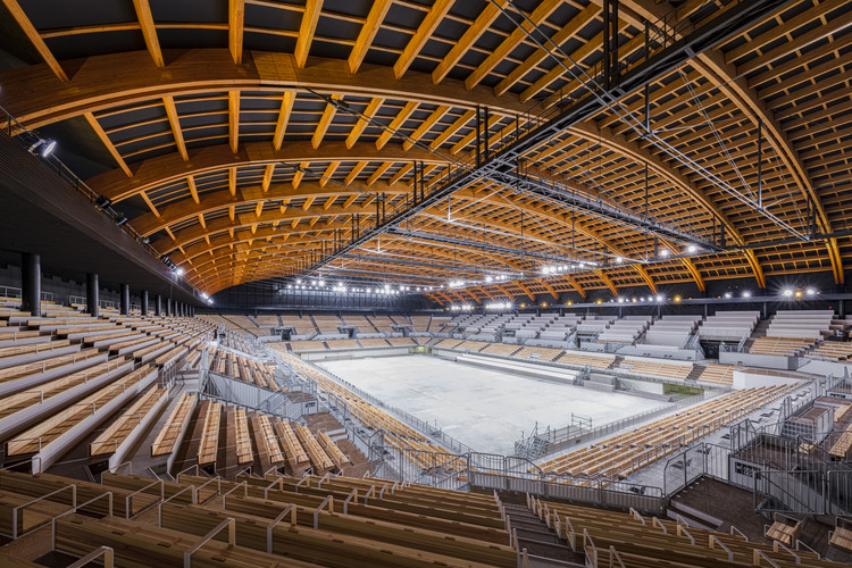
Interior view of Ariake Arena, Tokyo Metropolitan Government
In 2019, a consortium led by Dentsu won the 25-year operation right of Ariake Arena for about 9.4 billion yen, plus 50% of the pre-tax net profit turned over to the government every year. There is a detail here: the Tokyo Metropolitan Government's minimum requirement was only 20%, and the 50% figure was voluntarily raised by the bidding party itself.
This is the first franchise operation case in the field of sports facilities in Japan. Before that, the transfer of operation rights had been piloted in other public facility sectors: in 2016, the 45-year operation rights of Kansai Airport and Osaka Itami Airport were sold as a package for about 2.2 trillion yen to a consortium composed of Orix and the French company VINCI. The 30-year operation right of the New National Stadium launched bidding in 2023, and the NTT Docomo consortium won the bid the following year with 52.8 billion yen, setting the highest record for sports operation rights transactions in Japan.
The significance of these transactions is not just the cash they brought in. For the first time, they proved that the operation rights of stadiums and arenas can be priced and sold like those of other public facilities. Moreover, the price is not arbitrarily set by the government, but is a real offer made by bidders based on their own calculations of cash flow over the next two to three decades.
This "monetizable" signal was a timely help for Aichi Prefecture. In terms of fiscal strength, Aichi Prefecture cannot compare with the Tokyo Metropolitan Government. The Tokyo Metropolitan Government can pay 37 billion yen at one time to build the venue and then sell the operation rights, while Aichi Prefecture's initial plan was only for a construction cost of 300 billion yen, not to mention that the consortium later raised the total cost to 464 billion yen. But since Tokyo proved that operation rights can be priced, Aichi Prefecture dared to take this "price expectation" as a financing tool: since operation rights are valuable, there is no need to wait for the venue to be completed before selling them. The consortium can advance the funds to build the venue now, and use the operation rights for the next 30 years to directly offset part of the construction cost.
Therefore, Aichi Prefecture's use of more expensive capital does have a "forced" element: the public finance cannot afford the full cost, and the Asian Games cannot wait for a long construction cycle. But after being forced onto this path, it made a series of active choices: accepting the consortium's high-end proposal that raised the total cost from 300 billion to 464 billion yen, and handing over the project design right to private capital. The "no other choice" situation determined that it had to borrow more expensive capital, while the "viable solution" determined what value it got in return for the borrowed money.
Is "expensive" capital necessarily uneconomical? The Kai Tak Sports Park project in Hong Kong once did a detailed calculation
In 2013, to determine the financing method for the construction of Kai Tak Sports Park, the Home Affairs Bureau of Hong Kong commissioned PwC, an accounting firm, to conduct a detailed financial analysis, comparing several solutions including "government issuing bonds for construction followed by outsourced operation" and "integrated private financing for construction and operation" in the same model.
The report priced the main risks of the project over decades one by one: for the "design change" item alone, it was priced at HK$4.27 billion, calculated based on a 15% increase in capital expenditure, and the "additional functional requirements" item adopted the same standard and price; construction delay, demand fluctuation, and higher-than-expected inflation were also given respective prices. Then it calculated clearly which party would bear each risk under different solutions.
The conclusion is very clear: the interest rate of government bonds is 4.5%, and the private financing rate is 6.5%. Judging only from the interest rate, the government is 2 percentage points cheaper. But after discounting all risks and adding them to the accounts, the total cost borne by the government in the integrated private financing and operation solution is about HK$400.6 billion, which is HK$5.8 billion lower than the HK$459 billion of the government's self-construction solution. Even if the commercial lending rate is raised by one more percentage point for stress testing, the conclusion still holds.
Expensive capital is not necessarily expensive from the perspective of the whole life cycle, and cheap capital is not necessarily cheap.
The HK$5.8 billion difference is not a financing account, but a risk account.
However, the Hong Kong SAR government finally did not adopt this "more cost-effective" solution, but chose a compromise model in which the government provides full capital and the enterprise is responsible for design, construction and operation. The reason for giving up the more cost-effective solution was stated frankly: under the private financing model, "the government's level of participation in the design and construction phases of the facility is limited", making it impossible to fully achieve policy objectives.
One side aimed at cost saving, while the other side aimed at retaining control. Kai Tak Sports Park is the largest sports infrastructure investment in Hong Kong's history, and retaining control became the top priority of the Hong Kong SAR government. Whether this choice is right will be left to time to test, but it at least proves one thing: the accounts can be calculated clearly, and even the decision to abandon the more cost-effective solution is made after marking the price of control.
Even so, this compromise solution still strictly adhered to one bottom line: the design, construction and operation are bundled and assigned to the same consortium. The Hong Kong SAR government itself admitted to the Legislative Council that this single clause is expected to make the venue's retail, catering and parking revenue twice as high as that of self-operation by government departments.
This "double" figure is not a random estimate by consultants, but comes from two financial forecast reports submitted by the Hong Kong SAR government to the Legislative Council. For the same design and the same site, the Leisure and Cultural Services Department would run losses in the first two years of self-operation, and barely turn positive in the third year; if the venue is handed over to the contractor for operation, it will make profits in the first year, and reach a surplus of HK$291 million in the fifth year, which is five times that of self-operation. The Hong Kong SAR government's explanation to the Legislative Council is frank: the Leisure and Cultural Services Department "lacks commercial talents" to carry out marketing and investment promotion, and government self-operation has to bear all operational risks. The contractor does not work for free: it has to deposit HK$500 to 600 million in security deposit and upfront funds with the government first, while the profit from the project itself is only HK$500 to 800 million. To put it bluntly, the profit the contractor earns from building the facility is not enough to cover the deposit it places with the government. What really makes it willing to take the job is the 25 years of operation rights afterwards, and the construction profit is just the admission ticket.
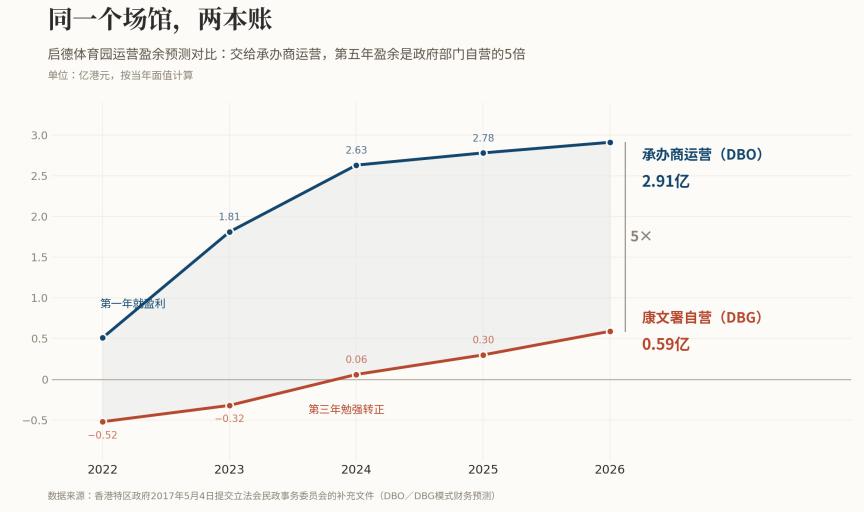
Chart by the author: Comparison of DBO model and DBG model of Kai Tak Sports Park
The cheap capital channel is no longer accessible even if you want to use it
China now has to seriously calculate this account: the path of cheap capital is closing for large-scale sports venues.
The policy orientation of the 15th Five-Year Plan has been clear: strictly control the construction of new large-scale sports venues. In the negative list of special-purpose bonds, "sports projects with grandstands and large sports venues with fixed seats" are directly excluded. The door for new construction is closing, and the bond financing channel is narrowing.
On the other hand, a large number of existing domestic venues are gradually entering the renovation cycle, with aging mechanical and electrical systems and outdated functions. Stock renewal will be the main battlefield of sports facility financing in the next ten years, and where the funds come from is a problem that many local governments have to face.
After the low-cost financing channel narrows, diversified financing has become a compulsory question. But before answering it, one question must be clarified first: can operation rights be used for financing in China?
The answer is yes, but it is only limited to some tax-like municipal projects: water supply, power supply, sewage treatment, etc. Such projects have stable and predictable cash flow, and the accounts are easy to calculate. Sports facilities are different: their demand is volatile, they are not rigid necessities, different operators have very different business models, and their revenue is difficult to predict. China is currently stuck at this point: some profitable models must be explored first to let all types of capital understand the profit logic of sports facilities.
The market is already experimenting. The 20-year operation right of the main stadium of Guiyang Olympic Sports Center was transferred for 2.375 billion yuan, with an average annual consideration of nearly 120 million yuan. However, the winning bidder is a local state-owned enterprise, and this project is essentially a transfer of assets within the state-owned system, with private capital still staying outside the market. According to public information, this consideration is closer to the value assessed based on the asset replacement cost, rather than the discounted value of future 20-year operating cash flow. In the author's judgment, this is not the proper calculation method for operation right valuation. But at least it shows one thing: revitalizing assets through operation right valuation will appear in more and more cities.
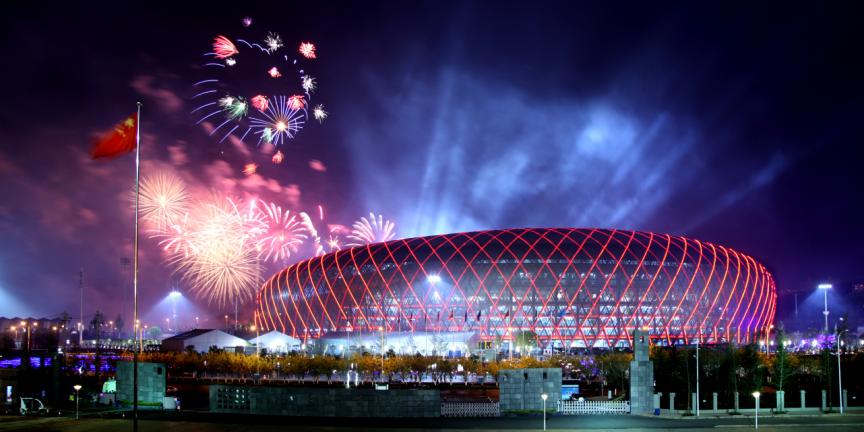
Guiyang Olympic Sports Center Stadium
The bottleneck in financing and the bottleneck in valuation are essentially the same bottleneck: no one can clearly tell how much profit a venue can make in the future. Answering this question cannot rely on empiricism, but requires long-term tracking of the revenue structure of different types of venues, comparable cases at home and abroad, and industry rules. Calculating the cash flow of a venue in the next two to three decades clearly to convince buyers, sellers and financial institutions is a task that someone must do, and must do with sufficient professionalism.
Back to the issue of capital. From the perspective of the whole life cycle, institutional cost is as important as capital cost: the operation period accounts for the largest part of the project, and the institutional cost often determines the total cost. Cheap capital is not that easy to obtain either: strict audits and complicated accountability procedures all raise invisible costs.
Of course, this model is not without critics. To build IG Arena, thousands of trees in Meijo Park were cut down, which was regarded by local public opinion as a typical case of public green space being sacrificed for commercial development. Once the operator's revenue falls short of expectations, the disputes and renegotiations during the long contract period will ultimately be paid for by the government. This model transfers risks, but does not eliminate them.
Even so, the accounts still need to be calculated. During Japan's "Lost Decades" that lasted for more than 30 years, it developed the PFI (Private Finance Initiative) model from a single law to a mature craft, and turned operation rights from a kind of commitment into a tradable asset. The Nagoya account is: with a capped expenditure of 26.4 billion yen, it gets a venue worth 46.4 billion yen, and a 30-year contract that requires no extra worry about follow-up operations. Expensive capital can sometimes be cheap, provided that you know exactly what you are paying for, and more importantly, know how much the right you hold is worth.