Not following the tide, Wei Jianjun
On the first weekend of September, Wei Jianjun led a team to Europe to investigate the market.
At the Lamborghini museum, he was captivated by a V10 engine for a long time; at the Ferrari museum, he walked around taking photos with his mobile phone; when he visited BMW, he test drove BMW's new models carefully, experiencing the thrill of speed at 250km per hour.
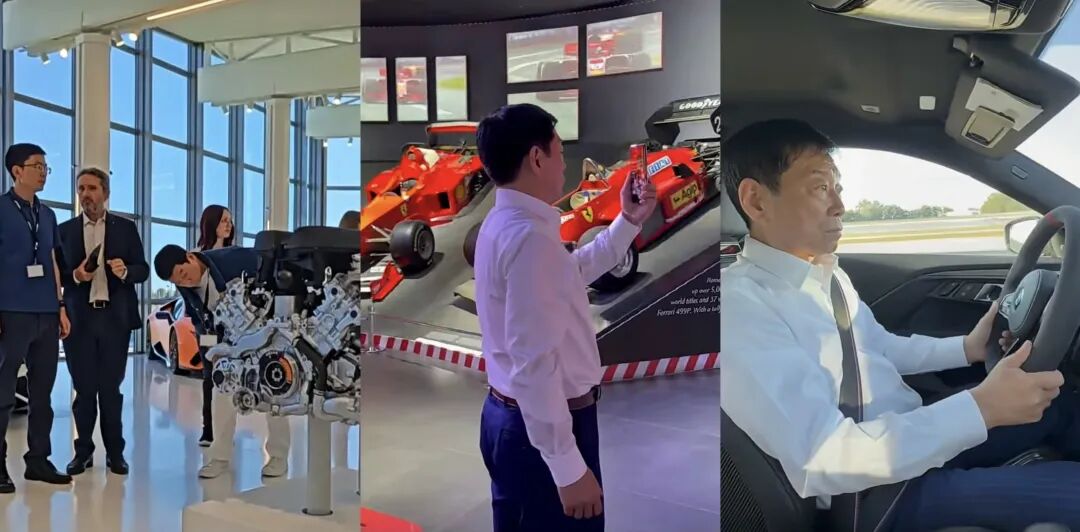
From left to right: Wei Jianjun looking at the V10 engine, taking photos with his mobile phone at the Ferrari museum, test driving the new BMW model
The videos he shared are full of his passion for automobiles. For the established European automakers, he repeatedly emphasized respect and the willingness to learn.
Against the public opinion backdrop that Chinese automobiles are sweeping the globe and overtaking in a "curve overtaking" manner, Wei Jianjun still chooses to be the "sober-minded person who pours cold water on the hype".
He seems to have long been accustomed to this role.
In the past two years, every wave that has risen in the automotive industry has seen Wei Jianjun present. But he never follows the trend when deciding which side to stand on, and only listens to his own inner judgment.
In response to this, his supporters say: in today's inwardly competing and impetuous atmosphere, Wei Jianjun is a rare sober-minded figure in the industry and a whistleblower for the sector. Of course, there are also opponents who complain that Wei Jianjun is too stubborn, which has dragged down Great Wall Motor's performance.
NO.1 [Wei Jianjun, who always "goes against the norm"]
In the first eight months of this year, Great Wall Motor sold 220,000 new energy vehicles, accounting for 27.3% of its total sales. During the same period, the domestic retail penetration rate of new energy vehicles has exceeded 60% for several consecutive months. Geely's new energy vehicles accounted for nearly 60% of its total sales, and Chery's new energy vehicles accounted for nearly 40% of its total sales.
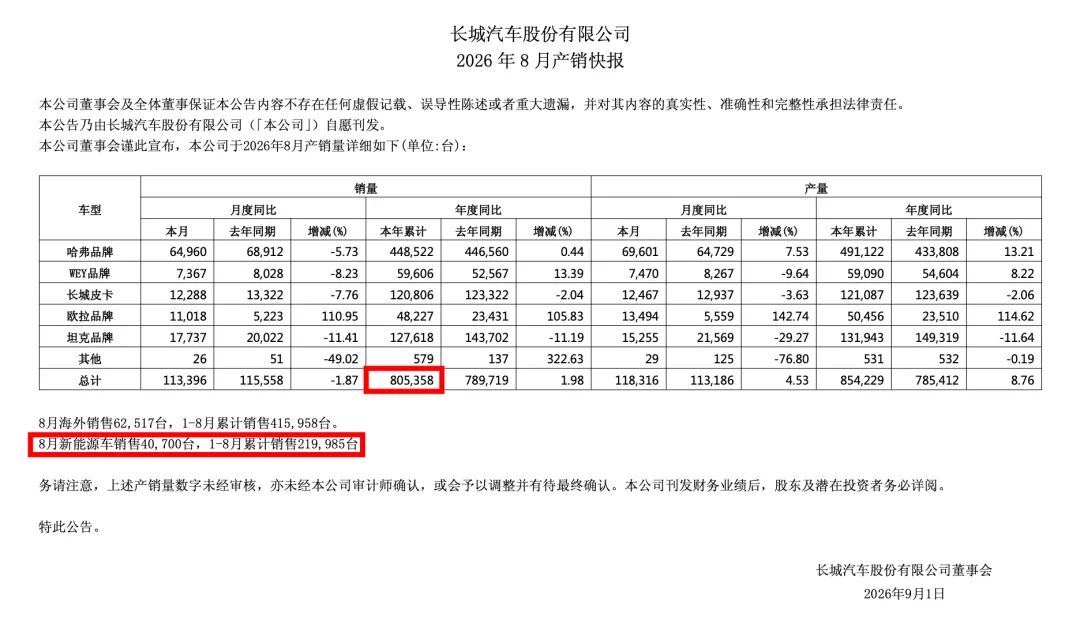
Production and sales performance of Great Wall Motor in August 2026
The proportion of new energy vehicles in Great Wall's sales is obviously lower than the industry average, but Wei Jianjun does not seem to be in a hurry.
During this trip to Europe, he mentioned Great Wall's supercar project many times. According to the plan, this upcoming plug-in hybrid supercar from Great Wall will be equipped with a 4.0T V8 twin-turbo engine. In the current global new energy supercar market, there are very few models that still use large-displacement engines like V8, and the main supercars of McLaren and Porsche mostly adopt 3.0T or 2.9T small-displacement turbo hybrid architectures.
At the Beijing Auto Show in April, Great Wall even placed this self-developed 4.0T V8 engine at the center of the exhibition booth.
Wei Jianjun's attitude towards electric vehicles has never changed over the years. He believes that the single exclusive electric vehicle platform is a false proposition.
"The more advanced hybrid power in the future will actually have no higher usage cost than electric vehicles." "Pure electric vehicles should be miniaturized, as a cost-effective commuting tool in urban areas, and should not blindly pursue high speed as well as large and heavy body design."
In 2022, he once expressed his concern that "the current pure electric vehicle model is not commercially viable in terms of business logic. The pure electric vehicle sector is suffering severe losses and it is difficult to form an effective commercial closed loop."
For this reason, in that year, he cut off the two pure electric mini models ORA Black Cat and ORA White Cat, which once reached a monthly sales volume of 20,000 units, on the grounds that these two models were not profitable, with a loss of more than 10,000 yuan for each unit sold.
In the same year, other automakers were stepping up their electrification transformation. BYD announced that it would stop producing fuel vehicles, becoming the first traditional automaker to fully switch to new energy vehicles; Geely, Chery and Changan also made statements to emphasize their determination in electrification transformation.
Up to now, the pure electric products under Great Wall are only mini models like ORA, and its larger models have always followed the hybrid and plug-in hybrid routes. Among the automakers with annual sales of over one million units, Great Wall is the one with the least pure electric product lineup.
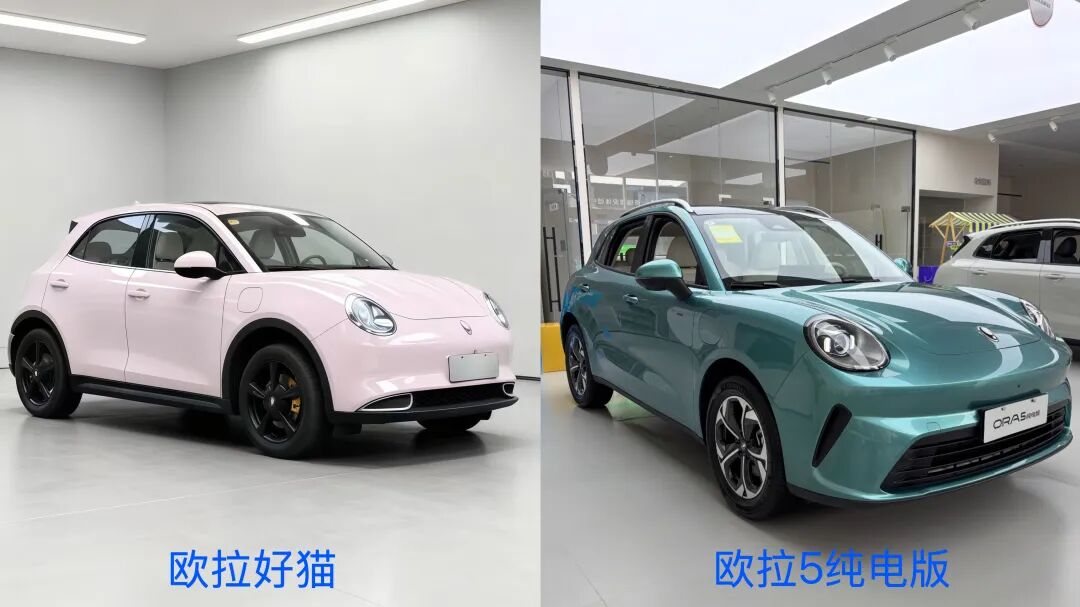
Part of the pure electric models under the ORA brand
This phased choice is directly reflected in the sales figures. From 2022 to 2025, Great Wall's sales volume only increased by about 260,000 units in four years, while the sales volume of BYD and Geely both doubled during the same period.
Up to this year, such a gap is still obvious. From January to August, Great Wall's total sales volume was 805,000 units, while the total sales volume of BYD and Geely reached 2.668 million units and 1.943 million units respectively.
The extended-range technology is the same. Wei Jianjun once said that Great Wall has no plan for extended-range technology, and all its power systems are series-parallel hybrid technology. "Through efficiency calculation and demonstration, we will definitely not do extended-range models."
In 2021, when Li Auto first started to develop extended-range vehicles, the industry generally held a negative attitude. But after Li Auto sold 376,000 extended-range vehicles in 2023, many automakers including Avatr and XPeng began to change their minds and enter this track.
Wei Jianjun's attitude has not changed at all. Great Wall's self-developed super Hi4 includes an extended-range mode, but it still will not launch independent extended-range models.
This choice inevitably has two sides. It has become much more difficult for models such as WEY Lanshan and WEY V9X to break through in the large six-seat SUV market, with monthly sales of less than 2,000 units this year.
Wei Jianjun did not completely ignore electrification. The Guiyuan Platform released earlier this year features a native architecture that is compatible with five power forms: fuel, HEV, PHEV, pure electric and hydrogen energy.
The core of this idea is not to bet on a single power route. In his own words, "pure fuel, hybrid, pure electric and even hydrogen power should all be developed, so that we can truly realize our positioning as a major automotive country serving the global market."
NO.2 [Wei Jianjun's persistence has also yielded results]
Wei Jianjun will keep working on the things he has made up his mind to do. This kind of persistence has brought controversy to Great Wall, but also brought tangible achievements.
Xiangjie G9, Trumpchi Yue 7, Hongqi G919, there are still many new players entering the boxy off-road vehicle market this year, but in fact, Great Wall is still the automaker that has achieved real success in this segment. From January to August, Tank's cumulative sales volume reached 128,000 units.
In 2021, Wei Jianjun separated the Tank brand from WEY, making it the first dedicated independent boxy off-road brand among Chinese automakers at that time. Back then, the mainstream options for boxy off-road vehicles in China were almost all foreign brands except for BAIC Off-road - Range Rover, Toyota Prado, Jeep Wrangler, all priced at more than 300,000 yuan.
Wei Jianjun has his own judgment on the technical route of boxy off-road vehicles: in a sense, it is extremely dangerous to make pure electric off-road vehicles. "The electric motor will lose torque when it runs at low speed. Those pure electric off-road vehicles you see that can climb slopes are all slipping on the tires to get up the slope, not climbing up with real torque output."
Facts have proved that there are indeed no pure electric versions of the new energy boxy off-road vehicles currently on the market, and the mainstream products all adopt plug-in hybrid or oil hybrid routes.
Tank's first-mover advantage in this segment, coupled with Great Wall's long-term accumulation in power technology, has allowed it to occupy more than 55% of the 417,000-unit hard-core off-road market in 2024.
Also in 2024, the automotive industry set off a wave of building personal IP for automotive company leaders, initiated by Lei Jun of Xiaomi Auto. Many heads of automakers stepped in front of the camera to shoot short videos and do live broadcasts, hoping to use their personal influence to enhance public awareness of their enterprises. Wei Jianjun was also one of them. At that time, there was a joke in the industry that Yin Tongyue, Wei Jianjun and Li Shufu all came to the public stage in person.
But by the end of 2025, this trend of automaker leaders personally building their personal IP has basically come to an end. Wei Jianjun is one of the few who has persisted until now and can still frequently appear in the public view.
Open the WeChat Channel "Great Wall Motor Wei Jianjun", and you will find that he rarely puts on the airs of a chairman. Most of the videos show his daily life of eating noodles, playing basketball, and eating flatbread wrapped with meat together with employees. Some of the videos are even recorded by himself with a mobile phone, without too much packaging and modification.
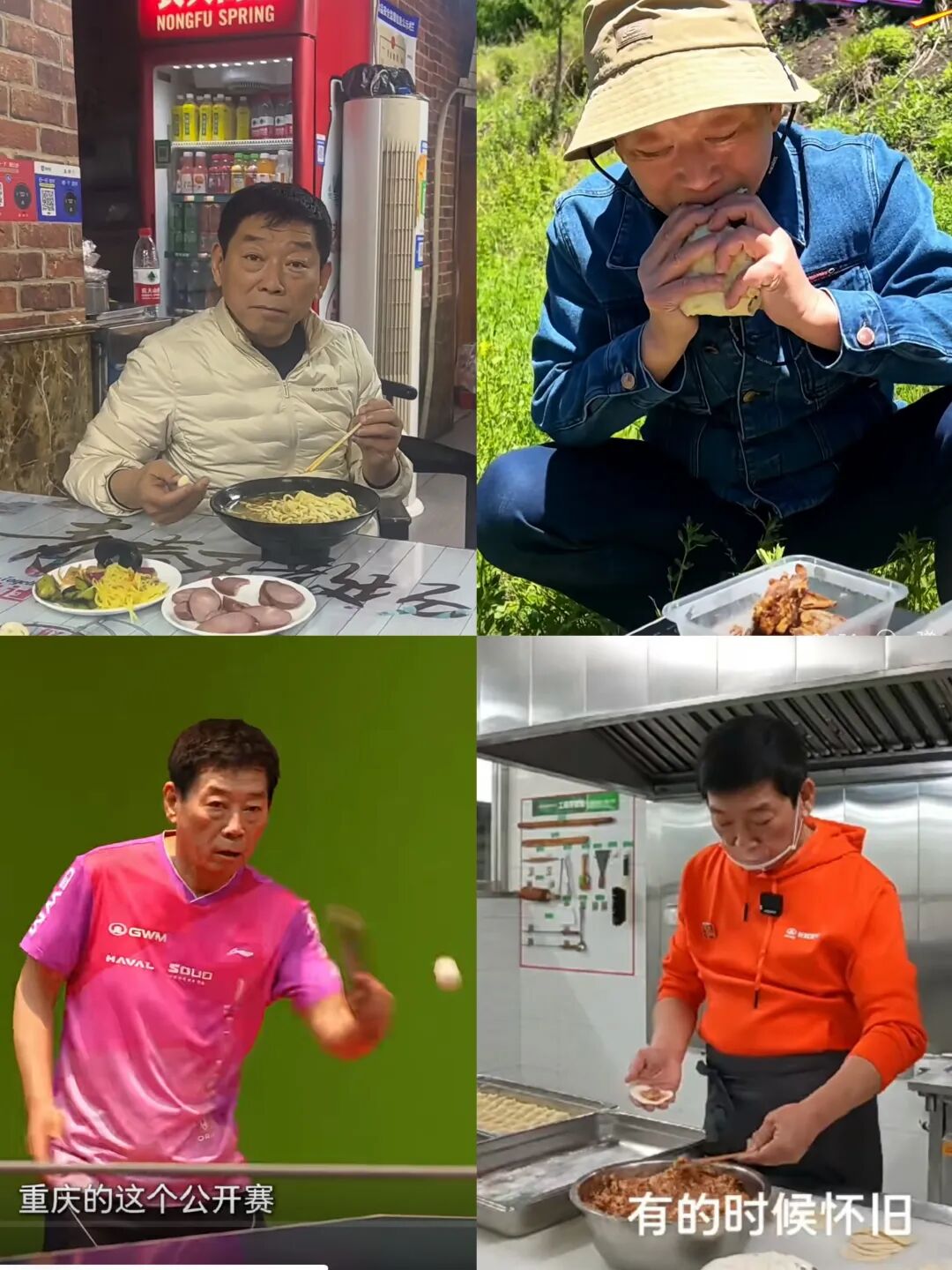
Screenshots of part of the content on the WeChat Channel "Great Wall Motor Wei Jianjun"
At the Great Wall Motor annual meetings in the past two years, Wei Jianjun even made dumplings and boiled dumplings by himself. But for these scenes, he was also very frank: "To be honest, there is a performance element in my participation, but I feel very happy."
Wei Jianjun's number of fans on Douyin was more than 400,000 in 2024, and now the number has increased by 10 times. His impression in front of the camera has always been real, simple and unpretentious.
At the WEY V9X pre-launch press conference in April this year, he publicly criticized his own marketing team, and named two senior executives, Zhao Yongpo, CEO of WEY, and Li Ruifeng, CGO of Great Wall Motor, in public.
"They want to say everything, have no key points, are too scattered to break through the audience's defense, and cannot form the mental occupation of buyers." It is rare in the industry that such words are said by the chairman in front of the media.
Earlier, the promotional poster of WEY V9X was once accused of plagiarizing Land Rover, and Wei Jianjun personally came forward to apologize. Putting these details together, we can roughly see his work style: he does not care too much about superficial tact, and does not play by the usual industry rules.
Of course, there are also objections in the market to Wei Jianjun building his personal IP, thinking that he is "too preachy". The meticulous exhortations and repeated sermons to the younger generation in the industry in the videos make some audiences feel uncomfortable. Such voices are not uncommon on social media.
NO.3 [Final notes]
There is a consensus in the industry that the judgment of the founder often determines how far an enterprise can go.
BYD's current leading position in China's new energy vehicle sector is closely related to the decisions made by Wang Chuanfu in the past, such as sticking to the lithium iron phosphate route and fully investing in hybrid technology in advance. The reason why NIO's models can be recognized at a glance on the road today is largely due to Li Bin's choices, and the styling plan of each car has to be approved by him in the end.
Great Wall is a private enterprise controlled by Wei Jianjun, and his judgment also directly determines the direction of this company. Since he took over the company more than 30 years ago, every key turn of Great Wall, from persisting in developing V8 engines to building boxy off-road vehicles, and then refusing to develop extended-range vehicles, has been approved by him in person.
In the next stage, whether Great Wall can achieve breakthrough in its high-end strategy, whether the new models built on the Guiyuan Platform can become hit products, and whether it can further expand its overseas market, all ultimately depend on Wei Jianjun's decisions. The future of Great Wall is in his hands.
This article is from the WeChat official account "AutoReport Auto Industry Review", author: Cong Runyu, editors: Chen Hao, Gan Meng, authorized by 36Kr for release.