More than 30 people, less than four months, payback in one week: *Soul Ferry · Floating Life Dream* has worked out the commercially viable profitability model for AI feature-length films.
How long does it take for a film and television work to recoup its production cost?
Under the traditional model, the answer is often counted in months or even years, and more projects may still fail to cross the break-even line after a long cycle.
But the AI new work of *Soul Ferry* launched by iQiyi and Changxin Media, the "Floating Life Dream" series of online feature films, gives the answer: one week.
On August 22, the first two AIGC online feature films of the *Soul Ferry* Floating Life Dream series, *Butterfly Dream* and *Dream of the Heavenly Maiden*, were exclusively launched on iQiyi. Three days after launch, the revenue sharing box office from member subscriptions exceeded 3 million yuan. In the first week of release, the production costs of the two films were fully recouped. Ten days after launch, the project's revenue sharing box office had exceeded 6 million yuan, and it is still growing continuously.
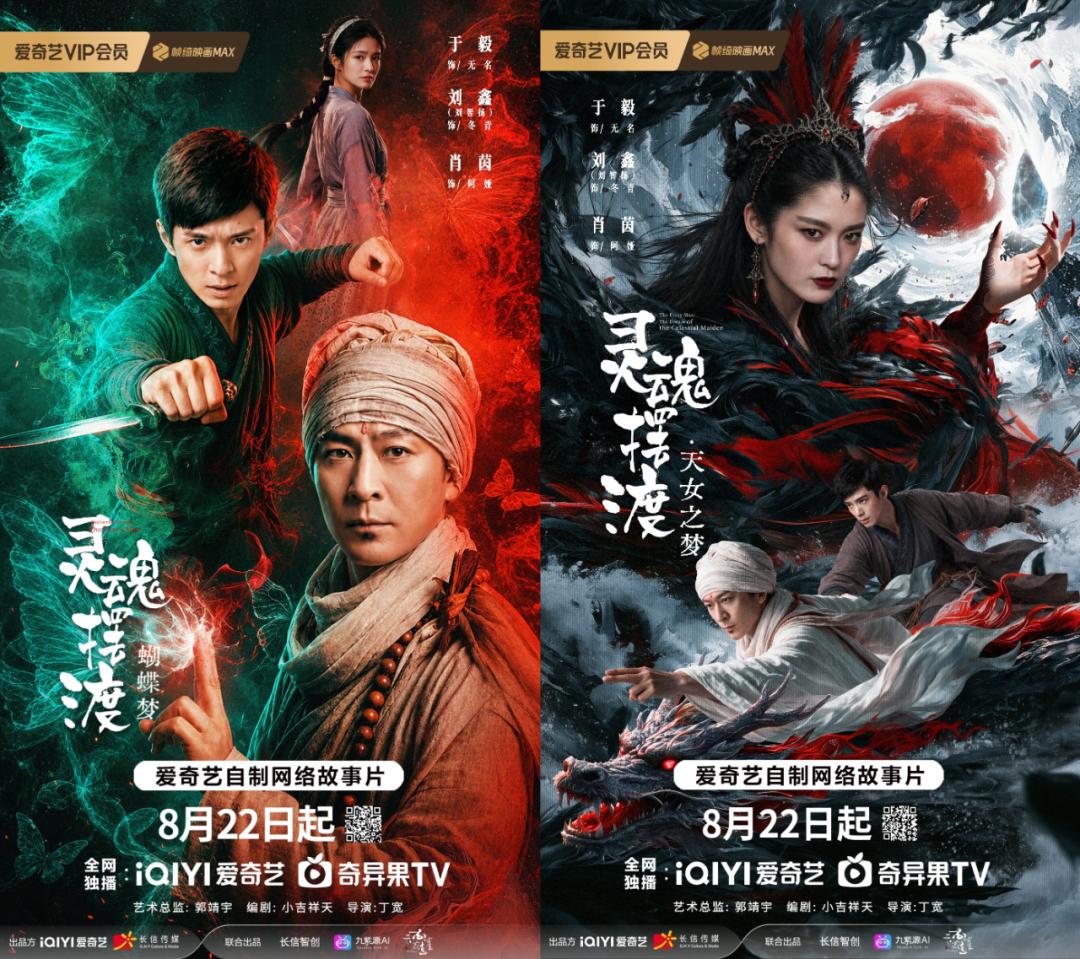
For the film and television industry, the value of this set of figures lies not only in the amount, but also in the efficiency of capital turnover. The discussion of AI feature films has for the first time shifted from visuals and production capabilities to specific commercial calculations of cost, cycle and return.
"A project can only have follow-up arrangements if it is commercially viable," said Li Zhichao, producer of the AIGC online feature films of the *Soul Ferry* Floating Life Dream series. The biggest significance of recouping costs in the first week is that it verifies that AI film and television projects can also achieve a complete commercial closed loop. "It allows the entire industry to see that an AI work can have excellent commercial value."
Completing two feature films of more than 60 minutes in less than four months, requiring less than 40 people throughout the whole process, and recouping costs in the first week after launch. Behind this set of figures: What variables of the film and television business has AI rewritten? From being able to film to being able to make profits, why is iQiyi the first to deliver a complete commercial answer sheet?
For the Film and Television Business, Solve the Time Puzzle First
From "Completing One Project in Several Years" to "Delivering Two Feature Films with Full Solutions in Four Months"
The story of *Soul Ferry* has been going on for more than ten years, but there are still many chapters waiting to be unfolded for the "iron triangle" along the way.
It is not that the creators do not want to shoot, but for such an Eastern fantasy IP, completing the story means Kunlun Divine Mountain, multiple layers of dreams, giant dragon naval battles... Every fantasy imagination written into the script has to be turned into specific shooting arrangements and post-production tasks.
In the traditional way, for two fantasy feature films each more than one hour long, the post-production visual effects alone would take more than a year. Including pre-preparation, shooting and special effects, the entire cycle will be even longer.
Taking the "Great Battle of Kunlun" in *Dream of the Heavenly Maiden* as an example, Li Zhichao said that if it is produced in the traditional way, green screen shooting is required, which takes at least ten days, and the special effects will take several months. "It is not even certain that it can be completed on time." And this is only one scene in the whole work, and more time is needed for pre-preparation, shooting of other scenes and post-production.

What the audience waits for is new stories, while what the production side faces is a sum of funds that needs to be invested in advance and occupied for a long time.
In addition to "cannot afford to shoot", "cannot afford to wait" also affects whether the project can be launched. Li Zhichao said that once a sum of capital is invested in traditional film and television, it often takes a year or even longer to complete the turnover. Before the revenue is generated, the capital has been occupied by the project, and subsequent creation has to wait for the results of this round of production and recovery.
However, *Soul Ferry*: Floating Life Dream has solved this problem: from the launch of the project to the release of the two finished films *Butterfly Dream* and *Dream of the Heavenly Maiden* on iQiyi, the whole process took less than four months.
The shortening of the cycle comes from the rewriting of the production process.
In the past, after the art plan was confirmed, it was necessary to build sets, arrange furnishings, prepare props, and then arrange personnel to enter the studio or transfer to other shooting locations. In the production of the AI feature films of the *Soul Ferry* Floating Life Dream series this time, script creation and polishing is no different from the traditional production process, but after entering the preparation period, the complex chain is greatly compressed — after the art assets such as characters and scenes are completed, the AI video generation link can be entered. In the past, shooting "had to follow the sets, people had to go wherever the sets were, there was still transition on the way, and a huge fleet was needed". Now a dozen people in the AI project team can complete all the "shooting" in the office, reducing a lot of scheduling around real scenes and shooting sites.
This efficiency also extends to large-scale scenes. According to Li Zhichao, in the AI video generation link, the gap in production time between literary drama scenes and special effects scenes has been significantly narrowed. Complex scenes still require pre-design, but they no longer have to go through the same lengthy live-action shooting and special effects production process.
More critical than time is the turnover of funds.
"In the past, it took several years to complete one project, but now several projects can be done in one year, and there has been a qualitative change in capital turnover rate." In Li Zhichao's view, a major chronic problem of traditional film and television is that once a sum of capital is invested, it often takes one or two years or even several years to see the return, leaving both projects and investors locked in for a long time.
For the film and television industry, a shorter production cycle also means getting market feedback earlier. Producers have the opportunity to adjust themes, budgets and expression methods according to the performance of the previous work before the next round of investment, and the time and capital required for a single trial and error are expected to decrease.
Another change brought by AI occurs before the project is launched, and some ideas that were abandoned in the past due to excessively high costs now have the possibility of being put into production.
Realize Imagination and Increase the Value of IP Assets
Large Scenes No Longer Cost Exorbitant Amounts, Assets Are Built Once and Reused Across the Series
The flapping of the giant magic butterfly in *Butterfly Dream* and the battle of two dragons in Kunlun in *Dream of the Heavenly Maiden* are both iconic famous scenes that the audience accepts as AI-produced. But in the traditional production system, these "cost-heavy" key scenes may not even have the chance to enter production.
"For a live-action project of the same investment scale, such scenes will be dissuaded at the project approval stage," Li Zhichao recalled. In the past, they only belonged to the core scenes of S-level dramas. Budget restrictions are often passed on to screenwriters and directors in advance, forcing them to reduce the scale of scenes, adjust plots, or let characters explain the whole scene with a few lines of dialogue.
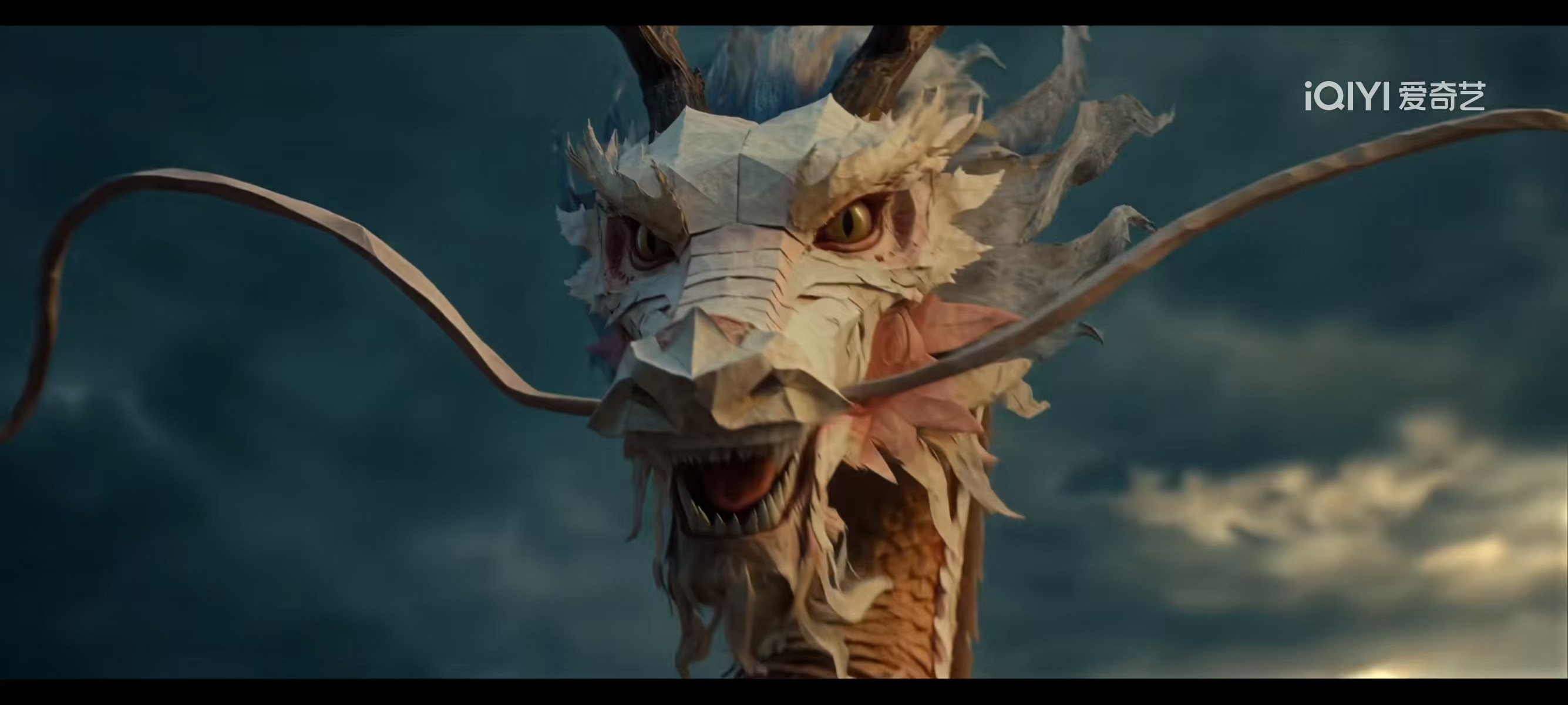
AI allows this scene to be retained, and also gives specific expression to the imagination in this classic IP that was originally restricted by budget.
After the works were launched, the market gave positive feedback. On the first weekend of release, *Butterfly Dream* and *Dream of the Heavenly Maiden* ranked first and fifth respectively in the effective playback market share of the Yunhe Film category; *Dream of the Heavenly Maiden* scored 8.6 on the platform, becoming the highest-scoring film in iQiyi's online feature film category in 2026.
There is no doubt that AI makes it possible to re-calculate the cost of this type of creation. According to Li Zhichao, in the video generation link, the gap in time and computing power cost between literary drama scenes and large special effects scenes is significantly narrowed. Complex scenes still require more pre-design, and the workload of the art team will also increase, but the additional investment required to achieve wonders no longer rises sharply like traditional live-action shooting.
The change in cost, in turn, can also affect project selection. Stories that were shelved in the past due to expensive visual effects and high production difficulty can be re-discussed. Screenwriters no longer have to set self-imposed limits for the budget when they start writing, and fantasy and science fiction genres that are known for high costs have for the first time obtained the possibility of normalized production.
There is a more long-term valuable account than cost reduction for a single project, which is assets.
In traditional live-action shooting, expenses such as actor styling, personnel presence on site, and on-site scheduling need to be incurred repeatedly with shooting, which are one-time consumption. AI production can retain the confirmed character images and visual settings as materials that can be directly called for subsequent production. Li Zhichao calls it a "huge productivity revolution".
This reuse already has clear follow-up applications. The three leading actors in the "Floating Life Dream" series authorized their images and dubbed themselves in person, and all the digital images, scenes and props of the characters are precipitated into standardized and reusable digital assets. The third film *Dream of the Princess* can inherit the character image settings completed in the first two films. At the same time, the overall art style has been determined in the first two films, and subsequent creations have a unified visual basis, with decreasing marginal cost and more stable quality.
This production idea of "asset precipitation, reuse and cost reduction" is expanding from a single project to wider applications. iQiyi is opening up IP value and AI creation capabilities to external creators — its professional-grade AIGC film and television production platform Nado Pro has opened its IP library for only more than four months, with more than 6600 works stored in the library, receiving nearly 300 cooperation applications from creators, and the first AI short drama adapted with authorization from the IP library has also been launched.
When IP changes from "one-time content" to "sustainable digital asset pool", the underlying model of the film and television production business will also shift from heavy assets and low reuse to light assets and high reuse.
Smaller Teams, Higher Production Efficiency
More Than 30 People Complete the Process That Traditionally Requires Hundreds of People
The outside world often has two extreme imaginations about AI film and television: either three or five people keep generating and selecting materials, or it is assumed that it still needs to set up a traditional crew of hundreds of people. *Soul Ferry*: Floating Life Dream gives a completely different answer. The complete industrial division of labor is all retained, but the crew size is greatly streamlined.
For two fantasy feature films each more than one hour long, from pre-preparation to the completion of post-production, a total of about 30 to 40 staff members participated, and all production was completed indoors.
In terms of work type composition, Li Zhichao broke down this new production line: after the screenwriter completes the script, the art team of three or four people completes the work of art concept design, furnishings and props in traditional film and television, and also covers the functions of casting, costume, styling and makeup; then, the AI project team of more than ten people generates videos under the leadership of the director in the office based on the character, scene and prop assets generated by the art team; the post-production is similar to the traditional process. After the final cut is confirmed, the actors dub, and at the same time carry out mixing, color grading and ultra-high resolution processing. "Compared with traditional film and television, the two most changed sectors are art and AI video generation. These two sectors simplify the complex process of traditional film and television production, while the pre-script creation and post-production are actually not much different."
The significance of 30 to 40 people can be understood by putting it back into this specific division of labor: part of the on-site execution work has been transferred to art asset design and AI video generation, and the director's requirements for narrative, performance and details need to be implemented through new processes.
For the industry, this also puts forward new talent demands. Art personnel need to understand how the generated materials serve continuous shots, AI production personnel need to accurately implement the director's intentions, and producers need to re-manage generation, modification and delivery. The tools compress part of the execution links, and also allow professional judgment to directly affect each output.
The creative experience left by *Soul Ferry*: Floating Life Dream is not only a smaller team size, but also a set of methods to allow this team to collaborate stably and ensure content quality. The signal this creative method sends to the industry is the overall migration of the job structure: on-site execution positions are shrinking, and new positions such as digital asset production, AI process management and quality control are added. The film and television industry has not become smaller, but has changed its entire framework.
AI Film and Television Boosts Enthusiasm for Member Payment
Recouping Costs in One Week, a New Variable in the Profit Statements of Producers and Platforms
Shortened cycle, streamlined team and asset reuse all ultimately need to answer the same question: can the finished work recoup the investment?
This summer, two landmark samples of Chinese AI film and television have come out, giving two different answers.
The 30-episode pure AI drama *Later Journey to the West* landed on Hunan TV's prime time and Mango TV, driving Mango Excellent Media to hit the 20% daily limit for two consecutive trading days, with a market value increase of about 11.65 billion yuan. It proves that AI content can reshape a company's valuation in the capital market.
And *Soul Ferry*: Floating Life Dream answers another more simple and essential question close to the nature of business: AI content can drive member subscriptions, and good works can make money directly. "The biggest significance of recouping costs in the first week is that it verifies that AI film and television projects can also achieve a complete commercial closed loop," Li Zhichao said.
This is the first time that AI feature films have directly converted audience recognition into member revenue, and the project payback cycle has been shortened from the year level to the week level.
For producers, the underlying constraints of traditional feature films are "high fixed cost + long recovery cycle + hit work dependence". A sum of capital is deposited for one or two years, and the time the project is exposed to market risks is also counted in years. But after recouping costs in the first week, the work can still continue to accumulate member revenue sharing box office, the element of gambling is decreasing, and the measurable element is increasing.
On the production side, the cost structure of AI projects is also unprecedentedly transparent. "Apart from manpower, it is all computing power. Most people can understand this account," Li Zhichao said.
The cost reduction is also traceable: iQiyi officially disclosed that compared with traditional production methods, the production cost and cycle of AIGC projects can be reduced by 70% to 90%.
For video platforms and film producers, the combined changes brought about by lower production costs and faster turnover are that capital can be allocated in more ways. In the past, a large investment might be concentrated in one project with a long production cycle; if the capital and time required for each project decrease, production companies will have the opportunity to advance multiple projects within a year, disperse investments, and gradually accumulate market feedback.
When the relationship between budget, cycle and revenue becomes clearer, film and television projects may also re-attract the attention of investors, and this logic will also be reflected in the platform's profit statement.
iQiyi's financial report for the second quarter of 2026 shows that the total revenue for the quarter was 6.29