The former top sunscreen brand is about to be sold.
Once the most popular sunscreen brand is about to be sold.
Recently, Spanish beauty group Puig announced that it will acquire the remaining 50% equity of skincare brand company ISDIN from Corporación Químico-Farmacéutica Esteve (CQFE), which is under the Spanish pharmaceutical family Esteve.
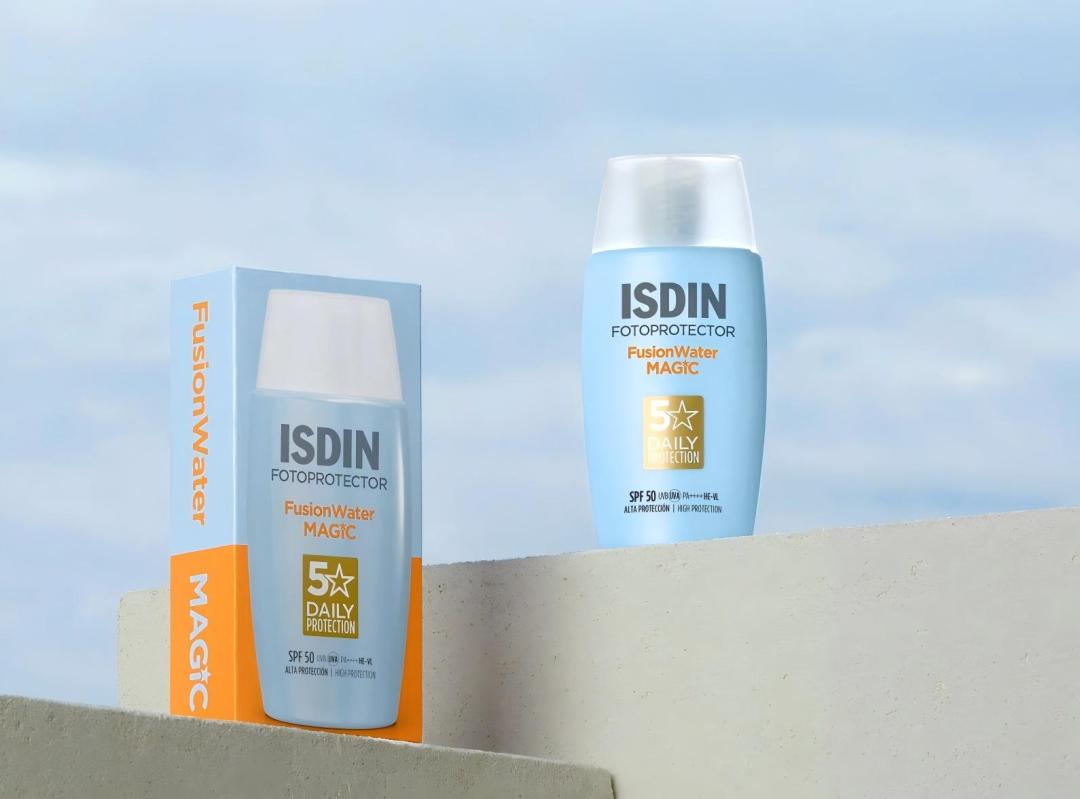
The total value of this transaction reaches 1.2 billion euros. After the transaction is completed, Puig will become the sole shareholder of ISDIN.
In other words, the well-known ISDIN sunscreen familiar to the market will usher in its sole owner. Consumer investment has seen ups and downs, but mergers and acquisitions remain active.
The Most Popular Sunscreen Once Ranked No.1 in Chinese Market
ISDIN was founded in Barcelona.
According to public records, the company was established in 1975. At that time, the Esteve pharmaceutical family brought pharmaceutical R&D and medical resources, while the Puig perfume and beauty family brought consumer brand experience. The two parties each held 50% of the shares, trying to find an intersection between pharmaceuticals and cosmetics. "Manufacturing skincare products with pharmaceutical standards" has become the brand story that ISDIN has followed for a long time.
Later, what really made ISDIN remembered by Chinese consumers was a lightweight "sunscreen fluid".
In 2015, ISDIN entered the Chinese market through Tmall Global. In 2018, its Isdin Fusion Water Sunscreen topped the sunscreen category on Tmall Global; in the rolling 12-month data as of September 2019, ISDIN ranked first in terms of sales among sunscreen brands on Tmall, the sunscreen sales of its official overseas flagship store exceeded 300 million yuan, and its star sunscreen product had sales of over 100 million yuan with about 1.05 million units sold.
The Chinese market is only part of ISDIN's internationalization. In 2024, the company's revenue reached about 643 million euros, a year-on-year increase of 13%; about 70% of its revenue came from markets outside Spain. By the end of 2024, ISDIN had 1,641 employees in 14 countries.
However, ISDIN's growth slowed down significantly in 2025: its full-year revenue was 647.7 million euros, an increase of only 0.8%; its operating profit dropped to 78.2 million euros, a year-on-year decrease of 26.6%; its net profit was 56.7 million euros, a year-on-year decrease of 14%.
Even so, Puig still paid 1.2 billion euros for half of the equity.
Simple calculation based on the equity proportion shows that the total equity of ISDIN corresponds to about 2.4 billion euros, which is about 3.7 times its 2025 revenue and 42 times its net profit.
For Puig, this is not an unfamiliar cross-border acquisition, but a buyback of assets that it has jointly nurtured for 50 years.
In 2025, Puig's revenue reached 5.042 billion euros, of which the perfume and fashion business contributed 3.646 billion euros, accounting for about 72%; the skincare business revenue was only 551.2 million euros, accounting for about 11%. Since Puig previously only held 50% of ISDIN's shares, ISDIN's revenue was not included in its operating revenue. Roughly calculated based on the 2025 caliber, after the full equity consolidation, Puig's skincare business scale will increase from about 550 million euros to nearly 1.2 billion euros, more than double the original size.
Puig will use its own funds and debt to complete the acquisition at the time of delivery, and promises that the ratio of net debt to adjusted EBITDA will not exceed 2 times. Before the delivery, ISDIN will still operate independently under the existing governance structure; after the delivery, this brand that once spanned two families will completely become part of Puig's skincare business landscape.
Some Are Exiting, Some Are Bottom-Fishing
This is a highly contrasting scene at present:
Consumer investment has clearly entered a cooling cycle, and even reached a stage where consumer assets are left unattended, yet a series of super large consumer M&A deals have emerged one after another.
It is still remembered that last month, Bain Capital officially announced that it has agreed to acquire Gong Cha from TA Associates ("TA") and other shareholders of the company. So far, this bubble tea pioneer that has opened 2,200 stores in 33 markets around the world has ushered in a new owner.
Earlier, CPE Yuanfeng and European private equity firm Jacobs Capital officially signed a share purchase agreement to fully acquire Mammut Sports Group AG ("Mammut"), and the transaction is expected to be completed in the coming months.
Looking ahead, recent consumer M&A deals are so dense that they are dazzling.
The most sensational deal is the strategic cooperation reached between Starbucks and Boyu Capital, which sold 60% controlling stake of its China business at a total price of 4 billion US dollars; shortly after that, CPE Yuanfeng and RBI Group announced the joint venture of "Burger King China", with CPE Yuanfeng holding 83% of the shares.
In addition: HSG took the majority stake in Italian luxury casual footwear brand Golden Goose, and then acquired Marshall which is famous for its classic guitar amplifiers; Dazheng Capital took over all global Blue Bottle Coffee stores from Nestle; Anta became the single largest shareholder of PUMA; IDG Capital took control of Yoplait's China dairy business... A number of legendary brands familiar to global consumers are quietly changing hands.
The choices of these consumer brands have become a microcosm of changes in the global macro economy. Their unanimous choice to sell assets at this time is, to some extent, a response to the cyclical trough.
The consumer industry has always been regarded as a track with rigid demand and counter-cyclical attributes, which also explains why consumer brands are more favored by capital during periods of economic fluctuation.
Some are exiting while some are bottom-fishing, which has become the most non-consensus scene in current consumer investment.
This article is from the WeChat official account "M&A Frontline", author: Chen Jia, published with authorization from 36Kr.