Will luxury dual-brand hotels be a new choice for large-scale properties?
Beijing is about to welcome a new dual-luxury-brand hotel project.
Beijing Beichen Marriott Marquis has officially opened to guests, and the adjacent Beijing Beichen The Ritz-Carlton is also scheduled to open by the end of this year. This is a dual-luxury-brand hotel project located in Beijing's core area.
In recent years, dual-brand hotel projects have been on the rise in China, but genuine dual-luxury-brand projects are extremely rare.
Many property owners tend to adopt the "high-low tier matching" and "long-short stay combination" dual-brand models to fully tap the potential of surrounding customer sources, making such projects far more common.
The combination of Marriott Marquis and The Ritz-Carlton, however, clearly further segments the high-end customer group.
This dual-brand project is worthy of industry attention: why did the Beichen Group launch two luxury hotel brands at the same time? What will its subsequent operating performance be like? Will this type of dual-luxury-brand project become a new choice for large-scale properties?
The arrival of dual-luxury-brand hotels
The Beichen Marriott Marquis officially commenced operations recently.
The project is situated in the complex of Phase II of the National Conference Center in Beijing Olympic Park area, at the northern end of Beijing's central axis, adjacent to city landmarks including the National Stadium (Bird's Nest) and the National Aquatics Center (Water Cube). It serves as a core carrier for hosting national-level conferences, large-scale exhibitions and high-end business events.
Many people may be relatively unfamiliar with the Marriott Marquis brand. It is a luxury flagship brand under the Marriott system, whose most core feature is "a large number of guest rooms". It focuses on supporting super-sized banquet and conference facilities as well as modern luxury spaces, targeting customers from large-scale exhibitions and conventions, enterprise executives and high-standard business activities.

Beijing Beichen Marriott Marquis Hotel Source: Xiaohongshu
For example, Beijing Beichen Marriott Marquis has 671 guest rooms, while Shanghai Luneng JW Marriott Marquis has 514 guest rooms.
This is only part of the dual-luxury-brand hotel project. The other luxury hotel, the Beichen The Ritz-Carlton, is about to open soon.
This is the third The Ritz-Carlton hotel in Beijing, with a planned 282 guest rooms and suites. This is a dual-luxury-brand hotel project jointly built by the property owner Beichen Group and two luxury brands under the same hotel group. The two hotels have a total of 953 guest rooms, jointly forming the "twin star" of hotels in the Asian Olympic Games area.
This scenario is very rare in China.
Looking at the domestic hotel market, the supply of high-end and luxury hotels continues to expand. According to industry monitoring data, the stock of luxury hotels in China's first-tier and new first-tier cities has been increasing year by year, and local supply saturation has emerged in many core business districts.
After the two hotels enter the market, nearly 1,000 luxury guest rooms will be added to this area of Beijing at one go, further expanding the scale of regional hotel supply.
However, the two hotels are located in the core area of the Asian Olympic Convention and Exhibition cluster, where a large number of central enterprise headquarters, scientific and technological innovation enterprises and national-level convention and exhibition resources are gathered. The base of high-end customer groups is considerable, and the batch group demand brought by international conferences and large-scale exhibitions, as well as local high-net-worth consumption, provide a solid customer base for the project.
Hotel Finance believes that the replicability of dual-luxury-brand hotel projects is relatively weak. They have extremely high requirements for the surrounding customer structure and consumption capacity. In the future, such projects will be more concentrated in the core areas of first-tier cities, and mostly exist in large-scale properties.
Both positioned at the luxury level, The Ritz-Carlton focuses on classic private exclusive luxury, targeting individual travelers, VIPs and customized experiences; Marriott Marquis focuses on convention-oriented luxury, undertaking large-scale conferences and group check-ins.
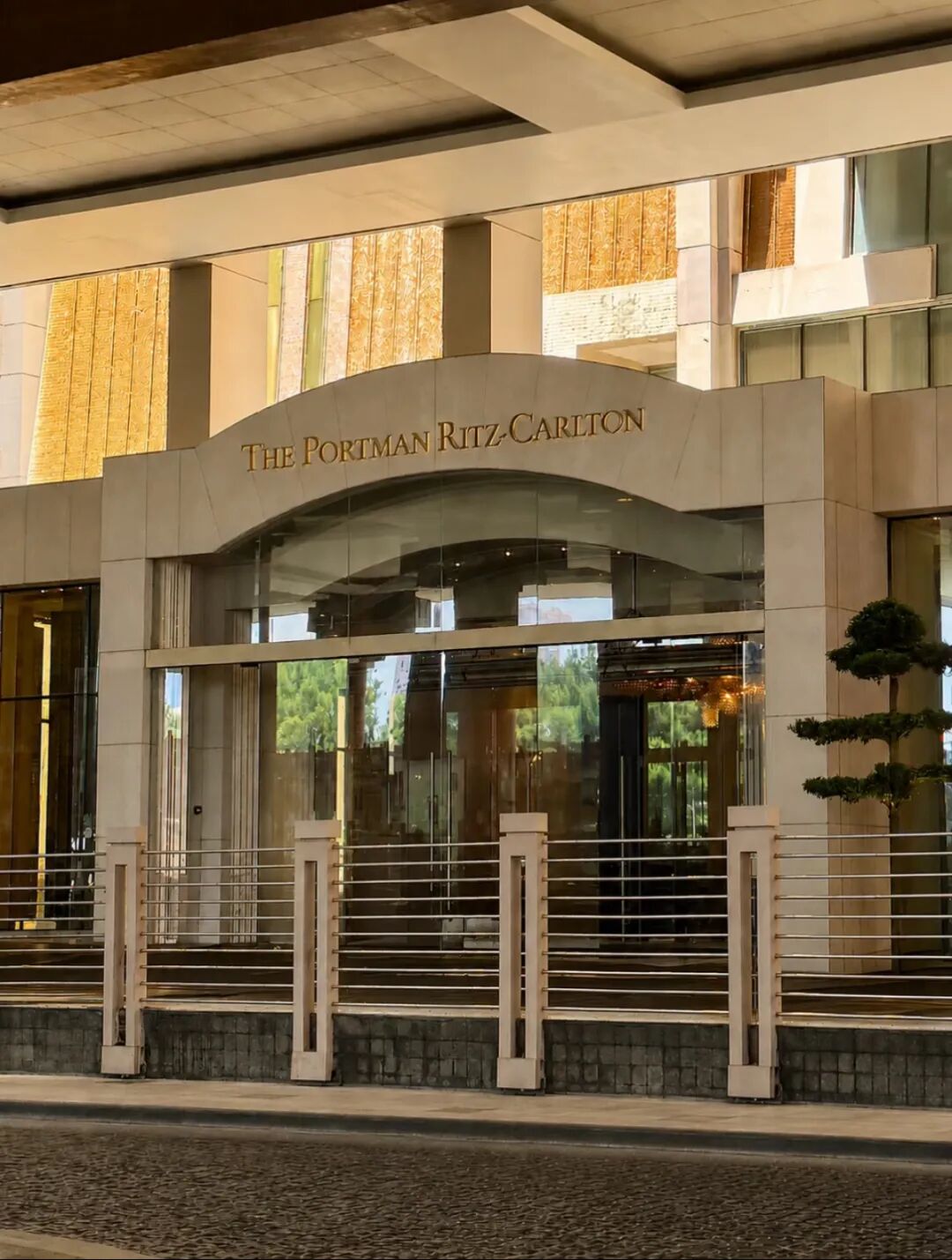
The Ritz-Carlton Shanghai, Pudong Source: Xiaohongshu
Both belong to the luxury track, but their customer groups, scenarios and pricing form a dislocation and complementary relationship instead of direct price competition. However, such a combination, if placed in second- and third-tier cities, will most likely face the practical dilemma of insufficient customer sources and the inability of room rates to support huge investment.
Even in first-tier cities, if the area lacks convention and exhibition resources, high-end business activities and local high-consumption customer groups, it is difficult to support the operation of two luxury brands simply relying on tourist flows.
Expansion of dual-brand hotels
As the market's awareness of dual-brand hotels becomes more mature and rational, similar projects in China have been gradually launched, becoming one of the mainstream paths to revitalize large-scale properties in the stock era.
The so-called hotel dual-brand model refers to operating two independent hotel brands in the same property or the same complex at the same time, which can share back-of-house, electromechanical, human resources, centralized procurement and other resources, while the front desk, brand experience and membership system operate independently.
In recent years, Marriott, InterContinental, Wanda Hotel Management, Jin Jiang and Huazhu have all launched many representative dual-brand projects in China.
Wanda Hotels & Resorts launched the Wanda Vista + Wanda Jinhua project in Changchun International Movie Metropolis, realizing the combination of high-end resort and mid-to-high end business travel; Huazhu launched the Steigenberger Icons + Songpin project in Jinan Sunac Cultural Tourism City, combining European luxury and oriental luxury resort; Jin Jiang launched the Radisson RED + Jin Jiang Metropolo project in Chengdu, completing the combination attempt of international high-end and local mid-to-high end brands.
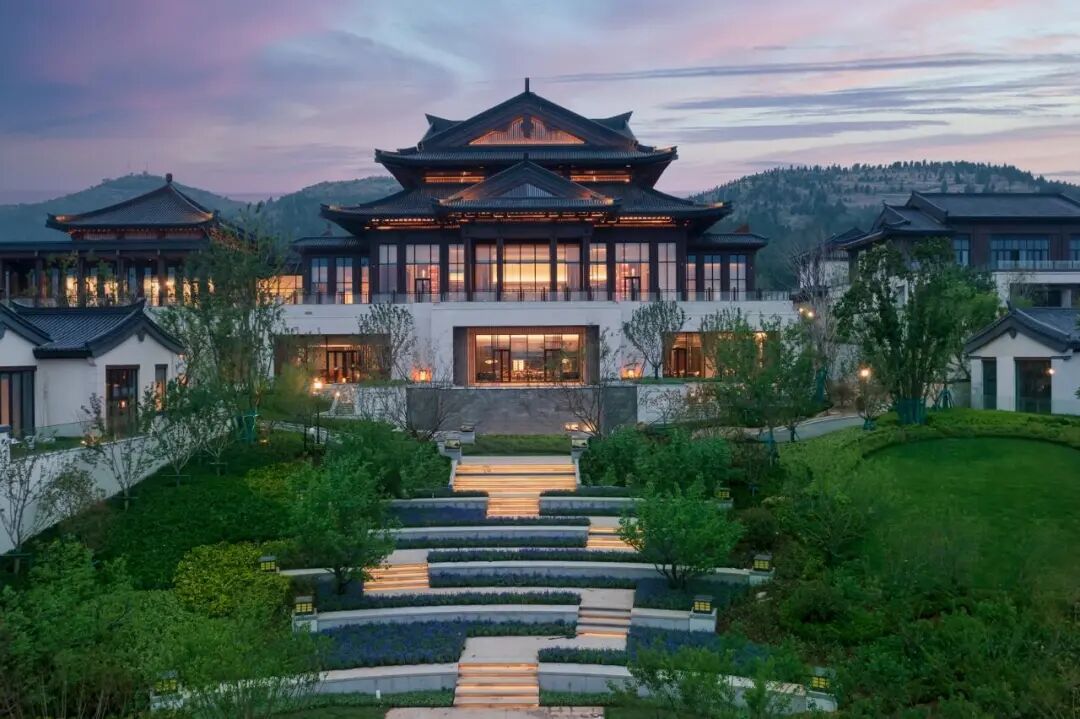
Jinan Songpin Hotel Source: Xiaohongshu
In general, the core reason for property owners to choose dual-brand hotel projects is that the property they hold is too large to be fully operated as a single hotel.
When the number of hotel rooms in a property exceeds 400 or even reaches more than 600 or 700, a single brand can hardly digest the entire scale: if only one high-end brand is adopted, the market may not be able to accommodate so many rooms at the same price range, which will directly drag down the average daily rate and occupancy rate;
Splitting it into two independent properties with two complete teams and two sets of back-of-house facilities will double the labor and infrastructure costs directly. Signing two hotel brands directly and reducing costs and increasing efficiency by sharing facilities and human resources has become a practical solution.
Under this model, the top concern of property owners is the coordinated development of the two hotels. Therefore, "high-low tier matching" and "long-short stay combination" are the most common combinations when signing dual-brand hotel agreements.
For example: a high-end hotel is matched with a mid-range hotel project; a hotel project is matched with an apartment hotel project; an international hotel brand is matched with a local hotel brand.
However, such project combinations also have problems, and the industry's disputes over the high-low tier dual-brand model have never ceased.
On the one hand, many high-end hotel customers believe that sharing some facilities with mid-range hotels will reduce the corresponding experience.
In other words, such projects will affect the operation and premium of the "high" brand in the dual brands. When the fitness center, swimming pool, underground parking lot and back-of-house circulation lines are shared, once the management boundary is blurred, high-brand customers will easily perceive the experience gap brought by the mid-range brand, which in turn affects the brand reputation and the ceiling of room rates.

Shanghai Luneng JW Marriott Marquis Hotel Source: Xiaohongshu
More experienced users pointed out that if a hotel property is developed into a "high-low tier matching" dual-hotel project, it indicates that the property is only suitable for operating a "low" tier hotel brand.
Because the software and hardware of hotel rooms can be upgraded through additional configuration. However, the overall structure of the building, floor height, elevator ratio, fire load, back-of-house area and sound insulation conditions are inherent attributes of the property. Later decoration can only optimize the interior of guest rooms, but cannot change the underlying hardware, which are the core factors determining what type of hotel product the property matches.
If the hardware of the building itself only meets the standards of mid-range hotels, even if you forcibly split it into a high-end + mid-range dual-brand project, the high-end part can hardly achieve the room rate and reputation of a real luxury hotel. Many investors suffered losses because they overestimated the power of decoration and transformation and ignored the hard constraints of the property itself.
On the other hand, as the industry enters the stock era, every new guest room means an increase in supply.
Dual-brand projects mean that more guest rooms enter the market at the same time, which will also affect the supply-demand balance of surrounding hotels. For example, the Beijing Beichen project releases nearly 1,000 luxury guest rooms at one go, which will directly change the supply pattern of luxury hotels in the Asian Olympic Games area, and the competitive pressure on surrounding hotels of the same tier will increase accordingly.
At the same time, dual-brand does not naturally lead to cost reduction and efficiency improvement.
Industry research shows that the dual-brand model can dilute the cost of back-of-house labor and material procurement, but it will increase the complexity of management. The general manager needs to take into account two sets of brand standards and two sets of membership systems at the same time, and the operation and management difficulty is significantly higher than that of a single hotel.
If the management system is not straightened out, the cost saved from labor will be eaten up by higher management losses, and it will be difficult to achieve the effect of 1+1>2.
What is the destination of large-scale properties?
The dual-luxury-brand hotel project in Beijing provides a new idea for many owners of large-scale properties: if the surrounding supporting facilities can match, can future dual-brand projects be more imaginative?
In fact, this needs to be analyzed on a case-by-case basis. When developing hotels in large-scale properties, one cannot blindly follow the dual-brand model trend.
First of all, if your property is located in the core business district of a super-first-tier or quasi-first-tier city, and the number of hotel rooms can be controlled within 300, choosing a strong brand to operate a single project may be a good choice.
If the property is larger in scale, you can choose a dual-brand project.
We believe that it is better to choose different product lines under the same hotel group. Moreover, the more distinctive the two brands are, the better. This will bring benefits in subsequent management systems, centralized procurement of materials, member interconnection and talent scheduling.
Dual brands under the same group can share the group's supply chain and training system, and the membership systems can divert customers to each other. When the conference group fills up one hotel, customer diversion can be carried out between the two brands.

JW Marriott Shanghai Fengxian Source: Xiaohongshu
If you choose two brands from different groups, with two sets of management teams and two sets of management fee systems, the difficulty of coordination will rise sharply, and the cost reduction advantage of dual brands will be greatly weakened.
Because, not all dual-brand projects can necessarily save costs, which involves issues including cost dilution, traffic concentration and management.
For a scale of 300 rooms or less, a single brand can maximize the brand potential and the ceiling of room rates, without bearing the internal management friction brought by dual brands. The brand story and customer positioning are more pure, which is more suitable for projects in core locations of core cities that pursue high premium.
Secondly, if the property is located in a second- or third-tier city, or even in a county-level market, it is recommended to give priority to the "high-low tier matching" dual-brand project.
For example, you can choose the select service brand of an international hotel group, matched with the mid-range brand of a local hotel group; in the county-level market, you can choose a mid-range brand matched with an economy hotel brand.
The high-end consumption base in second- and third-tier cities is limited, and the high-low tier matching combination can take into account high-budget business customers and mass business travelers, expanding the customer pool.
However, it is also necessary to pay attention to the hardware red line of the property. The hardware of the building itself cannot only meet the standards of low-tier brands, but forcibly develop high-end tiers, otherwise the room rate of the high-end part can hardly be realized.
For investing in hotels with large-scale properties, the core lies in certainty, not simply calculating the input cost during investment. Owners of self-owned properties need to consider asset appreciation, while investors of leased properties need to pay attention to the industry development trend in the next ten years.
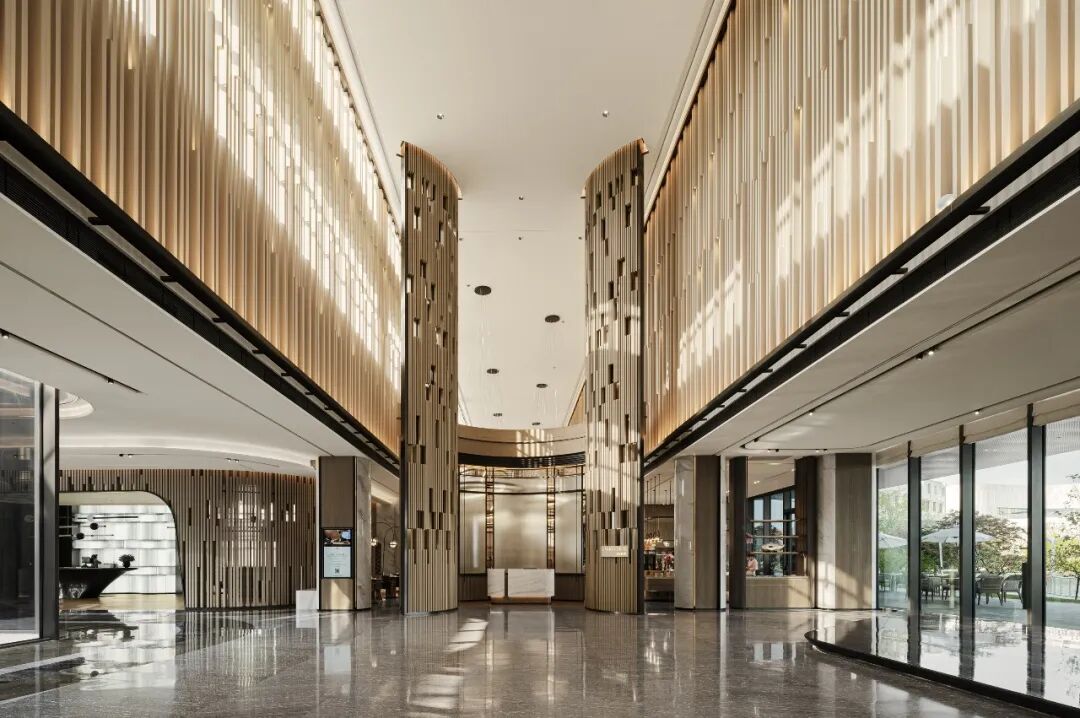
JW Marriott Shanghai Fengxian Source: Xiaohongshu
The underlying demands of self-owned property owners and leased property operators for the dual-brand model are completely different.
Self-owned property owners have no rent pressure, and they focus more on the improvement of asset valuation, the optimization of complex supporting facilities and long-term asset preservation and appreciation. Even if the short-term operating profit margin is average, the project is valuable as long as it can drive the overall value of surrounding office buildings and commercial facilities;
For leased properties, rent is a rigid cost. Hotel revenue must first cover the rent, then amortize labor and energy consumption. The requirements for RevPAR and GOP rate are more stringent. Dual brands bring more room supply, which also means that a higher occupancy rate is required to break even, and the risk is much higher than that of self-owned properties.
Dual branding is not an end in itself. Finding the right product for the property and obtaining operational certainty is the ultimate answer to investment.