The lifetime warranty provided by the car manufacturer has tricked one of our colleagues.
Nowadays, offering lifetime warranty for new cars is no longer a rare thing.
It is also not surprising that there are hidden traps in such warranty policies, after all, all companies are shrewd operators.

But what I never expected is that our own colleague recently ran into such a trap, and the ending was a bit unexpected.
Our colleague Rujun from the auto department bought the Polestar 2, a niche out-of-print model, back in 2023. It is so niche that when we go out for team building, passers-by often mistake it for a Xpeng car.
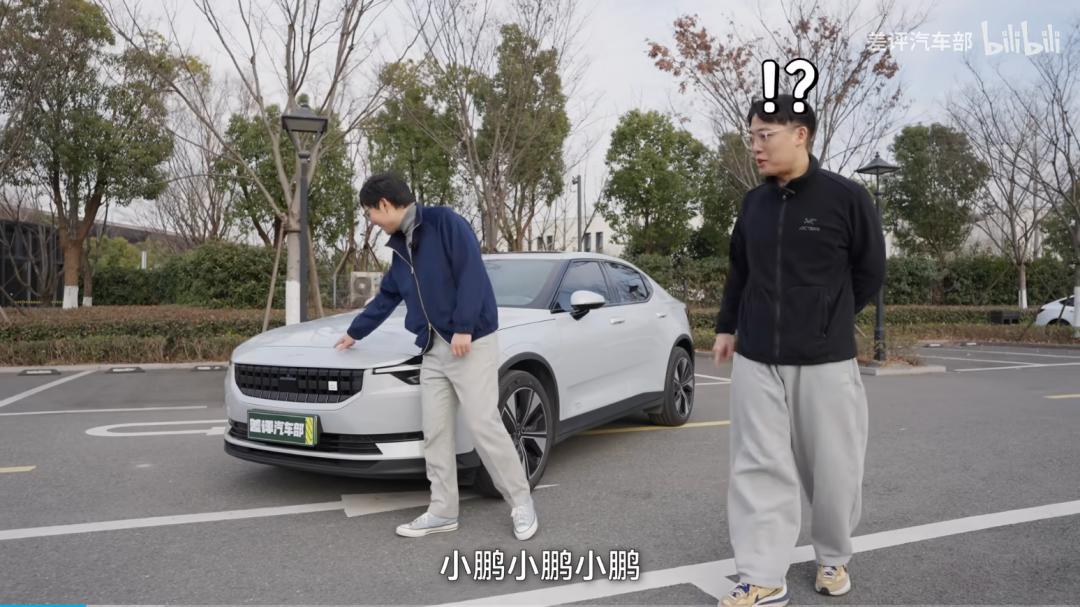
As the first owner of the car when he purchased it, the vehicle came with a full lifetime warranty.

More than a year after taking delivery of the car, he found that the front passenger door handle wiggled when pulled. He went to the official after-sales store at that time, and the staff said it was a common design flaw, re-fixed it and put it back in place, no parts were replaced, and no fees were charged.
After that, he used the car normally. But this year, the door handle broke completely, wiggling so severely that it felt like it was about to fall off.
This time he went to the store again, and after disassembly and inspection, the staff said the internal buckle was broken and the part needed to be replaced.
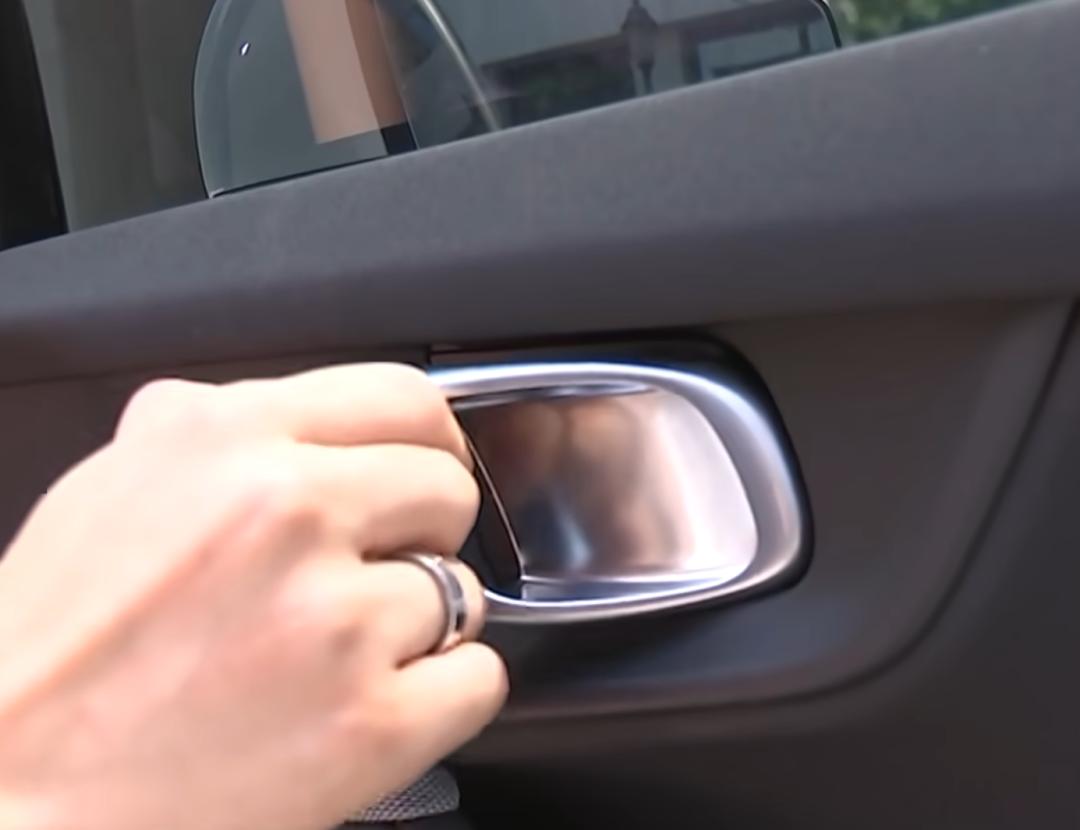
Theoretically, this part would not be broken just by normal use, and the car has not been bought for several years, so it should definitely be covered by the warranty, right?
But his lifetime warranty suddenly stopped working.
Polestar first artificially set up procedural obstacles, requiring him to provide ID card, driving license, car purchase contract, invoice, vehicle ownership certificate, and lifetime warranty contract, and all documents must be shot with a designated watermark camera.
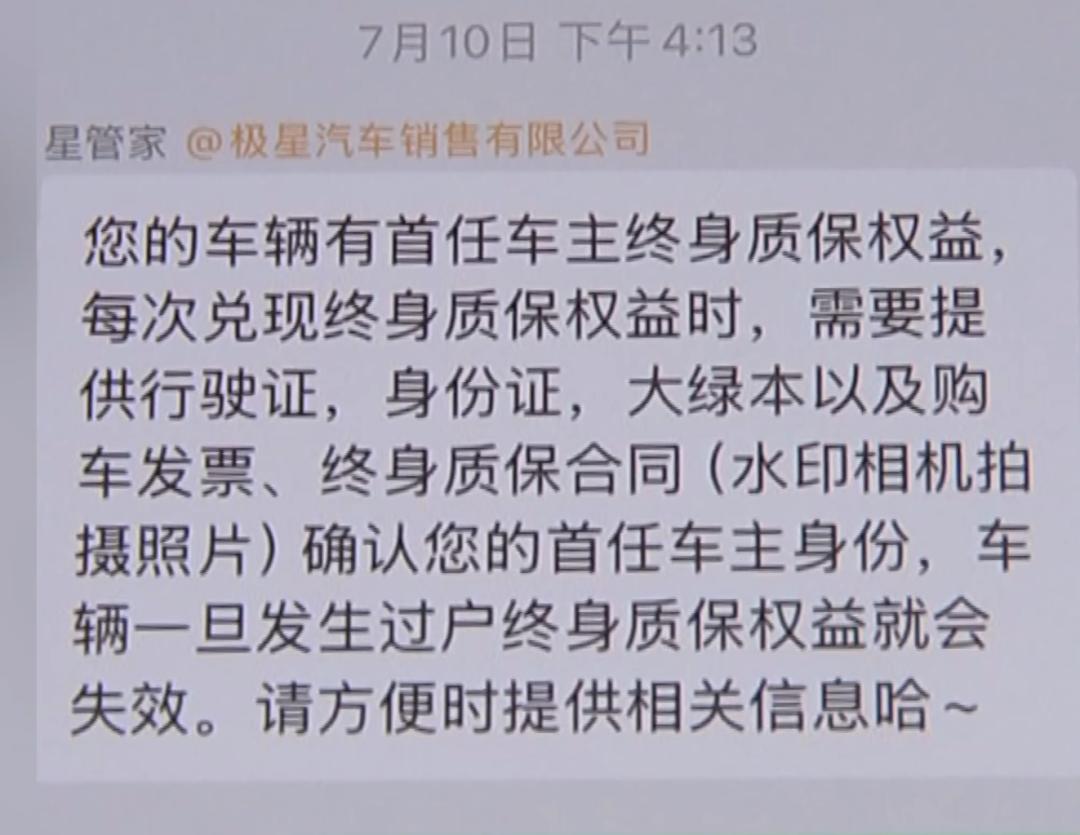
Going through all these cumbersome materials just to prove that you are the first owner. I guess Polestar never expected that someone would buy this car as the first owner and drive it for two or three years without reselling it?
After all the verification procedures were done, when our colleague went to the store again, the staff said the buckle was broken, and the total cost of the part plus labor was about 800 yuan. But sorry, this damage is not covered by the warranty, he has to pay for it himself.
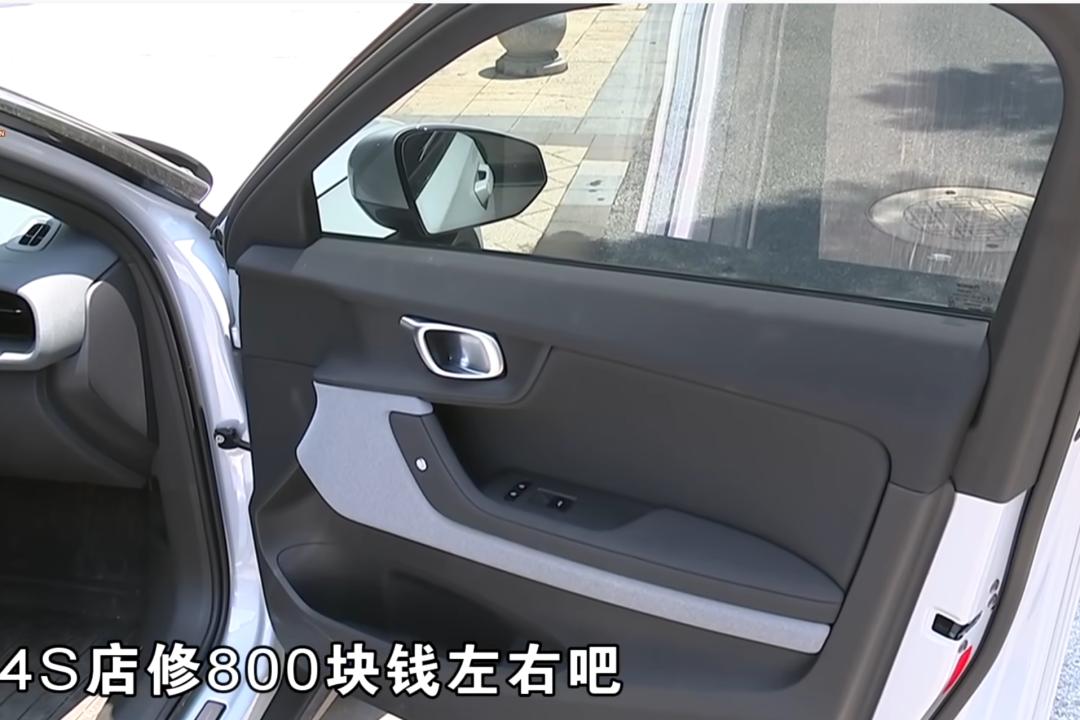
The reason given by the store is that the door handle was damaged by external force, which is not a quality issue.
em...
Let's be clear, the door handle is originally a force-bearing component. There was no violent yanking during normal use, and the broken part is hidden inside the component that no one can see. Is this kind of damage considered force-induced damage or a quality problem?
There is an exclusion clause in Polestar's warranty contract that stipulates which situations are not eligible for warranty service.
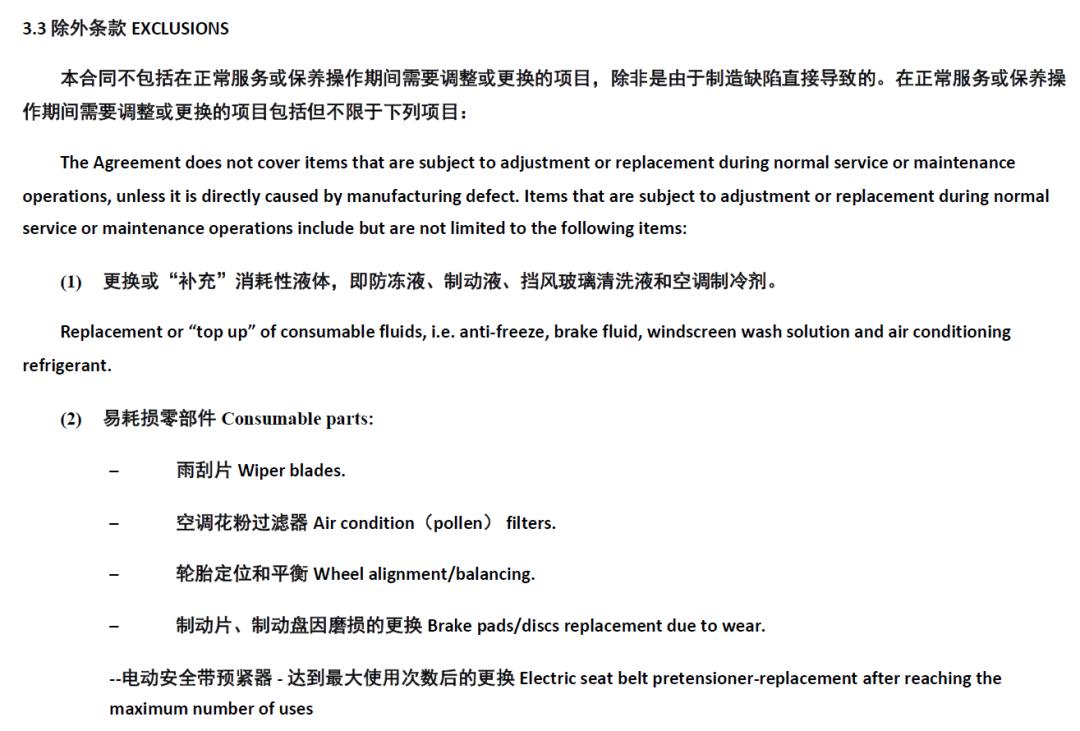
For example, consumable parts such as wipers, air conditioning filters, and brake discs, as well as damage caused by wear, normal aging or improper use, are not covered by the warranty.
These regulations are reasonable, right?
But for the door handle part, it is neither a wearing part nor used improperly. It makes no sense to refuse warranty coverage just by claiming it is force-damaged. Besides, why would a car owner deliberately damage the door handle? It can only be broken because it is not durable enough.
Furthermore, the door handle is also a safety component, and car manufacturers need to conduct various tests including door opening and closing durability tests during development. To put it bluntly, this part should be made sturdy enough to withstand daily use.
I even think that if a door handle breaks after only three years of normal use, it may be more than just a quality problem, it could even be a safety defect. Shouldn't Polestar consider launching a recall?
Being so unreasonable over a small door handle, many people may say this is a problem unique to this brand, after all, all its offline stores in China have been closed.
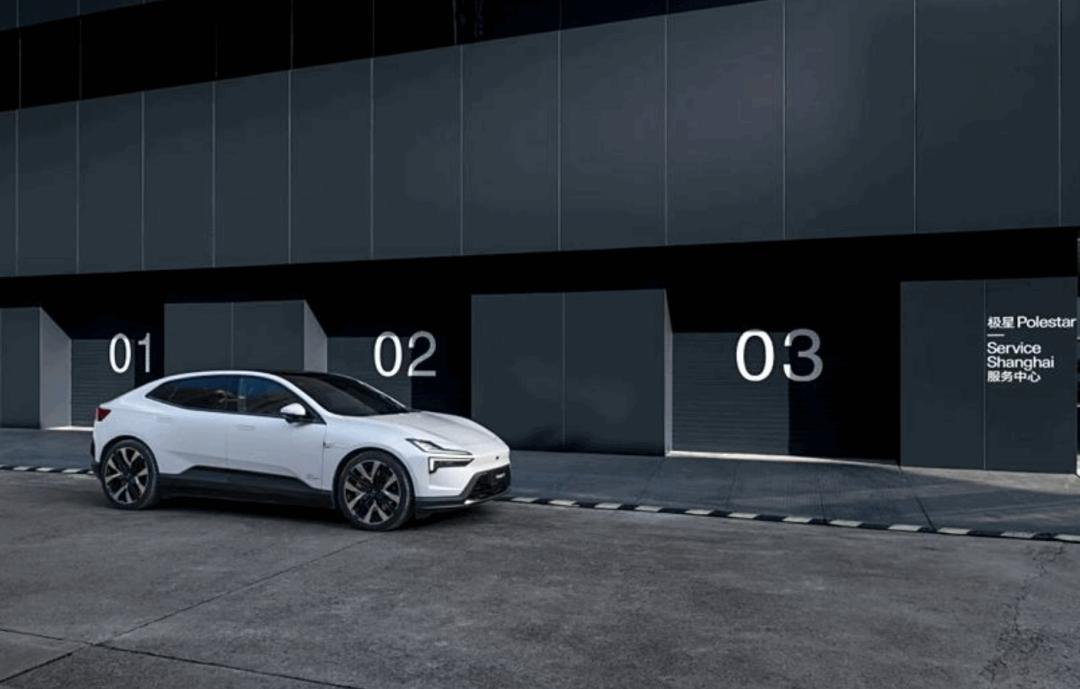
But Polestar is different from those bankrupt car companies. It is backed by Geely and Volvo, and its after-sales system is shared with the two groups. The parent companies should definitely be able to support it. Even Polestar models can be repaired, why can't Polestar 2?
Of course, if things ended here, we wouldn't have written this article. Polestar's tricky operations didn't stop there...
In order to safeguard his rights, our colleague even appeared on the popular TV program 1818 Golden Eye, thinking that even if the part couldn't be repaired under warranty, this kind of behavior still needed to be exposed and condemned. Guess what? You have to make some noise to get things done. New progress came after the exposure.

The manufacturer called and said that after coordination, the repair could now be done for free at the same store, with the part replaced at no cost. Interestingly, the store said this replacement was not processed under the warranty, but through a "troubleshooting channel".
What does that mean? Let me translate it for you: Polestar does not admit that this is a quality problem, but considering your situation (you made a big fuss publicly), they decided to arrange the repair through other channels.
This is called "distribution according to how much noise you make"... What about other car owners who didn't make a fuss? They can only consider themselves unlucky and pay for the repair themselves?
So from our personal experience, it can be seen that for all kinds of lifetime warranties provided by car manufacturers, the scope of what is covered and what is not is completely interpreted at the manufacturer's discretion.
There are many other similar cases where car owners think the damage should be covered by warranty but the car manufacturer refuses to provide coverage.
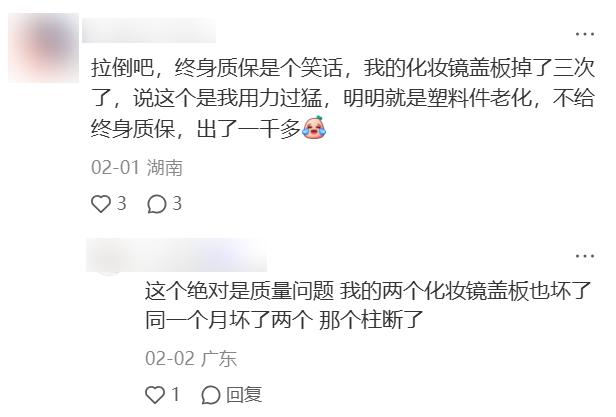
For example, someone's vanity mirror cover fell off three times, the store said it was because of excessive force and refused to honor the warranty, and the car owner finally paid more than 1000 yuan for the repair. Coincidentally, other car owners of the same model also encountered the exact same problem.
Neck Brother also saw another case in a car owner group: a guy's shark fin antenna on the roof leaked and got damaged. When he went to the after-sales service, the store said the damage was caused by high-pressure water gun washing and refused to cover it under warranty.
Then here comes the question: who never uses a high-pressure water gun to wash their car?
You see, because there are too many vague standards for defining damage in vehicles, car manufacturers can play all kinds of tricks on warranty services.
Of course, we are not saying that the warranty is completely useless. There are indeed people who have benefited from the lifetime warranty service.
For example, someone used the lifetime warranty to replace two headlights, saving nearly 8000 yuan in one go.

Others have replaced a bunch of parts for free including steering wheels, daytime running lights, and tow hooks.
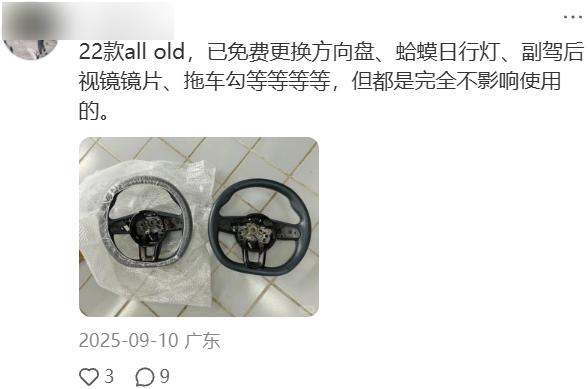
But in any case, almost all car manufacturers will definitely add a lot of restrictive clauses to their lifetime warranty terms.
For example, there is an annual total mileage cap. Many of them do not refer to the natural year, but require that the mileage within any consecutive 12 months cannot exceed a certain limit, such as 30,000 kilometers or a little more. In short, you have to pay attention to the mileage every month.
One of our colleagues who lives far away from the office does not drive for a period of time every year, and takes the subway for one and a half hours to work, just to avoid exceeding the mileage limit and losing the warranty coverage.

In addition, all maintenance and repair work must be done at official stores. When the specified time or mileage threshold is reached, you must go for maintenance on time. Failure to do maintenance beyond the deadline will also result in the loss of warranty eligibility.
Even if a problem is detected, you still have to pay for repair costs far higher than the market price. Car owners need to calculate carefully to see if this deal is worth it.
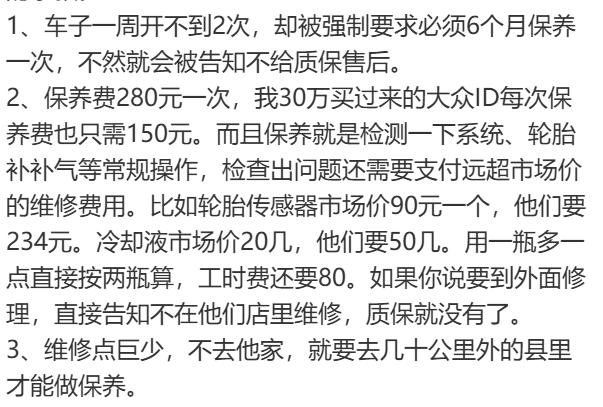
Not to mention that in many detailed clauses, car manufacturers will more or less leave a backdoor for themselves.
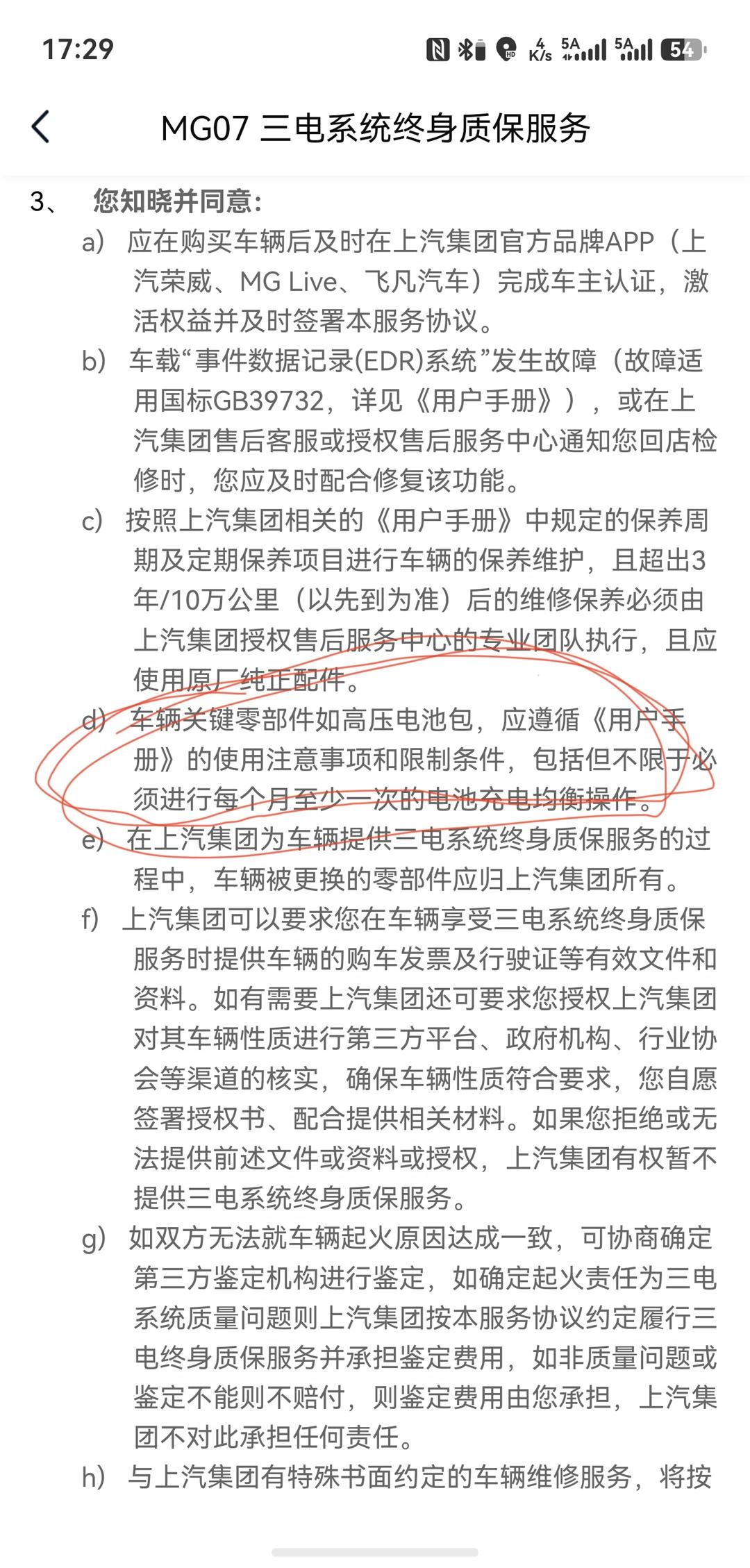
For example, some car owners found that the three-electric system lifetime warranty of MG07 has a clause stating that the battery pack must undergo battery charge equalization operation at least once a month, which can only be completed under slow charging mode.
For car owners who do not have home charging piles and use public fast chargers every day, can they be deemed to have violated this operation clause...
All