Major players enter the market, cutthroat price competition breaks out, leading to a gold rush and fierce scrimmage in the commercial and industrial energy storage sector of Southeast Asia.
Is the golden era of commercial and industrial energy storage in Southeast Asia coming to an end?
"Southeast Asia is a promised land flowing with milk and honey."
In the past few years, similar remarks have never been rare in the energy storage industry. As early as 2021, Alexander Lenz, CEO of Aquila Capital Asia Pacific, publicly talked about the growth opportunities of energy storage in Southeast Asia.
Five years later, the European residential energy storage market has gone through an inventory clearance phase, and the domestic large-scale energy storage sector in China has fallen into low-price cutthroat competition. Southeast Asia has been appearing on the new market lists of Chinese enterprises more and more frequently.
But up to now, this overseas energy storage market closest to China has not nurtured a truly absolute leading player in the full sense, and few enterprises can hold a firm foothold in the industry relying solely on the Southeast Asian market.
Karl, who has long been deeply engaged in the Southeast Asian market, supplements the second half of the sentence for us: This place is also flooded with chaos.
The appeal of the Southeast Asian market is not difficult to understand.
In 2025, UBS listed Southeast Asia, the Middle East, Latin America and other regions as the fastest-growing emerging markets for energy storage, predicting that the growth rate could reach 30%-50% or even higher.
Compared with Europe, where product compliance requirements are more complicated, some Southeast Asian markets leave more access opportunities for small and medium-sized manufacturers, with much lower product entry barriers and certification costs.
More crucially, there is still profit to be made. According to Karl's recollection, in the early days when the market was favorable, the profit of local projects was comparable to that of the European market.
But chaos is also real: the certification, approval, grid connection and electricity price rules of different countries are the visible chaos on the table; while dealers, installers, local connections, intermediary fees and even more grey benefit exchanges form another set of hidden rules under the table.
And this year, the market has added a more direct variable:
As Chinese enterprises accelerate their entry, the price war for commercial and industrial energy storage in Southeast Asia has also begun.
Leading Enterprises Enter the Market, Price Competition Heats Up
The market is growing rapidly, but Karl is under great pressure. The trigger came from a message on LinkedIn:
Deye, through a local partner, launched a roughly 1MW commercial and industrial energy storage project at a factory near Kuala Lumpur.
"I felt like the sky was falling when I saw that." he said half-jokingly.
Karl is deeply engaged in the commercial, industrial and residential energy storage business in Southeast Asia, mainly operating in the Malaysian and Indonesian markets. One project certainly won't really make him feel "the sky is falling", but what really makes him nervous is the signal behind it — leading enterprises have already set their sights on this "fat cake" in Southeast Asia.
In the past few years, his market positioning has always been very clear: to do the business that large enterprises find too troublesome to handle and small enterprises are incapable of doing.
Commercial and industrial energy storage projects in Southeast Asia are highly scattered, ranging from dozens, hundreds of kilowatts to several megawatts; the on-site conditions are different, the power consumption curves of customers are different, and the required system configurations are also different. The project is not large enough, but it requires investment in sales, solution design, installation and after-sales services.
For a large energy storage company, it may not be cost-effective to allocate a dedicated team for a project of several hundred kWh.
This leaves a gap for medium-sized integrators.
But this year, enterprises that once "looked down on" these projects have begun to step into this field.
Sungrow showcased residential energy storage, commercial and industrial PV, and commercial and industrial energy storage products at its Southeast Asian Channel Summit last year, gathering more than 100 channel and service partners at one event; Deye has also held new product events successively in Thailand, Vietnam, Indonesia, the Philippines and Malaysia.
In June this year, the 20MWh commercial and industrial energy storage project cooperated by HyperStrong and Malaysian local energy enterprise Plus Xnergy was officially connected to the grid for full-capacity operation.
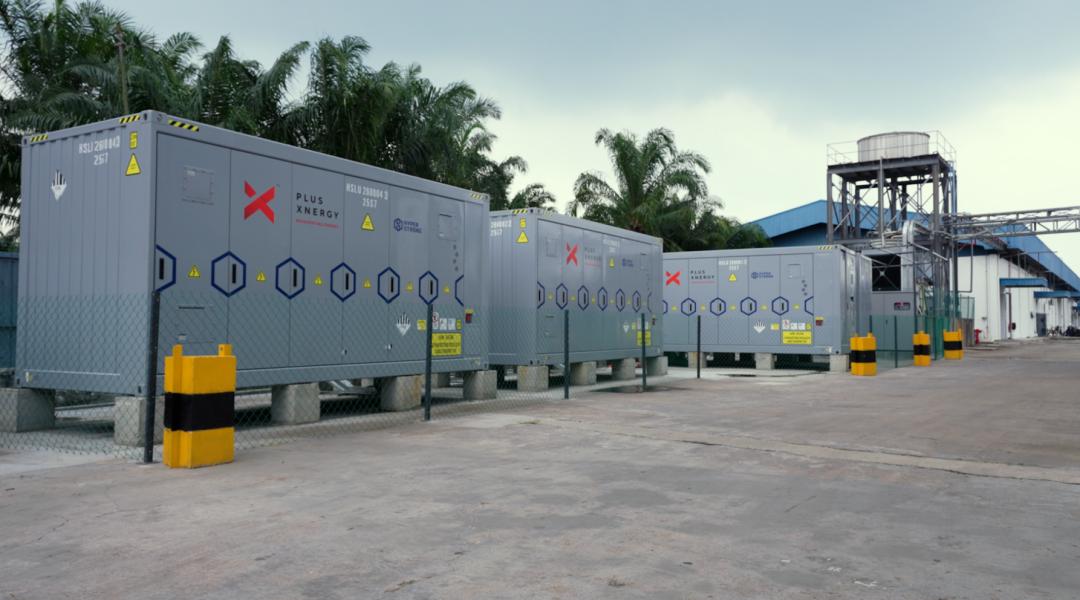
The commercial and industrial energy storage project implemented by HyperStrong in Malaysia
A month later, Sungrow signed a three-year framework agreement with Philippine renewable energy developer Berde Renewables and local dealer Solar Hive, covering 500MWh of energy storage systems.
Among these players are the kings of residential energy storage who have survived fierce competition in Africa, as well as global leading large-scale energy storage enterprises, and they are moving their products, channels, warehousing, after-sales and service systems to the region together.
One important reason why leading enterprises are willing to expand downwards is that this market is no longer as small as it used to be. The total installed capacity of energy storage power sources in Southeast Asia is expected to exceed 14.8GWh in 2026, a 37.6% increase compared with 2025.
In addition, the policies and electricity price mechanisms in Southeast Asia are also being adjusted continuously, which is favorable for the development of the energy storage market. For example, after Malaysia adjusted its electricity price structure in July 2025, for some industrial users, the cost savings that can be achieved by cutting peak power consumption have increased.
Plus Xnergy disclosed that according to the company's engineering calculation, under the current electricity price mechanism and appropriate load conditions, for every 10MWh of energy storage configured, it can help users save an average of about 1.25 million ringgit in electricity bills per year, equivalent to about 2 million RMB.
After customers calculate that they can save money, the number of projects will naturally increase. Karl remembers that standard commercial and industrial energy storage cabinets with a capacity of about 260kWh were only gradually deployed locally last year; by this year, such projects have been launched frequently.
After the market picks up, prices have quickly entered a fierce competition phase. A practitioner of overseas PV and energy storage interviewed by *Economic Observer* this year said that after considering costs such as EPC and labor, the cost of energy storage systems in Southeast Asia is about 1.2-1.5 yuan/Wh.
This is not a unified quotation, but it is enough to show that local customers are already quite sensitive to costs. Karl revealed to us that previously, their gross profit at the highest point was even comparable to that in Europe, but the profit this year has dropped significantly.
The more mature residential energy storage market has already gone through a round of price cuts. As we reported earlier, a 16kWh residential energy storage system can only be sold for about 5500 yuan locally, less than 0.35 yuan/Wh. This price is even lower than the price of pure cells, so such systems can only be assembled with recycled cells.
Another practitioner described this kind of competition: In Europe, a set of price strategies may be adjusted only once a year, but in Southeast Asia, "it has to be changed at least once every quarter".
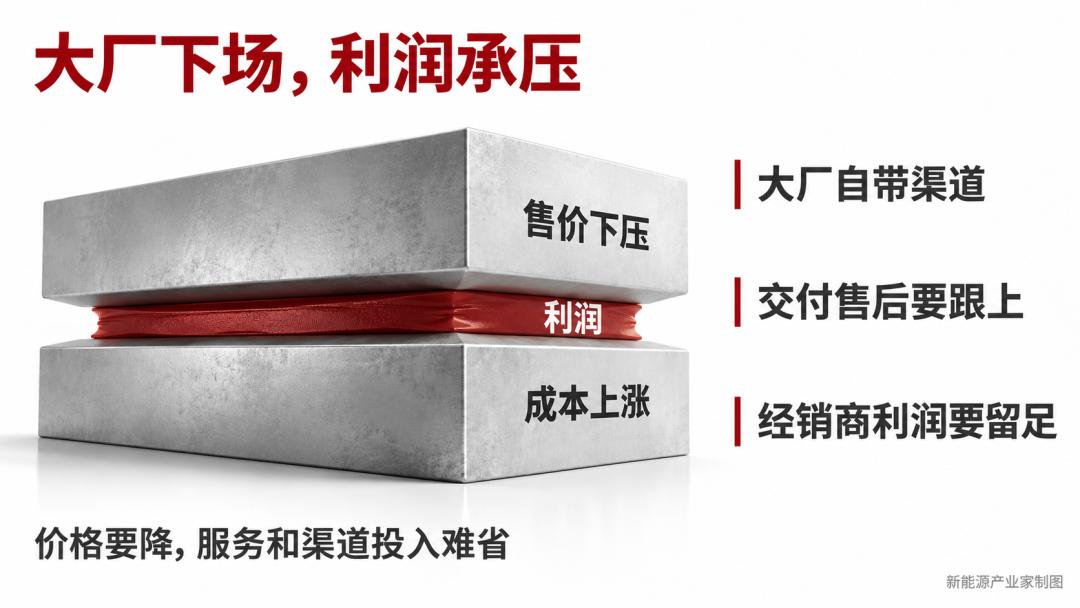
Southeast Asia has never been a market where high prices can be easily achieved. Now that leading enterprises have stepped into the market, price pressure will only be transmitted more directly to the intermediate integrators.
Karl's enterprise needs to purchase cells externally, and then integrate batteries, control and power conversion equipment into energy storage systems. He said that this year, procurement costs have risen, but terminal selling prices are still declining amid competition, squeezing profit margins from both sides.
But low price is not the whole of competition.
Dealers will also compare who delivers goods faster, who makes installation easier, and who can solve problems in time when something goes wrong. If a manufacturer quotes a slightly lower price but makes its partners make extra trips to the site and bear multiple repairs, it may not win the competition.
This is exactly where the advantages of leading enterprises lie. They have already sold PV, inverters or residential energy storage products locally before, and have ready-made channels and service networks in hand. After entering the commercial and industrial energy storage sector, they do not need to build the market from scratch.
As a result, an awkward situation has emerged in the Southeast Asian commercial and industrial energy storage market this year: The market has finally grown larger, but the space left for medium-sized enterprises in the past has begun to shrink.
Channels Mature, Dealers Become Increasingly Important
After the market becomes more competitive, another change Karl feels is that dealers have suddenly become very important.
"Dealers were not that important last year, but they have become extremely important this year." he described the change of local dealers.
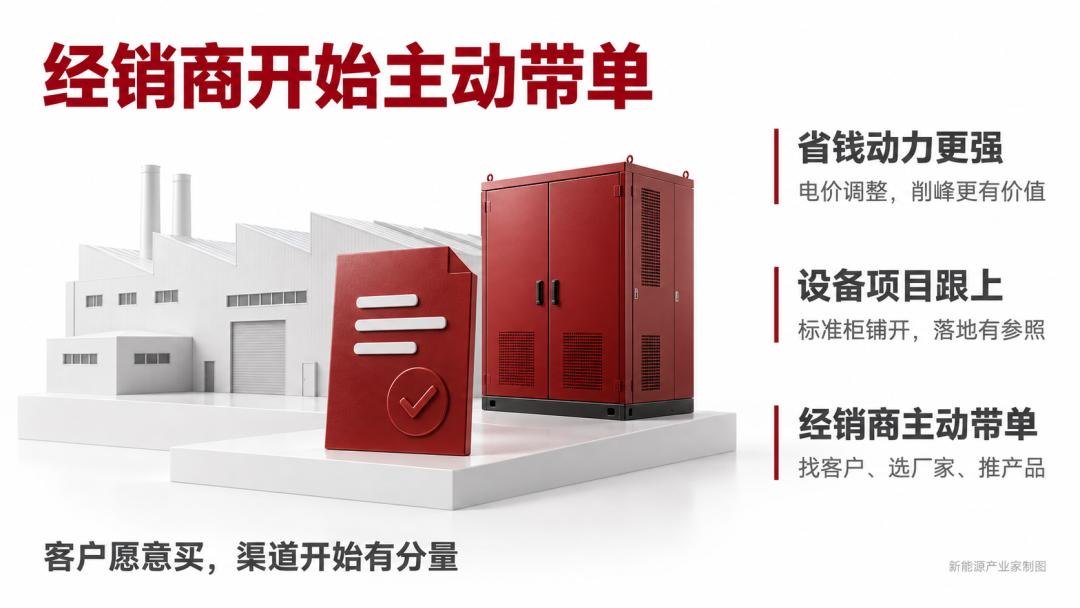
The change happened because dealers have begun to understand the industry. Last year, many dealers Karl contacted did not even know how to promote commercial and industrial energy storage and what scenarios it was suitable for, so they could not expand related business.
Therefore, in the early stage, the business was mostly driven by manufacturers. Sales staff would first find customers, check their electricity bills and power loads, and technical staff would configure solutions according to on-site conditions to calculate the required battery capacity and PCS, before finally moving to quotation, installation and delivery.
Why did these dealers collectively "get enlightened" in just one year?
According to Karl's observation, there are two main reasons.
First, electricity bills have become more expensive, and local residents have to find a way to save electricity costs.
Second, after several years of market education, energy storage products have achieved initial results. Dealers finally have clear use cases to explain to customers, and referenceable operation methods to follow.
The Malaysian market, where he mainly operates, is a typical example.
For the electricity bills of some local factories, in addition to the total amount of electricity consumed in a month, the maximum power demand from the grid during peak power consumption periods is also counted. Even if such peaks do not last long, the grid has to prepare sufficient power supply capacity and charge fees for this.
After the electricity price structure was adjusted in July 2025, taking the original E1 category medium-voltage industrial users as an example, the fees linked to peak power consumption increased significantly.
In short, the higher the peak power consumption of a factory, the more fees it needs to pay; conversely, if the peak value can be reduced, the money saved will be more than in the past.
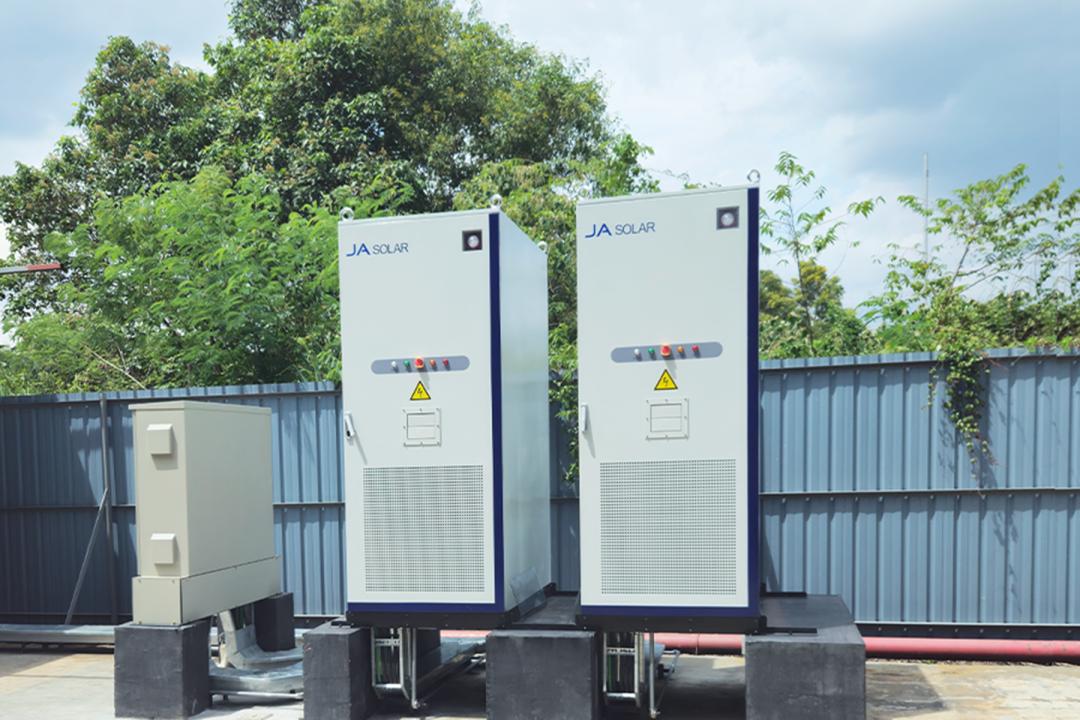
JA Solar's commercial and industrial energy storage project in Malaysia
Energy storage can just help solve this problem. It stores electricity in advance and discharges it when the factory consumes a lot of power, so that the factory does not need to draw too much power from the grid at the same time. For customers with appropriate power consumption patterns, the cost savings brought by batteries have increased, and the reasons for purchasing them have become more sufficient.
Therefore, dealers have a clear direction to find customers: look for factories with obvious peak power consumption and high related costs, and start communication from their electricity bills.
The most obvious manifestation of this change is that the customer acquisition methods for commercial and industrial energy storage have also changed accordingly.
Karl said that a few years ago, some sales staff would put equipment in their cars and visit factories door to door; now, a large part of the projects his team obtains locally come from recommendations by dealers and acquaintances. Some capable dealers will even directly look for original equipment manufacturers to compare products from different manufacturers.
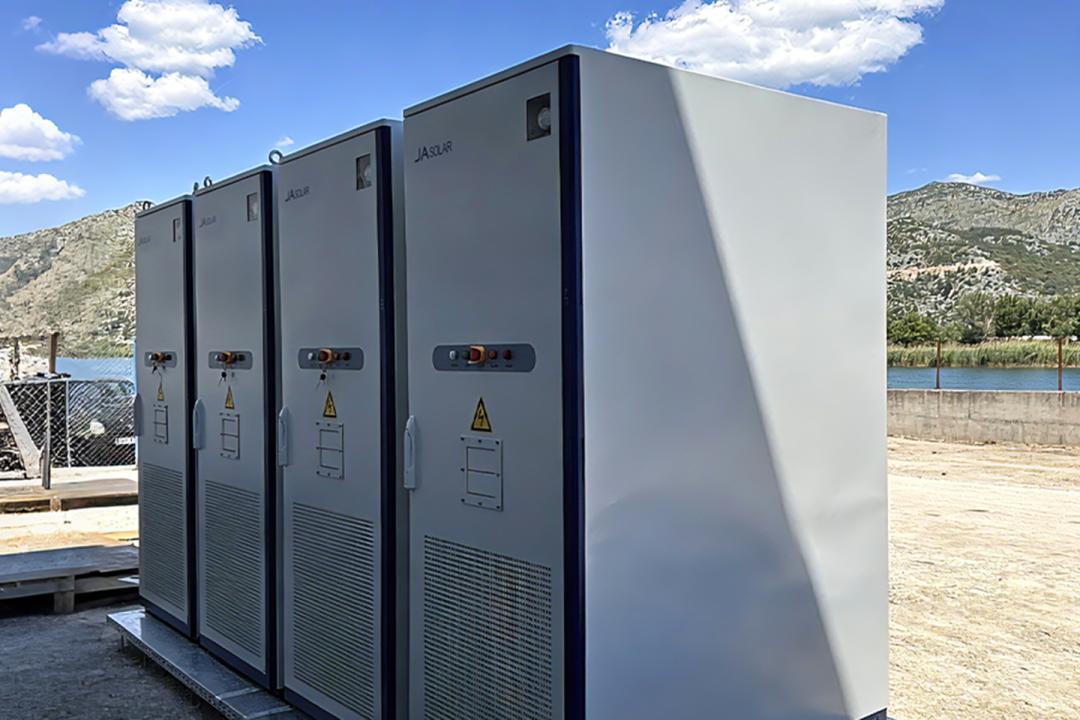
Commercial and industrial energy storage projects in Southeast Asia
In the early stage, manufacturers mastered products and technologies, while dealers only mastered local connections. Manufacturers had to teach dealers how to sell energy storage products, and then accompany them to find customers together.
Nowadays, dealers have more resources in hand: they have factory customers, installation teams, know which projects are worth doing, know which manufacturers can supply the same set of systems, and hold different quotation sheets in hand.
The party that takes the initiative has also changed accordingly.
This is a very typical process of market maturity.
In the early stage of the market, products are scarce, and manufacturers educate channels. When there are more and more products and customers have a better understanding, channels begin to educate customers, and in turn screen manufacturers.
Part of the bargaining power that manufacturers originally held has begun to shift to channels.
The Chaotic Game
When dealers can influence the direction of order flows, competition no longer only occurs on pricing.
In the projects Karl has experienced, agency fees and intermediary fees are not uncommon. In order to make channels prioritize recommending their products, some manufacturers will pay extra "tea money", and even resort to private benefit exchanges.
This all points to a reality: Southeast Asia is not an orderly market.
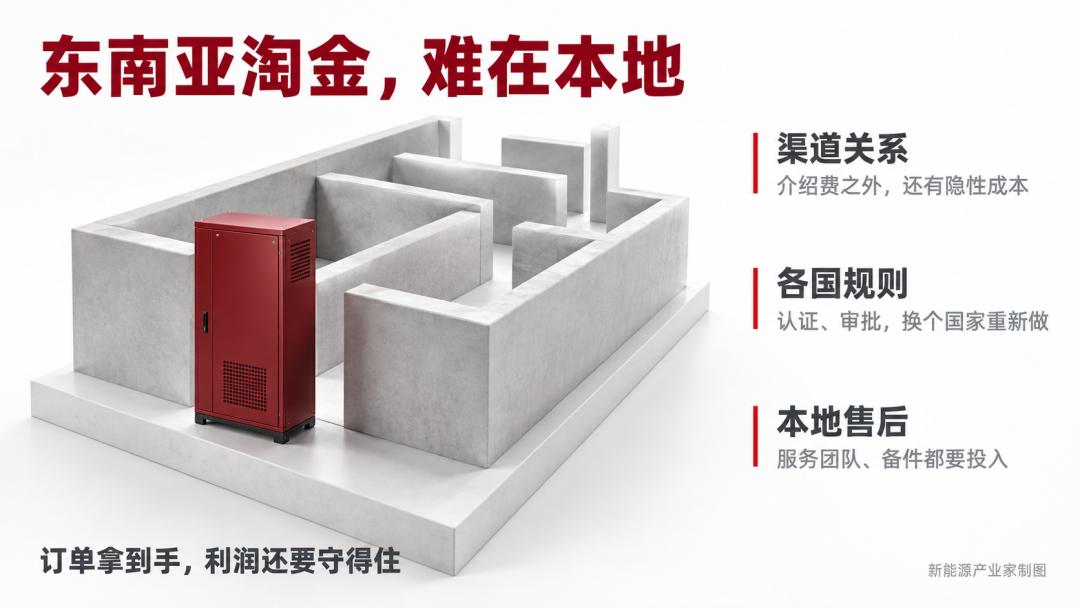
However, Karl does not believe that a one-time benefit can buy long-term cooperation.
"In the end, what can retain dealers is still your service and quality." he said. Dealers also hope to find a brand that can be operated for a long time. If they get a referral fee but the equipment frequently breaks down, their local reputation and more subsequent business will be damaged.
This makes the Southeast Asian market seem contradictory:
Connections are very important, but relying solely on connections cannot support long-term business; prices must be competitive, but if you cut costs on services, you may have to pay a higher price to make up for it later.
The questions customers ask have been very specific. Faced with the multi-year warranty commitment provided by