Raising interest rates by 25 basis points, the US stock market first rallied then plunged, and Walsh shattered Wall Street's last illusion.
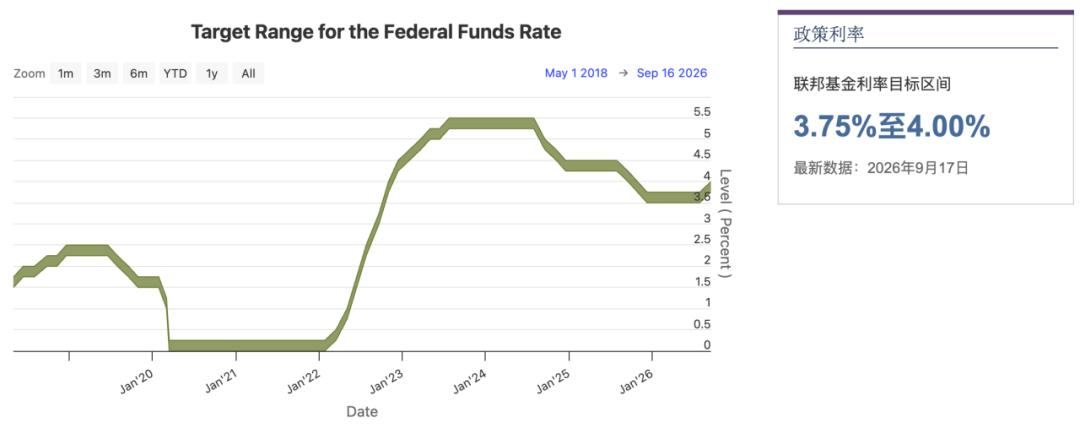
At 2 p.m. Eastern Time, the Federal Reserve announced a 25 basis point rate hike, raising the federal funds rate to 3.75%–4.00%, marking the first rate increase since July 2023.
After the news was released, U.S. stock markets dipped briefly. At 2:30 p.m., Waller came out to speak, and the market initially rallied for about 15 minutes before quickly turning downward.
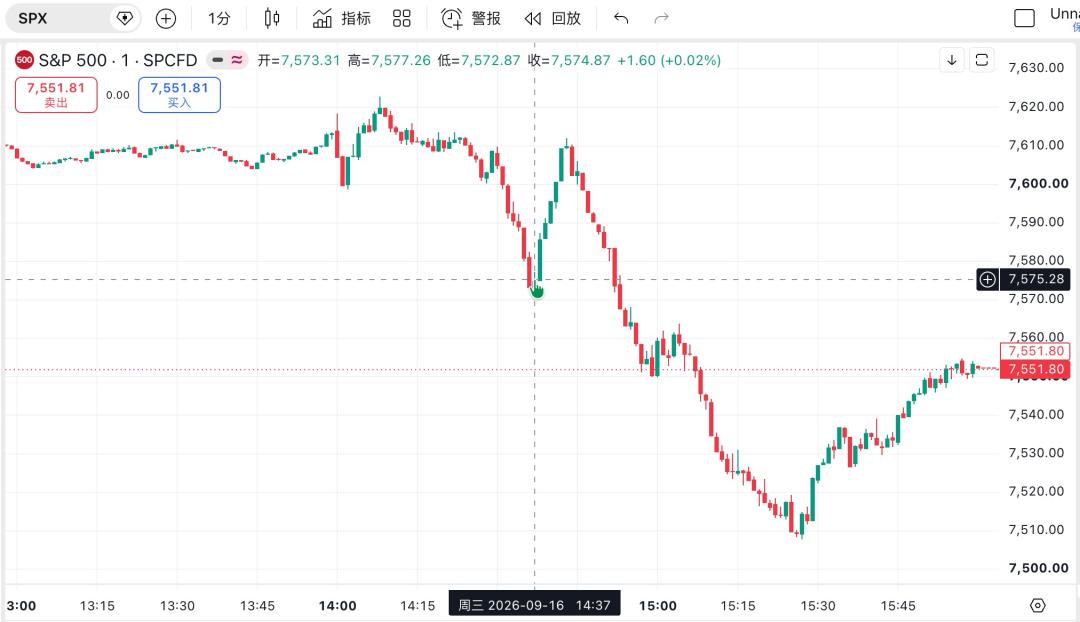
At market close, the S&P 500 fell 0.45%, the Dow Jones Industrial Average dropped 1.21%, and the Nasdaq was roughly flat. The pressure on the bond market was more immediate: the yield on the 2-year U.S. Treasury note rose to around 4.74%, the 10-year yield approached 5%, and the 30-year yield remained near 5.35%.
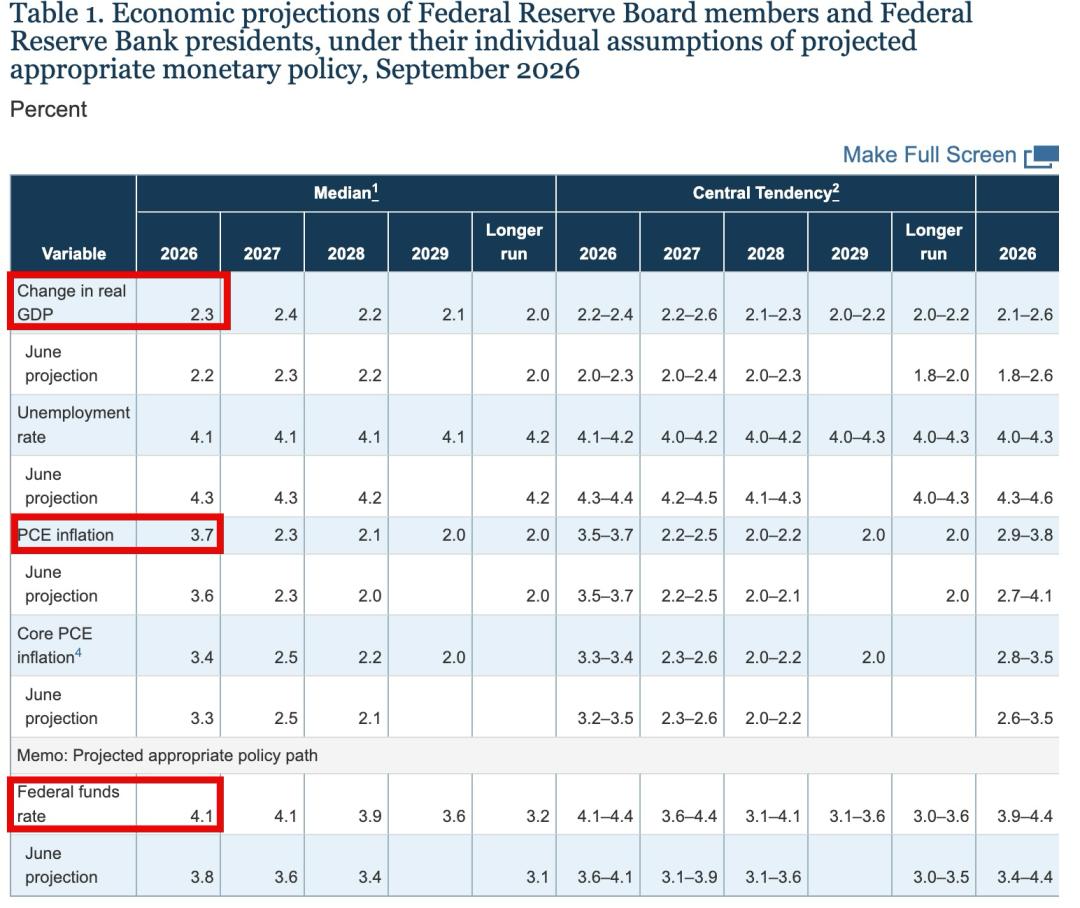
According to the Federal Reserve's statement, this rate hike was approved unanimously by a 12-0 vote. Meanwhile, the Fed's latest economic projections raised the median interest rate forecast for the end of 2026 to 4.1%, up from the 3.8% projection made in June.
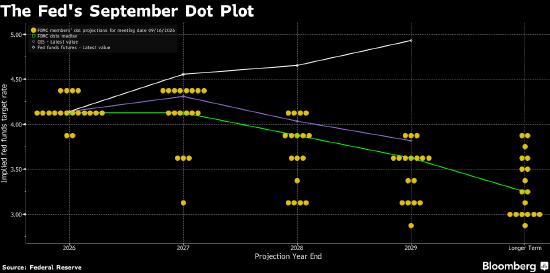
Analysis from U.S. Stock Investment Network holds that what the market is actually pricing in today is not this 25 basis point hike, but whether there will be further rate increases afterward.
Waller did not make a direct commitment to another rate hike at the next meeting, but his remarks were clear enough:
Inflation is too high and has stayed elevated for too long;
It is hard to say that the current financial conditions are sufficiently restrictive;
Today's move is only the Fed's first step to prove it is serious about fighting inflation. Combined with the 4.1% end-of-year rate projection, Wall Street naturally draws a conclusion: the September rate hike is not a one-off, and at least one more rate hike is still on the table within this year.
This is why U.S. stock markets rallied first and then sold off sharply today. At the beginning of the speech, capital was still looking for a bit of dovish room, hoping that Waller would tell everyone to "pause and observe after this hike".
But as the speech went on, the market found that Waller not only gave no hint of ending the rate hike cycle, but also kept emphasizing that the economy is strong, consumption is resilient, financial conditions are not restrictive enough, and there is no reassuring downward trend in inflation.
The market finally got the message: this rate hike may just be the beginning.
25 Basis Points Cannot Push Down Oil Prices, But Can Contain the Spillover Effects of Inflation
Now the cost of capital in the U.S. is indeed extremely high.
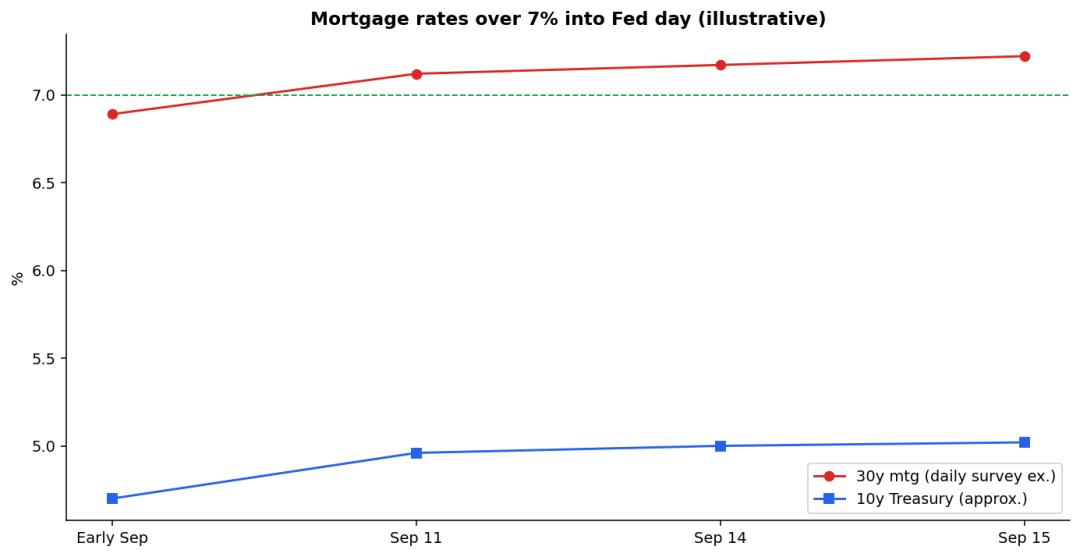
The 30-year fixed mortgage rate is close to 7%, and mortgage applications continue to decline; many commercial loan rates are near 10%, and unsecured loan rates have even hit double digits. Real estate transaction activity is cooling, homebuilder sentiment is weakening, and for-sale housing inventories in some regions are starting to rise. Coupled with continuous layoff announcements, both consumer and business confidence is under pressure.
The question is this: given that the financing pressure on businesses and households is already so high, why does the Federal Reserve still want to raise interest rates further?
Because while high interest rates cannot directly increase oil supply, fix shipping routes, or bring down food prices immediately, they can prevent higher oil prices and transportation costs from spreading across the entire economy.
When oil prices rise, logistics companies raise their prices first;
As logistics costs go up, commodity companies will then raise their prices;
When the cost of living becomes higher, workers demand wage increases;
After companies raise wages to retain employees, they will pass the increased costs on to service prices.
Once this cycle starts, inflation will no longer be just a problem caused by crude oil or the war, but a situation where everyone is raising prices and taking it for granted that prices will keep going up.
RXO's spot truckload trunk line freight rate index has risen by about 43% year-on-year so far in the third quarter, and contract freight rates also increased by about 6% year-on-year in the second quarter.

The 43% increase does not mean that logistics costs across the entire U.S. have risen by 43%, but it reflects that the most sensitive spot transportation market is rapidly becoming more expensive. The increase in per-pallet transportation costs actually felt by enterprises will eventually be reflected in commodity prices and profit margins in one way or another.
At the same time, U.S. consumption remains strong, the government deficit stays at a high level, and AI and supercomputing centers are competing for electricity, land, equipment, financing and construction resources.
When multiple forces are superimposed, bond investors will naturally demand higher yields as compensation for holding long-term U.S. Treasuries.
Therefore, a 25-basis-point hike certainly cannot solve the oil price problem.
What the Federal Reserve really wants to control is the market's expectations for the future:
It must not let businesses and consumers believe that inflation will stay high for a long time, still less let everyone form the mindset that "if you don't raise prices now, your costs will only be higher later".
Once this expectation takes hold, the cost of bringing inflation down will be much higher.
Waller Is Shattering the Last Illusion of Wall Street
The most hawkish remark Waller made today is not "inflation is too high", but "it is very difficult to describe the current financial conditions as restrictive".
This statement is very important. In Waller's view, the U.S. economy is not weak enough for the Fed to hit the brakes: domestic spending remains healthy, credit is still flowing normally, corporate capital expenditure is strong, and the job market is more resilient than expected.
The Fed's latest projection shows that U.S. real GDP will grow by 2.3% in 2026, the unemployment rate will reach 4.1% at the end of the year, but PCE inflation will still be as high as 3.7%. With no obvious recession and inflation far above the 2% target, the Fed naturally has the confidence to continue raising interest rates.
Analysis from U.S. Stock Investment Network suggests that what has actually changed today is that the market can no longer easily bet on a Fed pivot. As long as the job market remains stable and no problems emerge in the financial system, the normal correction of the stock market will not be enough to change the Fed's policy direction.
Going forward, more important than guessing whether there will be another rate hike is to watch three key signals:
Whether the yield on the 2-year U.S. Treasury note will continue to rise
Whether the 10-year U.S. Treasury yield can hold firmly above 5%
Whether high oil prices and transportation costs start to spill over to wages and service prices
If all three signals appear at the same time, U.S. stocks will face more than just valuation fluctuations. High interest rates will gradually pass through to corporate financing, cost expenditures and profit margins, and at that point the market may downgrade both earnings expectations and valuation levels simultaneously.
The fact that the Nasdaq barely fell today does not mean that tech stocks are no longer vulnerable to high interest rates; it only means that the earnings growth of leading AI companies has temporarily offset the pressure from higher interest rates. If the 10-year U.S. Treasury yield stays above 5% for a long time, and enterprises start to downgrade their expectations for profit margins and capital returns, tech stocks will hardly be immune to the impact.
Waller only raised interest rates by 25 basis points today, but he forced Wall Street to face a reality again: As long as the economy can withstand the pressure and inflation has not come down, there is no reason for the Federal Reserve to rush to pivot.