Capitals are flocking to the underwater track, betting heavily on the next "underwater Unitree".
In the waters of Fujian, a cargo ship fully loaded with barnacles is moored at the anchorage. Manual cleaning of the ship's bottom takes two weeks, but the "Orca" robot from Sailing Intelligence is launched into the water and finishes the work in 10 hours, with an efficiency 50 times that of manual labor.
The calculation for ship owners is straightforward: every 1% improvement in the cleanliness of the ship's bottom increases the average sailing speed by about 2 knots, saving around 100,000 yuan in fuel costs per day.
Sailing Intelligence has completed such orders for more than a thousand vessels. In the first half of 2026, its received order value exceeded 1 billion yuan.
Almost at the same time, capital began to enter the market in an organized manner, focusing on the marine robotics track.
In June, Sailing Intelligence closed a Series A financing of over 1 billion yuan, setting a global single-round financing record for marine robotics companies; in August, Deepsea Humanoid Robotics completed a Series A financing of over 500 million yuan, refreshing the domestic Series A record for deep-sea robotics enterprises; in early September, Oceanine Robotics, a firm established just two years ago, secured a nearly 100 million yuan angel round, doubling the ceiling of angel round financing for deep-sea equipment.
Three record-breaking financings in three months, and the founders of the three companies all graduated from the same university — Harbin Engineering University.
The robotics industry has been telling stories for several years, with the most capital burned in factories and household scenarios. However, the first category that achieves clear economic returns appears in places that humans can hardly reach.
01 The more dangerous the scenario, the clearer the business logic
Underwater robots, mining robots and space robotics share the same commercial logic: humans can enter these scenarios but cannot stay and work efficiently for long.
The physiological limits of human underwater operations are very clear.
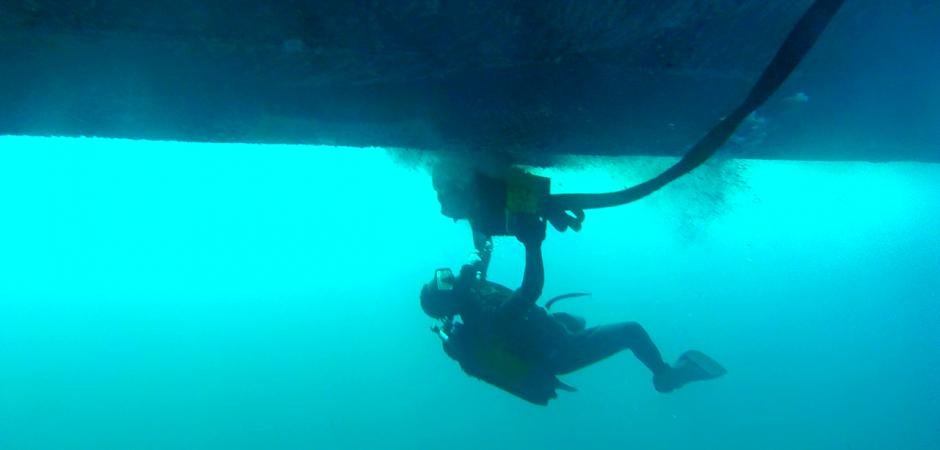
There are only a small number of saturation divers with internationally recognized qualifications around the world, and their effective working time at a water depth of 200 meters is only about 10 minutes. 300 meters is the physiological limit for human divers, beyond which operations can only be completed by machines. China has long had only 300 to 500 professional rescue and salvage divers, while the scour inspection of offshore wind power pile foundations, fault location of submarine optical cables, and underwater maintenance of oil and gas pipelines need to be carried out repeatedly every year.
The willingness to pay on the demand side comes from two sets of calculations.
The first is accident cost: accidents caused by manual diving operations account for 25% to 30% of all offshore wind power operation and maintenance accidents.
The second is operating cost: the single cost of manual operation for submarine optical cable maintenance is as high as 5 million US dollars, and robotic solutions can reduce the cost by more than 40%. When Oceanine Robotics conducts inspections for reservoirs, it cuts the overall cost from about 5 million yuan to 700,000 yuan, and shortens the cycle from 6 months to 20 days — there are about 94,000 reservoirs across China.
Source: TTSM.com
The rapid commercialization in dangerous scenarios has its inherent rationality.
When humanoid robots enter factories, they first have to face the question of "why not use mature robotic arms that are already available". The ship's bottom is dirty, dangerous and located underwater, with no mature alternative solutions, so robots are the only viable option. Policies are also promoting this trend: the 2024 national intelligent mining regulations stipulate that by 2026, the robot replacement rate for dangerous and heavy positions in coal mines and non-coal mines shall not be lower than 30% and 20% respectively.
More importantly, customers are already paying for the products, which is different from most other robotics tracks. Sailing Intelligence's orders in the first half of 2026 exceeded 1 billion yuan; as of July, Deepsea Humanoid Robotics has signed new complete machine sales contracts worth hundreds of millions of yuan, with another hundreds of millions of yuan of pending contracts locked in for the next two months, plus 1 billion yuan of potential orders under in-depth negotiation. Oceanine Robotics holds the exclusive supply agreement for deep-sea mining components of Canadian APG-Neuros, with pending contract value close to 100 million yuan.
The paying parties are ship owners, wind power operators, oil and gas companies, reservoir management authorities and central state-owned enterprises. They use their operation and maintenance budgets to calculate the cost of downtime and accident compensation.
The market ceiling is quite high.
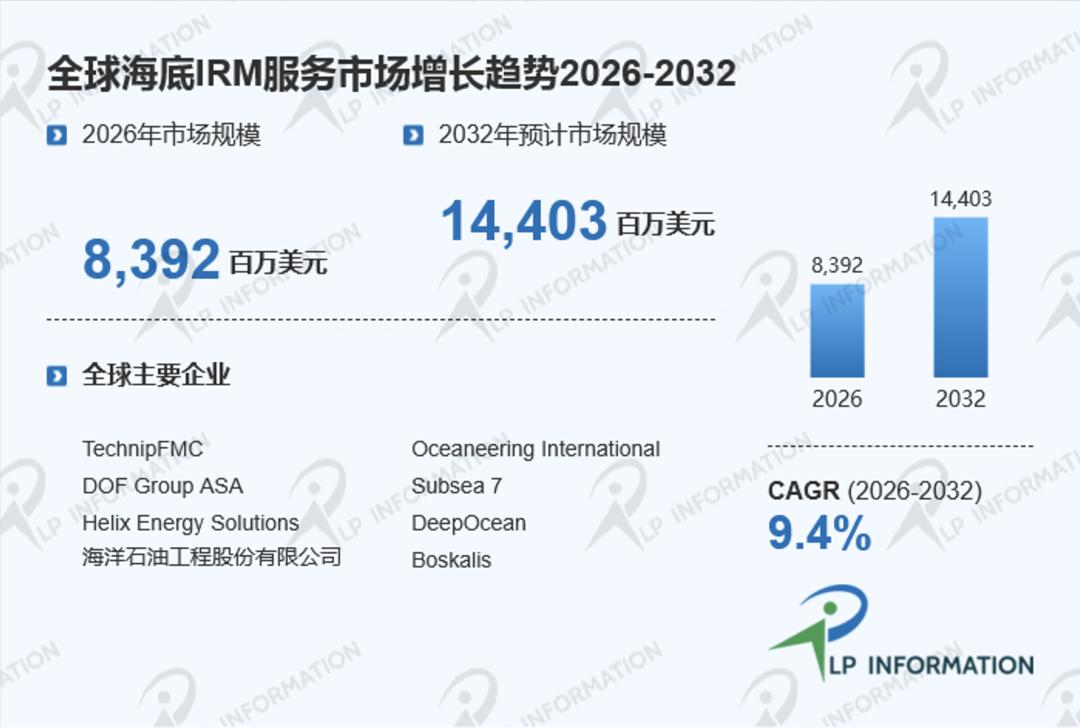
The global subsea service market is about 1.5 trillion yuan in scale, with an annual growth rate of over 20%; in 2025, China's total marine GDP reached 11.02 trillion yuan, up 5.5% year on year, among which the added value of the marine engineering equipment manufacturing industry increased by 10.2%.
The same logic is not only applicable to the marine sector.
Wuyi Vision's "Low Altitude - Space - Deep Space" strategy takes mining as a demonstration scenario: it first reconstructs the real environment into a digital twin, allows robots to train and evaluate in the virtual space, and then sends them to the actual site for operation. On the space side, it cooperates with Huantian Smart to develop physical AI dedicated remote sensing satellites.
In the three fields of mining, space and deep sea, paying customers are either state-owned enterprises, central SOEs, energy companies or insurance firms.
Humanoid robots and household service robots have been hyped for several years, but the real paid bills first appear in these special scenarios.
02 The measurement ruler of investors
To understand this underwater robotics boom, Zhu Xiaohu is an unavoidable reference.
In March 2025, he drew a diagram of risk in an interview with 36Kr: the horizontal axis is market consensus, and the vertical axis is commercialization path.
Tracks with high market consensus but no feasible commercialization path are the most dangerous — the year before last it was large language models, and this year it was embodied intelligence.
"Now every humanoid robot can do somersaults, but where is the commercialization?" When explaining the batch exit from humanoid robot projects, he said he had asked those CEOs: where are the potential paying customers? The answers he got were "customers imagined by themselves. Who would spend hundreds of thousands of yuan on a robot to do these jobs?"

Robot performance at the Spring Festival Gala
In the following year, Jinshajiang Venture Capital successively exited from Xinghaitu and Songyan Power.
Half a year later, he gave a positive answer in a dialogue with PingWest: this year we have invested in many robotics companies, most of which are "hardworking workhorse robots" — they do not look fancy or showy, but can really create commercial value.
The first example he cited was a ship cleaning robot company invested in the first half of the year: it dives to the bottom of the ship in turbid seawater to clean attachments, with rigid scenario demand and high technical difficulty. This company is Sailing Intelligence.
In the same dialogue, he put forward a ruler to measure the robotics industry.
Many startups have a trap in calculating ROI: the robot can only replace "half a person", and you still can not lay off that person, which means it is a false ROI. The counterexample he gave is a massage robot: the massage therapist is not only a technician, but also the top salesperson for selling membership cards. Only when the robot can complete both massage and card selling tasks can it truly replace one full position.
When applying this ruler to the underwater robotics sector, you will find it fits perfectly.
Divers are exactly the positions that enterprises can completely replace: Sailing's Orca robot in actual tests shortens the two-week construction period to 10 hours, replacing not half a person, but the entire diving team and two weeks of ship downtime.
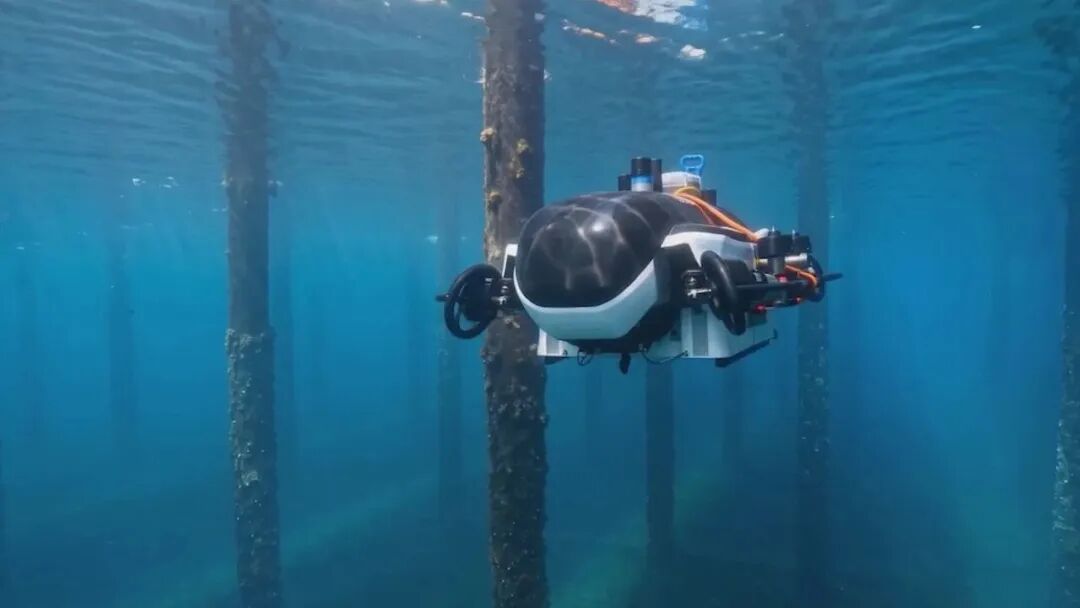
Sailing Intelligence underwater robot
This may also be the reason why Zhu Xiaohu gave Sailing such a comment — "SpaceX redefined space, and Sailing is redefining the ocean with embodied intelligence."
By June 2026, Jinshajiang has made its fifth consecutive additional investment in Sailing Intelligence.
Before that, in Zhu Xiaohu's investment career, only Didi and Xiaohongshu received such continuous investment treatment; Sailing Intelligence is also the only known continuously managed project of Jinshajiang in the robotics track so far.
Both exit and additional investment follow the same ruler: whether the business can achieve clear positive returns.
03 Three types of capital, three different intentions
The capital pouring into this marine robotics wave has a different composition from that of the Internet era.
The investor list of Deepsea Humanoid Robotics' over 500 million yuan Series A includes: four leading market-oriented institutions including Photosynthesis Venture Capital, Dachen Caizhi, GGV Capital and Yida Capital, making their first investment in the deep-sea track; China Insurance Investment represents insurance capital, and CETC Investment represents central SOE capital; the energy technology fund managed by Cathay Capital has TotalEnergies behind it.
In Sailing Intelligence's June shareholder list, the Shanghe Momentum Fund is backed by Moore Threads and Kunlunxin, Vertex Growth under Temasek, the agricultural industry fund of CITIC Group, and listed company Broad-Ocean Motor all entered the market at the same time.
According to statistics from Zhidongxi and IT Juzi, in the first seven months of 2026, 918 institutions invested a total of 1044.6 billion yuan in the robotics track. Market-oriented VCs bet on early-stage projects with large quantity, state-owned capital places large bets on growing-stage enterprises, and industrial capital makes layout along its own industrial ecological chain. In the underwater segment, special robots (including underwater, transportation, security and fire-fighting) only had 11 financing cases, totaling 2.07 billion yuan, accounting for 2.0% of the total financing of the entire robotics track.
The total capital amount is not huge, but the demands of the three types of capital are very distinct.
State-owned capital and insurance capital bet on national strategy: in 2025, "deep-sea technology" was written into the government work report for the first time, and the outline of the "15th Five-Year Plan" clearly proposes to accelerate the construction of a maritime power and implement deep-sea engineering projects;
Energy and industrial capital bet on their own position in the industrial chain: TotalEnergies cares about the operation and maintenance cost of subsea oil and gas facilities, while Broad-Ocean Motor focuses on the supporting business of motors and propellers;
Market-oriented VCs bet on scarcity: there are only a handful of private enterprises that can deliver complete deep-sea robot products.
When reviewing the investment in Oceanine Robotics, Infini Capital mentioned a core criterion: to evaluate a project, we must focus on actual product delivery and payment collection, and technical demonstrations alone do not count.
The premise for the three types of capital to enter the market at the same time is the visible exit channel: DeepBlue Technology's STAR Market IPO has resumed its "inquired" status; Yunzhou Intelligent submitted its IPO application for the second time in June; Shandong Future Robot has completed share reform.
Capital is not here for charity. When the expectation of the IPO window is clear, every order is given an extra premium.
The quality of this listing echelon is worthy of separate inspection.
04 Which enterprises are worth investing in
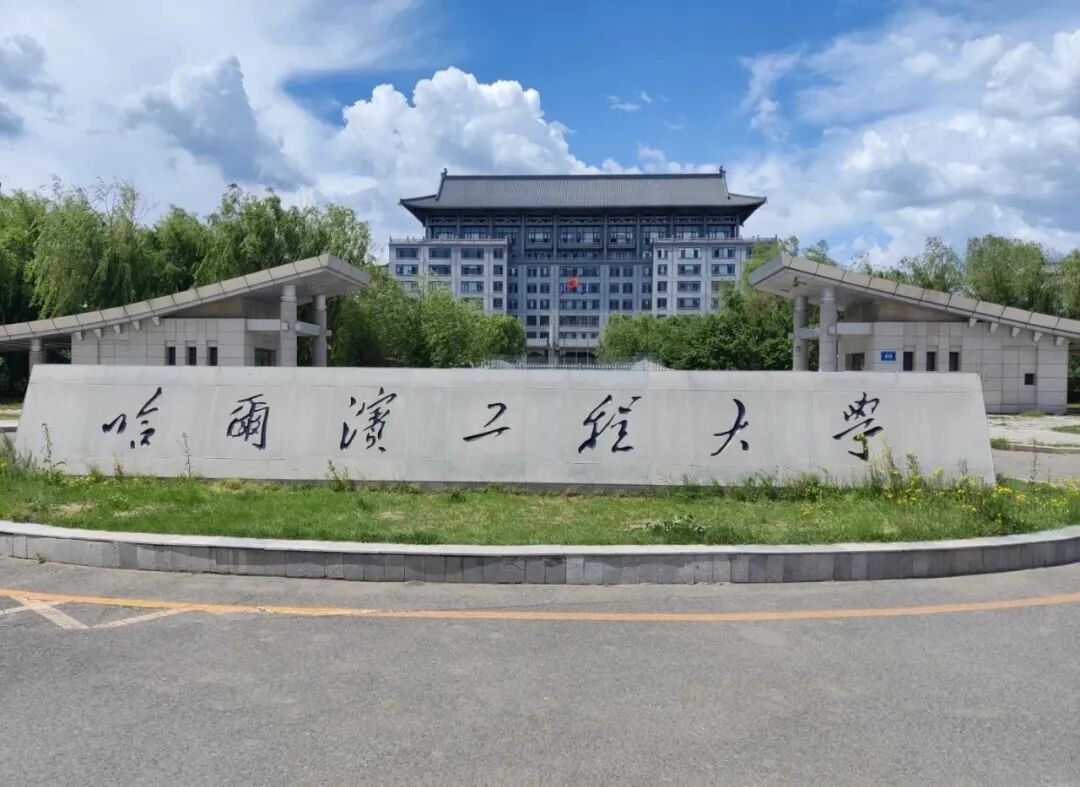
Let's start with a coincidence: this track is almost dominated by graduates from one university.
Chen Xiaobo, majoring in Navigation, Guidance and Control at Harbin Engineering University, developed his first underwater cleaning robot when he was a sophomore. He has done more than ten years of technical verification in ship cleaning and deep-sea exploration scenarios, and founded Sailing Intelligence in Kunshan in 2023;
Ma Yiming, a 2013 graduate majoring in Naval Architecture and Ocean Engineering at Harbin Engineering University, participated in the development of the world's first commercial deep-sea mining robot "Nautilus". After returning to China, he led the team to develop three product lines: "Singularity", "Phoenix" and "Taurus";
Guo Chunyu, professor and doctoral supervisor at Harbin Engineering University, participated in the R&D of the Jiaolong manned submersible...
About 30% of the technical management talents in China's shipbuilding industry graduated from Harbin Engineering University. Now, even the university's asset management platform, HEU Asset Management, has taken a stake in Oceanine Robotics.
With the same academic origin, the business models of these companies are different.
Sailing Intelligence adopts a service-oriented operation route.
The Orca series has replaced manual cleaning on ships of China Merchants Energy Shipping and COSCO Bulk, with a maximum efficiency 70 times that of manual labor, and has completed maintenance for more than 1000 large ships in total. In 2026, as the only Chinese company, it was selected into the National Underwater Hull Inspection and Cleaning Program of the Maritime and Port Authority of Singapore.
Chen Xiaobo summarized his scenario selection method as "three laws of robot industrialization": tasks that humans cannot complete (or are dangerous for humans to complete), low manual efficiency, and high manual cost — ship cleaning meets all three standards, and the annual market demand for this segment alone is hundreds of billions of yuan.
Wang Gongbin, founding partner of Changshi Capital, commented: "DJI in the sky, Sailing under the water."
Deepsea Humanoid Robotics takes the route of exporting complete machines to overseas markets.
In the summer of 2025, it defeated industry giants from the UK, the Netherlands and Norway, and delivered a nearly 10 million US dollar "Phoenix 600" deep-sea robot to Etisalat — this is the first commercial export of Chinese deep-sea robots. In October of the same year, the customer placed a follow-up purchase based on the use experience of the first unit, forming a continuous "1+2" order.
Its product matrix is divided by water depth: Singularity for 6000 meters, Phoenix for 3000 meters, and Taurus for 1000 meters.
