If ByteDance goes public, will it become the enterprise with the largest market capitalization in China?
Over the past few days, two sets of figures related to ByteDance have been continuously circulating in the market: one set is about revenue — its revenue in the first half of 2026 reached 120 billion US dollars, slightly exceeding Meta's 117.1 billion US dollars in the same period; the other set is about valuation — its valuation in secondary market transactions has approached 600 billion US dollars, with the mainstream reference range between 500 billion and 600 billion US dollars, while Meta's market cap stood at 1.7 trillion US dollars in the same period.
A natural question then arises: If this never-publicly-listed giant lands in the capital market, will it replace Tencent as the company with the highest market capitalization in mainland China and even the whole of China?
$120 Billion in Half a Year: A "Mixed" Report Card
According to a September 15 report by The Information, ByteDance's revenue in the first half of 2026 hit $120 billion, a year-on-year increase of about 30%. The growth engine mainly comes from TikTok's international advertising and e-commerce businesses. However, the profit side presents a different picture: net profit dropped to $20 billion, with a year-on-year decline of a single-digit percentage, and the net profit margin fell all the way from over 20% previously to about 16.7%.

Source: Internet
Although ByteDance has not responded to this report, putting this set of figures into the comparison system of China's Internet industry makes it more meaningful. On the revenue side, ByteDance's total revenue in 2025 was about $200 billion (up 29% year on year), equivalent to more than 1.4 trillion RMB, surpassing Alibaba and Tencent, and firmly taking the top spot in revenue among Chinese technology enterprises.
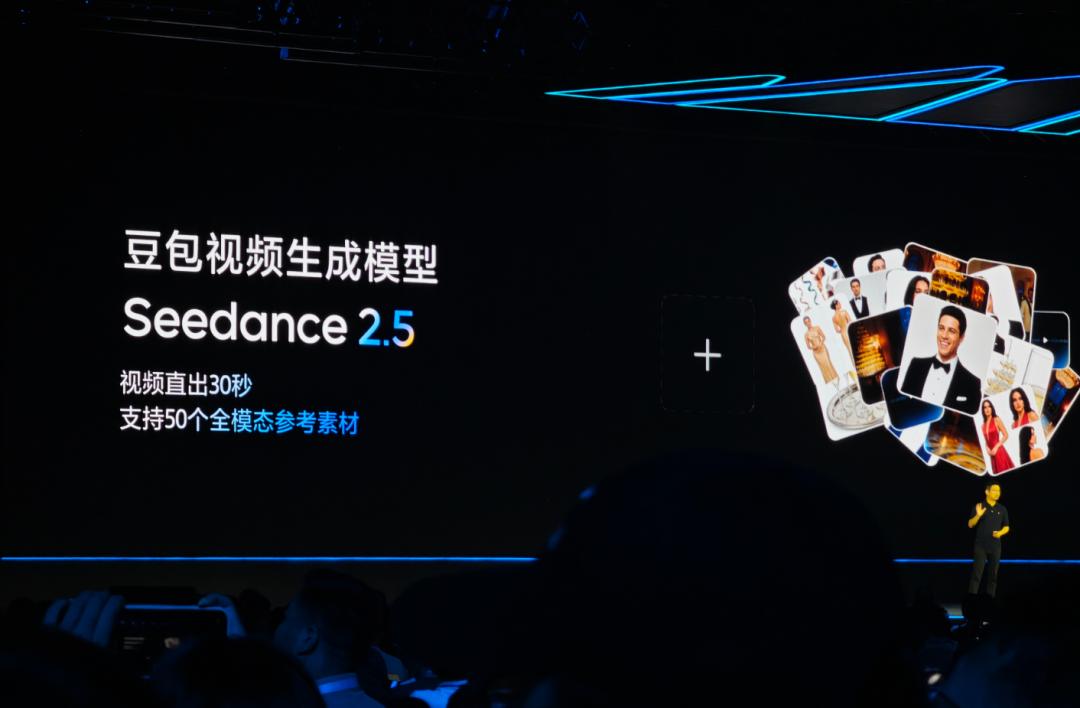
The profit side shows a different picture: Tencent's total net profit in 2025 was at the level of about 240 billion RMB with its profit margin continuing to rise, while ByteDance chose the path of "sacrificing current profits for the future" in the AI arms race — self-developed large models, the video generation model Seedance, expansion of Volcano Engine, user subsidies for Doubao, each of which is a huge money burner.
Source: Lei Technology
Bloomberg reported in May that ByteDance is considering investing up to $70 billion in data centers and AI infrastructure in 2026, about twice as much as in 2025.
To sum up in one sentence: In terms of revenue scale, ByteDance is No.1 in China and has outperformed Meta; in terms of profit quality, it is in the stage of "heavy investment for growth" that Alibaba experienced back then, forming a sharp contrast with Tencent's "high-margin harvesting period".
Can It Take the Top Spot with a $600 Billion Listing Valuation?
I think it should be able to within the scope of mainland Chinese companies, but the threshold is much lower than before.
As of September 2026, Tencent's market capitalization is about $504 billion, ICBC's is about $375 billion, and Alibaba's is about $280 billion. If ByteDance goes public at a valuation of $600 billion, it will be nearly 20% higher than Tencent, becoming the publicly listed company with the highest market capitalization in mainland China.
Source: Internet
But two footnotes must be added. First, Tencent's market capitalization once exceeded HK$5 trillion in March this year, and then it has corrected sharply by about 40%. ByteDance's "reaching the top" has to some extent caught up with the low ebb of its old rival. Second, the primary market valuation is not equal to the market capitalization after listing — IPOs on the Hong Kong Stock Exchange usually have a discount, and $600 billion is an "anchor" rather than a "result".
As for the whole of China, TSMC's market capitalization of about $2.15 trillion is still out of reach, and ByteDance's valuation is only about 30% of that.
The Confidence Behind High Valuation: One Underlying Reason and One Hidden Card
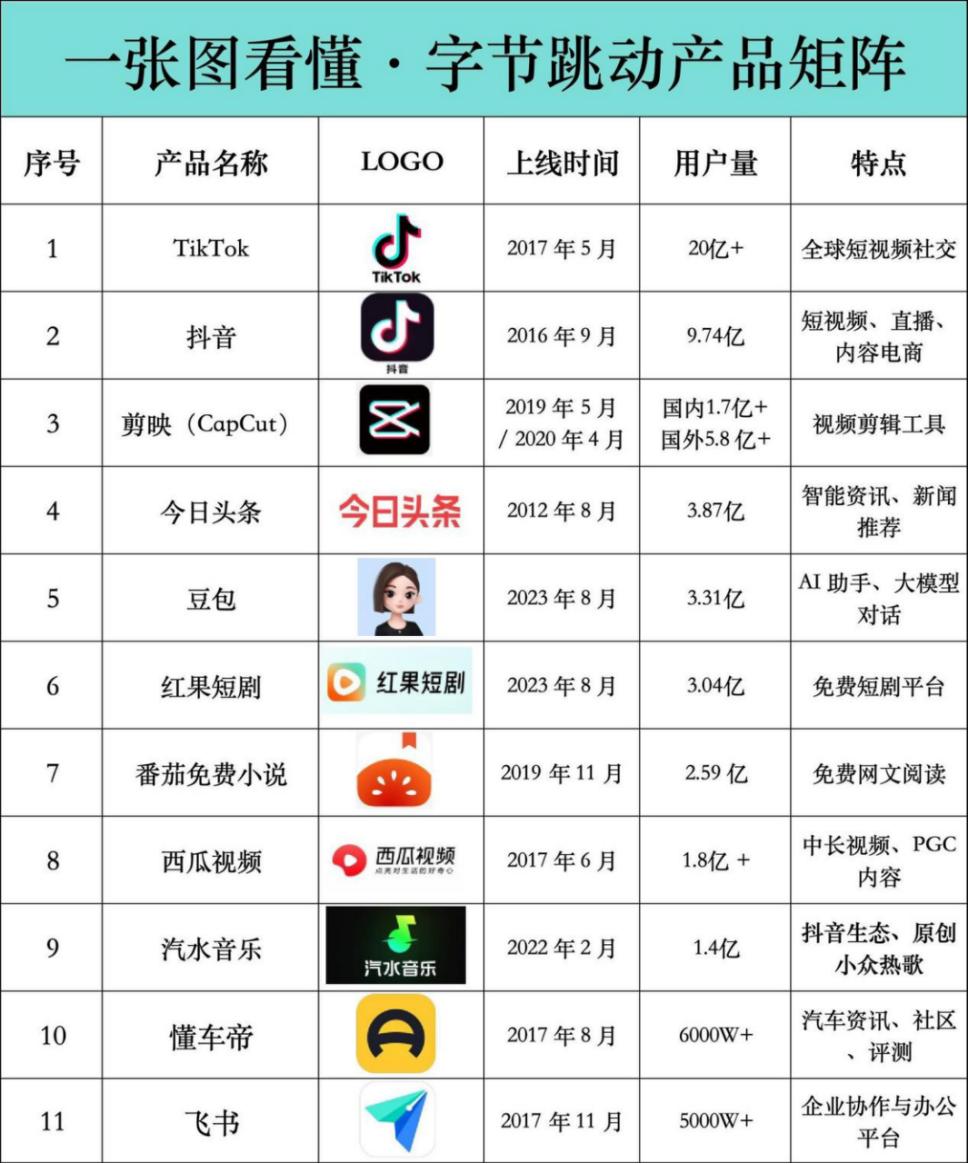
The market is willing to price ByteDance at $500 billion to $600 billion, not relying on a single business, but a mutually interlocking business matrix.
Domestic Core Base: Douyin. The integration of advertising, e-commerce and local life services contributes most of the company's revenue and cash flow. The GMV of Douyin E-commerce is continuously approaching that of traditional shelf e-commerce giants, while its local life business directly breaks into Meituan's hinterland. The value logic of this sector is closest to Meta — a traffic entrance that almost monopolizes users' attention.
Overseas Growth Engine: TikTok. The proportion of overseas revenue has risen from 25% in 2024 to over 30%. TikTok Shop's global GMV in the first half of 2026 was about $50.3 billion, up 92% year on year. More importantly, the restructuring of TikTok's U.S. business was approved in January 2026, lifting the biggest regulatory risk hanging over it for many years — which is exactly the direct catalyst for its valuation jumping from $330 billion to $550 billion or even $600 billion this year.

Source: Internet
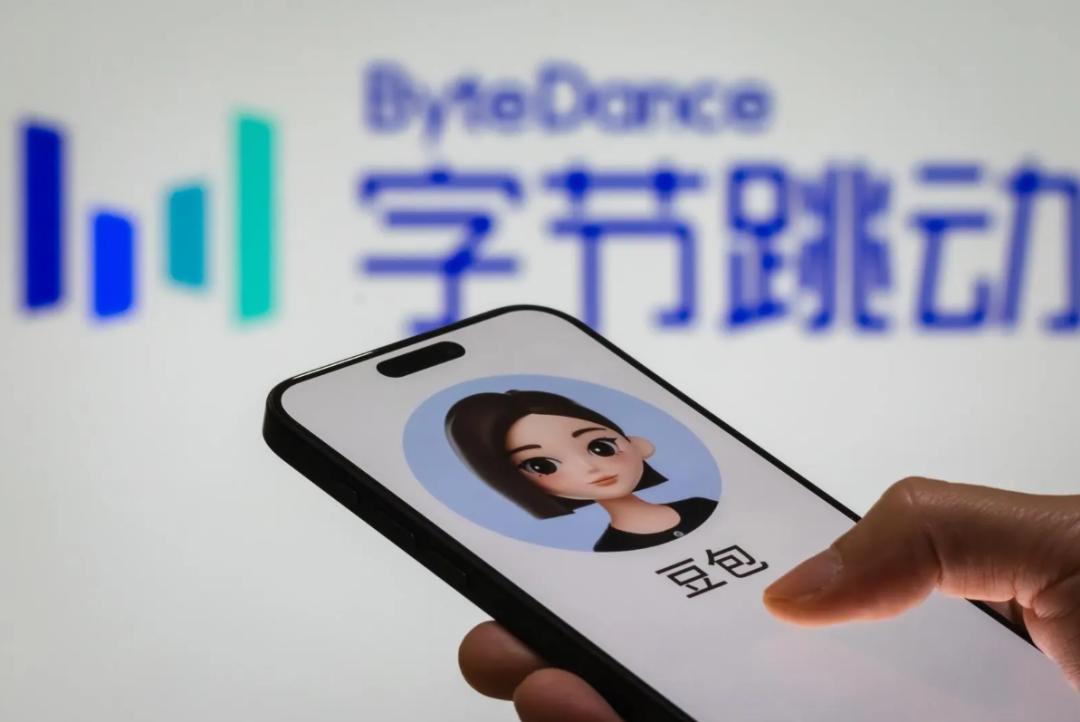
AI Option: Large Models and Cloud Services. Doubao's daily active users have exceeded 100 million, and its daily average Token call volume has exceeded 180 trillion. Volcano Engine has taken the largest share in China's AI public cloud market. The Seedance video model has entered the world's first tier, and the company is also developing self-designed inference chips. This part of the business is currently burning money and making negative profit contribution, but the market obviously prices it as a "ticket to the next decade" — which is the fundamental reason why ByteDance's valuation premium coexists with declining profits.
Source: Internet
Therefore, when we understand ByteDance, we will understand why Tencent and Alibaba will continue to invest in AI infrastructure. This is a battle that no giant dares to lose.
In fact, it seems that the three core businesses are advancing side by side, but essentially they all stem from one reason. ByteDance occupies most of users' time. Whether it is Douyin, TikTok or Doubao, it builds its own business empire around information entrances and user usage time.
How to achieve this? Through algorithms. How to consolidate its algorithm advantage? Through AI. The logic is now fully closed.
Everything starts from the most single and universal itch point of human beings: boredom. Using technology to alleviate human "boredom", is this a good idea? I don't know, but for now, it is definitely a good business.
Every extra minute of stay, every extra click, every extra follow is an opportunity for ByteDance to make money.
The most ruthless business model turns out to be not taking money directly from your pocket, but making you willingly give up your time.
In addition, there is a hidden card that is often overlooked: ByteDance's cash reserve exceeds $200 billion, and this kind of balance sheet strength is also top-tier among global technology companies.
Will It Go Public in the Short Term?
I think the probability is very low.
First, the financing structure speaks for itself: ByteDance has just completed a syndicated loan of about $29.6 billion recently, setting the record for the largest single financing in the company's history — choosing debt financing instead of equity financing exactly shows that the company does not want to dilute its equity before listing, and also proves that its financing channels are unobstructed and it is not short of money.
Second, the employee share repurchase mechanism is still operating, the company continues to provide liquidity for employee stock ownership at a valuation of over $330 billion, and the urgency of cashing out after listing is greatly alleviated by this "internal market".
Third, the business status is not suitable: it is currently at the peak of AI investment, and its profits are deliberately suppressed. Going public at this time is equivalent to pricing its least impressive profit statement; the rational choice is to wait until the return curve of AI investment appears and the profit margin stabilizes before talking about IPO.
Source: Internet
Fourth, although the regulatory and geopolitical environment has improved, the variable of Sino-US relations still exists, and the founding team and early investors have always preferred "controlling the rhythm" over "seizing the window".
The foreseeable path is: ByteDance will continue to maintain the status quo through repurchases and debt financing, and its valuation will climb slowly in the secondary market, until the input-output ratio of its AI business becomes clear — that may be the time when it really knocks on the door of the capital market.
At that time, the title of "the company with the largest market capitalization in mainland China" will most likely be well deserved.
This article is from the WeChat official account "Chief Business Review" (ID: CHReview), written by Wei Ming, and published with authorization from 36Kr.