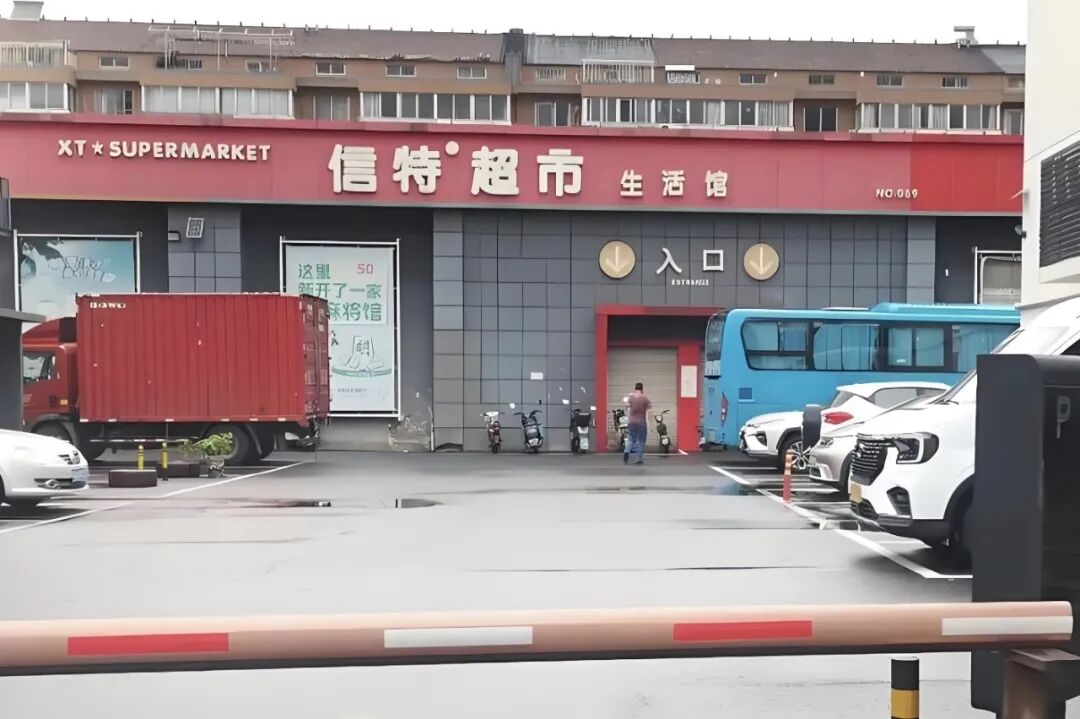
Dozens of stores closed down overnight, who killed Xinte Supermarket?
1
Following Xinchengyuanwei, another long-established player in Changzhou's retail market has collapsed.
Xinte Supermarket released an announcement at the end of August, stating that due to business restructuring, all stores in the Changzhou region will cease operations immediately. At the same time, it will launch the registration and filing of stored-value cards, and uniformly handle users' rights and interests in the follow-up.
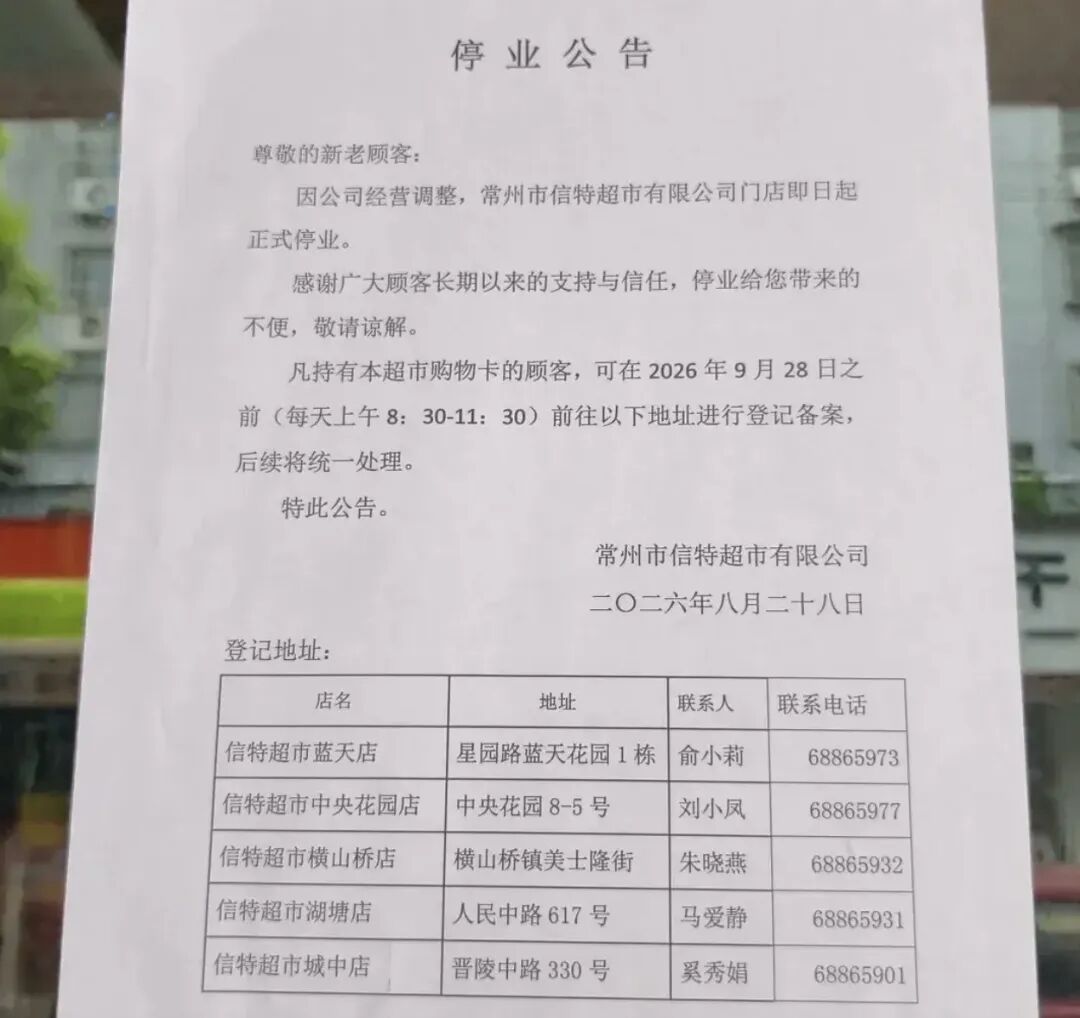
There was no prior notice and no buffer period, dozens of stores spread across Changzhou's urban and township areas pulled down their rolling shutters on the same day.
According to understanding from Lingshou, all the closed stores are directly-operated stores, while franchise stores can still operate normally and are still opening new outlets, but they do not accept Xinte's shopping cards for consumption.
What makes people sigh is that just one month before the news of store closures came out, Xinte's official account was still updated, reviewing the 30-year development history of the brand. In hindsight, this forms a sharp contrast with the subsequent sudden closure of all directly-operated stores.
As one of the earliest local chain community supermarkets in Changzhou, Xinte can be called a "living fossil" of the development of regional retail. Its predecessor can be traced back to the Wujin Supply and Marketing Cooperative Cotton and Hemp Company in 1996. It was founded in response to the call of the provincial supply and marketing cooperatives to promote new consumption patterns amid the wave of restructuring of supply and marketing cooperatives, with a model similar to that of early Suguo Supermarket.
During its heyday, it had around 40 directly-operated stores in the Changwu area, which were deployed in old residential areas and mature communities in major main urban areas including Tianning, Zhonglou, Xinbei and Wujin. Stores such as Hongmei Xincun, Huiguanbang and Qingshanqiao are all well-established outlets familiar to old Changzhou residents. It also laid out nearly 100 franchise stores in all towns and townships, with more than 100 outlets across the whole region, and its reach once extended to every corner of Changzhou.
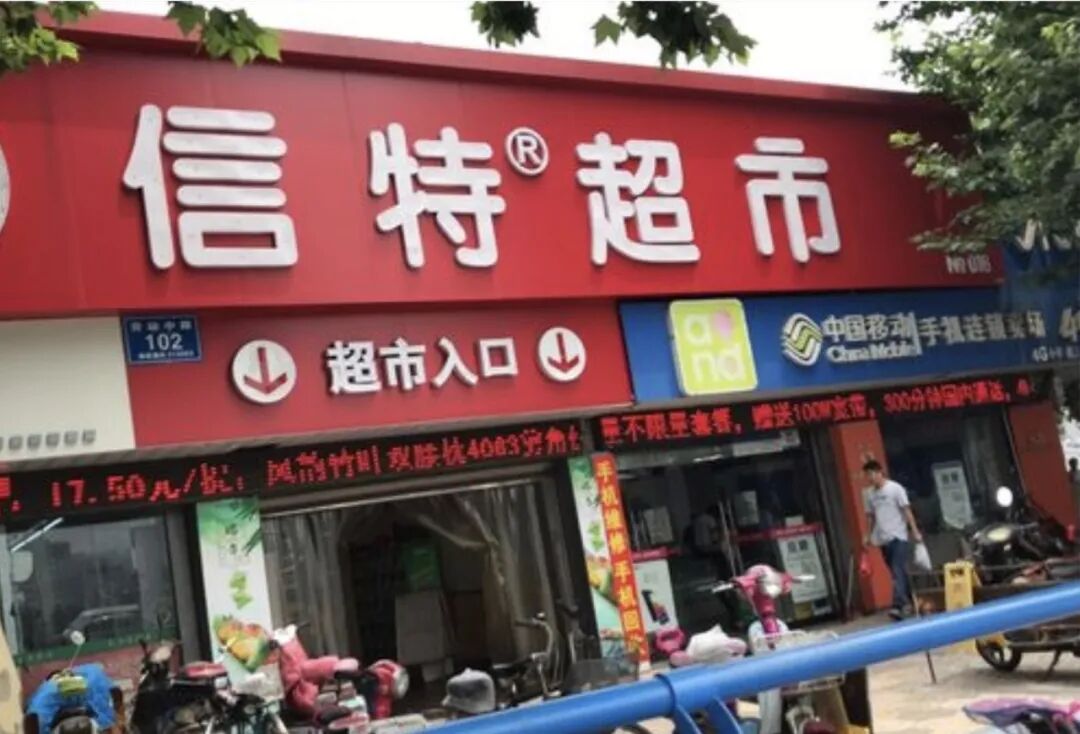
On the surface, the trigger for Xinte's collapse is the capital problem.
According to revelations from netizens on Hualongxiang, multiple joint operators reported the problem of payment arrears, with the estimated amount involved reaching millions of yuan, and the rumored arrears to department store suppliers amount to tens of millions of yuan. Some suppliers have taken judicial rights protection approaches.
Some suppliers also said that they only learned the news of store closure after seeing the announcement. The unsettled payment for goods had not been notified to be taken back, which instead triggered a run on shopping cards by consumers.
Judging from the public industrial and commercial information, many stores under Xinte had undergone cancellation or business status changes from April to June 2026. The foreshadowing of the crisis had long been laid.
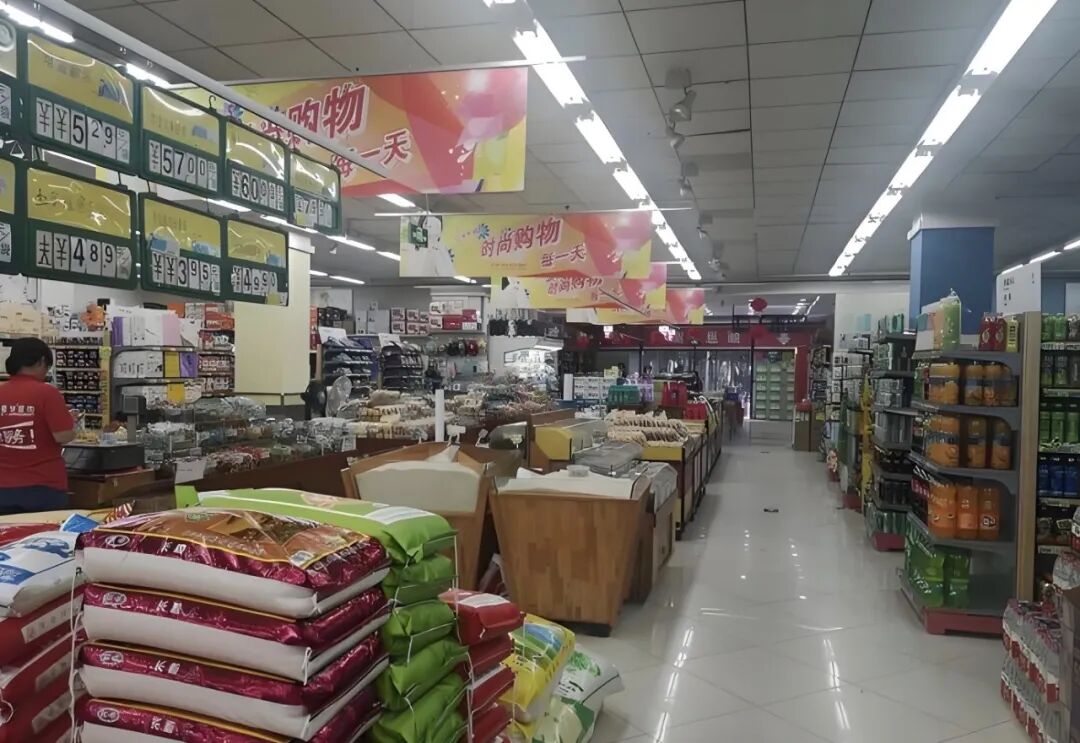
The capital problem is only the trigger. The real cause of death of this old supermarket that has been operating for 30 years is the aging of its model and other issues.
The aforementioned supplier told Lingshou that Xinte Supermarket's advantages lie in fresh food, grain and oil, which are less impacted by online channels. The main reason for its being eliminated is that its products, prices and costs have almost no essential differences from those ten years ago.
It is not a unique case, and this is already the second supermarket that has disappeared in Changzhou this year.
At the beginning of this year, "Xinchengyuanwei", a community fresh food brand under New Town Holdings, also closed more than 20 stores across Changzhou overnight.
The problems of Xinchengyuanwei, in addition to external market competition, are more internal, including its positioning, supply chain capacity and investment.
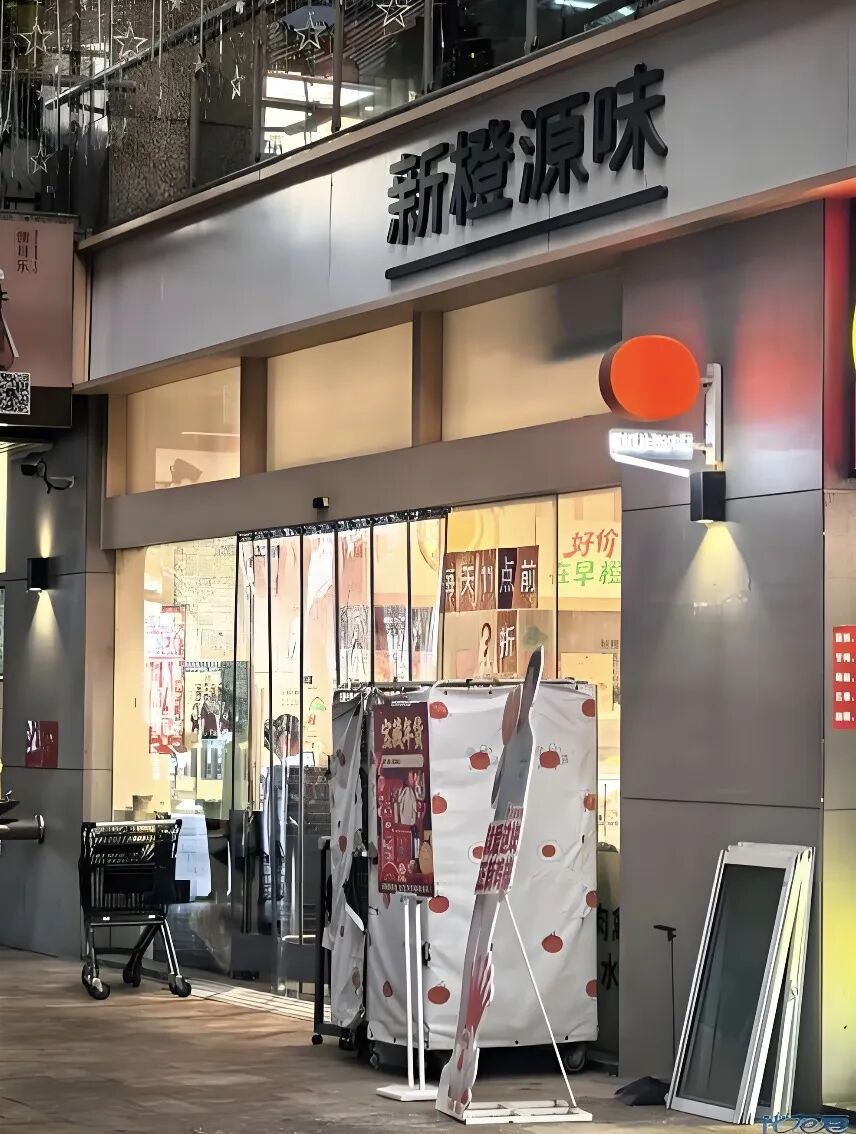
More importantly, its parent company is a real estate enterprise, whose underlying logic is different from that of the retail business. The former tends to pursue fast money with high returns, while the latter requires long-term polishing.
As a result, when the single-store model of Xinchengyuanwei had not been verified to be viable, the headquarters directly stopped the project, unwilling to continue investing a lot of time and costs, but chose to stop losses quickly.
In fact, Changzhou's consumption capacity has always been good, but supermarkets have closed down one after another. The real problem is that when new players enter the market intensively, those old supermarkets like Xinte still stick to the old routines, placing a large number of circulating standard products with low gross profit that cannot build user stickiness, waiting passively for consumers to come, so they can only be eliminated by the market.
2
The consumption power of the Changzhou market is very typical. The city has a small area and a not very large permanent population, but it is already crowded with retail players.
The collective influx of players also values the high gold content of this market.
As a major manufacturing city with a GDP exceeding one trillion yuan, Changzhou's total annual retail sales of consumer goods is close to 300 billion yuan. Local household income is stable. In the first half of 2026, the per capita disposable income of all residents in the city reached 36,344.1 yuan, a year-on-year increase of 4.4%. In addition, a large number of middle-income groups are expanding, who are highly receptive to Sam's Club and also have high acceptance of ALDI.
In addition, with its geographical advantage of being adjacent to Shanghai, Suzhou and Wuxi, the logistics cost is relatively better and the distribution radius is shorter. There are also a large number of dense commercial complexes, so giants regard Changzhou as an important experimental field for new retail models, where logistics, store opening costs and operations are relatively easy to test and adjust, which also makes the expansion of several new forces visibly fast.
First, look at the small hard discount formats.
ALDI's layout in Changzhou has accelerated significantly. From the popularity of its first store last year, to the second store in Qingfenghui and the third store in Xuejia following closely, it means that ALDI's layout in Changzhou is denser than that in most cities in southern Jiangsu.
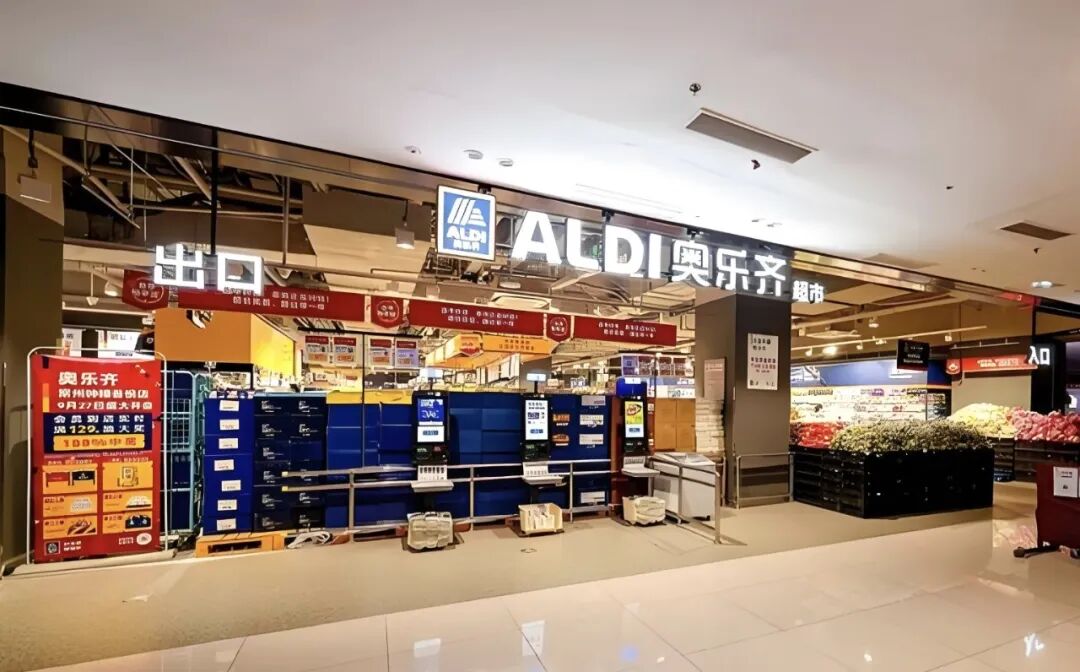
In addition, ALDI's second East China distribution center, the Wuxi large warehouse, has been put into use.
The confidence of this aggressive expansion largely comes from the back-end supply chain.
In February this year, ALDI's second distribution center in East China, the Wuxi large warehouse, was officially put into operation, further improving the supply chain services in Jiangsu region.
After the completion of the Wuxi large warehouse, it provides a more stable foundation for replenishment and loss control of Changzhou stores. The distribution distance from Changzhou to Wuxi is less than 100 kilometers, and cold chain goods can be delivered on the same day.
On the other side, Freshippo has also made heavy deployment in Changzhou. Its discount format Super Box NB has opened about 15 stores. Together with large Freshippo Hema stores focusing on dine-in and instant delivery, the overall scale has reached 20 stores. In the next five years, it even shouted the expansion goal of deploying 50 stores and targeting 12 billion yuan in revenue.
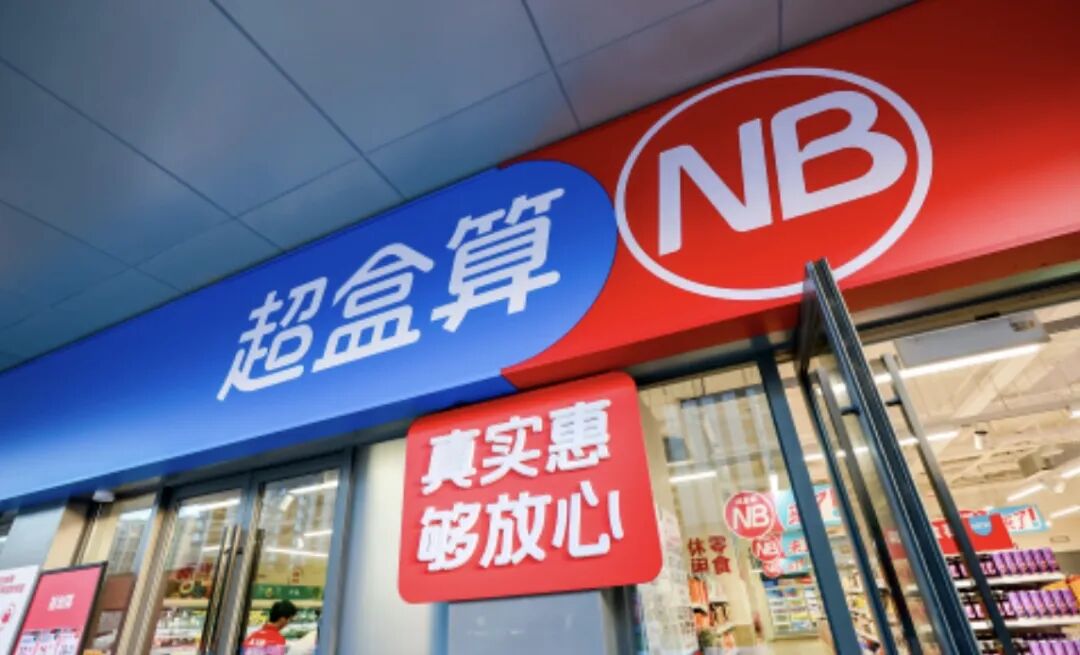
Super Box NB and ALDI target high-frequency rigid demands and complete a daily purchase at a very low cost. The large Freshippo Hema stores focus on new retail, with seafood dine-in, instant delivery, and a product structure biased towards young people. In the field of quality consumption and bulk procurement, Changzhou also has 1 Sam's Club covering quality consumption and bulk procurement scenarios.
How fierce is the competition here? When RT-Mart first tested its M membership store in Changzhou, it even had to cancel the membership fee to retain customer flow under the fierce price war and customer flow diversion.
Players in different price bands are accelerating to enter the Changzhou market, which has directly disrupted Changzhou's retail landscape. From high-end member-only stores to community discount stores, and then to instant retail, all price ranges and service scopes have been clearly divided.
The formation of this pattern essentially means that the dimension of competition has changed:
First, "proximity" gives way to "value". In the past, local small supermarkets easily won by relying on the physical distance of "just downstairs", but now front warehouses and instant food delivery are closer and more convenient than them. When convenience is no longer a scarce attribute, consumers start to calculate: if there is no price advantage and no unique features, why should I go to your old supermarket?
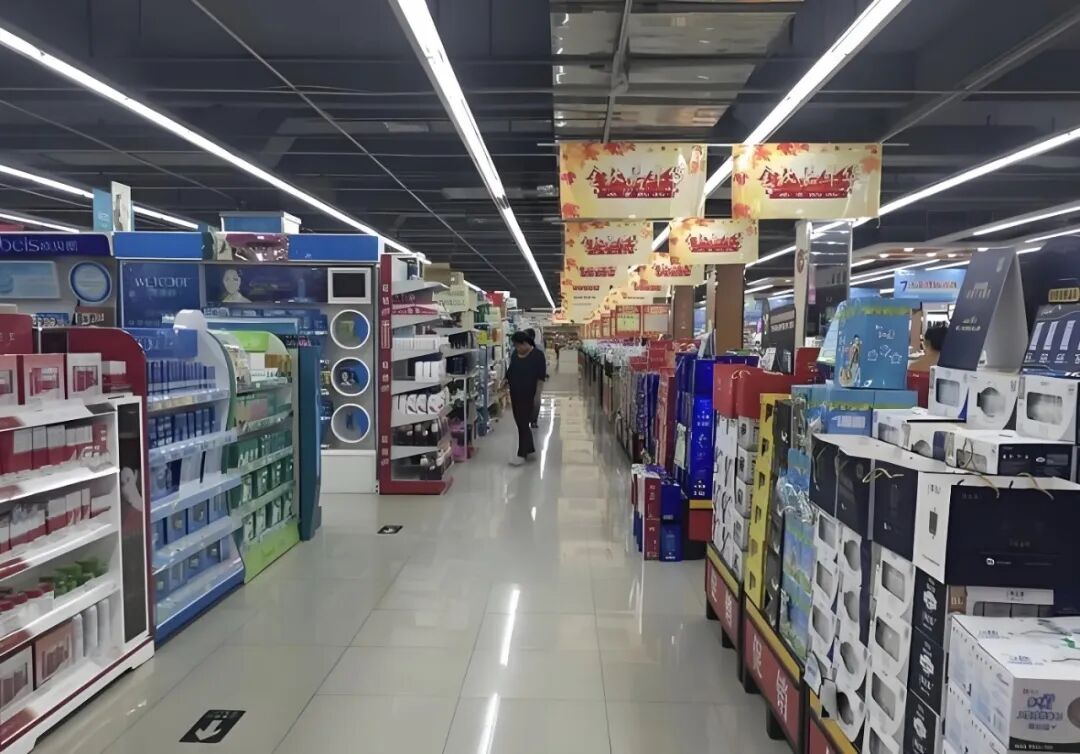
Second, the victory is decided by the supply chain of private brands. Sam's Club relies on global direct procurement, while ALDI and Freshippo rely on an extremely high proportion of private brands, selling exclusive products that "cannot be bought elsewhere" or "have no such cost performance elsewhere". In contrast, traditional supermarkets that rely heavily on intermediate wholesalers and sell ordinary standard products have no power to fight back in terms of price and product selection.
Third, the extreme squeezing of efficiency. Sam's Club focuses on selected quality, ALDI focuses on extreme cost performance, and Freshippo focuses on youthfulness and instant experience. The entire market is surrounded by multiple forces layer by layer, and the living space left for traditional players in the middle tier has been compressed to the extreme.
Of course, there are still several old local supermarkets in Changzhou remaining in the market, such as time-honored Ruihetai (more than 40 stores), Xinyihua and Mingdu Supermarket, whose operating conditions are relatively differentiated.
This round of fierce competition in Changzhou's supermarket industry has proved that in an extremely involuted battlefield, regional players who lack product moat and supply chain efficiency have very little chance.
3
Xinte is not the first one to collapse, and most likely it will not be the last one.
Looking at the longer timeline, there have been several old community supermarkets that have been operating for more than 20 years closed down in recent years — Hutan Leke, the old Shanghai Hualian store in Zouqu, and Shanyuanli in Shandong.
The rise and fall of them are almost facing the same market situation: they have taken root in a region for decades, started their business by facilitating people's lives, and were finally eliminated in the tide of consumption because their business models could not keep up with the times.
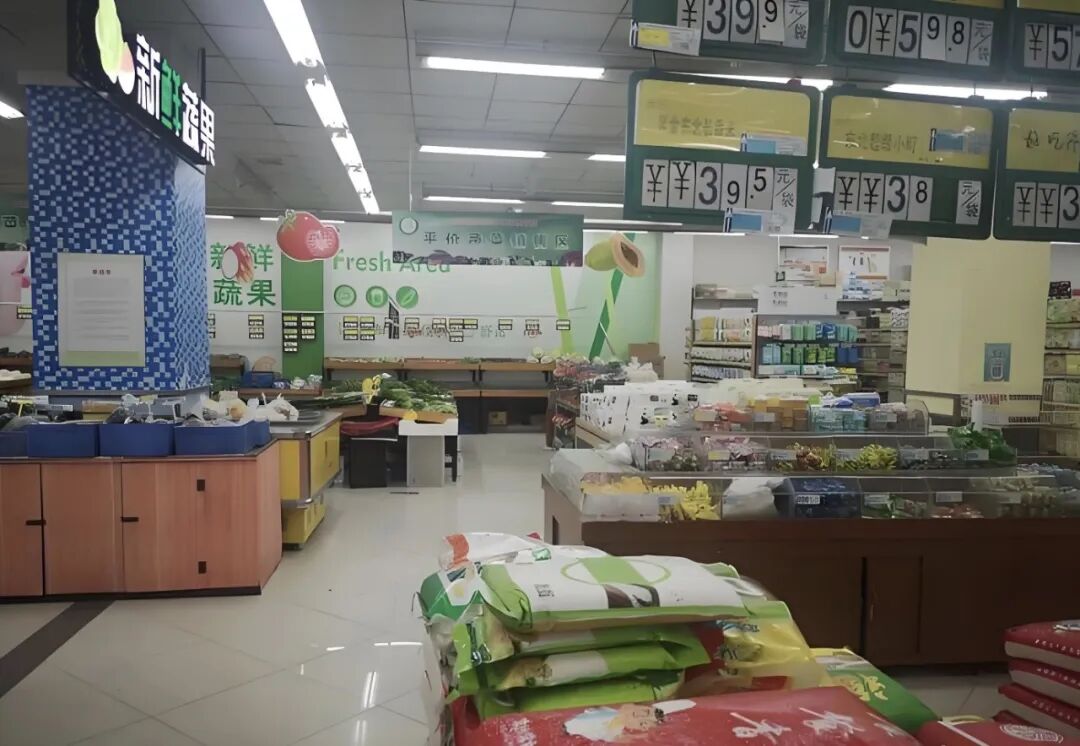
When we expand our vision to the whole country, this wave of clearance is even more fierce.
Data from the China Chain Store & Franchise Association shows that the total number of top 100 supermarket stores in 2025 was 21,000, a year-on-year decrease of 5.4%, which is equivalent to a net reduction of about 1,200 stores.
But interestingly, another set of data from the National Bureau of Statistics shows a different trend. In 2025, the retail sales of supermarkets above designated size nationwide increased by 4.3% year on year.
Behind the contrast between the two sets of data is that people are no longer not spending money in supermarkets, but the channels for buying things have changed. The stock cake in the market has not shrunk, but it has been quickly divided by head players who have better knowledge of the supply chain and can deliver goods to customers' doors.
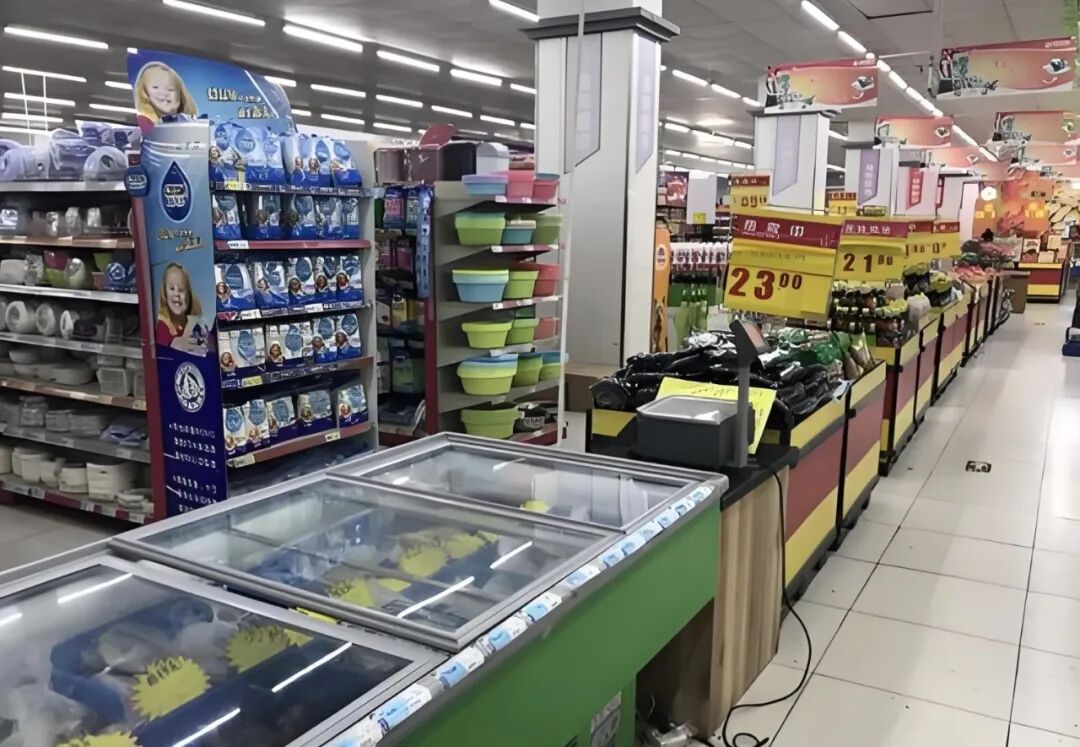
Many people attribute the exit of traditional supermarkets to the general environment, or blame instant retail for taking their jobs.
But the actual situation may be just the opposite. The rigid demand for offline community stores has always existed, but it has never been well satisfied.
What is really eliminated is not the form of "physical small supermarkets" at all, but the inefficient model that relied on occupying a good storefront in the early years, selling circulating standard products with no price advantage, and making a living entirely by information gap.
On the night Xinte closed its stores, a very ironic scene was swiped on Changzhou's local social platforms:
On the last night before the rolling shutters of dozens of directly-operated stores were pulled down, the stores were crowded with old neighbors who came to snap up goods and refund their cards after hearing the news, and the shelves of many stores were snapped up within a few hours