ChangXin Memory Technologies ranks first in the world in terms of profit margin.
A Chinese memory chip firm that has been constrained by export controls for a decade has suddenly become the world's most profitable chipmaker.
But the story is far more complicated than that.
Recently, global economic research and analysis platform QUICK FactSet updated a set of data. In Q2 2026, Changxin Memory Technologies achieved an EBIT margin of 82%, surpassing SK Hynix's 76%, Samsung Electronics' semiconductor division's 70%, and Micron's 80%, making it the most profitable memory chip manufacturer worldwide in that quarter.
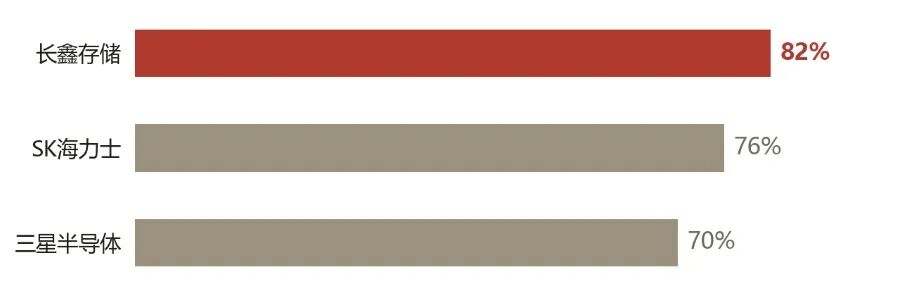
EBIT margin in Q2 2026 (Data: QUICK FactSet)
A year ago, this company was still in the red.
A year later, it has left all three global memory giants behind.
From Sci-Tech Innovation Board IPO to RMB 77.6 billion profit in half a year
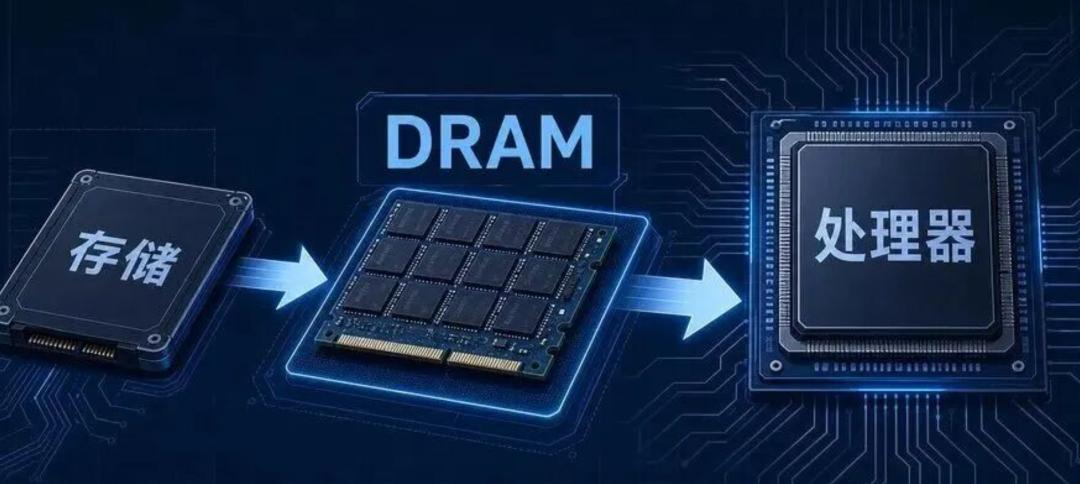
Changxin Technology was founded in 2016, with its core business covering R&D, design, production and sales of DRAM memory.
The company has three 12-inch DRAM wafer fabs in Hefei and Beijing, with products covering DDR4, DDR5, LPDDR4X, LPDDR5 and LPDDR5X sectors.
In December 2025, the company submitted an application for listing on the Sci-Tech Innovation Board to the Shanghai Stock Exchange, planning to raise RMB 29.5 billion. Later, as its performance and market conditions changed, the issuance scale was further expanded.
In July 2026, the company issued shares at RMB 8.66 per share, raising approximately RMB 57.9 billion in actual funds. It was listed on the Sci-Tech Innovation Board on July 27 with the stock code 688825, becoming one of the most high-profile memory chip enterprises in the A-share market.
After the IPO, the company's disclosed 2026 semi-annual report attracted even more attention: its operating revenue reached RMB 150.31 billion, up 873.64% year on year; net profit attributable to shareholders of listed companies stood at RMB 77.605 billion, compared with a loss of RMB 2.332 billion in the same period of the previous year; net profit attributable to shareholders after deducting non-recurring gains and losses was RMB 78.793 billion; gross margin of core business reached 84.84%.
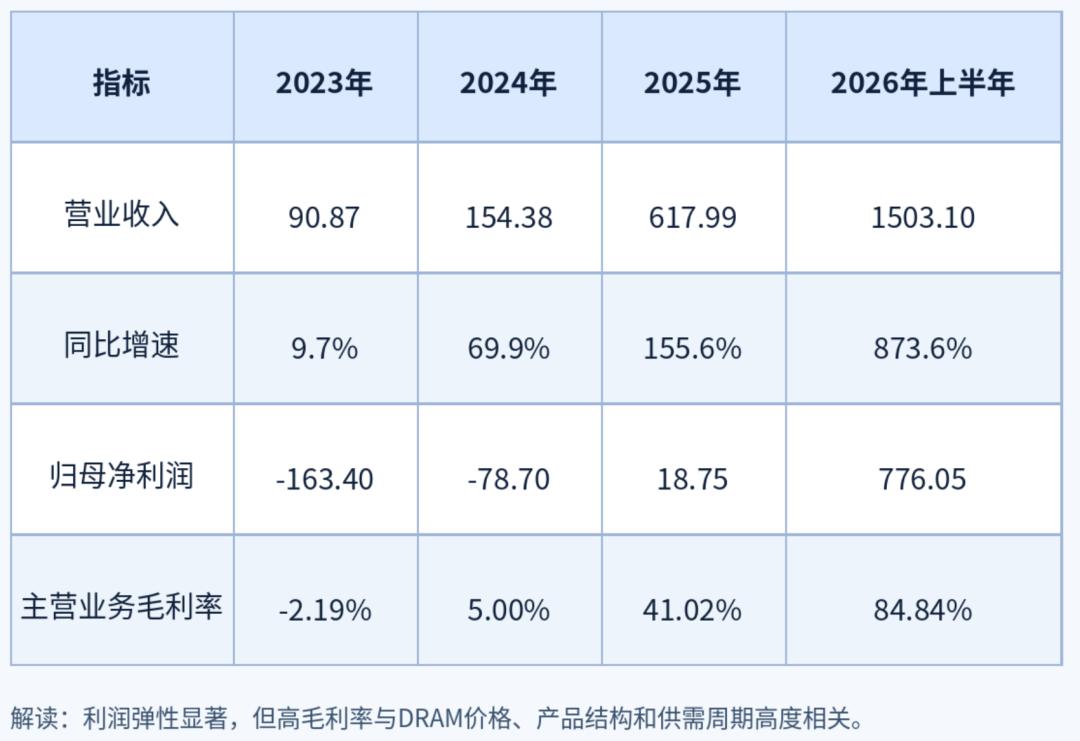
In terms of figures, Changxin Technology has quickly transformed from consecutive losses to a state of high revenue, high profit and strong cash flow.
However, the high profit margin in the semi-annual report does not mean the company will permanently maintain an ultra-high profit margin, let alone simply draw the conclusion that it ranks first in the world in terms of profit margin.
There is currently no globally unified ranking of DRAM enterprises' profit margins released by a designated institution with a consistent statistical caliber in public materials.
A more rigorous statement is that Changxin Technology is in the top tier of profit margins among global DRAM manufacturers in the first half of 2026.
Three driving forces behind the explosive profit growth
The first driving force comes from industry pricing. DRAM prices are greatly affected by changes in supply and demand.
Since the second half of 2025, global computing power demand has grown, and manufacturers including Samsung and SK Hynix have shifted part of their production capacity to HBM, leading to a phased tightening of general-purpose DRAM supply.
Changxin Technology disclosed in its prospectus that the year-on-year change in the average selling price of its main DRAM products in 2024 and 2025 was 55.08% and 33.69% respectively.
The second driving force comes from economies of scale. Memory chip manufacturing is a heavy-asset industry, where depreciation, equipment and R&D costs need to be amortized by larger shipment volumes.
When capacity utilization rises and yield improves, unit cost will drop significantly. Changxin Technology's revenue grew from RMB 9.087 billion in 2023 to RMB 61.799 billion in 2025, and the cost dilution brought by scale expansion played a critical role.
The third driving force comes from changes in product mix. Products including DDR5, LPDDR5X and server-related products have higher requirements for stability, speed, power consumption and customer certification.
Changxin Technology upgraded its product line from DDR4 and LPDDR4X to DDR5, LPDDR5 and LPDDR5X, and the optimized product mix lifted its average selling price.
The superposition of these three factors has led to the profit surge in the semi-annual report. None of the three factors alone can explain the RMB 77.6 billion profit.
The actual business strategy: "skip-generation R&D" plus large-scale mass production
The technical route adopted by Changxin Technology is not to fully follow every generation of products, but to narrow the gap with leading international manufacturers as much as possible through process platform iteration and product upgrading.
The company has realized mass production of multiple generations of process platforms, and is continuously promoting the development of products such as DDR5.
The value of this route lies in the fact that the memory industry competes not only on laboratory technology, but also on the full set of capabilities ranging from design, wafer manufacturing, packaging and testing to customer verification and continuous supply.
Being able to produce chips does not mean being able to achieve stable mass production; being able to achieve mass production does not mean being able to continuously supply products in the supply chain of key clients.
Changxin Technology's advantages mainly lie in three aspects.
First, it has a localized DRAM R&D and manufacturing system that can serve Chinese clients in the mobile phone, PC, server and consumer electronics sectors.
Second, its production capacity scale has entered the vision of major global manufacturers. According to relevant data from Omdia, the company's DRAM sales accounted for about 7.67% of the global market share in Q4 2025, ranking fourth worldwide.
Third, China's domestic end market is large in scale, and there are favorable local scenarios for customer onboarding and product iteration.
But the company also has shortcomings. Compared with Samsung, SK Hynix and Micron, Changxin still lags behind in terms of cumulative shipment volume, global customer coverage, HBM experience and cycle management capabilities.
The competition focus in the AI server market has shifted to high bandwidth, high reliability and advanced packaging, and the company still needs to prove its strength through more certifications and deliveries.
The global DRAM market is still an oligopolistic business
According to relevant data from Omdia, in 2025, SK Hynix, Samsung Electronics and Micron Technology together accounted for more than 90% of the global DRAM market in terms of sales revenue.
The three manufacturers have long-term process accumulation, huge capital expenditure and stable customer relationships, leading to an extremely high market concentration.
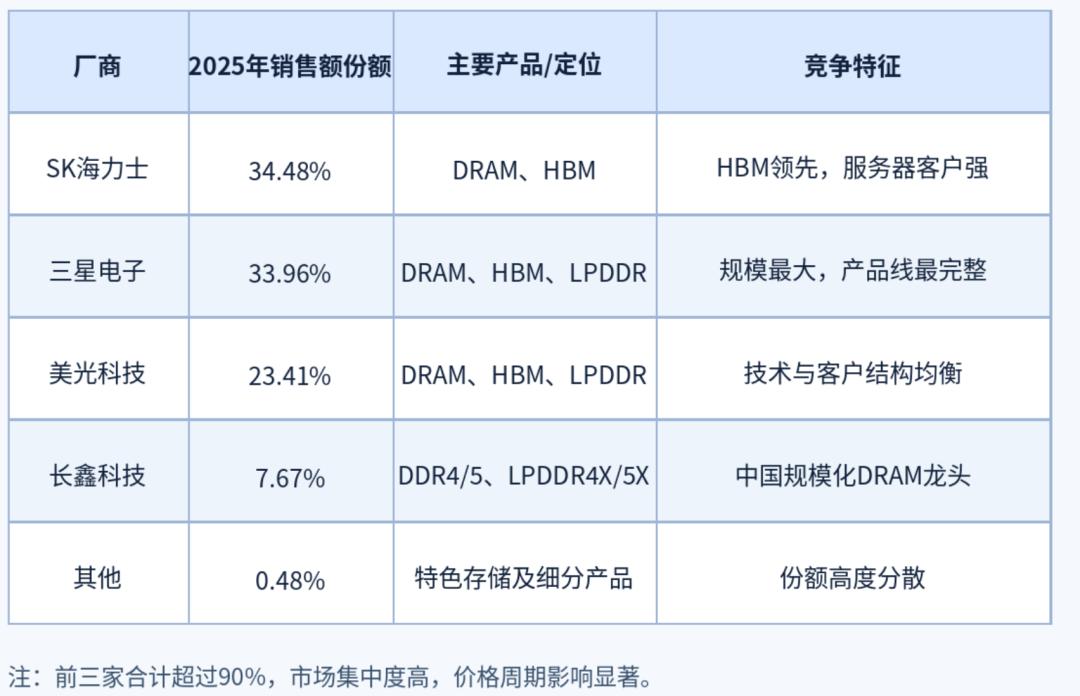
The DRAM market has a large space, as mobile phones, PCs, servers, automotive electronics, data centers and artificial intelligence all rely on memory. With the advancement of large model inference, cloud computing and data center construction, server memory and high-bandwidth storage still have growth potential.
The challenges facing the DRAM market are also obvious.
The industry has strong cyclicality, and prices may fall after supply is released; the capital expenditure threshold is high, and the construction of new production capacity requires years of time and massive funds; advanced equipment, materials, processes, intellectual property rights and customer certification together form high barriers to entry.
In terms of competition trends, two parallel tracks may emerge in the market in the future.
The first track is general-purpose DDR and LPDDR, with the core competitiveness lying in cost, yield, scale and customer coverage.
The second track is HBM, high-end server memory and advanced packaging, with the core competitiveness lying in technology collaboration, customer certification and supply chain capabilities.
If Changxin Technology wants to truly enter the global first tier, it should not only focus on the production capacity of general-purpose DRAM, but also make continuous breakthroughs in high-end products and global clients.
What is the RMB 29.5 billion raised funds used for?
Changxin Technology originally planned to raise RMB 29.5 billion through its IPO, which was mainly used for the transformation and upgrading of wafer production lines, DRAM memory technology upgrading and forward-looking technology R&D.
After the actual issuance scale was expanded, the company obtained more sufficient capital ammunition.
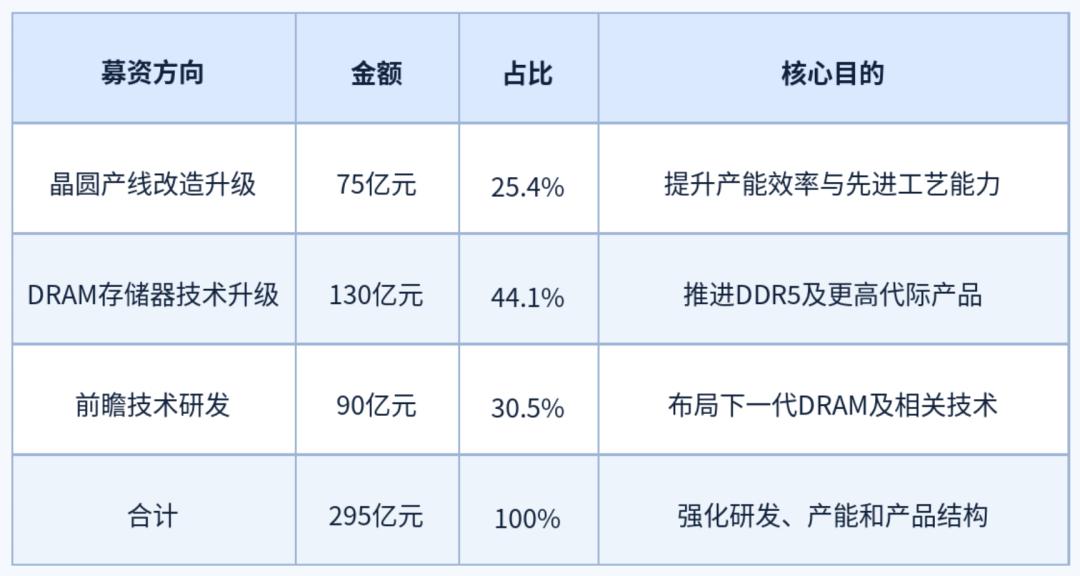
The logic for the use of this fund is very clear: to improve the efficiency of existing production lines, promote the upgrading of products such as DDR5, and invest in next-generation technologies. For memory enterprises, R&D and capacity expansion are both indispensable.
Without advanced products, production capacity can only lead to low-price competition; without large-scale production capacity, it is difficult for advanced products to generate stable revenue.
What the capital market really needs to observe is whether the company can achieve three goals after raising funds: first, capacity expansion should not come at the expense of yield and cash flow; second, whether the proportion of revenue from high-end products can continue to increase; third, whether R&D investment can be converted into customer certifications and large-scale orders.
For investors, the most important thing is not the "top profit margin"
The biggest inspiration of Changxin Technology's semi-annual report to the market is that domestic memory industry has moved from the stage of "whether we can make the products" to a new stage of "whether we can produce on a large scale, make sustainable profits and enter the high-end market".
But investors also need to stay rational. The 84.84% gross margin of core business not only reflects the progress of the enterprise in technology, scale and product mix, but is also deeply affected by the rising memory prices.
Historical experience shows that the high gross margin of the DRAM industry is usually cyclical. When prices fall, the pressure from fixed costs, depreciation and inventory will resurface.
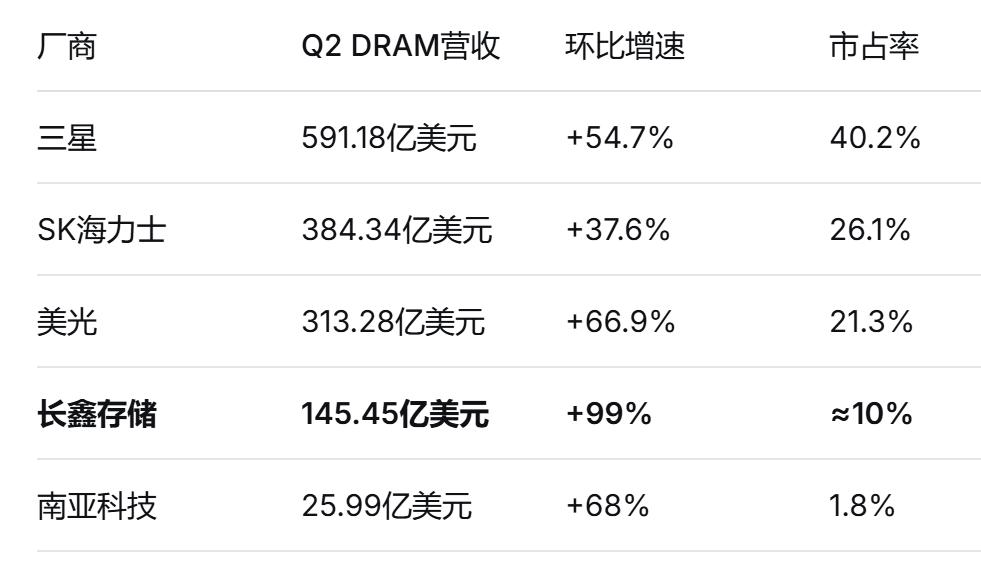
Therefore, to judge the long-term value of Changxin Technology, we should not only look at the profit of a single quarter, but also focus on its ability to go through industry cycles.
The author believes that the truly valuable indicators include: advanced process progress, volume production of DDR5 and higher-end products, capacity utilization, unit cost, customer structure, operating cash flow, and the profit bottom line in the downward price cycle.
My judgment is that Changxin Technology has completed the key step from domestic substitution to global competition, but there is still a long way to go, which needs to be proven by time and product performance, before it can catch up with global memory giants.
The most noteworthy part of the company is not the profit margin in a certain quarter, but whether it can convert the profits earned in this boom cycle into the admission ticket for the next technology cycle.
Memory chip development is a long-distance race.
This article is from the WeChat official account "Investment Banking Circle", the author is Ao Ye's Senior Investment Bank Sister, and it is published with authorization from 36Kr.