After 400 idol groups have emerged, is the underground idol business still easy to operate?
"The side I show to my fans is not the real me," says Miyuki.
What fans adore is that sparkling character on the stage. "But if you really quit being an idol and start dating this person, it will never end well." Miyuki has never thought of developing a romantic relationship with any of her fans.
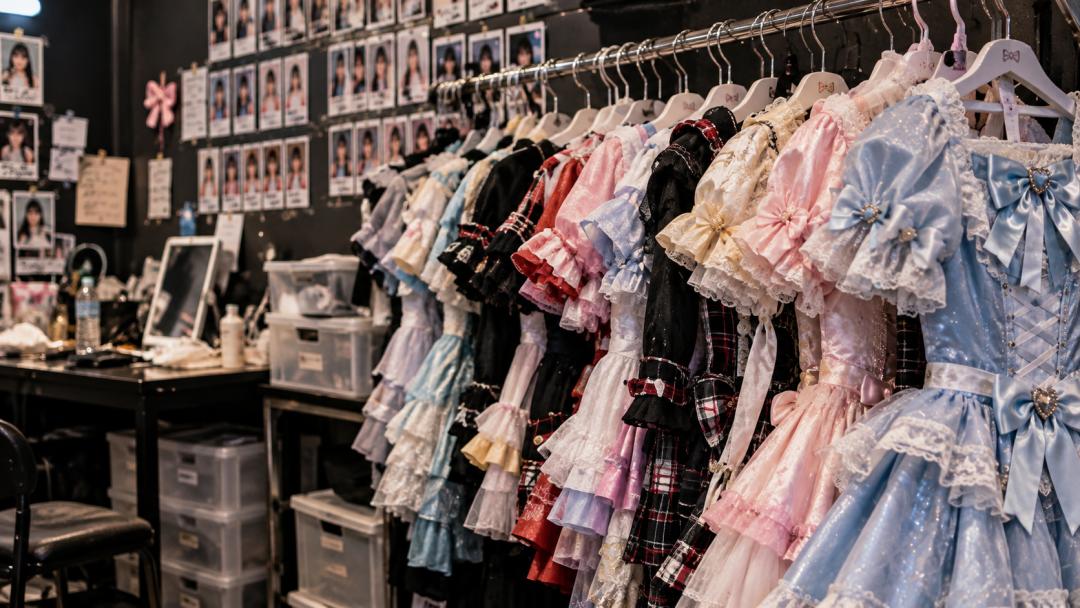
At a café in Beijing, the editorial team met Miyuki. She used to be a member and captain of an underground idol group in Beijing, which disbanded three years after its establishment. On the day of the meeting, she was still dressed exquisitely in a blue puff-sleeve dress, retaining a hint of the aura of a small-time idol. Miyuki speaks at a gentle pace, with her eyes curving into crescents when she smiles. After three years as an underground idol, she has collected 55 stage costumes.
Miyuki has also encountered some fans who are extremely difficult to deal with.
The most extreme one was a female high school student with a yandere personality. Everything seemed normal at the beginning of their contact, but later the girl posted online that she wanted to "kill Miyuki and eat her". Later, she started implying to other fans that "Miyuki had private contacts with her", but in fact, Miyuki never added her WeChat account.
At the special event meeting, the girl even leaned on Miyuki's shoulder and ate her hair. In that carefully designed close-distance space, the boundaries are often not as clear as people imagine. A single chat or a single glance may make fans feel that a special bond has formed between them and the idol.
And this special relationship itself is part of the underground idol business model. However, when this boundary gets out of control, it is often not only the fans who are affected. Similar stories are not rare in the underground idol circle. Miyuki's experience is just a common slice of this industry.
So, what is the current state of the underground idol business?
Music Finance has an exclusive conversation with Takeda (alias), an operator of underground idol projects, and Miyuki (alias), a former underground idol member and captain. From the perspectives of the operator and the artist respectively, they tell how underground idols make money, how they build and maintain relationships with fans, and the practical dilemmas the industry is facing now.
The number of underground idol groups has risen to 400: the market is bigger, but the business is getting harder
In September 2022, there were only 26 underground idol groups across the country. By 2023, the number of underground idol groups saw explosive growth, and this year was called the "first year of underground idols" by many people.
As of September 14, 2026, according to statistics from the Weibo account "Underground Idol Related Bulletin Board", a total of 400 underground idol groups have been established nationwide. Shanghai has the largest number with 110 groups, accounting for 27.5% of the total; Guangdong follows closely with 65 groups; Beijing ranks third with 38 groups.
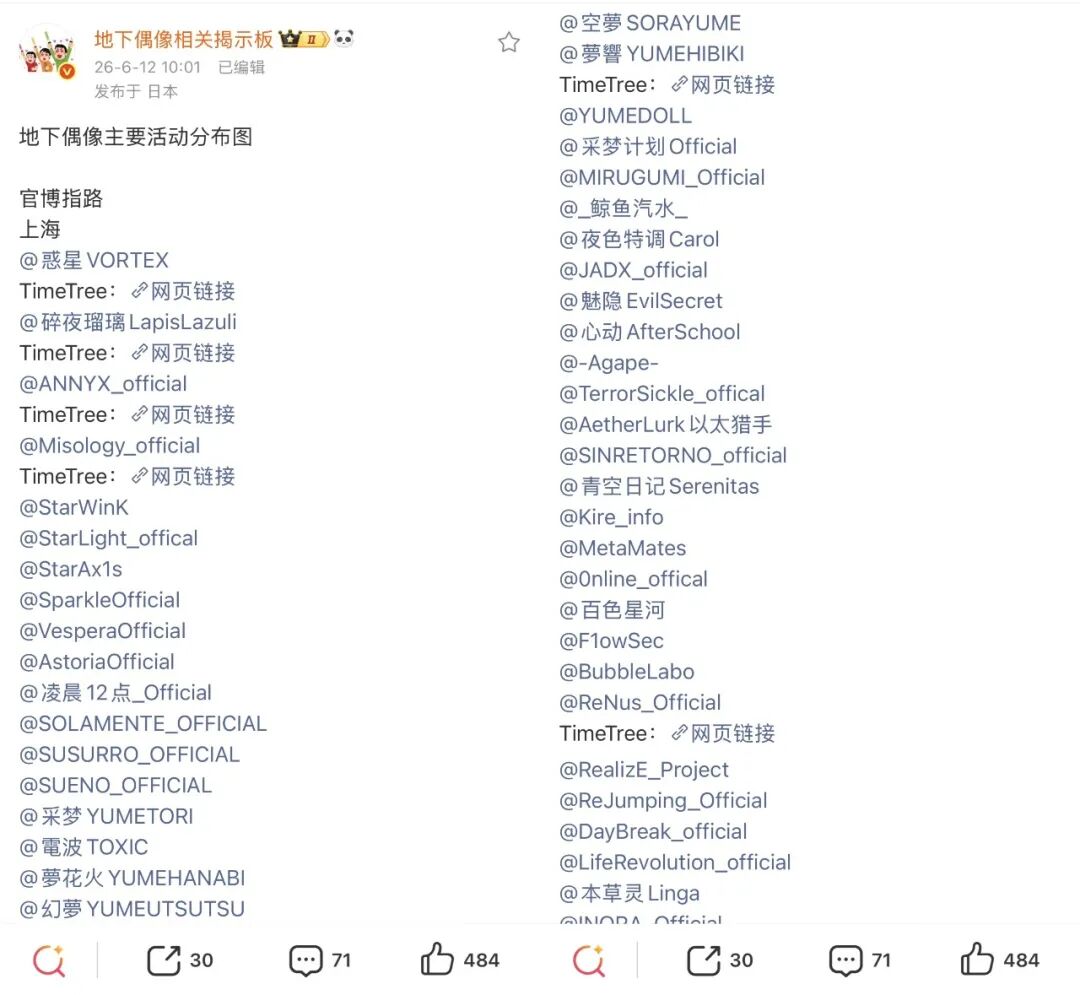
In terms of geographical distribution, Shanghai, Guangdong and Beijing have the largest number of groups, totaling 213, accounting for 53.3% of the national total. At the same time, central and western provinces and cities such as Sichuan, Chongqing, Hubei and Shaanxi have also formed a certain scale, and underground idols are spreading from a few first-tier cities to more regions.
However, the development across different regions is uneven. Provinces at the bottom of the ranking have a small number of groups, and some provinces even have only 1 group, which is still in the initial stage overall.
When the editorial team asked the owner of a livehouse in Beijing about the performance of underground idol shows, the owner said that the promotion of underground idol shows is usually released only two or three days before the performance, but every show can always attract hundreds of people, with extremely high fan stickiness.
But this stickiness has not been translated into higher ticket prices, instead, more and more free performances have emerged.
There are many reasons for this, and the unavoidable one is that in China, the underground idol culture is still in an awkward position so far. It has stable consumption and fan relationships, but it has never had a cultural space that can be publicly and continuously recognized. At the same time, the deep connection between underground idols and Japanese idol culture also brings more practical restrictions to its performance, dissemination and commercialization process in China.
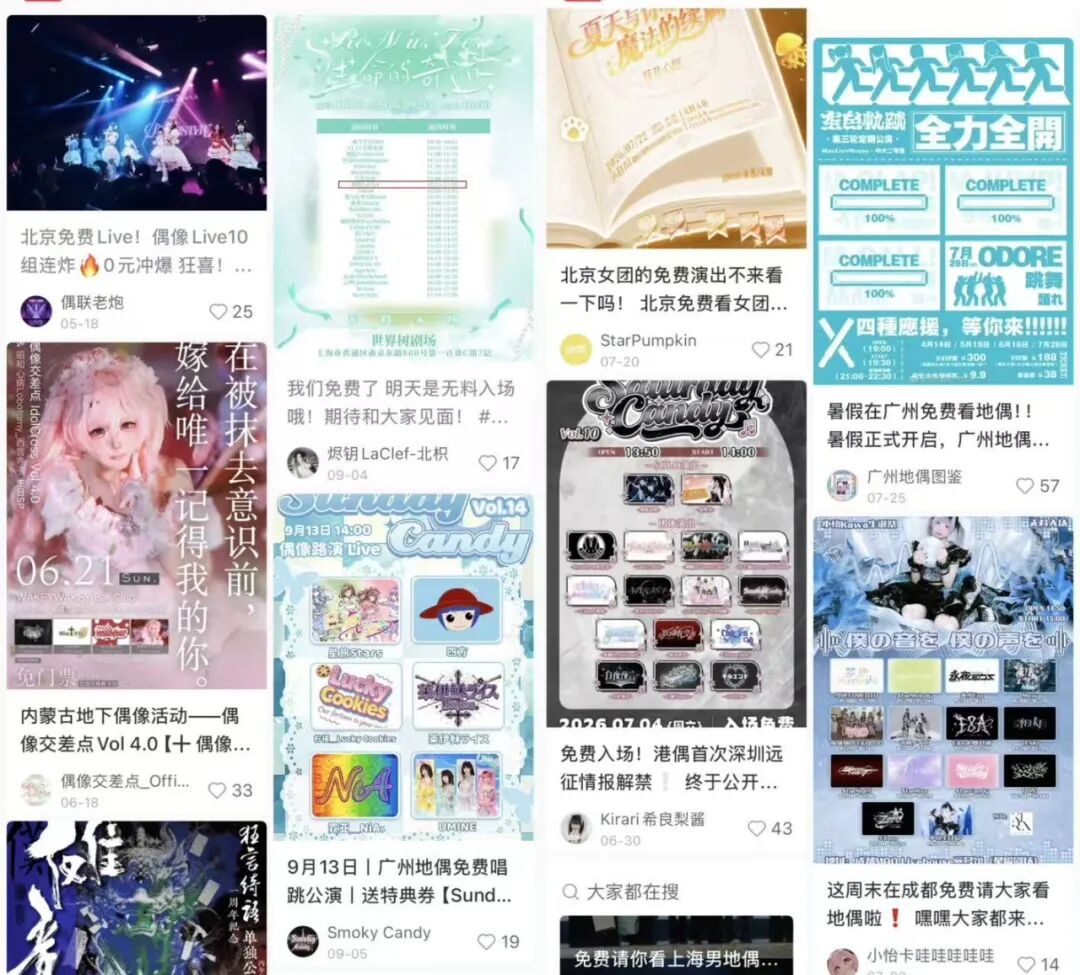
In the past, the ticket price of some groups could be close to 100 yuan or even higher, but as the number of groups increases, the ticket price keeps dropping. Now in some markets, selling 30 to 40 tickets for a show is already considered a good performance; to achieve the scale of 100 to 200 audiences per show as in the past, free performances are easier to achieve.
The problem arises: when the audience gets used to free performances, why would they pay for tickets again?
Takeda believes that this is precisely one of the most tricky problems in today's underground idol business model. In his view, the real valuable part of underground idols is not putting a group of boys and girls on the stage to sing and dance, but a complete consumption chain. Tickets are only a part of it, and the more important part is the special event (tokuten).
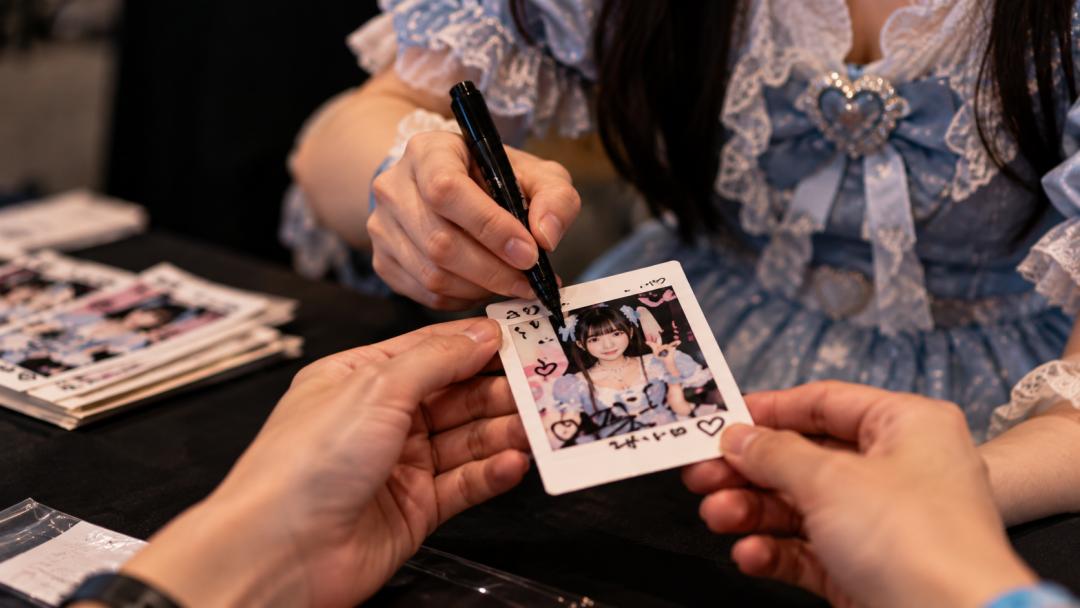
After a performance, fans can queue up to buy a "cheki". A "cheki" usually costs around 80 yuan, and the idol will take a photo on site, sign it, draw some small patterns, and chat with fans at the same time. It is different from the traditional merchandise sales, because consumers are not just buying a photo, but an irreproducible on-site relationship.
That's why it must be "a photo taken on the spot with a polaroid camera". Photos taken by mobile phones and then printed out don't count, photos printed by a printer don't count, and if the photo is blurry, you can only accept it. Because its core value is exactly that: this photo belongs to this specific meeting only.
Takeda summarizes this model with one keyword: limited.
Birthday merchandise is limited, on-site photos are limited, and the two minutes of face-to-face time with the small idol is also limited. This is a very typical high emotional value consumption. Fans do not buy a standardized product, but "I had a specific interaction with this person".
Therefore, the real consumption structure of underground idols is not completely the same as that of traditional performances. Tickets get you to the scene; the stage builds the idol's image; and the special event completes the real consumption conversion. This also explains why some groups can still rely on special events to maintain operation even with limited ticket revenue.
Takeda has operated three groups before. He told Music Finance that in the past, it was not particularly outstanding for a member to sell 20 to 30 special event tickets per show; but now, selling 10 tickets can already be considered a good performance.
Consumers have not disappeared suddenly, they are just scattered by the growing supply. In the past, the number of groups in a city was limited, and a new group still had a chance to be noticed by the market. Now, the entry threshold of the industry is getting lower and lower. Some people train seriously, create original works, choreograph dances and design costumes; while others are just a few young people forming a team, taking a few photos, posting on Weibo, and then starting to operate in the name of "underground idol".
When the supply increases rapidly while the total number of consumers does not expand simultaneously, price competition is inevitable. More and more free performances are also constantly changing consumers' perception of the price of underground idol shows.
That's why "free shows" seem to bring more performance opportunities to the industry, but from another perspective, they may be making the original price system harder and harder to maintain.
It's not hard to get on stage, but the hard part is to keep an underground idol group running for a long time
At underground idol performance sites, the "Call" shouted by the audience off the stage is a specialized skill.
The so-called "Call" refers to the slogans and cheering voices shouted by the audience in line with the rhythm of the songs. Underground idol songs usually leave sections without singing but only dancing, which are specially reserved for the audience to shout "Call". This interactive way is an important part of the atmosphere of underground idol live shows. Even a dozen people shouting together off the stage can create a very powerful effect, giving people who watch the show for the first time a strong on-site impact.
This ritual completed jointly by the stage and the audience also forms the unique viewing experience of underground idols that is different from ordinary performances.
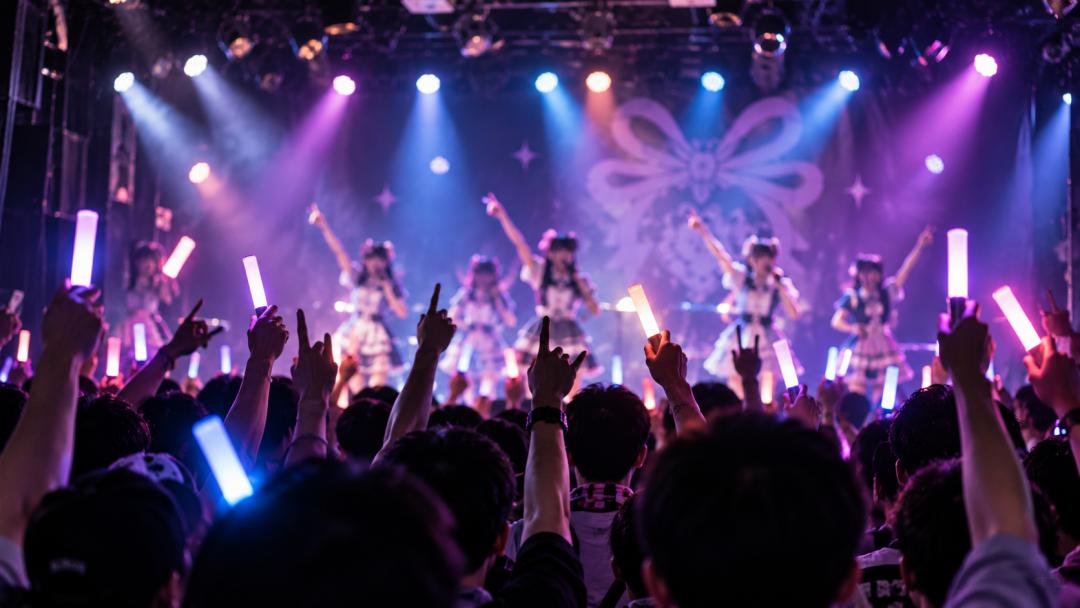
At the same time as the ticket price drops, the focus of consumption is changing. More and more fans do not regard watching the whole performance as a must, but take the special event as a more important consumption link.
This divergence is even summarized in the circle as "stage faction" and "special event faction". Some people think that not watching the stage but only going to the special event is essentially no different from engaging in soft pornography. Another view is that consumers themselves have the freedom to choose what content to consume, and whether they watch the stage or not should not be the standard to measure the consumption mode.
The two consumption logics correspond to two different understandings of underground idols. The stage faction values the performance itself, while the special event faction values the face-to-face relationship after the performance. And the business model of underground idols is precisely built on this face-to-face consumption. When more and more people come only for the special event, the importance of the stage itself will naturally be re-examined.
While the stage is being redefined, the threshold of getting on stage itself has never been very high.
Takeda gave a very specific answer: five songs are enough to support a performance of about 15 minutes. But that does not mean that five songs are easy to prepare. For many members without Japanese language foundation, the lyrics of Japanese-style underground idol songs are part of the training itself. They need to memorize romaji, practice singing, practice dancing, and turn the lyrics into muscle memory. After standing on the stage, their brain can not only focus on memorizing lyrics, but also complete dancing, interaction, self-introduction and communication with the audience at the same time.
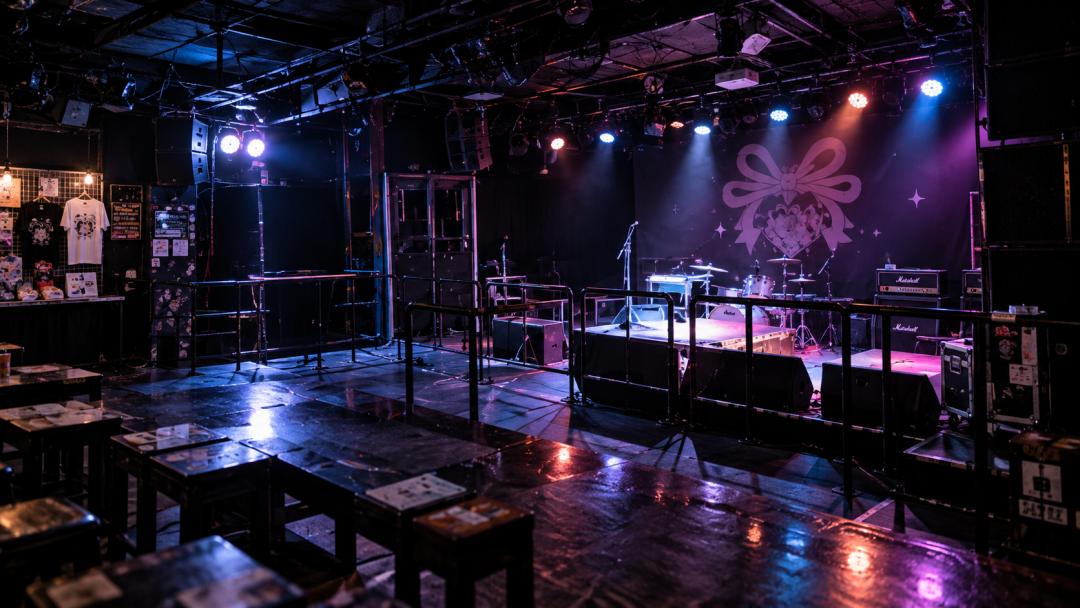
Therefore, what really makes underground idols hard to sustain is not getting on stage itself, but how to keep the group running for a long time after getting on stage.
An underground idol group is far less "light" as it seems. Assuming starting from scratch, a four-member group needs at least about 3 staff members, 4 sets of basic stage costumes, shooting and visual production, rehearsal space, song production, recording, choreography, performance equipment, special event shooting equipment and photo paper, as well as continuous content creation and performances.
Takeda roughly estimated that the basic costs including personnel, costumes, rehearsal, equipment and pre-production alone have already required an investment of 50,000 to 100,000 yuan. If you start making original music, the cost will continue to rise. From arrangement to recording to subsequent release, a song requires an investment of at least several thousand yuan; if you look for a more mature production team, the upper limit will be far higher than that.
More importantly, you can't just make one original song. Idols need to continuously launch new songs, new dances and new visual content to give fans a reason to come to the scene continuously.
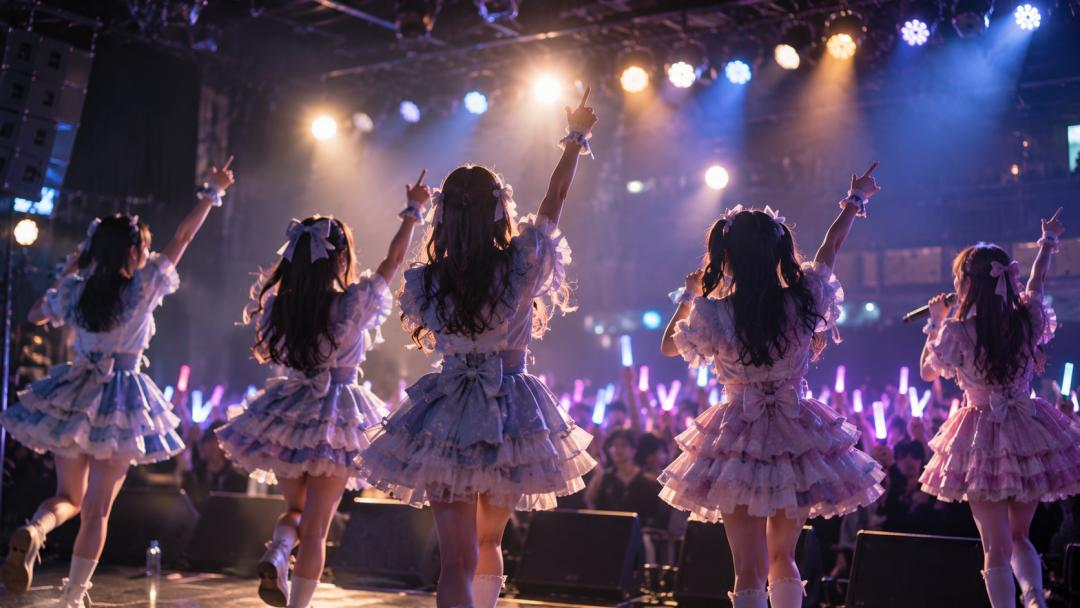
Therefore, underground idols are not "spending a little money to form a group and then making money by selling polaroid photos". It is essentially a content business, except that the way of content production is different from that of the traditional music industry.
Takeda believes that the best era for underground idols may have passed. When the entry threshold of the industry is getting lower and lower, what is really scarce is no longer "whether you can form a group", but whether you can keep the group running for three years, five years or even longer.
And the underground idol industry is highly dependent on "people" in its nature. Members may quit for reasons such as studies, work, family, or leave due to internal group conflicts, operator adjustments or income problems. For operators, the departure of a member often means more than just losing one person, it also means that the original stage arrangement, songs, visual content and even fan relationships need to be readjusted. Once the group changes members frequently, the emotional connection that fans have built with the members will change accordingly.
The premise for fans to be willing to consume is that they believe the group will still exist next month; the premise for them to be willing to buy merchandise is that they believe the members will not leave suddenly; the premise for them to be willing to invest emotions is that they believe this relationship will not end tomorrow.
Conclusion
"We are more like after-sales service, providing the emotional value of the special event. If everyone can watch your live stream for free online, they will think that chatting with you for free online is enough." Miyuki told Music Finance that underground idols cannot do live streams online, which is very different from the way internet celebrities make money.
What underground idols sell is not daily companionship, but one-on-one experience in specific occasions. Once the live stream turns this interaction into free content that can be obtained at any time, the consumption experience that originally required going to the scene to complete will no longer be so special.
This also means that the core asset of the underground idol business is never just a member himself/herself, but the scarcity of "meeting him/her". The stage, the special event and the polaroid photo are essentially all around the same thing: turning