What does it mean to have an additional "coastal city" in western China?
On September 16, the Pinglu Canal will be completed and open to navigation.
This is the first national-level coordinated canal project connecting rivers to the sea since the founding of the People's Republic of China. This strategic waterway, with a total length of 134.2 kilometers and a total investment of about 72.7 billion yuan, starts from the Pingtang River estuary in the Xijin Reservoir area of Hengzhou City, Nanning in the north, passes through Luwu Town, Lingshan County, Qinzhou in the south, and leads directly to the Beibu Gulf along the Qinjiang River, allowing 5,000-ton vessels to pass through.
As a result, as the only coastal province in the western region, Guangxi has filled the key gap of direct access from inland rivers to seaports. Nanning has broken through the restriction of "not far from the sea but unable to reach the sea" and become a "coastal city in the true sense". Some people commented that this long-underperforming western "weak provincial capital" has finally got the chance to stand in the "center of the stage".
The benefits go far beyond Guangxi's one city and one region. For a long time, the inland hinterland of southwest and central China is rich in resources and has a solid industrial foundation, but it is constrained by the geographical bottleneck of "being close to rivers but hard to reach the sea". The inland water transport of goods in southwest China to the sea has to detour hundreds of kilometers through the Greater Bay Area, making it difficult to fully release the opening potential.
After the Pinglu Canal is open to navigation, this situation will be completely rewritten — the inland shipping distance for goods from southwest China to the sea can be shortened by more than 560 kilometers, the comprehensive logistics cost is expected to be reduced by 18%~30%, and the annual social transportation cost can be saved by more than 5 billion yuan.
Outside the southwest region, many provinces including Guangdong, Jiangsu, and Hainan have taken the lead in sensing the new round of competition and cooperation opportunities, and are re-examining their own access to channels, ports and even industrial function layouts to find possible access points.
Hub
As the capital city and the starting point of the canal, Nanning is undoubtedly a direct beneficiary of this historic opportunity.
Just a few days ago, Nanning Port welcomed international navigation ships for the first time, realizing the historic breakthrough that foreign trade seagoing vessels can reach Nanning inland port directly from Beibu Gulf seaports.
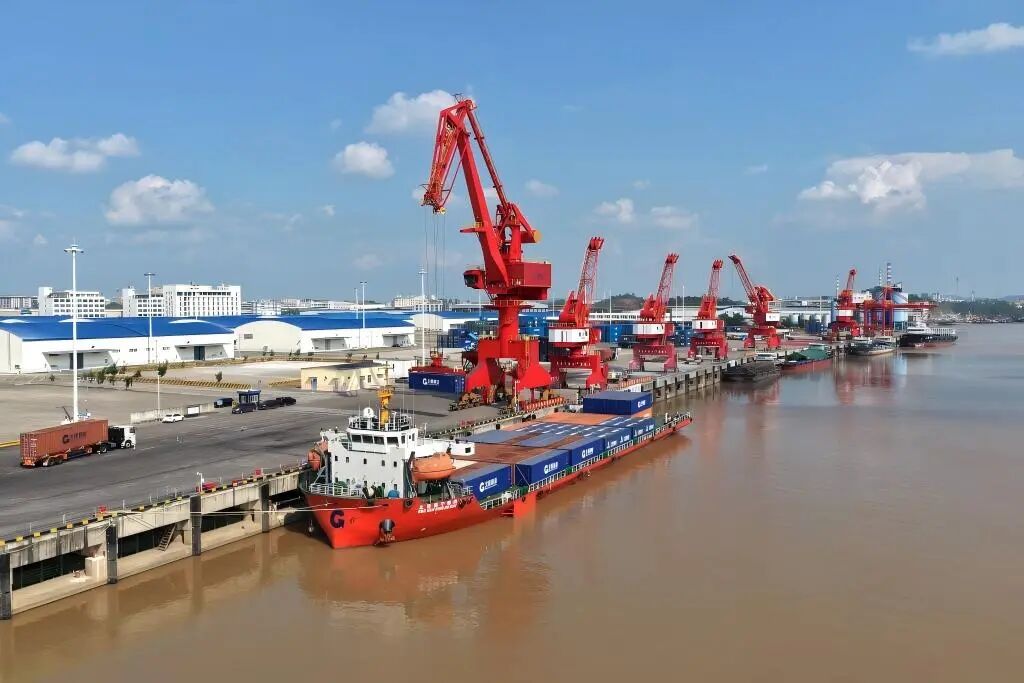
The first international navigation ship docked at Nanning Port. Image source: Xinhua News Agency
Transforming from an inland city to a river-sea hub, in the words of local media, "What has changed is not only the logistics route, but also the inland thinking that the city has had for thousands of years."
For a long time in the past, "weak provincial capital" was a label that Nanning could not get rid of. Within the province, Nanning is less famous than Guilin, and its industrial strength is weaker than Liuzhou. As the capital, Nanning's visibility in the whole region is not high; across the country, its economic primacy ratio has long been at the lower level nationwide.
At present, the favorable conditions for reshaping the competitive position of the economy and industry have arrived.
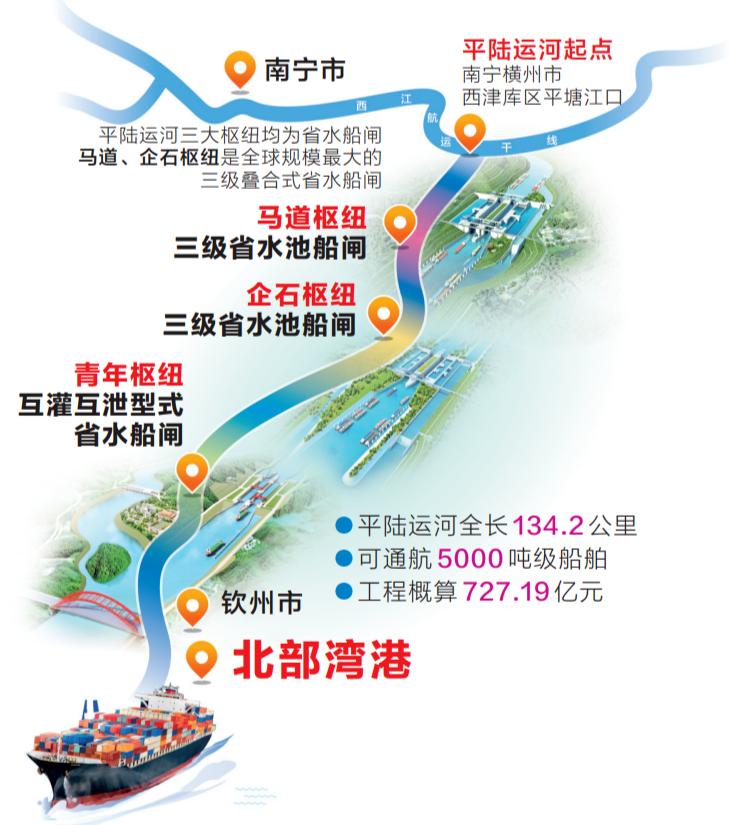
Schematic diagram of the Pinglu Canal. Image source: Guangxi Daily
According to relevant calculations, the comprehensive logistics cost of local enterprises in Nanning going to sea via the Pinglu Canal will drop by 30%~40%. Take BYD's Nanning project as an example, it currently imports hundreds of thousands of tons of spodumene every year. After the goods arrive at Qinzhou Port, if all are transported via the Pinglu Canal, more than 10 million yuan can be saved in transportation costs alone every year; the transportation cost per ton of bauxite can be saved by more than 30 yuan; the cost of "bulk to container" for grain is reduced by about 20%...
Furthermore, with the opening of logistics in the southwest and even a wider hinterland, Nanning is expected to press the "accelerator" to build the core hub of the New International Land-Sea Trade Corridor in the western region.
The industrial agglomeration effect has already appeared. From January to July this year, 148 new projects with an investment of more than 50 million yuan were signed in the key implementation area of the Pinglu Canal Economic Belt in Nanning, covering new energy and batteries, high-end equipment manufacturing such as ships, forest product processing, artificial intelligence and other fields.
In order to more accurately seize the favorable opportunities, Nanning is accelerating the construction of a characteristic industrial system adapted to the canal, and aiming at a brand new goal —
Promote the "4+3+N" advanced manufacturing clusters to develop towards the sea, that is, build four 100-billion-yuan industrial clusters including new energy, artificial intelligence and new generation information technology, intensive processing of non-ferrous metals and key metal materials, and food processing, and three 50-billion-yuan industrial clusters including machinery and high-end equipment manufacturing, modern green chemical industry, forest product processing and paper making;
Develop N emerging and future industries such as low-altitude economy and bio-manufacturing, vigorously develop intensive processing and export-oriented industries, promote the in-depth integration of manufacturing with port logistics and cross-border trade, and build an important undertaking place for advanced manufacturing that connects the Guangdong-Hong Kong-Macao Greater Bay Area and faces ASEAN.
Water Network
Measured in the national water transport map, the Pinglu Canal is a key channel that can leverage the global logistics pattern.
In addition to Guangxi, the most direct beneficiary is the southwest region.
Take Sichuan as an example, in the past, when goods were transported by water to the sea, they either traveled eastward along the Yangtze River for more than 2,000 kilometers to Shanghai, or went south via rail-sea intermodal transport to ports such as Beibu Gulf, with many transshipments, long time consumption and high cost. After the Pinglu Canal is open to navigation, the inland shipping distance for goods from southwest China to the sea via the Pinglu Canal is shortened by more than 560 kilometers compared with the traditional route, and the shipping distance to major ASEAN ports is greatly shortened.
This is equivalent to opening a closer seaport for the entire southwest region. Sichuan and Chongqing's new chemical materials and equipment manufacturing, Yunnan's green aluminum, Guizhou's photovoltaic products, and Hunan's construction machinery — all these industrial products extremely sensitive to logistics costs can greatly reduce the cost of going to sea through the canal.
A set of intuitive data shows that Zhang Zhiwen, Deputy Secretary-General of the People's Government of Guangxi Zhuang Autonomous Region and spokesperson of the Autonomous Region Government, said a few days ago that the comprehensive logistics cost of southwest China's goods going to sea via the Pinglu Canal will be reduced by 18%~30% compared with the traditional route, saving more than 5 billion yuan in social transportation costs every year.
Zhang Yansheng, a world economic expert, told City Evolution that in the past, China's opening-up was dominated by the Pearl River Delta, Yangtze River Delta and Beijing-Tianjin-Hebei in the eastern coastal areas and opened to the west, while the opening-up level of the western region was relatively backward. An important reason is that the western region's access to the sea has always been unobstructed. As an important part of the New International Land-Sea Trade Corridor in the western region, the Pinglu Canal is of great significance for the opening-up and development of the southwest, central-south, northwest and other regions along the line.
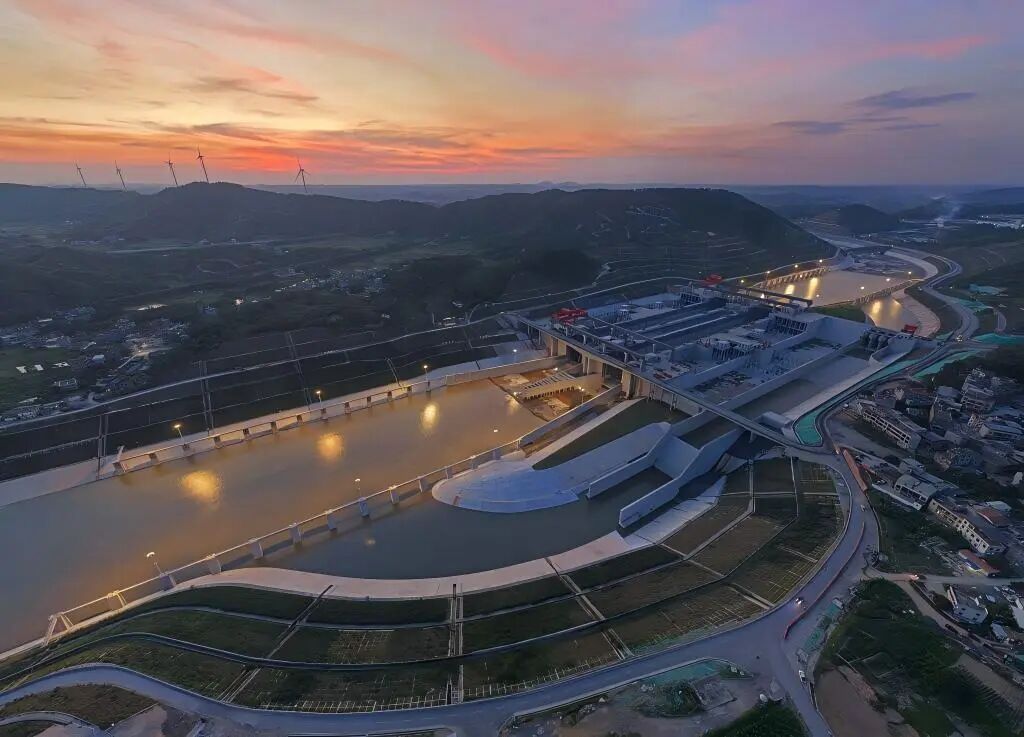
Madao Hub of the Pinglu Canal. Image source: Xinhua News Agency
Looking further, if the Pinglu Canal is placed together with the Xiang-Gui Canal and Zhe-Gan-Yue Canal which are under demonstration, a water transport layout with east-west complementarity and north-south connection is taking shape. Economist Pan Helin told City Evolution that this makes the national water transport network change from the "strong east-west while weak north-south" pattern to a three-dimensional "interconnected grid" pattern, and the functional positioning of ports across the country will also be reshaped accordingly.
More regions are joining this "group chat" — taking Jiangsu as an example, in the vision of local media, after the Pinglu Canal and Xiang-Gui Canal are completed and open to navigation one after another, goods from southwest China enter the Xijiang River from Beibu Gulf via the Pinglu Canal, cross basins through the Xiang-Gui Canal to access the Yangtze River system to reach Jiangsu, and then radiate to North China via the Beijing-Hangzhou Grand Canal. "On this major water transport artery, Jiangsu is an indispensable hub".
There is also Hainan, which has special policies such as "zero tariff" for its free trade port and tariff exemption for processing value-added products. However, as an island economy, the scale of local goods sources and the depth of its economic hinterland are relatively limited. If the international shipping network of Yangpu and the system of Hainan Free Trade Port can be truly connected with the industrial demand of the southwest hinterland, the Pinglu Canal may add a relatively insufficient economic depth for Hainan in the past.
Some coordinated actions have been taken in advance. In April this year, Hainan and Guangxi signed an agreement, proposing to build a logistics channel of "Yangpu Port - Beibu Gulf Port - Pinglu Canal", and jointly build a leading highland for opening-up and cooperation facing ASEAN.
Coordination
What the Pinglu Canal has built is not only a logistics channel for north-south inland water transport in China, but also a new bond for China to deepen foreign economic and trade cooperation. Data shows that in 2025, the bilateral trade volume between China and ASEAN exceeded the trillion-dollar mark for the first time, reaching 1.05 trillion US dollars, a year-on-year increase of 7.4%.
Lei Xiaohua, Deputy Director of the Institute of Southeast Asian Studies of Guangxi Academy of Social Sciences, once said that after exceeding the trillion-dollar mark, the bilateral trade between China and ASEAN will see a new round of growth, and the supporting driving force lies in the general trend of the global economic center moving eastward. Southeast Asia is in an economic "rising channel", and its growth, infrastructure construction and the expansion of the consumer market have formed strong import demand, which is naturally complementary to China's production capacity.
As the nearest seaport of western China facing ASEAN and also an important hub seaport of the New International Land-Sea Trade Corridor in the western region, Beibu Gulf Port pressed the development accelerator as early as 2019 when the "Overall Plan for the New International Land-Sea Trade Corridor in the Western Region" was approved. From 2020 to 2025, the container throughput of Beibu Gulf Port has maintained a double-digit growth rate, ranking among the top major coastal ports in China.
However, compared with other mature seaports, there is still a quantitative gap in the scale of foreign trade in Beibu Gulf. Data shows that in 2025, the annual container throughput of Beibu Gulf Port exceeded 10 million TEUs, entering the ranks of 10 million TEU large ports. But in the same year, the foreign trade container throughput of Shenzhen Port alone in the Pearl River Delta reached 33.156 million TEUs, more than three times that of the Beibu Gulf port group.
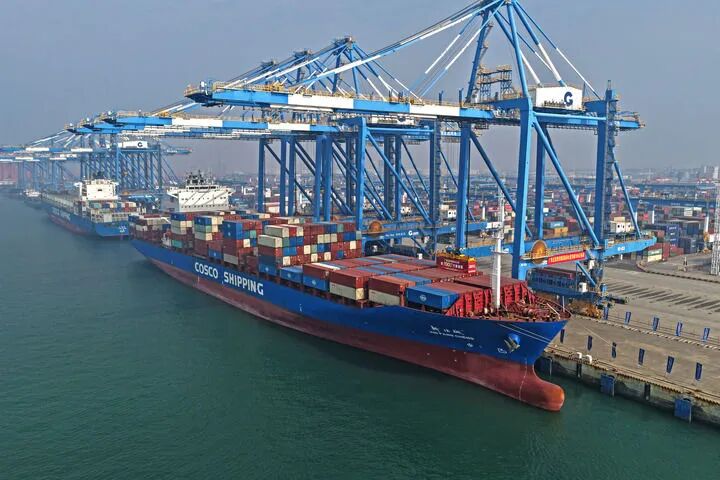
The 10 millionth TEU is being hoisted at Guangxi Beibu Gulf Port. Image source: Xinhua News Agency
At present, with the help of the Pinglu Canal, Guangxi's freight transport is expected to usher in a new round of upgrading. Lei Xiaohua said that the opening of the canal will reshape the organization mode of China-ASEAN trade and transportation.
After the liner routes are fully operational, enterprises can further expand their procurement scale and form stable trade orders, among which bulk cargo will benefit first. Vietnam, Thailand, Malaysia, and Indonesia have great potential for cargo source growth. Cargo sources such as Vietnamese wood chips, Thai rubber, and Malaysian palm oil can form effective cargo sources only when they are connected to the canal via Beibu Gulf Port.
However, as Zhang Yansheng analyzed, compared with the surrounding large ports, Beibu Gulf Port still has a large gap in logistics, transportation, warehousing and other links, and needs to improve step by step.
Some people point out that one of the core challenges after the Pinglu Canal is put into operation is to break the dependence on the original logistics routes. The traditional Xijiang channel in the Pearl River Delta has formed a stable interest pattern and low-cost inertia. If the Pinglu Canal wants to attract the return of cargo sources from Beibu Gulf Port's ocean routes, it must have an absolute advantage in comprehensive logistics costs (including transshipment and time loss).
But this does not mean that Beibu Gulf needs to compete with large ports for the same market share. In terms of coordinated port development, the cargo flow brought by the Pinglu Canal should be diverted rather than replaced. The Greater Bay Area ports have mature ocean route networks, perfect port services and rich foreign trade ecology, and are still the core hubs for China to connect with Europe and the United States for ocean trade.
Beibu Gulf ports will focus on near-sea trade with ASEAN, bulk cargo transportation in the southwest hinterland and river-sea intermodal transport business, forming a healthy pattern of differentiated division of labor and complementary development with the Greater Bay Area ports.
As Zhang Yansheng said, Guangxi Beibu Gulf Port, Guangdong Zhanjiang Port, and Hainan Yangpu Port are connected via the Pinglu Canal, forming an interconnected combined port group, which will bring greater benefits to all parties.
This article is from the WeChat official account "City Evolution", authors: Cheng Xiaoling, Liu Xuqiang, published with authorization from 36Kr.