The products have been successfully integrated into the world's leading Tier 1 production lines in batches, and Zhilai Embodied Intelligence aims to create out-of-the-box generalizable robots for industrial scenarios.
The labor shortage in factories has long been a normal state in the industry, especially in the automobile production sector where the manufacturing process involves hundreds of links. Processes such as grinding, high-speed snapshot inspection and assembly have not yet achieved large-scale automation, while the number of professional skilled workers is declining.
At the WRC site last month, many customers gathered around the robots of Zhilai Embodied Intelligence to measure the cycle time, evaluate efficiency, and discuss the accuracy, speed, service life and return on investment of the robots. Compared with the eye-catching "performances" of robots, they are more concerned about a practical problem: can machines work as fast and well as humans?
How to make robots truly integrated into the factory workflow is the most intractable problem in the current embodied intelligence industry. In response to this, Zhilai Embodied Intelligence, founded in 2021, is offering its own solution to the industry.
According to introductions, relying on its full-stack self-developed technical system of "world model + physical AI", the robot products of Zhilai Embodied Intelligence including high-speed snapshot inspection, force-controlled grinding and ironing have now been put into mass use in multiple production lines of global leading auto parts manufacturers.
"What robots need to solve is not only the parts of factories that can already be automated, but also the complex tasks that are still difficult to cover after traditional automation, and they need to be able to do the remaining dirty, arduous and strenuous work," said Yu Qiong, Chairman and CEO of Zhilai Embodied Intelligence.
Starting from the Industrial Site
Let Robots Truly Go to Factories to Work
"We are a composite team that has know-how in the automotive industry and understands AI algorithms," said Yu Qiong.
Yu Qiong chose to join Zhilai Embodied Intelligence in early 2024. Before that, he had been deeply engaged in the automotive industry for nearly 30 years, and once served as STA and procurement executive at Ford Motor; the technical R&D team of Zhilai mainly comes from the Alibaba AI team, the reinforcement learning team of Nanjing University, etc., with experience in artificial intelligence algorithms, robot learning and engineering implementation.
The technical route of Zhilai Embodied Intelligence can be summarized as "world large model + physical AI". The team breaks down the capabilities of robots into four modules: vision that provides perception capabilities, the brain responsible for decision-making, the cerebellum that controls the movement of the main body, and the end effector that completes execution, thus forming a complete technical closed loop.
Take the grinding scenario as an example. You can imagine that traditional grinding is like "blindly shaving" potato skins. No matter what the potato looks like, it is cut into a fixed shape, which is prone to over-grinding or under-grinding.
Zhilai Embodied Intelligence has built a set of operation system of "perceive first, execute later" based on the multi-modal perception model. The grinding robot first uses the vision system to accurately identify the surface structure of each "potato", then dynamically plans the trajectory in real time to achieve profile fitting, and only processes the burr parts. Compared with the "blind grinding" of the traditional method, it realizes the reconstruction of the operation logic of "see then grind".
At the execution level, Zhilai's robots have met the industrial-grade requirements for high precision, high cycle rate and long service life in terms of repeated positioning accuracy, maximum linear speed of the end, continuous working endurance and other indicators.
At the level of brain algorithms connecting perception and execution, Zhilai Embodied Intelligence has built a two-layer architecture of "general large model + expert model", which makes the model accuracy reach 99%.
But Yu Qiong admitted frankly that 99% is far from the end point. "The accuracy required by industrial scenarios is 99.99%, otherwise the production lines cannot be connected. To go from 99% to 99.9%, the R&D investment will double; to reach 99.99%, the investment will double again."
Following the principle of "from the scenario, to the scenario", Zhilai Embodied Intelligence has formed multiple product lines around the automobile production chain, among which high-speed snapshot, ironing and grinding robots have achieved mass production and shipment, the hooking, assembly and handling robots have completed on-site verification, and other dexterous hand robots are in the small trial stage of R&D.
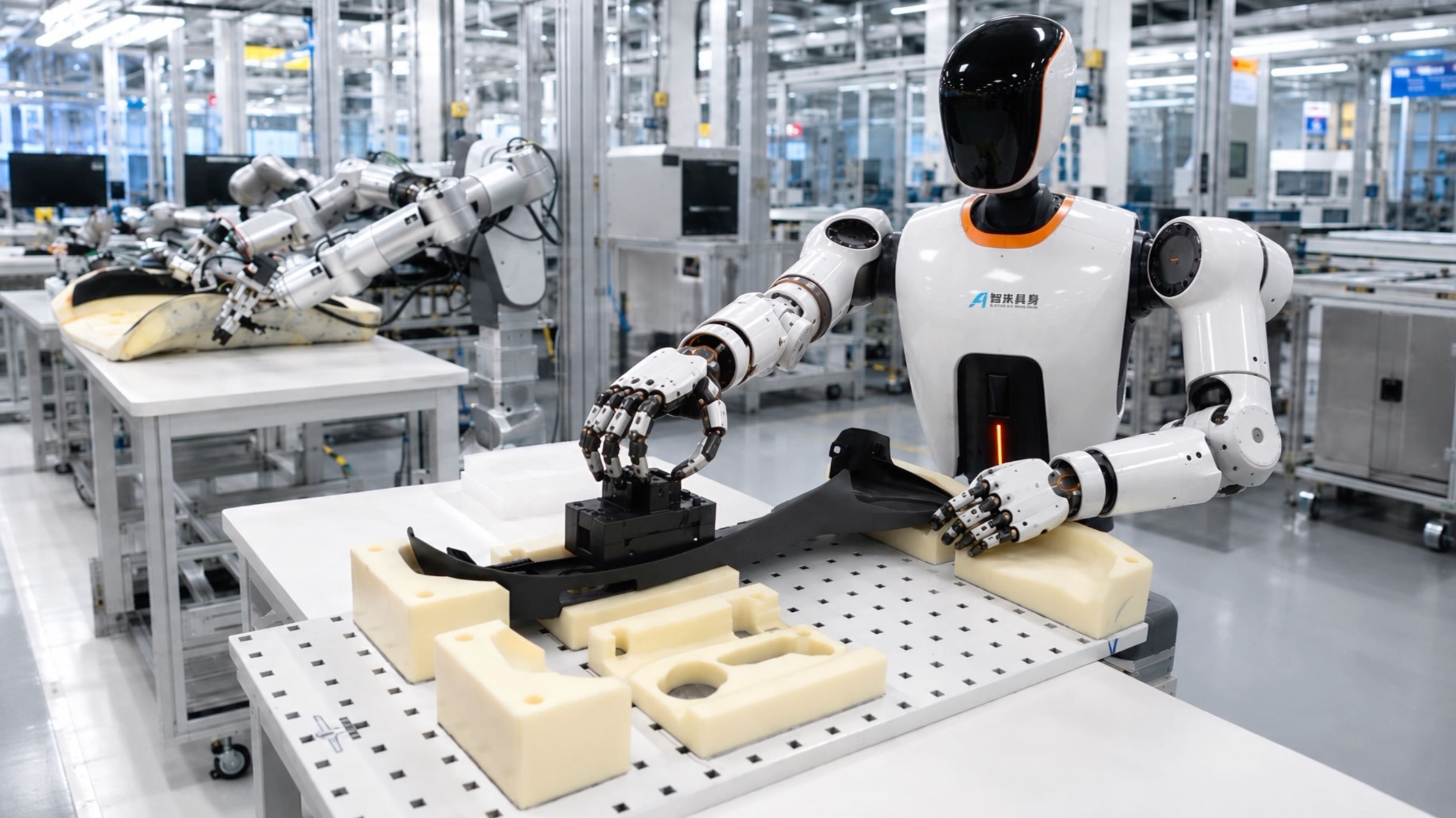
Schematic Diagram of Zhilai Embodied Intelligence Robot Products Operating in Industrial Scenarios
Revenue Comes From Automotive Industrial Production Lines
Expand to AI Hardware Manufacturing in the Future
After completing the product verification from 0 to 1, Zhilai Embodied Intelligence is in the stage of large-scale growth from 1 to N. Yu Qiong revealed that with the continuous implementation and repeated purchase of robot products in real industrial scenarios, the company's sales have maintained rapid growth.
At present, the high-speed snapshot inspection robots have been applied in batches in various products such as metal parts and interior parts, and have received orders from leading global automotive seat customers such as Adient and Lear Corporation. Among the world's top 20 auto parts suppliers, 4 have become long-term partners of Zhilai Embodied Intelligence.
To rapidly increase production capacity and reduce production costs, Zhilai Embodied Intelligence reached a production line cooperation with a listed company for a production capacity of thousands of sets last year. At present, the first production line jointly built by the two sides has been officially put into use.
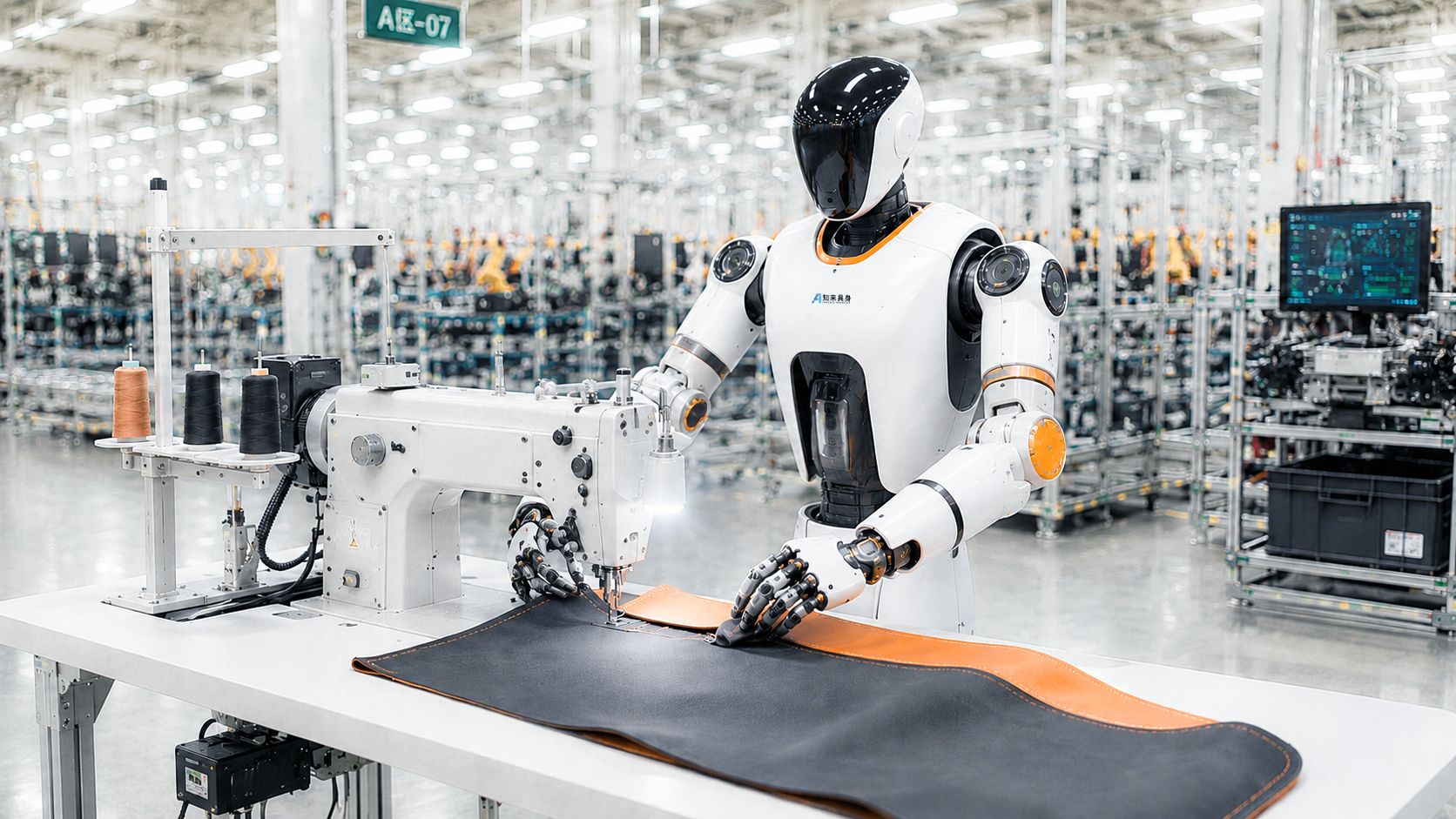
Schematic Diagram of Industrial Scenarios That Zhilai Embodied Intelligence Is Promoting for Implementation
"All our revenue comes from industrial production lines, with no performances, entertainment or education scenarios," Yu Qiong said. Zhilai Embodied Intelligence takes the automotive industry as its basic market, and will gradually expand to industries such as AI hardware manufacturing in the future.
At the product level, Zhilai Embodied Intelligence is evolving from "single machine with single function" to "one machine with multiple functions", and plans to launch robot products with 3 to 5 skills at the same time in mid-2027.
"Our ultimate goal is to allow customers to use the robots right out of the box," Yu Qiong said.