In fact, SERES has long had other plans.
In fact, Seres has long shown early signs of preparing for a more independent cooperation model.
Whether it is Saido Technology launching AIVA and introducing Volcano Engine to provide large model and intelligent cockpit technologies, or earlier carrying out embodied intelligence cooperation with Volcano Engine through its subsidiary Phoenix Technology, it all proves that Seres has been looking for new technology partners outside Huawei.
The practice of organizing products independently and selecting partners on a project-by-project basis has been rolled out in new businesses. Now that AITO has shifted to an "asset-light" cooperation model, Seres has the opportunity to bring more independent choices back to its most important automotive business.
According to today's news, the smart selection vehicle cooperation between Huawei and Seres will be adjusted this week. In terms of product, marketing, sales and services, the leadership will shift from Huawei to Seres, with Huawei providing support. The report cited sources familiar with the matter saying that Harmony Intelligent Mobility will allocate more resources to the Luxeed, Xiangjie, Zunjie and Shangjie brands.
Under this arrangement, more decisions for AITO will be made by Seres. There is also the possibility of rearranging technology procurement and service expenditures.
The two sides have repeatedly negotiated the pricing power of AITO in the past. On July 4, 2022, when Yu Chengdong invited Zhang Xinghai to the stage to announce the price of AITO M7, he revealed that as of noon that day, the Huawei team was still arguing with Zhang Xinghai, hoping to lower the price further.
This in-depth cooperation covering product and operation not only helped AITO build its business, but also formed a continuous procurement and charging relationship. Now Seres needs to re-evaluate which capabilities are worth continuing to purchase and which tasks can be handed over to its own team.
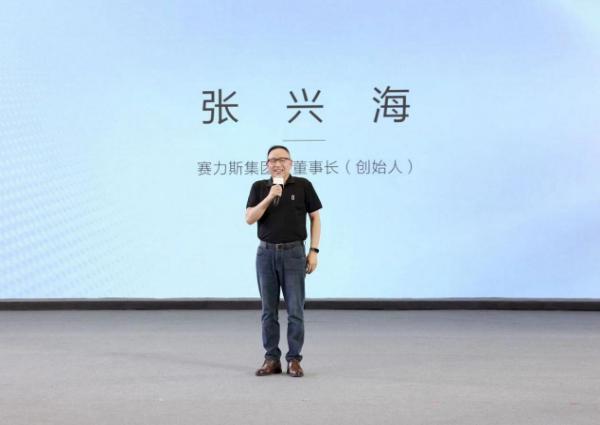
Zhang Xinghai at the first batch of delivery event for AITO M7, August 2022.
Seres has actually started preparing for a more flexible cooperation model long ago. In June this year, Zhang Zhengyuan, as the chairman of Saido, launched AIVA, introducing Volcano Engine to provide large model and cockpit-related technologies, with Seres responsible for vehicle engineering and manufacturing support, and CATL participating in energy solutions.
From an operational perspective, Saido can be regarded as a correction: Seres is looking for opportunities to try another profit model outside the AITO business.
Only when automakers organize products independently and purchase required capabilities from different companies can their existing R&D and channel investments have more opportunities to play a role. For Zhang Xinghai, this adjustment of AITO provides room to improve revenue on the existing business.
Seres will start with procurement and marketing
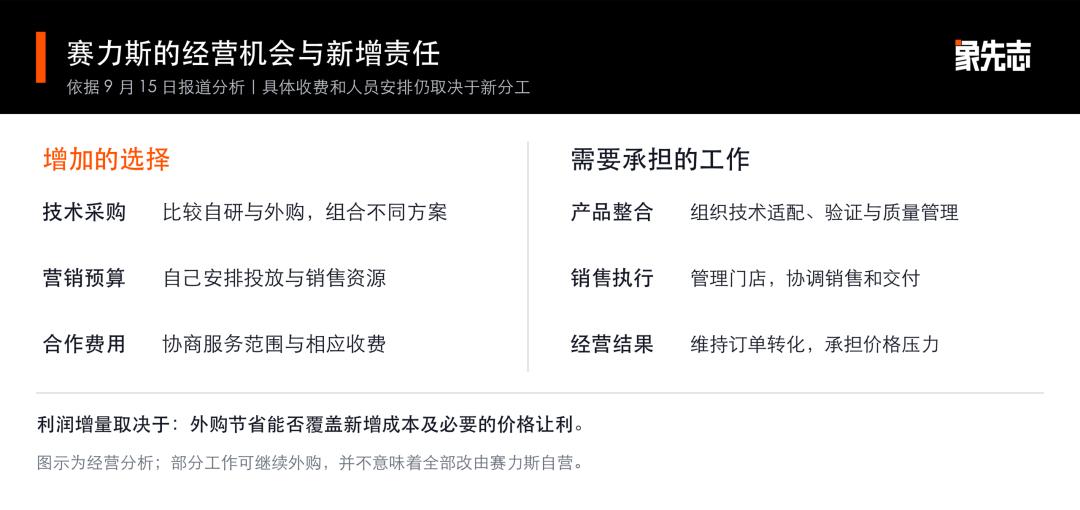
The "asset-light" model at least leaves one possibility: gradually adjust the previous in-depth cooperation covering product and operation to on-demand procurement. Seres will independently select solutions for intelligent driving, intelligent cockpits and various components according to the needs of different vehicle models. Marketing, sales and services can also be re-divided, either undertaken by its own team or continuously purchased from partners.
As we analyzed before, Seres has been bearing two expenditures at the same time: purchasing Huawei's technologies and services, and building its own R&D and channels. The former maintains the existing business, while the latter adds more choices for the future. Before the new team and new technologies are fully utilized, both expenditures have to be paid.
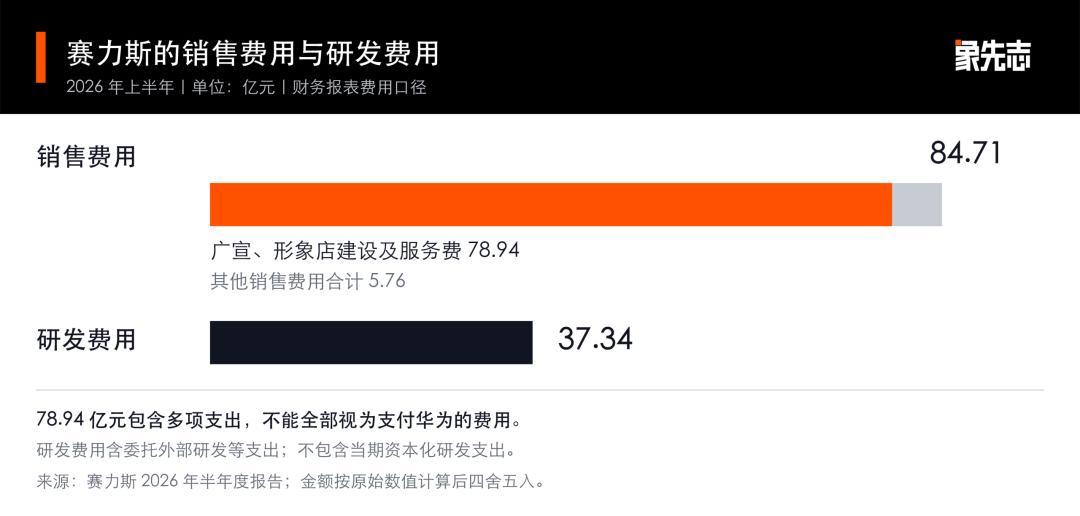
In the first half of 2026, Seres achieved revenue of 57.493 billion yuan, and the net loss attributable to shareholders was 1.717 billion yuan. In the same period, sales expenses reached 8.471 billion yuan, and R&D expenses reached 3.734 billion yuan.
The loss cannot be entirely attributed to cooperation costs. Impairment in the first half of the year reduced the net profit attributable to shareholders by about 1.751 billion yuan. The company explained that affected by factors such as technology iteration, the revenue of existing vehicle models failed to meet expectations, which weakened the profit base of related intangible assets.
Development investment needs to be recovered through subsequent sales, so product selection directly affects profits. When more decisions are handed over to Seres, it can not only control costs in advance, but also assume corresponding responsibility for trial and error.
Specifically for a new vehicle, cost adjustment has already started from the project approval stage.
The technical solution and configuration of a vehicle directly affect the cost. Seres has accumulated capabilities in extended-range electric systems, electric drives and other fields. In April this year, it still showcased its self-developed extended-range technology at the Beijing Auto Show. Expanding the application of existing solutions has the opportunity to spread development investment and reduce some external procurement demands.
Continuing to purchase Huawei's technologies can also be an active choice. Seres can compare self-developed and outsourced solutions according to the vehicle positioning and target price, so as to bring cost control forward to the product development stage. New procurement prices and service terms need to be negotiated with partners.
Marketing expenses also have room for adjustment, and have already formed a large expenditure in the financial statements.
In July 2024, 21st Century Business Herald learned from Seres that Huawei would obtain sales service fees for each vehicle sold, and the specific proportion was not disclosed. In the subsequent Hong Kong Stock Exchange prospectus, sales and promotion services were also included in the procurement content of the largest supplier A.
This fund is Seres' sales expenditure and also Huawei's service revenue.
Of the 8.471 billion yuan in sales expenses in the first half of the year, advertising and promotion, image store construction and service fees totaled 7.894 billion yuan. Previous research reports once judged that this item was mainly paid to Huawei. This judgment cannot be directly regarded as the precise split of current expenses, but sales services are obviously an important part of cooperation costs.
After Seres arranges the marketing budget and manages more sales work independently, it can renegotiate the service scope and fees accordingly. If its own team can achieve similar results at lower costs, the difference can be retained in the company.
The original service fee includes the cost of Huawei's actual performance. After Seres takes over, it still has to bear expenditures such as personnel, advertising placement and store management, and the external channels and services that continue to be used may also continue to charge fees. The money saved from paying less to partners can only be counted as revenue after deducting the new costs after the handover.
After the procurement relationship is adjusted, enterprises usually need to spend time improving products and operations. A similar case is Sony's TV business: at the end of 2011, Sony withdrew from S-LCD, the panel enterprise jointly ventured with Samsung, continued to purchase Samsung panels, in exchange for a more flexible market-oriented procurement arrangement, and reduced the responsibility and cost commitment to the joint venture factory. It was not until the fiscal year ending in March 2015 that Sony's TV business achieved an operating profit of 8.3 billion yen. This caliber does not include restructuring fees, and the improvement also relied on cost reduction and the increase in the proportion of high value-added products.
Procurement freedom did not end long-term competition. In March 2026, Sony signed another agreement with TCL, planning to have a joint venture with TCL holding 51% take over the home entertainment business. The joint venture is expected to start operation in April 2027, and still needs to meet conditions such as approval. Sony and TCL Agreement
Volcano Engine Enters the Cockpit, Automakers Gain More Options for Combined Technologies
Zhang Zhengyuan's AIVA provides a specific way to reorganize cooperation on a project-by-project basis.
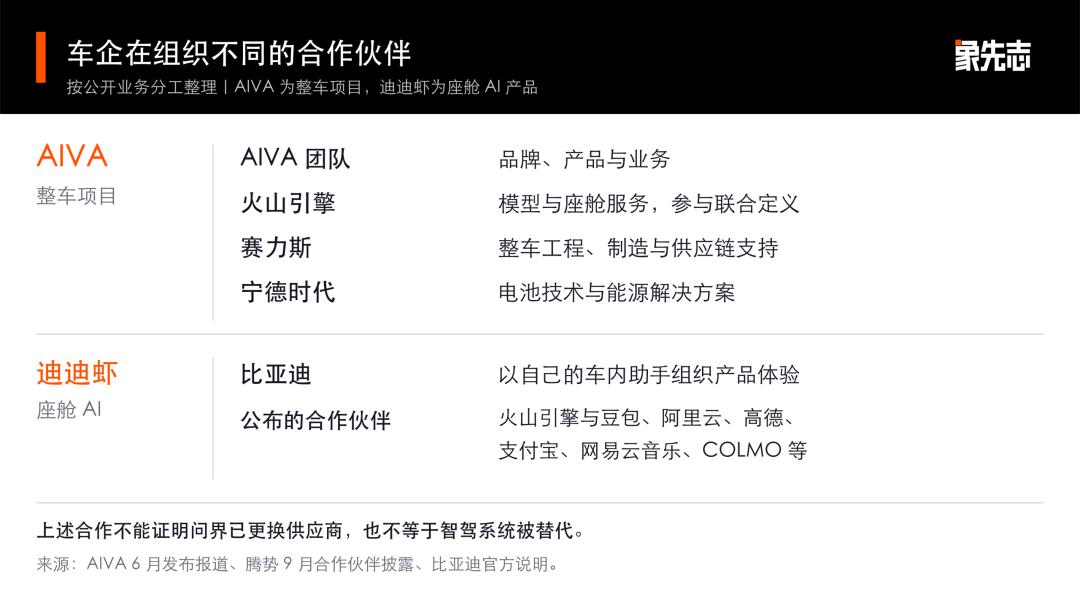
According to the arrangement released in June, Volcano Engine provides technologies such as the Doubao large model and intelligent cockpit, and participates in joint definition and design. The AIVA team is responsible for brand, product and business, Seres undertakes vehicle engineering, manufacturing and quality work, and all parties participate in the project around their own capabilities.
Both Zhang Zhengyuan and Li Bo have participated in AITO's product or sales work. Zhang Zhengyuan has been involved in promoting the cooperation between Seres and Huawei since 2021, responsible for the construction of AITO's sales and service system. Li Bo, President of Saido and product manager, once served as the head of Huawei's Smart Selection Vehicle Product Department, participated in the product definition and mass production of AITO M5, M7 and M9, and joined Seres in 2024.
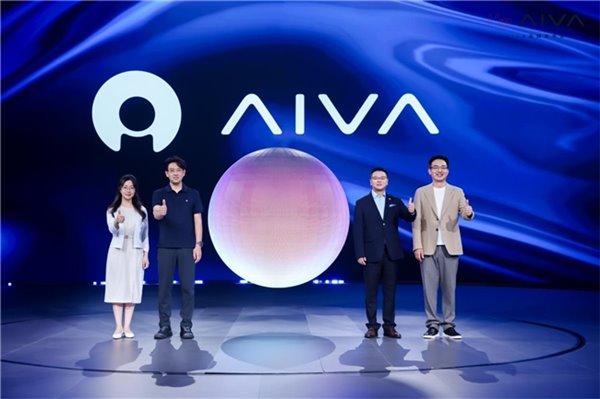
AIVA launch event, June 2026. From left to right: Chen Jingwen, Yang Liwei, Zhang Zhengyuan, Li Bo.
Saido introduced external shareholders, and Zhang Zhengyuan emphasized its identity as an independent company in June. AIVA can organize capital and business independently, and also has the conditions to re-select technology partners.
Volcano Engine thus participated in a new automotive project. Part of the services it provides also falls within Huawei's business scope. In April this year, Huawei released HarmonySpace 6, in which Xiaoyi intelligent agent, multi-modal perception and interaction are important capabilities.
The two have formed competition in cockpit AI and other businesses. Public materials cannot yet prove that this part of AIVA's orders previously belonged to Huawei, or that AITO has transferred the corresponding procurement to Volcano Engine. But for new projects of automakers, the number of comparable technology partners has increased.
Similar cooperation arrangements also appear in BYD's cockpit products.
The recently launched pure electric Denza N8L is equipped with Didi Xia. The in-vehicle assistant announced partners including Volcano Engine and Doubao Large Model, Alibaba Cloud, AutoNavi, Alipay and others. When users use BYD's products, multiple companies provide technologies and services behind them.
AIVA and Didi Xia show that automakers can first determine product requirements, and then organize different partners to participate in development. This division of labor has appeared in the cockpit AI business; whether new solutions are adopted for intelligent driving and other components still needs to be evaluated separately.
Huawei is also opening up the cockpit AI Agent ecosystem. Which solution to adopt and how much product decision-making power automakers retain need to be discussed separately. Opening access to more services does not automatically mean that automakers can dominate the entire product.
Zhang Zhengyuan and Li Bo are familiar with AITO's products and sales work, and AIVA allows them to rearrange the division of labor in cooperation. But the new brand still needs to build its own team and channels, and turn the previously accumulated experience into products that consumers are willing to buy.
Recalculate Organizational Costs
When Seres takes over the operation of AITO, the work it needs to undertake is broader than the newly introduced model and cockpit services of AIVA. Huawei has previously been deeply involved in AITO's products and operations.
In February 2023, the joint business agreement announced by the two sides clearly stated that Huawei is responsible for new product definition, and Seres promotes the iteration of existing models and new platforms. In July of the same year, the AITO Sales and Service Joint Working Group began to be responsible for marketing, sales, delivery, service and channel management.
These tasks will be implemented in the daily operation of stores. According to 36 reports, some AITO stores have been transferred to Hui Tong for direct management. A salesperson at a directly-operated store mentioned that the store cannot offer discounts beyond the official event benefits.
It requires continuous management to allow stores in different cities to sell cars according to consistent rules. After Seres takes over the sales work, it also needs to arrange sales personnel to follow up car purchase leads and coordinate problems arising during delivery.
What AITO may lose is part of the personnel investment and execution support previously obtained with in-depth cooperation, as well as the convenience of synergy with Huawei's brand and channels. After Seres reduces the purchase of corresponding services, it needs to take over by itself or find other service providers. If customer acquisition efficiency declines, new advertising placements and discounts will consume the money that was originally expected to be saved.
Product development also requires synergy. Even if Huawei's solutions are continued to be adopted, how much engineering resources the two sides invest will also affect vehicle model development and launch.
In May this year, the new generation of AITO M9 debuted Huawei's Smart Drive full 800V high-voltage dual silicon carbide power platform; in August, Xiangjie G9 debuted the adaptive differential lock electric drive. The debut of different technologies is originally distributed in different brands. AITO obviously has not obtained more new technologies. Although there is no other direct evidence for the change of the cooperation model between the two sides, from the actual situation, the new technologies obtained by AITO are indeed getting fewer and fewer.

Official vehicle diagram of the all-new AITO M9.
According to this report, Huawei will allocate more resources to Luxeed, Xiangjie, Zunjie and Shangjie. Technical solutions can be reused, but the team's time needs to be allocated specifically. Only by reducing direct investment in some of AITO's work can it be possible to free up manpower for other projects.
But support comes at a cost. The four automakers need to turn new investments into orders, and also deal with product differences after jointly adopting Huawei's technologies. Similar technical configurations cannot determine the positioning and price of vehicle models for each company, let alone replace manufacturing and delivery.
Seres and Huawei still have the foundation for continued cooperation. In addition to the vehicle business, the two sides also have equity ties formed by Seres' investment in Harmony Intelligent Mobility. AITO's continued purchase of competitive Huawei technologies and maintenance of sales volume can bring revenue to both sides; when Huawei reduces part of its operational investment, it also needs to measure the impact of changes in service revenue and AITO's performance.
Continuing to purchase Huawei's technologies can happen at the same time as Seres dominates AITO's operations. The new division of labor needs to clarify the work each party is responsible for and the corresponding charging arrangements.
Zhang Zhengyuan can choose partners starting from AIVA's new products, while Zhang Xinghai needs to maintain AITO's existing sales volume and user experience. The procurement and operation space won by Seres will eventually be realized through product and sales performance.
How much profit this adjustment can bring to Seres depends on whether the saved external procurement expenditure can cover the new R&D, integration and