A renowned philosopher is developing AI chips, having raised more than 1.5 billion yuan in financing, with the former president of ASML joining the team.
Core News September 15, Dutch AI chip startup Euclyd announced today that it has completed its Series A financing, with a total amount of more than 200 million euros (approximately 15.48 billion yuan). The co-lead investors include Samsung, Somerset Capital Partners, the Scaleup Europe Fund under EQT and Innovation Industries, while Danish export investment fund EIFO, imec.xpand, BOM and Quadri participated in the round.
On the same day, Peter Wennin, former President and CEO of ASML, joined Euclyd as Chairman of the Board.
The company plans to launch its physical chip system in 2028 and serve thousands of enterprise clients by 2030.
At present, many manufacturers are deploying alternative solutions to NVIDIA GPUs, and Samsung's investment is one of such moves. NVIDIA has established an almost monopoly position in the AI training and inference market with GPUs originally designed for gaming, while hyperscale cloud vendors and AI companies including OpenAI, Google, AWS and Meta are heavily investing in self-developed AI chips for AI workloads.
Founded in 2024 and headquartered in the Netherlands, Euclyd is designing an AI chip system with a different architecture from GPUs, which is specifically oriented to AI inference scenarios and covers both processor and memory architecture levels.
Bernardo Kastrup, founder and CEO of Euclyd, holds dual doctorates in computer engineering and philosophy, and is also one of the representative figures of contemporary analytical idealism philosophy. In his early years, he participated in the R&D of the trigger system for the ATLAS experiment of the Large Hadron Collider at CERN, and later joined Philips Research to engage in research work. In 2011, he co-founded parallel processor company Silicon Hive, which was later acquired by Intel.
After that, Kastrup served as Director at lithography giant ASML, in charge of product strategy. In 2024, Kastrup co-founded Euclyd with his former partner at Silicon Hive, Atul Sinha, at the High Tech Campus Eindhoven in the Netherlands.
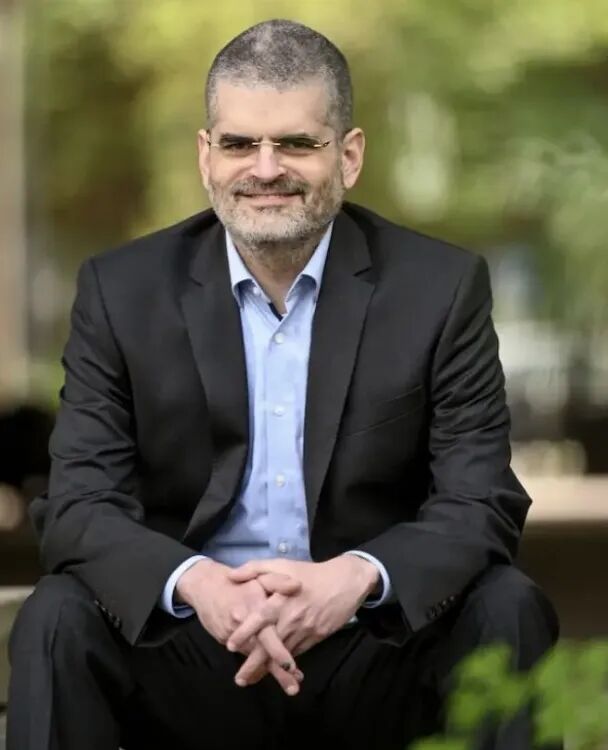
Bernardo Kastrup, Founder and CEO of Euclyd
The core of Euclyd's roadmap consists of two products: craftwer, the world's first silicon chip designed for agentic AI, and the craftwerk station CWS platform. The company states that craftwerk station CWS is the world's lowest-power exascale AI factory, and the platform integrates programmable ASIC computing, processor-memory co-design and system-level optimization. However, Euclyd is still in the product development stage, and its AI chip system has not been verified by large-scale commercial deployment.
Kastrup said that AI is becoming the foundation of economic growth, scientific discovery and national competitiveness, but the existing infrastructure fundamentally limits the release of AI's potential. Euclyd's silicon chip system for foundation models is designed to significantly reduce the energy consumption and cost of AI data centers.
According to CNBC, in terms of business model, Euclyd has planned two revenue paths. The first is to directly sell hardware and physical rack systems to enterprise customers with secure self-hosted inference needs, helping enterprises run large model inference locally; the second is to sell IP licenses to companies that hope to develop self-developed chips based on existing technologies, lowering the threshold for customers to develop their own chips. The two paths correspond to two monetization methods: self-owned product sales and technology licensing.
Kastrup told CNBC that Samsung's strategic value goes far beyond capital itself. Samsung is one of the world's largest memory manufacturers, with profound accumulation in engineering capabilities, system understanding, supply chain management and industrial networks. At the same time, Samsung is a major global supplier of HBM and DRAM, and its cooperation with AI inference chip companies also forms synergy with its memory business.
Conclusion: New Player Enters AI Inference Chip Track, Industrial Capital Bets on Differentiated Inference Architecture
The continuous influx of self-developed chips from cloud vendors and new architectures from startups is breaking NVIDIA's dominant position in the high-end AI chip market. Different from the high threshold of the training market, the requirements of the inference market for cost, energy efficiency and deployment flexibility provide differentiated entry space for non-GPU architectures, and also attract industrial capital with deep accumulation in memory and manufacturing such as Samsung to enter the market for layout.
As more inference-specific chips move to tape-out and mass production, the high-end AI chip market will gradually evolve from NVIDIA's sole dominance to the coexistence of multiple architectures. For customers, more suppliers mean more bargaining space and solution flexibility; for industrial capital, taking positions in the incremental market of inference chips in advance is expected to occupy a favorable position in the next round of AI infrastructure investment cycle.
This article is from WeChat official account "Core News", written by Cui Yuanwei, edited by Chen Junda, and authorized for release by 36Kr.