Severe supply shortage, the sector stages a pre-emptive rally once more.
According to the latest estimates from Morgan Stanley, the total potential global market size of Copper Clad Laminate (CCL) will expand from USD 19 billion in 2025 to USD 47 billion by 2030, representing a 20% compound annual growth rate, which is higher than the previously expected market range of USD 35 billion to 40 billion.
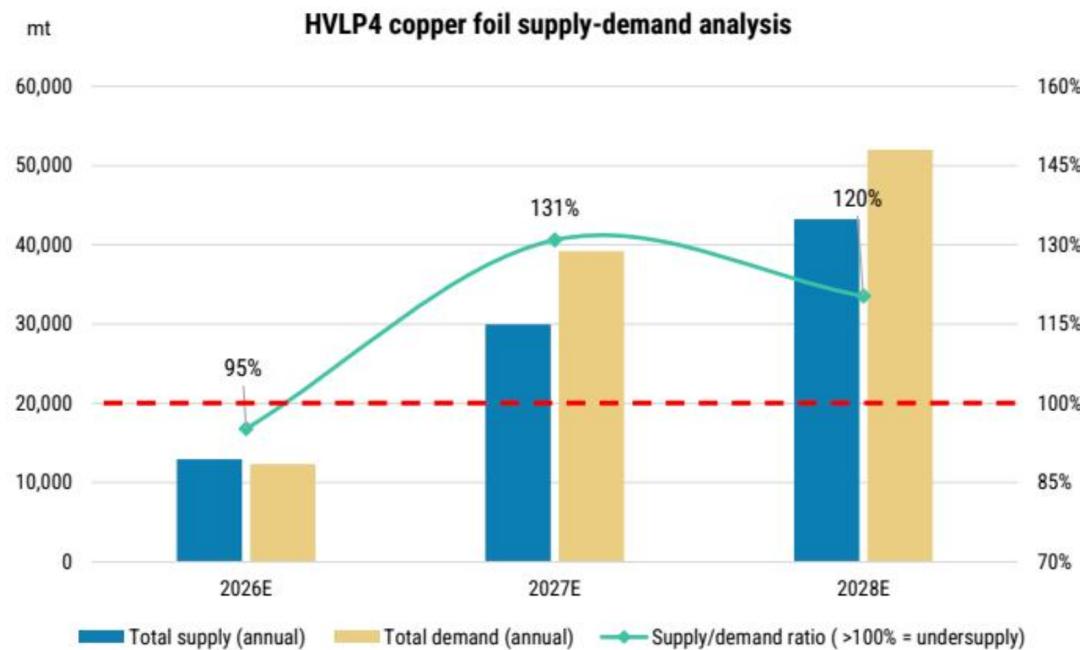
(Morgan Stanley)
AI and data centers contribute 90% of this incremental demand, accounting for nearly two-thirds of the total share by the end of the decade. The report also points out the tightest link in the industrial chain, there will be a 31% supply shortage of HVLP4 copper foil in 2027, and a 20% gap will remain in 2028.
In the early trading session on September 15, the CCL concept sector once again led the rise across the two markets, with the electronic components sector strengthening simultaneously, followed by concepts such as PTFE and ceramic substrates. Hua Zheng New Materials and Hong He Technology hit the daily limit, Fang Bang Co., Ltd. and Long Yang Electronics rose by more than 11% during the trading day, while Sheng Yi Technology, Nan Ya New Materials and China Jushi ranked top in terms of growth. In the previous trading day, the PCB sector just saw a wave of new highs for a large number of stocks.
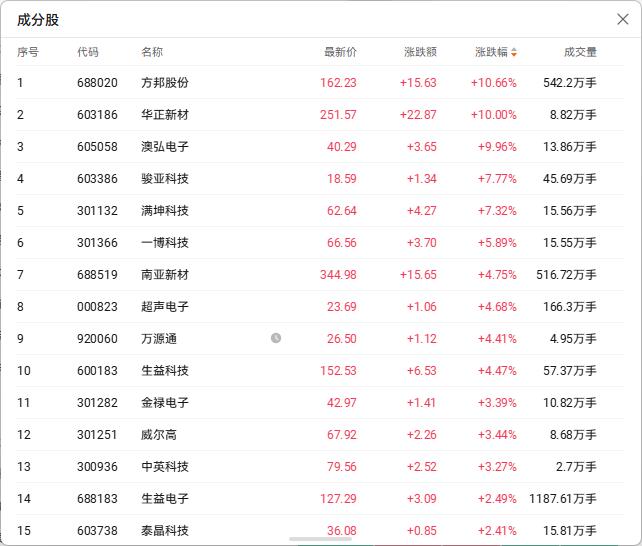
(Performance of the electronic components sector; Futu NiuNiu)
Why this industrial chain is so tight can be traced back to copper clad laminates.
Copper clad laminate is the base material of printed circuit boards, which is pressed and synthesized from copper foil, electronic glass fiber cloth and resin. The higher the material grade, the stricter the requirements for the surface roughness of copper foil.
HVLP4 is an ultra-low profile copper foil, a key enabling material for high-speed AI servers and network boards. It has a long certification cycle and low yield rate, while the upstream equipment restricts the delivery pace, so the release speed of qualified production capacity cannot keep up with the climbing demand.
The progress of leading mainland copper foil manufacturers is more intuitive: Defu Technology shipped 500 tons of HVLP products in August, of which about 70 tons were HVLP4, the yield rate of HVLP1 to 3 series is close to 70%, and the yield rate of HVLP4 is above 60%.
The demand side is also growing steeply. In 2026, the global demand for HVLP copper foil dedicated to AI servers is expected to reach 24,000 tons, a year-on-year increase of 260%; the demand for CCL for AI servers will rise from about 42 million pieces in 2026 to 131 million pieces in 2028, with a compound annual growth rate of 77%, and the average price per piece will rise from USD 165 to USD 362.
On the supply side, the shortage of HVLP4 copper foil is expected to reach 1,500 tons in 2026, and expand to 2,500 tons in 2027. Morgan Stanley attributes this round to a specification-driven structural cycle, and the logic of general commodity price hikes does not apply to it.
Prices have already reflected the supply and demand dynamics. Citi's report shows that the price of electronic cloth in August recorded the largest monthly increase of the year, with the average price of mainstream series such as 1080, 2116 and 7628 rising by 17% to 18% month-on-month, and the cumulative increase during the year reaching 118% to 165%. Kingboard Laminates issued its seventh round of price increase notices of the year at the end of August, and the cumulative increase of FR-4 CCL during the year exceeded 100%; China Jushi raised the price of electronic cloth in September, with thick cloth up 15% and thin cloth up 20%; Panasonic raised the price of ordinary multilayer CCL by 30% starting from September, and Nan Ya Plastics followed with a 20% to 25% increase. Weaving machines are another barrier: more than 90% of the market share of high-end electronic cloth weaving equipment is held by a Japanese manufacturer, with a delivery cycle of more than one year.
The profit distribution is also highly uneven. According to statistics from Prismark, in the high-end track of AI high-frequency and high-speed products, the five enterprises of Taiwan Optical, ITEQ, Tai Yow, Panasonic and Doosan account for more than 60% of the total market share, while the total share of the three leading mainland enterprises is only 8.3%. The barrier lies in certification: Sheng Yi Technology is currently the only mainland manufacturer that has passed NVIDIA's M9 certification, and Nan Ya New Materials has entered the certification and mass production introduction stage for M9 products.
There has been feedback on the performance side: Sheng Yi Technology's revenue in the first half of the year was 19.026 billion yuan, a year-on-year increase of 50.05%, and the net profit attributable to shareholders was 3.287 billion yuan, up 130.42%; Hong He Technology's net profit attributable to shareholders in the first half of the year was 379 million yuan, up 334%, the proportion of special electronic cloth revenue increased from 16% to 35%, and the gross profit margin rose from 31% to 59.5%; China Jushi's net profit attributable to shareholders in the first half of the year was 2.933 billion yuan, up 74%.
This track is driven by the upgrading of material specifications. The development of the growth cycle is usually slower and longer than the market expects, and every step including capacity verification, customer introduction and yield climbing takes time.
We can look far ahead in terms of direction, but it is better to move steadily in terms of position allocation. Keeping room to cope with fluctuations is more effective than blindly chasing rising prices.
This article is from the WeChat Official Account "Gelonghui APP" (ID: hkguruclub), the author is Gejila, and 36Kr publishes it with authorization.