Bitter Half-Year Report of the Auto Market: The net profit margin of 14 major automakers is a mere 1.22%, with some raking in huge profits while others suffering steep losses.
Financial results of 14 domestic automakers in the first half of the year have been released, and only one of them has achieved profitability with rising net profit.
As of today, the 2026 H1 financial reports of 14 mainstream domestic automakers have all been unveiled. After a comprehensive review of the half-year performance of the 14 automakers, AutoDongxi found that the total revenue of the 14 automakers in H1 2026 exceeded 1.47 trillion yuan, but the total attributable net profit was only 18 billion yuan. Simple calculation shows that the net profit margin is only about 1.22%, and the profitability pressure remains high.
According to the data disclosed by the China Association of Automobile Manufacturers, the average profit margin of China's complete vehicle manufacturing sector dropped to 1.5% in H1 2026, hitting a new low in the past 10 years.
On one hand, 7 traditional automakers including BYD, Geely, Great Wall, Chery, GAC, SAIC and Changan recorded a total attributable net profit of over 33.9 billion yuan. On the other hand, 7 new EV brands namely NIO, Li Auto, Xpeng, Leapmotor, Seres, Xiaomi Auto and Voyah posted a total accumulated loss of over 15.9 billion yuan in the first half of the year, and the differentiation among automakers is intensifying.
However, what is more alarming is that while complete vehicle enterprises are caught in fierce price wars, the leading upstream suppliers are reaping huge profits.
CATL, the leader of power battery industry, recorded an attributable net profit of as high as 43.28 billion yuan in H1 2026, a year-on-year increase of 41.98%. The net profit of this single battery enterprise is more than twice the total net profit of the 14 automakers (18 billion yuan), with a daily net profit of about 240 million yuan.
The cruel realities of "automakers work for battery manufacturers" and "making batteries is more profitable than making cars" have been further confirmed in the 2026 H1 financial reports of automakers.
In the extremely involuted Chinese auto industry in H1 2026, who is making real profits and who is swimming naked?
01. 14 automakers generated over 1 trillion yuan in revenue in half a year, 6 of which saw year-on-year revenue decline
In terms of revenue performance, the total revenue of the 14 automakers in the first half of this year reached 1.47 trillion yuan, of which 8 recorded year-on-year revenue growth and 6 saw decline, showing an obvious differentiation trend.
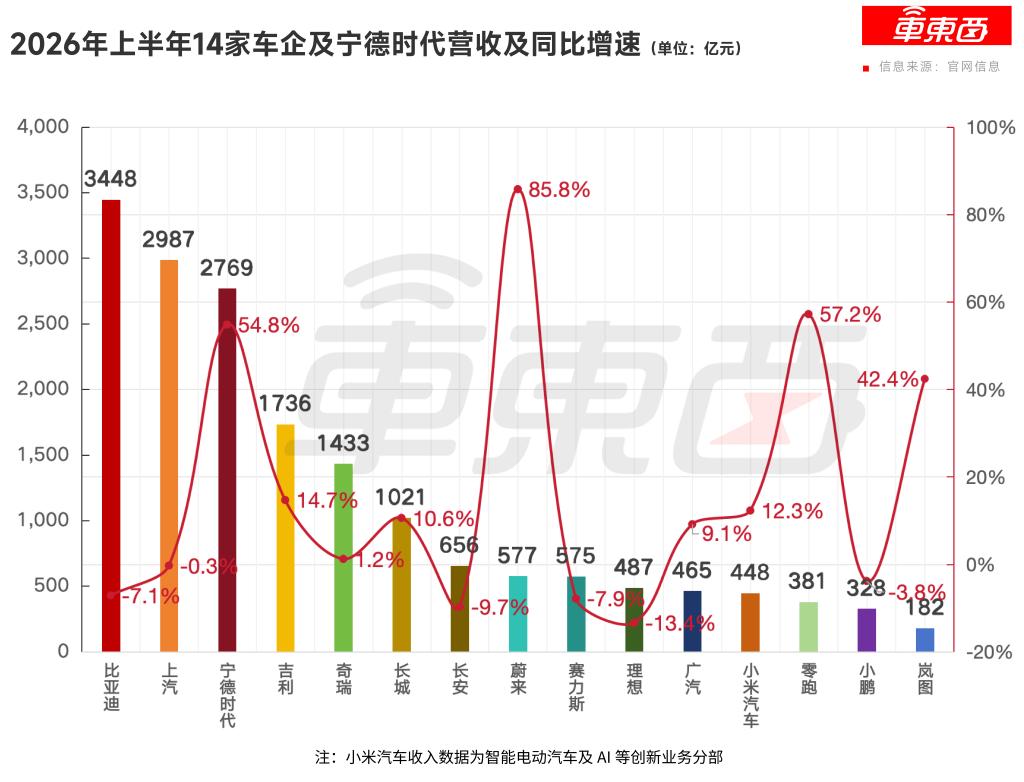
Revenue and year-on-year growth rate of 14 automakers and CATL in H1 2026
1. BYD, Geely and Great Wall hit record highs, overseas market becomes an important growth engine
Looking at traditional automakers first, Geely's H1 revenue reached 173.6 billion yuan, hitting a record high for its H1 revenue in history, representing a 15% year-on-year increase, which is the highest year-on-year revenue growth rate among the 7 traditional automakers; Great Wall, Chery and GAC achieved slight year-on-year revenue growth, while Changan, BYD and SAIC saw declines of varying degrees year on year.
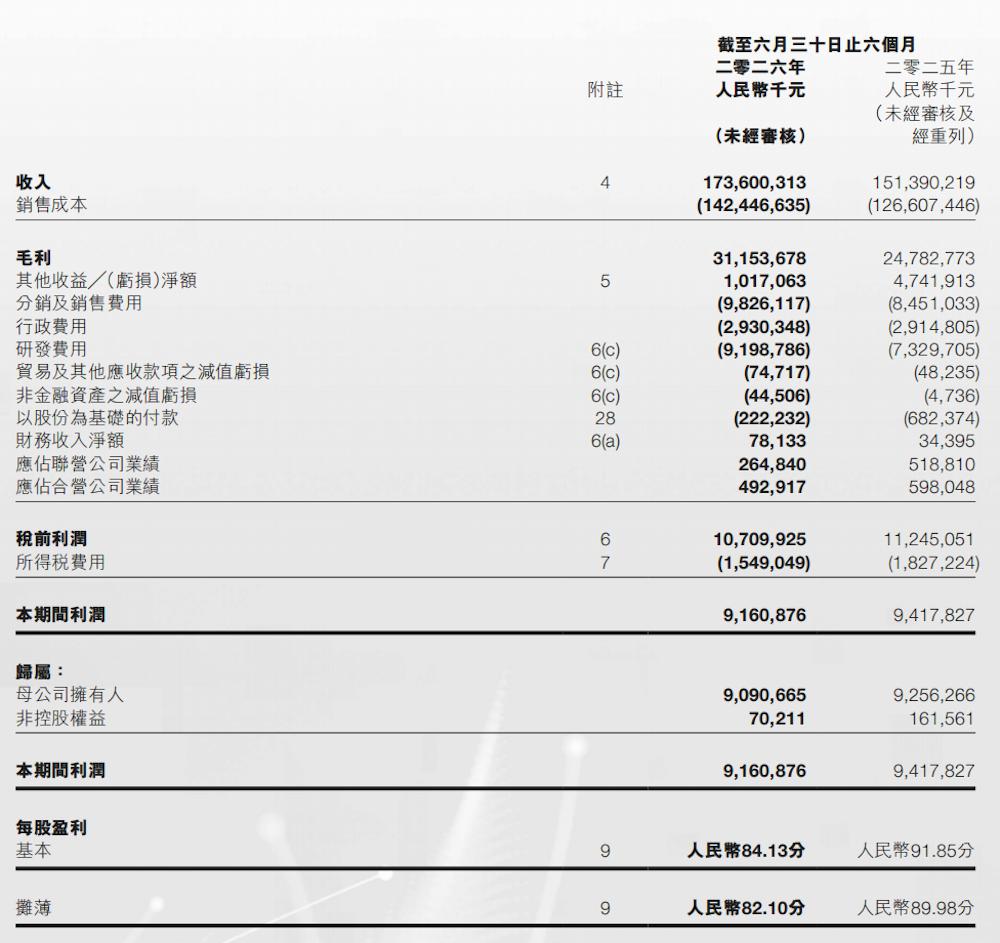
Geely's H1 revenue reached 173.6 billion yuan
Geely's revenue growth is closely related to the strong performance of its premium car brands. Zeekr delivered a total of 178,400 vehicles in the first half of the year, up 97% year on year; its revenue accounted for 31.7% of the total revenue, 13.8 percentage points higher than the same period last year.
The increasing sales of high-value models drove the overall revenue growth, and the average sales revenue per vehicle of Geely increased by 16% year on year from 96,000 yuan in H1 2025 to 112,000 yuan in H1 2026.
Great Wall's H1 revenue reached 102.1 billion yuan, up 10.58% year on year. Public information shows that its H1 revenue exceeded the 100 billion yuan mark for the first time.
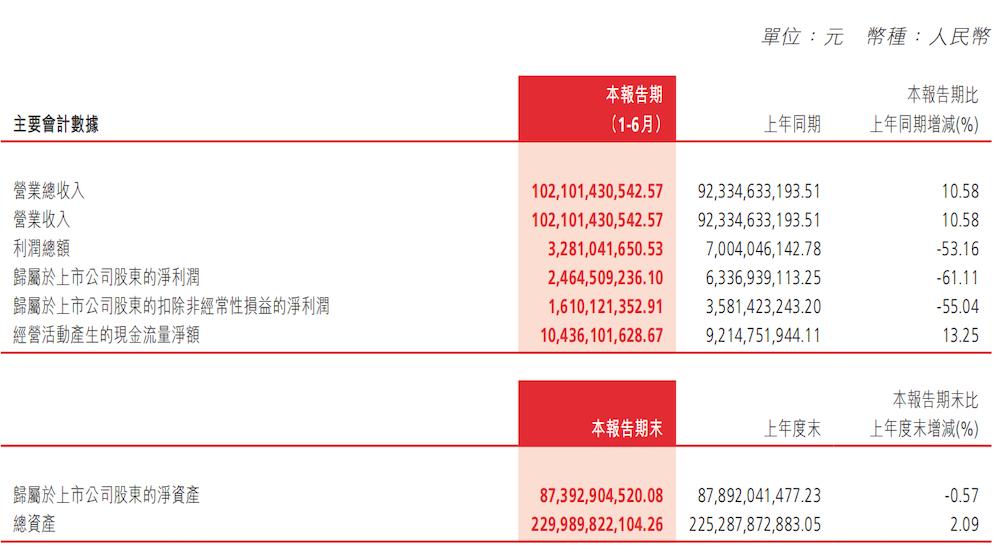
Great Wall's H1 revenue reached 102.1 billion yuan
The overseas market has become an important engine for its revenue growth. In the first half of the year, Great Wall's total sales volume reached 576,000 units, up 1.2% year on year, among which Great Wall's overseas sales reached 289,000 units, exceeding domestic sales for the first time, with a sharp year-on-year increase of 45.5%; overseas revenue reached 56.29 billion yuan, up about 57% year on year, accounting for about 55% of the total revenue.
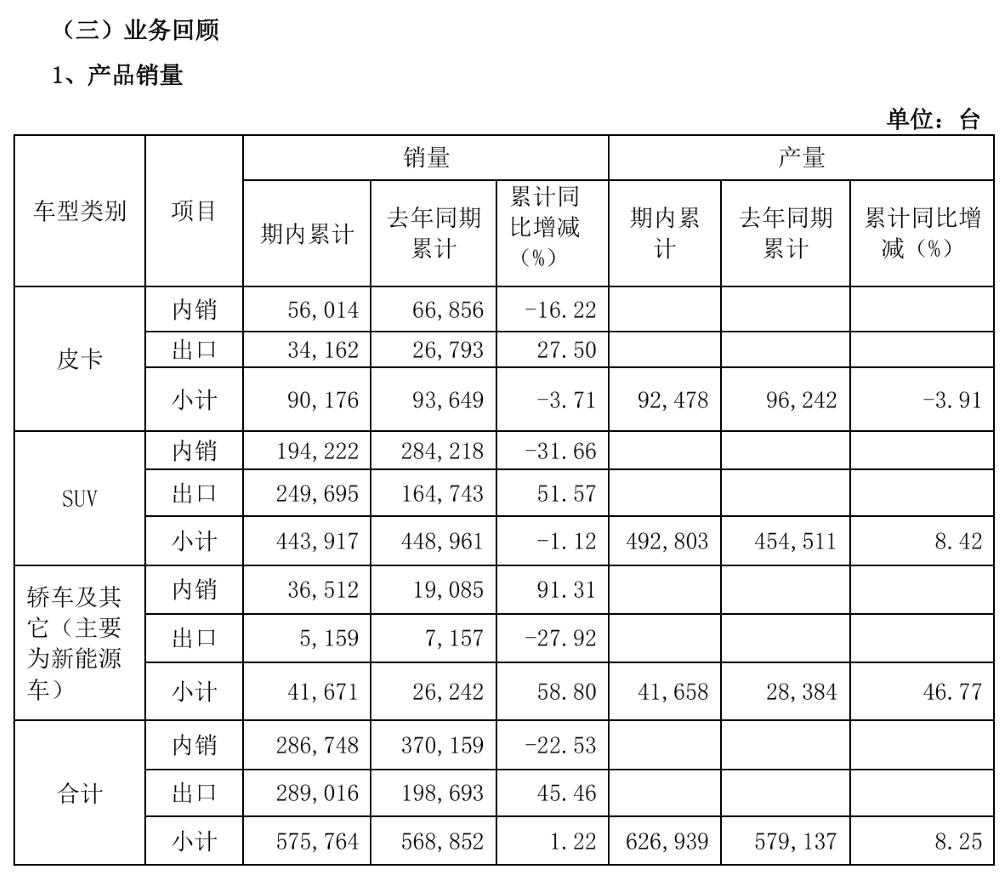
Sales volume of Great Wall Motors in H1 2026
GAC's total operating revenue in H1 reached 46.5 billion yuan, up 9% year on year, and its self-owned brands took the lead: the sales volume of self-owned brands reached 346,000 units, up 35.69% year on year, accounting for 44.75% of the group's total sales.
Meanwhile, GAC's overseas revenue saw explosive growth, reaching 14.013 billion yuan in H1, a sharp year-on-year increase of 109.27%, accounting for about 30% of the total revenue; the export volume of self-owned brands reached 121,500 units, up 132% year on year, almost catching up with the full-year level of 2025.
Chery's revenue in H1 reached 143.28 billion yuan, up 1.2% year on year. Its revenue growth mainly came from overseas market expansion, growing sales of auto components and parts, and increased sales of other auto-related materials.
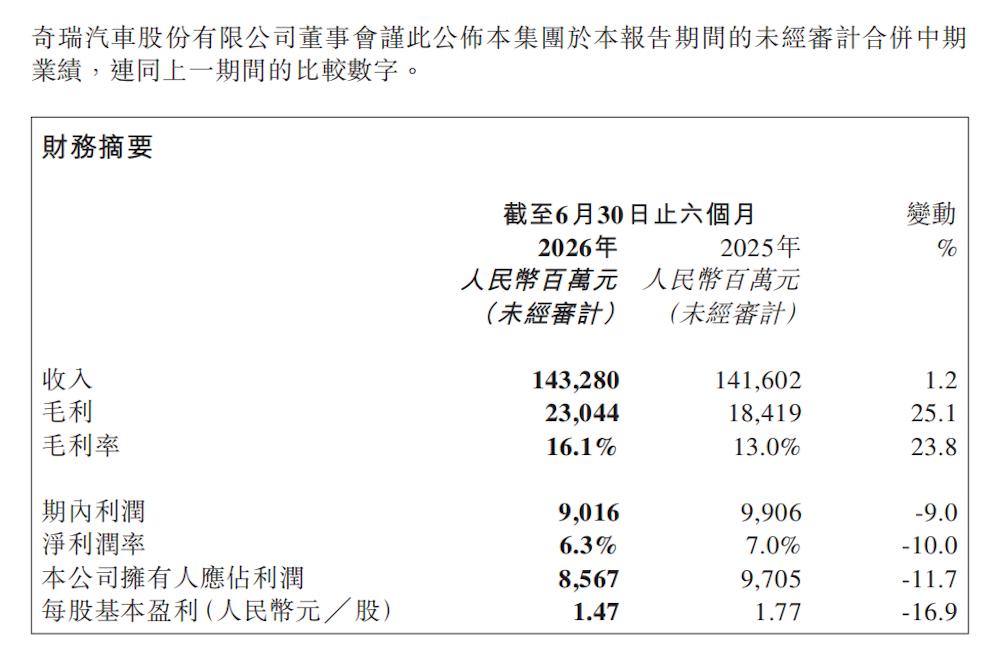
Chery's H1 revenue increased by 1.2% year on year
However, not all traditional automakers managed to maintain stable revenue in the first half of this year.
Changan's operating revenue in H1 reached 65.634 billion yuan, down 9.71% year on year. The core reason is the decline in domestic sales directly dragged down the revenue.
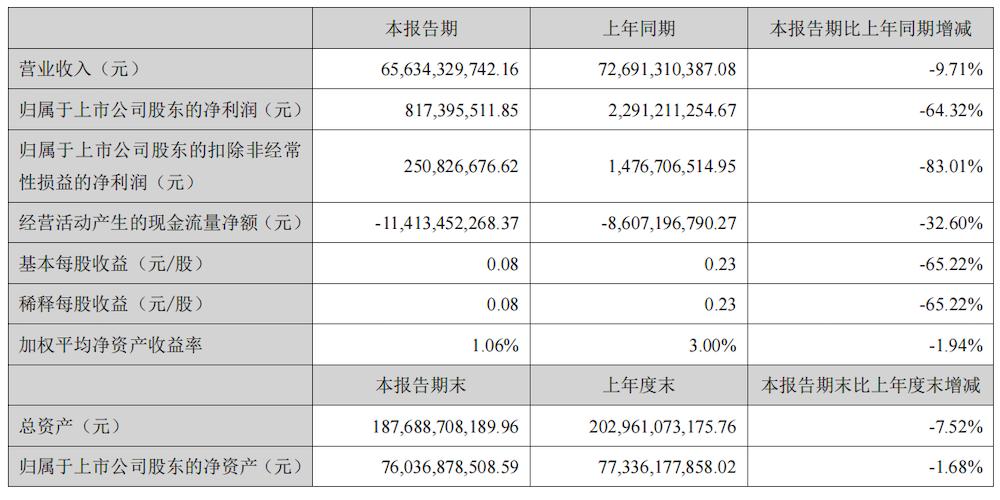
Changan's H1 operating revenue reached 65.634 billion yuan
In H1, Changan's total sales volume reached 1.119 million units, down 17.44% year on year; domestic revenue reached 43.692 billion yuan, down 27.68% year on year, accounting for 66.57% of the total. The weakening domestic demand coupled with the industry price war and the continuous shrinking of the fuel vehicle market share are the direct drivers of the revenue decline.
On the overseas front, Changan's overseas revenue in H1 reached 21.94 billion yuan, a sharp year-on-year increase of 78.77%, and its proportion rose to 33.43%.
BYD's H1 revenue reached 344.8 billion yuan, down 7% year on year. Its cumulative sales of new energy vehicles in H1 reached 1.8085 million units, down 15.72% year on year, among which domestic revenue fell by 30.68% year on year.
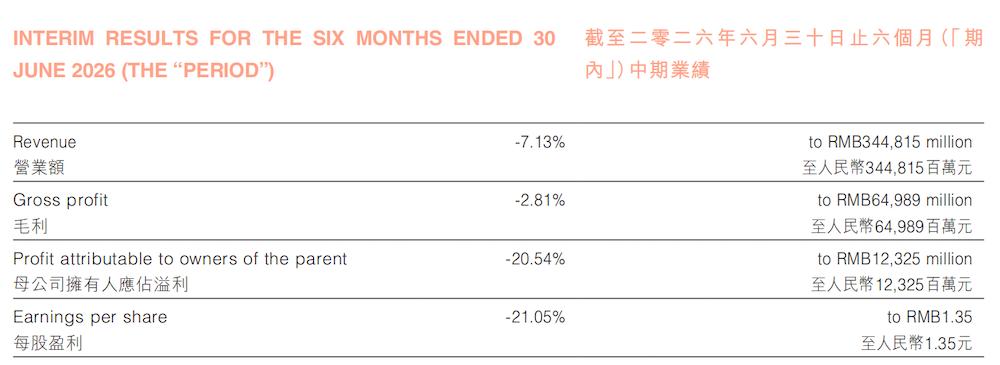
BYD's H1 2026 revenue reached 344.815 billion yuan
However, BYD's export performance in H1 is noteworthy: it exported 792,000 vehicles in H1, a sharp year-on-year increase of 67.8%; overseas revenue reached 181.268 billion yuan, up 33.92% year on year, accounting for 52.57% of the total revenue.
This is the first time in BYD's history that the proportion of overseas revenue has exceeded 50%, which means its growth logic is changing: in the past, it relied on the scale expansion of the Chinese market, but now it begins to be driven by diversified demands of the global market.
SAIC's H1 revenue reached 298.65 billion yuan, down 0.31% year on year, which is basically the same as last year.
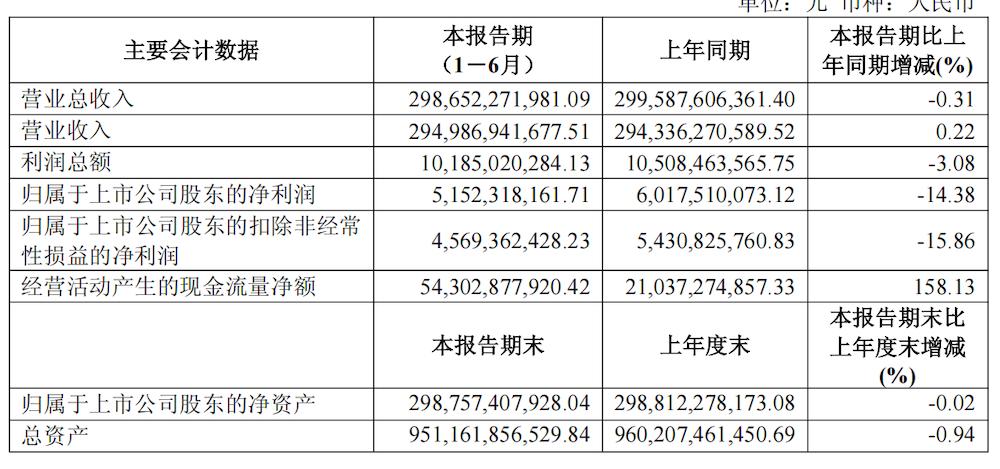
SAIC's H1 revenue saw a slight year-on-year decline of 0.31%
2. 7 new EV brands generated nearly 300 billion yuan in half-year revenue, only 3 of which saw revenue decline
Looking at the new EV brand camp, the total revenue of the 7 new EV brands in H1 2026 reached 297.6 billion yuan.
Among them, NIO is the automaker with the highest revenue growth rate among the 14 automakers. Its H1 revenue reached 57.67 billion yuan, up 85.8% year on year. The core reason is the surge in sales volume and hot sales of high gross margin models.
NIO delivered 191,100 vehicles in H1, a sharp year-on-year increase of 67.4%; the continuous hot sales of high-value models and rising proportion directly boosted the total revenue, with auto sales revenue reaching 51.842 billion yuan, up 98.8% year on year.
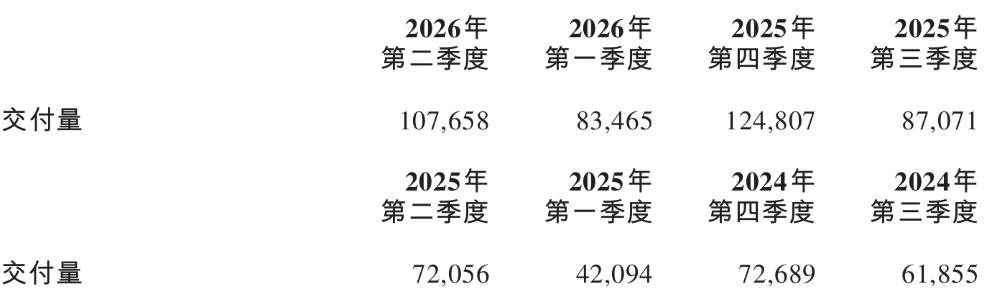
NIO delivered 191,100 vehicles in H1 2026
Leapmotor's H1 revenue reached 38.107 billion yuan, up 57.2% year on year, hitting a record high for the same period in history. The core driving force is the surge in sales volume.
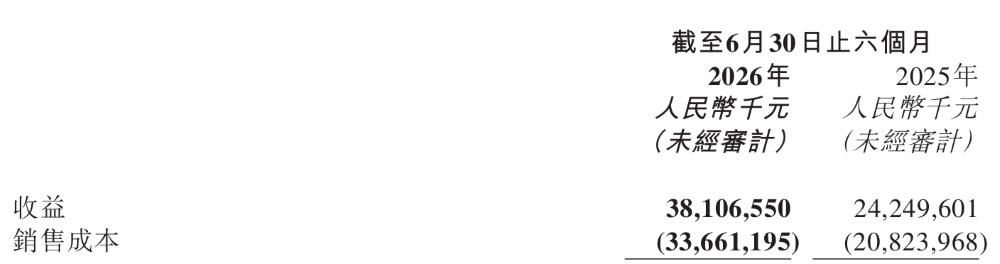
Leapmotor's H1 2026 revenue increased by 57.2% year on year
In H1, Leapmotor's new vehicle delivery volume reached 356,500 units, up 60.8% year on year, ranking first in sales volume among China's new EV brands; its export volume reached 96,300 units, up 372.6% year on year, exceeding the total export volume of the whole year of 2025.
Voyah's H1 revenue reached 18.159 billion yuan, up 42.4% year on year, which was mainly driven by the increase in new vehicle delivery volume, as well as the after-market and technical service businesses.
In H1, Voyah's cumulative delivery volume reached 76,300 units, up 35.9% year on year; vehicle revenue reached 16.47 billion yuan, up 36.2% year on year, which is the core support for revenue.
In addition, Voyah's after-market business revenue in the same period reached 1.187 billion yuan, up 113.5% year on year; technical service revenue reached 457 million yuan, a sharp year-on-year increase of 591.7%. The after-market and technical services have become important incremental sources of Voyah's revenue.
In H1 2026, the revenue of Xiaomi's smart electric vehicles and AI and other innovative businesses reached 44.8 billion yuan, up