Trend-chasing supermarkets and hypermarkets: Can they achieve self-rescue by shifting from operational adjustment and restructuring to the hard discount model?
Hard Discount in Supermarket and Hypermarket Sector: No Noticeable Improvement Seen
Recently, Zhongbai Group released its 2026 semi-annual report.
The financial report shows that the company achieved operating revenue of 3.586 billion yuan, down 22.35% year on year. The net profit attributable to shareholders recorded a loss of 296 million yuan, which expanded by 16.18% compared with the same period of last year; the non-recurring profit and loss adjusted net loss reached 296 million yuan, expanding 29.12% year on year.
It is beyond doubt that the continued decline in revenue, further widening of losses, and the obvious shrinkage of net assets attributable to shareholders still make this a far from satisfying financial report.
This comes one year after Zhongbai opened 51 hard discount stores in a concentrated manner.
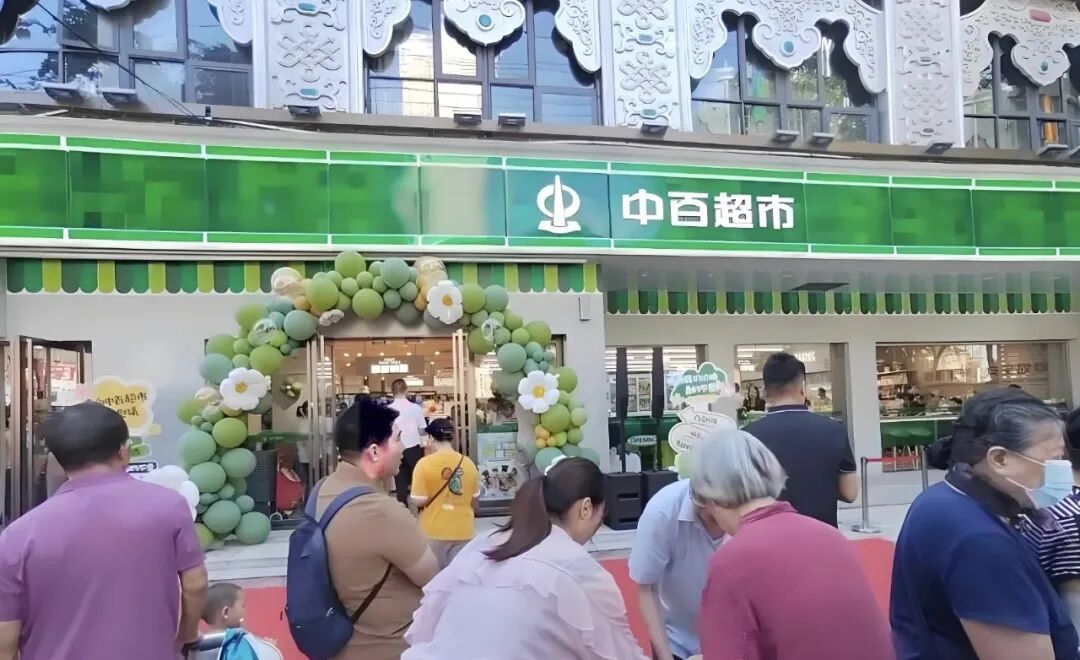
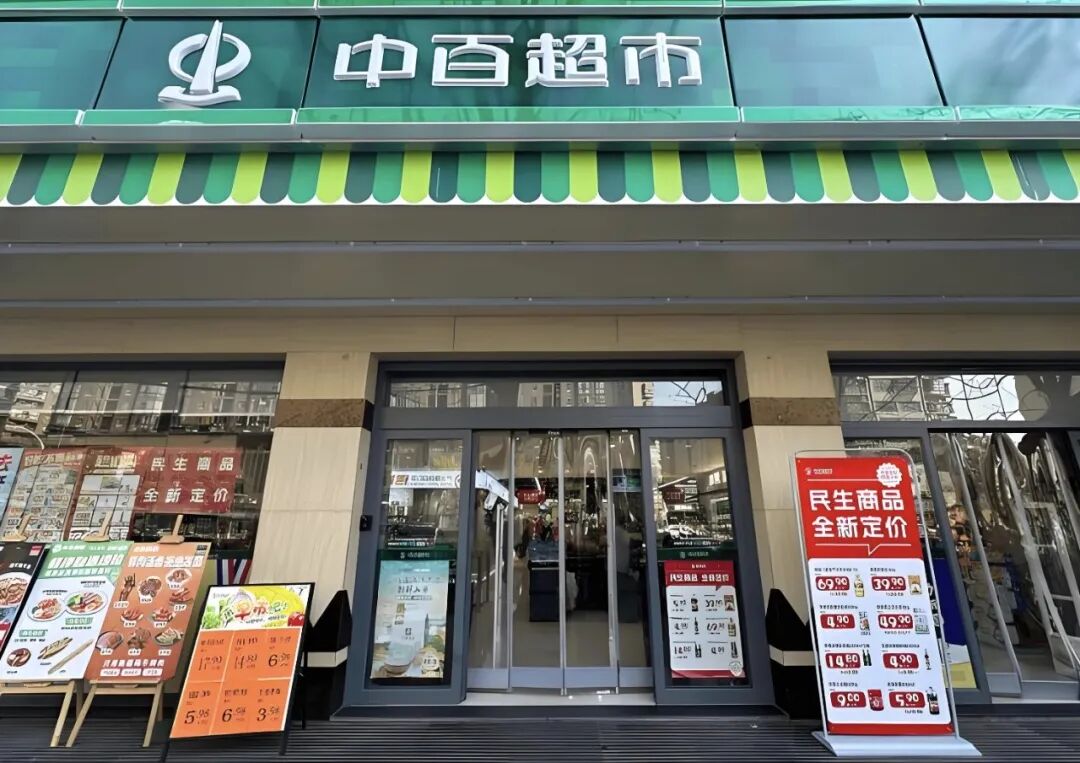
This move was then interpreted as a major action of Zhongbai's transformation to save itself. Even a year later, such a dense deployment to enter the new track is still quite rare in the regional retail sector. Some media also reported at that time that all the stores were converted from original Zhongbai supermarket stores, with only the words "hard discount store" added to the storefront sign.
Facing the declining foot traffic of hypermarkets and the operating pressure on community supermarkets and convenience stores, Zhongbai tested the hard discount store model, trying to find a new growth fulcrum by reorganizing product offerings, lowering prices and improving store operation efficiency.
However, judging from the data disclosed in the current financial report, although Zhongbai's overall performance has not improved significantly, the hard discount business has at least seen partial improvement. In the first half of 2026, the comparable store sales of Zhongbai's community hard discount supermarkets increased by 9.11% year on year, and the number of customers rose by 14.12% year on year.
The crux of the problem is that this part of the growth is not enough to offset the decline of traditional formats such as hypermarkets and convenience stores. In the first half of the year, the comparable operating revenue of Zhongbai's hypermarkets decreased by 15.96% year on year, and the comparable operating revenue of convenience stores fell by 13.86% year on year.
Zhongbai explained that the performance change is mainly affected by two factors.
First, affected by the external environment, residents' willingness to consume recovers relatively slowly. Coupled with the impact of new formats such as live-stream e-commerce and instant retail, both store foot traffic and sales are under pressure, leading to a 15.96% year-on-year decline in the comparable operating revenue of hypermarkets;
Second, the company has taken the initiative to make internal adjustments, accelerating the closure of low-efficiency stores. During the reporting period, it closed 7 hypermarkets, 44 community supermarkets and 87 convenience stores. Although this will bring short-term losses from store closures and gains and losses from asset disposal, the goal is to optimize existing assets and improve long-term operating quality.
During the reporting period, Zhongbai's supermarket format achieved operating revenue of 3.197 billion yuan, accounting for 89.16% of the company's total revenue, but down 24.01% year on year; the comparable operating revenue of hypermarkets decreased by 15.96% year on year.
At the same time, it is worth noting that in the first half of the year, Zhongbai closed 7 hypermarkets, 44 community supermarkets and 87 convenience stores.
This is not Zhongbai's first large-scale contraction. Throughout 2025, Zhongbai Group had closed 414 stores of various types.
A large number of stores have been closed, but the operational problems of Zhongbai have not been solved. The adjustment of supply chain and profit model is still in progress, and new profitability has not been fully established. In the view of some industry insiders, such adjustment is more like a patch at the store level, and has not touched the underlying and fundamental part of operation.
Store closures will not bring profits immediately. Asset disposal, lease termination and employee resettlement all require real capital investment, which will even amplify losses in the short term.
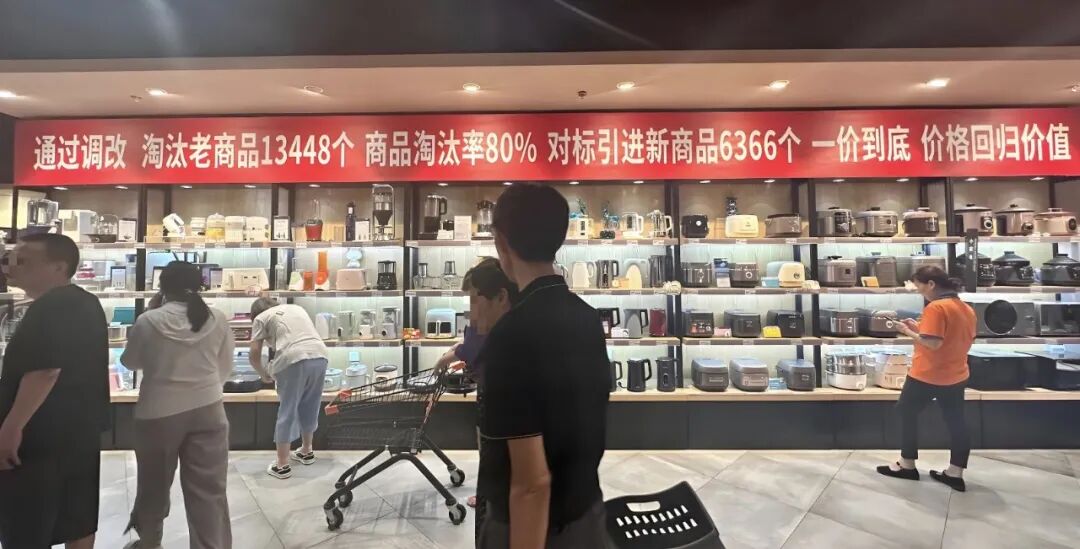
Now, nearly a year has passed since the 51 hard discount stores were launched. The old formats are still contracting, and the hard discount business, although growing, is not enough to support new incremental growth. For Zhongbai, this business is still in the trial-and-error stage, far from being proven successful.
In other words, hard discount has not yet become a new growth fulcrum for Zhongbai, nor is it enough to offset the impact of declining sales in traditional stores and large-scale store closures.
But Zhongbai is not an isolated case.
In May this year, CR Vanguard's "Vanguard Select" and Rainbow's "Daily Rainbow Heart Select" opened their first stores on the same day. Both focus on affordable community consumption, concentrate on selected products and private labels, and try to enter the hard discount market with fewer SKUs, more direct prices and higher product efficiency.
Wumart took action even earlier. Its "Wumart Value" brand has now opened 23 stores, including 11 in Beijing and 12 in Yinchuan. In addition, Biyoute, known as the "Supermarket King of Northeast China", has also begun to test the small store model. On September 8, the first two Biyoute Neighborhood Supermarket stores opened in Shenyang, with a store area of about 350 square meters and about 2000 SKUs, and the brand plans to further increase the proportion of private labels.
A large number of supermarkets are betting on hard discount, but problems also follow: when the hard discount business of traditional supermarkets has begun to see partial growth, is it a new growth curve, or just another self-rescue attempt of traditional supermarkets in the stock competition?
The Essence of Supermarkets Entering the Track is Self-rescue
Let's answer the previous question first.
Traditional supermarkets developing hard discount business are mostly pushed forward by operating pressure, rather than suddenly discovering a brand new business. The financial reports of the first half of this year have illustrated this point. According to the publicly disclosed semi-annual report data, among 11 major listed supermarkets, 8 recorded year-on-year revenue decline, and some of them saw a drop of more than 20%.
The profit side also shows obvious differentiation. Among the 11 sample enterprises, only a few have achieved profit turnaround or profit growth, and 4 are still in a loss-making state.
After years of adjustment, no obvious results have been seen, which is why supermarkets keep looking for new directions.
In previous years, the industry regarded the "Pang Donglai-style Transformation" as a glimmer of hope. Many enterprises followed suit to learn from Pang Donglai's product offerings, services and store management to improve revenue. However, the actual results showed obvious differentiation: some enterprises saw improved operation, while others are still in a state of loss and contraction.
Now, this trend has shifted from "Pang Donglai-style Transformation" to hard discount.
Compared with traditional hypermarkets, hard discount stores have smaller area, more refined product selection and more competitive prices.
For the contracting hypermarkets, this format model seems easier to control costs, which is more in line with current consumers' demand for low prices.
More importantly, hard discount can supplement the areas not covered by hypermarkets. It has flexible site selection, relatively low investment, and some original stores and properties can be reused. For regional supermarkets, these are ready-made foundations.
This is the reason for this concentrated trial.
Looking at the external competitive environment, it does not leave much time for traditional supermarkets to wait and see.
Since the beginning of this year, Freshippo's Super Box Discount NB has continued to expand. By the end of June, its operating stores across the country increased from 409 at the beginning of the year to 550, covering 24 cities, up from 12 at the start of the year. After that, Super Box Discount NB continues to expand to regions such as South China, North China and Southwest China.
ALDI has also begun to accelerate its pace in the Chinese market. In March 2026, the number of its stores in China exceeded 100. In addition, new players such as Meituan's Happy Monkey and JD Discount Supermarket are also accelerating their layout in different regions.
New entrants have begun to enter regional markets, stepping into the familiar battlefield of traditional supermarkets to compete for consumers. As consumers have more and more choices, supermarkets can only take the initiative to make changes.
However, for traditional supermarkets, the real difficulty may not be whether to do hard discount, but how to do it well.
Traditional supermarkets do have inherent conditions. They have deep local roots, with advantages in stores, locations, warehousing and fresh food supply chains. They are also more familiar with the local market and consumers, which can help them avoid detours.
Even so, there is still no supermarket that has fully run through the hard discount format.
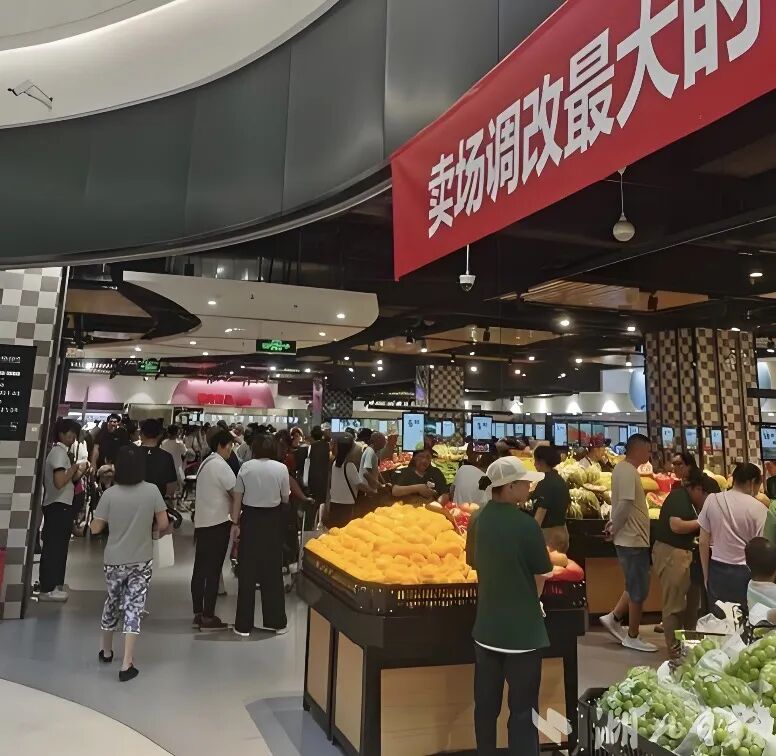
Take Zhongbai as an example. 51 stores were opened together, almost all directly renovated from original stores. After modifying the storefront and display, the products in the store are intuitively low-priced, which looks like a discount store.
The surface seems correct, but it still falls into the vicious cycle of "transformation - investment - loss - contraction".
Because Zhongbai Group's business model relies on suppressing operating costs to obtain meager profits. After product prices are lowered, enterprises still face the problem of narrower gross profit margins due to cheaper product prices. If the turnover speed cannot keep up, coupled with costs such as rent, labor, logistics and loss, the stores may not be able to make profits.
The deeper the discount goes, the greater the operating pressure may even become.
Furthermore, the procurement models and processes of hypermarkets in the past are deeply rooted, with long supply chains and complex supplier systems, which will also increase the difficulty of product structure adjustment.
This is the difficulty for hypermarkets that want to transform to hard discount.
If these problems are not solved, hard discount will easily become a new format operated with the old supply chain. The stores are still the original stores, the procurement teams are still the original ones, the model has not really changed, only adjustments have been made to the storefront and product prices. Such hard discount can hardly form long-term advantages.
Let Go of the Illusion of Scale
It is impossible to develop new business with old methods, which is the current dilemma of many traditional supermarkets.
What is more worrying than being unable to make adjustments is that people seem to regard hard discount as a universal cure-all medicine again.
Over the years, the supermarket industry has suffered losses from many fleeting trends.
Every time there is pressure on performance, enterprises rush to find benchmarking cases. A few years ago, they chased small formats, warehouse membership stores and instant retail, then turned to the Pang Donglai-style transformation, and now they are flocking to hard discount.
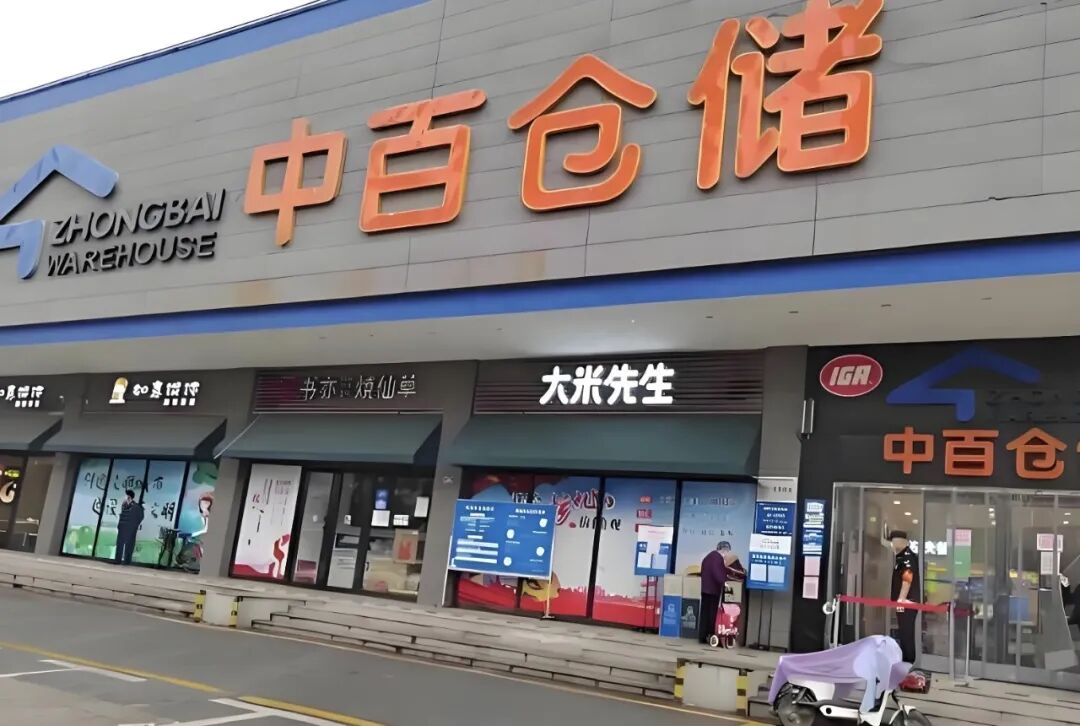
It seems that as long as the store is made smaller, the product selection is streamlined, the proportion of private labels is increased, and the word "discount" is hung on the sign, the business situation will get better.
But when you actually start operating, it is a completely different story.
Hard discount is not a set of formulas that can be copied casually. Potential franchisees analyze that it is very common that the foot traffic of stores of the same brand in two adjacent cities can differ by two or three times.
For example, the business district targeted by large hard discount players is full of cheap fresh food stalls and family-run small shops around, which will make the discount advantage not prominent. For consumers who used to buy groceries in wet markets, hard discount is a kind of consumption upgrade. Therefore, mechanically copying the site selection and product categories from other regions will eventually drag down the business.
Under the hard discount trend, a set of comparative data always appears: the penetration rate of the hard discount format in Germany has reached 42%, while in China, it is less than 10%.
Although the market space is huge, it cannot be converted into profits for enterprises.
The reason why hard discount in Europe can develop so large is largely because local people are used to buying frozen food and packaged food, with an extremely high degree of standardization. However, Chinese consumers are more demanding on fresh food, and complex regional dietary tastes, scattered and even backward agricultural product supply links are all considerable challenges.
Therefore, on this track, ALDI has moved slowly enough, adopting a relatively restrained regional deep cultivation strategy in China. At present, its core market is still focused on penetrating the Yangtze River Delta region, because the consumption habits and eating habits there are similar.
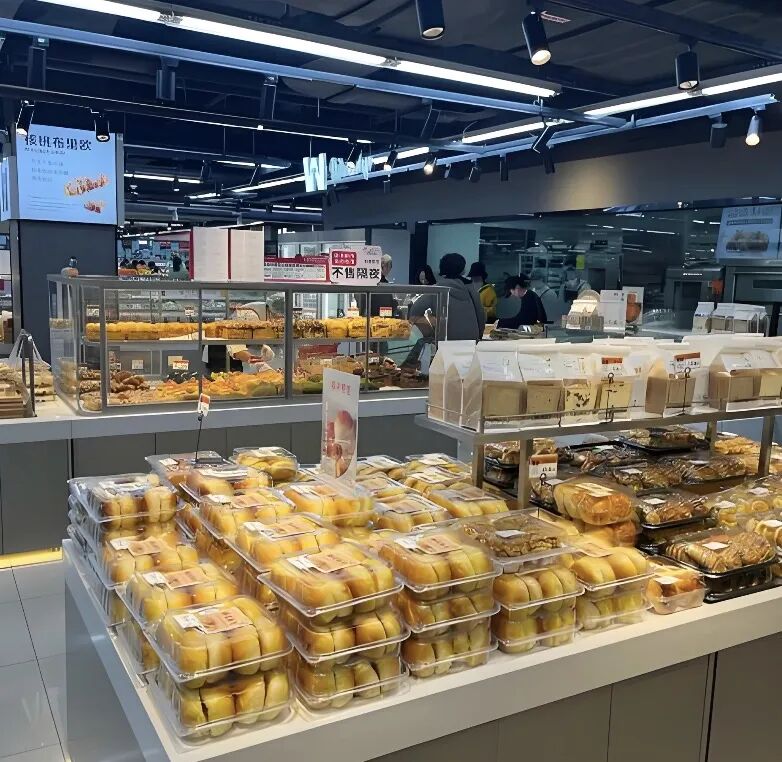
In this regard, hard discount is not a business of seizing market territory at will, and scale cannot cover all problems. Its underlying logic is closer to: running through single-store profitability before replication, which is a better choice.
If a store cannot make profits, and has to rely on subsidies or even capital infusion to survive, the more stores you open, the deeper the loss hole of the supply chain and stores will be. Traditional supermarkets are already in a state of continuous blood loss, and have no spare resources to support an endless money-burning battle.
In the final analysis, hard discount is not a competition of who opens stores faster. What hard discount really tests is whether enterprises can shift from the past operation mode that relies more on channel fees to making profits through product efficiency and supply chain efficiency.
Therefore, for traditional supermarkets now, no matter continuing to make adjustments or testing the hard discount business