Both Nike and lululemon have seen their growth stall, and the sportswear industry has entered an era of fragmentation.
You are about to start running, and initially you only wanted to buy a pair of sports shoes.
After doing a lot of research, you end up with more questions instead. The criteria for choosing shoes for a 5km run and a half marathon seem to be different. When you finally pick a pair, you think about wearing it to work and feel it looks weird with your pants, then you plan to go hiking in the mountains during the holiday and have to check the sole and protective performance of the shoe again.
As a result, you originally only planned to visit one store, but ended up comparing products between several brands. Before you even buy the shoes, you have learned a bunch of terms that you would never have used otherwise.
A person only has two feet, but the sports brands in your shopping cart can even form a whole team.
The trouble you face here is exactly the trouble sports brands are facing today. Brands want you to stick to their products, but consumers are making more and more specific choices. Foot feel, usage scenarios, compatibility with pants - any of these factors may lead consumers to consider another brand.
Following the logic of this shopping cart, it becomes easier to understand the recent negative news of Nike and lululemon.

01 Bad News for Giants Hides Lucrative Opportunities in Niche Tracks
A few days ago, S&P Dow Jones Indices announced that Nike will be removed from the S&P 100 before the market opens on September 21. A company that has long represented sports consumption appearing on the adjustment list is highly symbolic.
Nike's revenue in the fourth quarter of fiscal 2026 decreased by 1% year-on-year, with full-year revenue reaching approximately 46.4 billion USD, which was largely flat on a reported basis. The company still maintains a huge scale, but its growth has become rather sluggish.
Another sports giant lululemon has also lost its previous brisk growth momentum. In the second quarter of fiscal 2026, the company's revenue fell by 4% year-on-year, revenue in the Americas dropped by 8%, and it expects full-year revenue to decline by 5% to 7%. The once-enviable business now requires serious discussion on how to reverse the downward trend.
However, if we shift our sight slightly, the whole picture will change.
On's revenue in the second quarter of 2026 increased by 13.5%, with a 21.6% growth at constant exchange rates; ASICS' revenue in the first half of the year rose by 32.7%, representing a 22% growth at constant exchange rates. Although their reporting periods are different, the contrast in their operating performance is very clear.
Changes can also be observed over a longer time horizon. According to 2025 reports from McKinsey and WFSGI citing Euromonitor data, the combined market share of Nike and Adidas dropped from 27% to 24% between 2019 and 2024, leaving more room for other brands to develop.
While giants are struggling to grow, a number of brands with clear positioning are continuously seizing opportunities. This raises a question: how long can the old expansion logic of super sports brands continue to operate smoothly?
02 Why Is It Increasingly Difficult for the Era of Super Sports Brands?
To discuss the current large and comprehensive layout of Nike, it is best to first look back at how it grew from a small niche field back then.
Its foundation lies in running. In the early stage, it focused on exploring running shoes, and its later efforts to enter fields such as basketball all had clear project-specific attributes.
Running, basketball, and tennis all have their own unique rules. Recognition on the running track will not automatically translate into recognition on the basketball court. Nike had to develop products, win over athletes, and then convince the audience off the court that the brand also understands their sport. The full-category product line that seems natural today was all built through hard-won progress step by step.
What makes Nike stand out is that it can accumulate all these scattered recognitions under the same brand. Performance on the field adds credibility to its products, advertisements extend the charm of athletes beyond the stadium, and physical stores turn this yearning into a pair of shoes that customers can try on. You may not have participated in those competitions, but you can wear that iconic logo.
When this brand appeal is strong enough, the company's business will gain inertia. A person who likes Nike because of basketball may choose to check Nike first the next time they buy running shoes or training clothes. The brand saves new products part of the cost of self-promotion, and consumers also save part of the trouble of doing research.
The lucrative business of super brands lies precisely in this convenience. This convenience was also related to the shopping environment at that time.
Of course, there were also professional brands in the past. But for ordinary people, it was very troublesome to learn about a brand, figure out what scenarios it suits, and then find a place to buy its products. The familiar stores in shopping malls, the advertisements that appear repeatedly on TV, and the shoes worn by favorite athletes are more likely to form the final selection range for consumers.
Brands did the screening work for consumers: once you recognized the brand, you could just go in and pick a suitable product, and the shopping process would be over. After all, most people buy shoes to go out, and they don't plan to learn a whole course about sports equipment first.
As a result, the more familiar a brand is, the more likely consumers will step into its store first; the more people who walk into the store, the more resources the company will have to continue developing products, launching advertisements, and expanding distribution channels. Long-term accumulation forms a positive cycle, and a single brand name can support more and more business.
Nike expanded its brand influence to many sports, while lululemon built strong representativeness in its core field. For brands, the most comfortable state is that consumers decide to buy your products first, and then consider which specific item to pick. They can choose the pants style, color, and fabric slowly, as long as the order stays in your store.
Today, however, consumers are increasingly likely to walk out of that store before paying.
They may still love Nike, but at the same time want to try the foot feel of On and ASICS; they may already have several lululemon items in their wardrobe, but they are attracted by a matching set from Alo. This change does not need to be accompanied by disappointment. The brand has done nothing wrong, but consumers just realize that there are other products worth buying.
lululemon's situation is particularly worth analyzing. It grew up from a niche demand back then, but now it also has to face the continuous segmentation of this very demand. When people buy sportswear, some care more about the experience during training, some want to wear the clothes directly to have coffee after class, and some just feel that their old styles have been worn for too long.
People who were once grouped together can have more and more different reasons to choose other brands. A niche market will not stop segmenting just because a successful brand has already been born in it.
Past success can make consumers remember you, but it is hard to make them promise to buy your products again next time. What super brands most need to adapt to is exactly this familiar but non-exclusive relationship with consumers.
03 The Era of Fragmented Sports Brands Has Arrived
The premise that consumers are willing to walk out of familiar stores is that there are other stores for them to visit.
Consumers have access to more brands that can enter their comparison list. Among them, there are latecomers like On, as well as long-established brands such as ASICS and Salomon. The opportunities they seize do not necessarily come from newly invented products. Essentially, their relatively professional advantages that used to be exclusive to a small group of people are now easily discovered by ordinary consumers.
A pair of shoes can enter the candidate list after being tried on in a specialty store, and can also be noticed through running group discussions, product reviews, and outfit-sharing content. Brands do not need to let everyone know about themselves first to have the opportunity to reach people who really need the product.
In addition, some big brands such as Nike have shrunk their wholesale business and suffered losses from their aggressive bet on DTC, which has also left retail space for other brands.
Chris Anderson discussed a related issue in his original book *The Long Tail*: niche content that used to be hard to discover can find its audience through new distribution and recommendation methods.
Sports shoes involve inventory and R&D costs, so the business model of digital products cannot be directly copied, but the logic of discovering demands is quite similar. Runners scattered in different places can gather around the same foot feel or usage scenario.
Niche demands have always existed. Today, it is easier for brands to find these consumer groups.
Looking further, with more options available, consumers no longer have to compromise easily. If a pair of shoes feels a little tight when tried on, they don't have to convince themselves that it will stretch out after wearing for a while just because they like the brand; if they find a pair of shoes great for running but not suitable for work, they can continue to look for other options. Once the candidate list expands, there is no need to rush to make compromises in one store, and they can take their requirements to the next store.
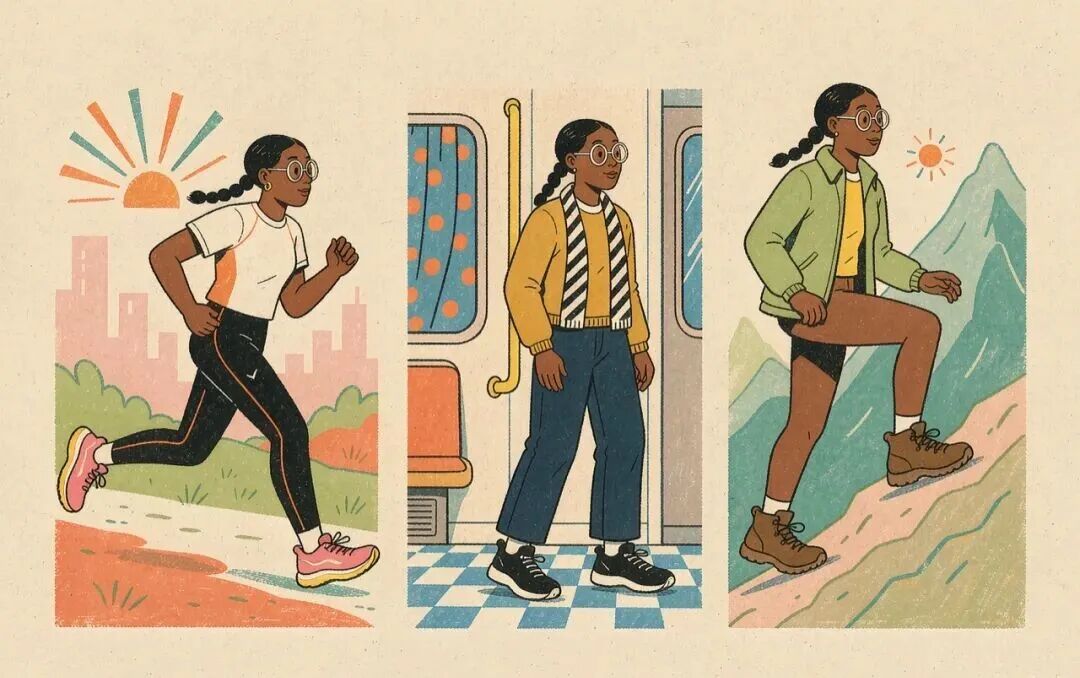
Consumers' lives can hardly be covered by a single product category. They are runners on Saturday mornings, office workers hurrying to the subway on Monday mornings, and hikers wanting to go to the mountains during holidays. These identities belong to the same person, but their requirements for shoes may conflict. The eye-catching colorway that is acceptable when running may not be what they want to wear in the office to make their feet the focus of the whole room. The more usage scenarios a piece of equipment needs to cover, the more consumers have to make trade-offs between performance, comfort, and appearance.
ASICS' performance reveals an interesting detail. In the first half of fiscal 2026, the SportStyle business grew by 65.6% at constant exchange rates, far exceeding the 8.2% growth rate of its professional running business. The growth of professional brands also includes demands for aesthetic experience and daily wear.
Therefore, when we talk about On, ASICS, Salomon and Alo, we cannot just list them as a new set of brand names. They represent that consumers can select sports products with more diversified criteria. Running performance, mountain hiking suitability, comfort level, and outfit-matching effect can all become independent reasons for purchase.
This is the main reason that has led to the era of fragmented sports brands. These brands do not need to outperform Nike in every sports discipline. As long as a certain product makes a specific consumer feel that it is more suitable for them, the brand may win this purchase.
The most direct result of fragmentation is that the budget of the same consumer is divided among different brands.
Brand loyalty has become very specific in this era. A person may stick to the running shoes of a certain brand, but have no interest in its new jacket. Brands certainly hope to sell more products to consumers in one go, but consumers have their own plans: if they are satisfied with the shoes they bought, why should they also buy the matching pants from the same brand?
For big brands, this is where the real pressure lies. The competitors they need to face are only strong in one specific field, but they can compete for the market share of different product categories at the same time. When facing each of these niche brands, big brands have scale advantages; but when all these niche brands are considered together, every business line of the big brands is facing fierce impact.
04 Big Brands Need to Win Niche Markets One by One Again
There is one exception. The performance of Adidas provides a reference for the future of super sports brands.
In the second quarter of 2026, Adidas' revenue at constant exchange rates increased by 14%, and its Performance business grew by 39%. Large comprehensive sports brands can still achieve growth, and scale itself has not become a death sentence.
The R&D capabilities, athlete resources and distribution advantages of large companies still have value. The next challenge is whether they can convert these resources into products that consumers are willing to choose in specific scenarios. Running products need to meet the demands of running, outdoor products need to meet the requirements of outdoor activities, and outfit-matching demands also need to be fully understood.
Nike became what it is today exactly in this way, entering one project after another, and building new credibility every time. Now, it needs to face these specific practical problems again.
Back to the sports bag full of different equipment mentioned at the beginning. A person can love sports, but there is no obligation to give their entire sports life to a single brand logo. The opportunities left by consumers to brands lie in their specific needs before each time they go out.
Big brands in the future need to win small niche markets one by one again. Only by deeply satisfying specific demands can they have the opportunity to continue growing their brands.
This article is from the WeChat official account "Xunkong's Marketing Revelations", author: Xunkong 2009, published with authorization from 36Kr.