The "follow-suit" design strategy of the iPhone Duo is causing Apple to lose its luxury brand halo.
Admit it or not, everyone who spends a large sum of money on an iPhone will feel delighted when their device is "recognized" by friends.
Its high price silently speaks to the owner's financial capability, and its globally recognized positioning as an "electronic artwork" also subtly highlights the owner's taste level.
The iPhone in the Tim Cook era has already become a kind of electronic luxury good. From the notch on the iPhone X to the Dynamic Island first introduced in the iPhone 14 Pro series, every generation of iPhone in daily life boasts extremely high recognizability. These features, beyond its identity as a trendsetter in electronic products, have been bestowed with the unique aura of luxury goods by society.
Today, our chief editor will not talk about the interactive design of the iPhone, nor the experience of its closed-loop ecosystem. Judging solely from the factor of appearance design, the "abandonment" of leading appearance design by the iPhone, a category that has long dominated the "top tier" of the smartphone market, is eroding the luxury attribute it has built over more than a decade.
Simply put, the iPhone Dou, which follows the appearance design of a host of its rivals, is making Apple lose the extremely "valuable" aura of being a luxury brand.
Being Recognized At First Sight Matters Greatly
Among the three foldable phones in the image attached at the beginning of this article, which one is the iPhone Dou? Unless you are a die-hard Apple fan, you will be confused at first glance, feeling that all three look like it, yet none of them do. The correct answer is that none of the three is it, because the camera cutout on the small screen of the iPhone Dou is located at the upper right corner.
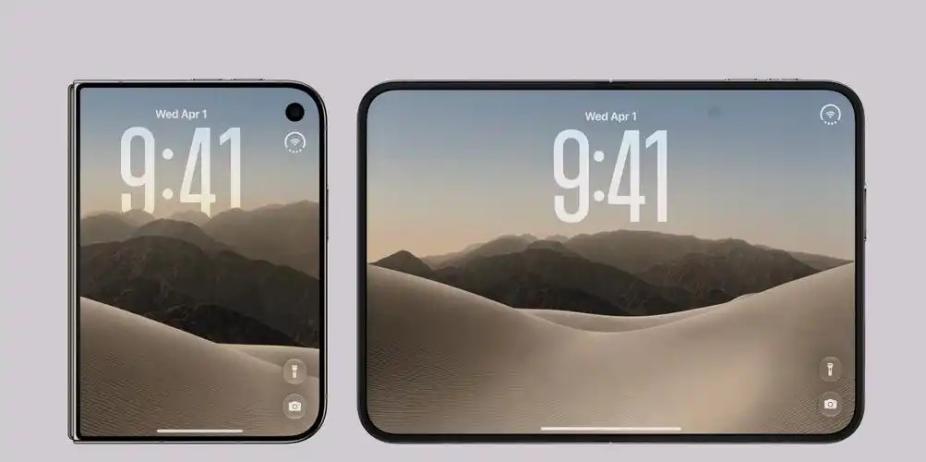
The iPhone Dou itself
Why can't the iPhone Dou be recognized at first sight? The reason is that Samsung, Huawei and Xiaomi adopted similar designs before it. Among the four mid-range foldable phones, apart from Samsung, the other three have extremely high similarity. Without deliberately looking at the logo on the back, ordinary people cannot tell the difference between the three.
The highly similar Huawei Pura X Max was launched in April this year, and the Xiaomi 18 Fold was released only a few days before the official launch of the iPhone Dou. Moreover, both of them were promoted very high-profile. This directly leads to the lack of sufficient surprises of the iPhone Dou in terms of appearance design after its official debut.
Looking back at every generation of iPhone in history, from the minimalist design of the iPhone 4 series to the later large-screen, high-screen-ratio notch and Dynamic Island, the iPhone has always taken the lead in adopting breakthrough appearance design styles of the time, and has attracted a large number of Android rivals to follow suit.
For quite a long time, imitating the iPhone was not a shameful thing, but a fashion and a kind of aesthetic existence.
The unique boot transition animation, the unique interactive design of double-tap to lock the dual screen, and the relatively unique under-screen camera innovation in the unlocked state, will still allow some people to recognize the iPhone Dou at a glance, and the social "star" status of Apple products is still unshakable.
However, the no longer novel appearance greatly reduces the points of the iPhone Dou. Moreover, this following strategy also makes the sense of superiority that iPhone Dou owners naturally generate much less than in the past.
The fact that it cannot be recognized at first sight will subtly break the aura of the iPhone. It is no longer "far ahead" in technology and configuration. If the feature of recognizability also dissipates, coupled with the impact of its price exceeding ten thousand yuan, the glory that dominated an era may leave the iPhone.
Luxury Goods Are Never Defined By High Price Alone
Why is Apple's first iPhone Dou subjected to such serious scrutiny? If its appearance design is similar to that of its competitors, can it no longer be regarded as an electronic luxury? Even Wang Ziru, who loves the Apple brand, believes that "spending 16,000 yuan on a domestic foldable phone cannot be used as social currency". The implication is that the iPhone Dou is still a powerful tool to enhance the aura of personal identity at dinner tables, offices and parties.
Then our chief editor wants to emphasize a key fact: luxury goods, as a product category, have never been simply defined by "high price" since ancient times. For example, LV, Rolls-Royce, Rolex and so on. In addition to their high prices, their unique visual design, leading-edge functions ahead of the times, and the creation of the overall atmosphere are the core of being widely recognized as luxury goods.
In this regard, we have to mention the 8848 phone. It is expensive, but due to the lack of other advantages, it has failed to complete the transformation to the identity of a mass luxury brand to this day.
Simply put, luxury goods never sell the product itself, but the emotion, culture, scarcity and social class identity behind the product. In short, high price is only a common label for luxury goods. What really makes them recognized as widely accepted luxury goods are their unique special features.
Looking back at the luxury gene of the iPhone, it is the leadership and breakthrough that have been precipitated since the Steve Jobs era. Once these two core elements are broken, its brand premium will be greatly reduced. More assertively, as Apple's first foldable phone, it is not a problem even if the price is more expensive. However, the lack of leadership and breakthrough will break public perception, and then suffer the backlash of such evaluations.
Just imagine, the next generation of LV bags no longer have "luxury temperament"; the next generation of Rolls-Royce is no longer domineering; the next generation of Rolex lacks a sense of elegance. Then these luxury goods will reach a crossroads of "end of life".
High price is not scary. Losing its unique genes while being expensive is the fatal factor.
The "Artwork-Oriented" Trend of Smartphones Is Irreversible
In an era of prosperous commercial culture, enterprises in various fields are pursuing the positioning of "luxurization". So far, only a few fields such as bags, automobiles and watches have given birth to globally recognized luxury brands. The reason is that luxury categories will only be born in the categories that humans "love dearly". This love will prompt us to examine them from a "sacred" perspective, and those impeccable brands will receive this honor.
Smartphones have developed to this day, and they have become a category we love very much. Among countless brands, the iPhone is the choice that we consider to have the color of "artwork", which objectively creates the status of the iPhone as a light luxury or electronic luxury good.
We Spend More and More Time With Our Phones
According to the National National Reading Survey released by the Chinese Academy of Press and Publication, in 2025, the average daily time Chinese adult residents spent on mobile phones was 109.54 minutes, a slight increase over 2024. This data mainly counts contact behaviors such as reading and listening to books, excluding the time spent purely on entertainment such as scrolling through videos.
It seems that more than 100 minutes is not particularly much, accounting for less than two hours of a day. If you distribute the scattered mobile phone usage behaviors evenly throughout the day, the time we feel we spend using mobile phones is far greater than the statistical data. We are with our mobile phones day and night, which will naturally increase our emphasis on mobile phones.
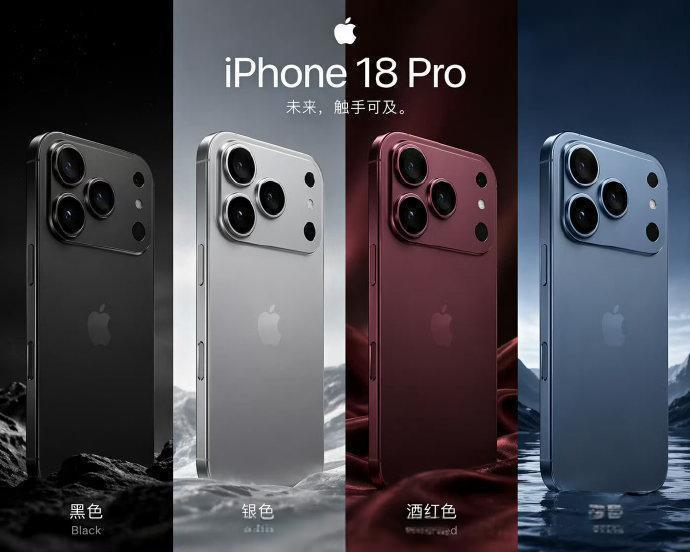
Apple, which is well aware of this feature, discovered the secret weapon of "color marketing" in the Tim Cook era. From colors like Gold, Rose Gold to Hermès Orange and Burgundy Red, it accurately captures users' "deep affection" for their phones and wins their affection with these special colors.
Don't Limit Your Experience To The "Screen Page"
Many people believe that Apple fans' love for the iPhone stems from its smooth UI design, artistic icons and details. The above are the sources of the feeling of electronic artwork, but the influence brought by the aesthetic beauty of the iPhone body cannot be ignored. The minimalist straight board design starting from the iPhone 4 series, and the rounded design starting from the iPhone 6 series. These body designs that conform to people's visual and tactile preferences are also the key to forming the love of each generation of Apple fans.
Every time we pick up the phone with our hands, our "evaluation" of the phone we own has already begun. The overall visual experience it brings us, from unlocking and using it to turning off the screen and putting it in our pocket or on the table, the whole process is the process of our "interaction" with the phone, and every detail determines our evaluation of the phone we own.
Most Smartphone Brands Lack The Design Concept Of High Recognizability
Including Huawei, all smartphone brands lack the design concept of high recognizability. Looking back at the development history of smartphones, only the iPhone has a distinct design style that has been inherited from generation to generation to this day. Whether it is Samsung, Huawei or Xiaomi, they may have a certain smartphone model with a very beautiful design, but so far each series either lacks the continuity of design style, or the characteristics of the continued design style cannot impress users.
This phenomenon is caused by the simple structure of smartphones. A straight, long-shaped phone seems to have little room for "artistic" exertion. More importantly, smartphone manufacturers all take competing for hardware as the core of development, making design an option that is "good enough" to pass.
Make a bold assumption: if the new generation of iPhone adopts the shell and design style of a thousand-yuan phone, will you still like them so much? If the next generation of iPhone Dou still adopts the design that follows its competitors, will you unswervingly buy it purely because of its UI and interaction?
The answer is obvious. At the moment when the iPhone no longer adheres to the identity of "electronic artwork" and begins to lose its aura of electronic luxury, a new opportunity for domestic smartphone brands to achieve a comeback has arrived.
This article is from the WeChat Official Account "Shi Tianhao Observation" (ID: shitianhao01), written by Qinfen de Haozi, and authorized for release by 36Kr.