BYD announced that solid-state batteries will be mounted on production vehicles in 2027: CATL's cash cow business is facing huge risks, and Japanese automakers' dream of turning the tables has been shattered.
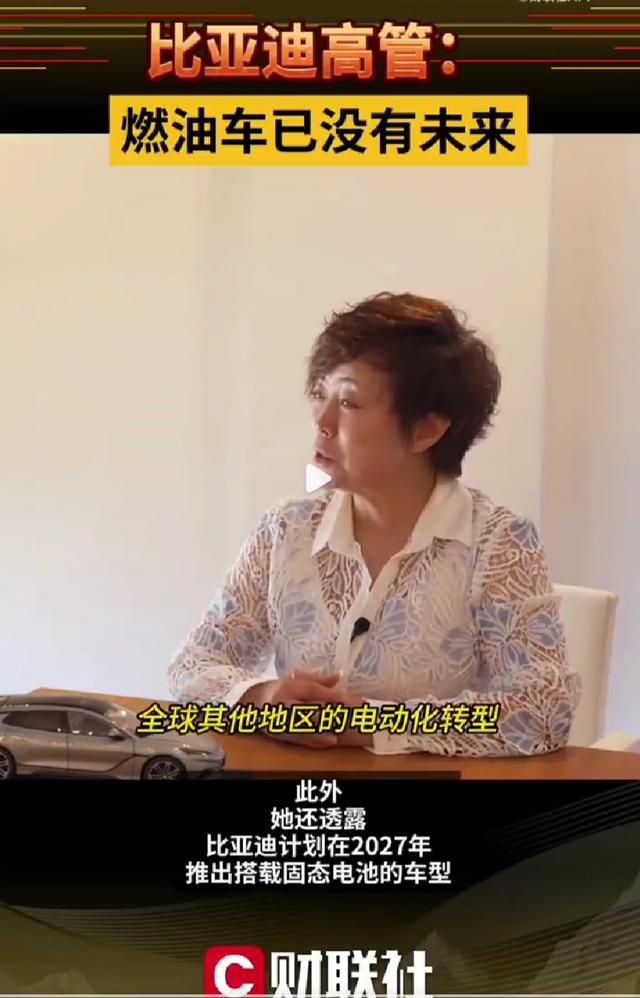
"We are at the leading edge of technology and marketing," a senior BYD executive said. To prove this, BYD plans to launch mass-produced vehicles equipped with self-developed sulfide all-solid-state batteries in 2027, with a single-cell energy density of 400Wh/kg, about twice that of its Blade Battery.
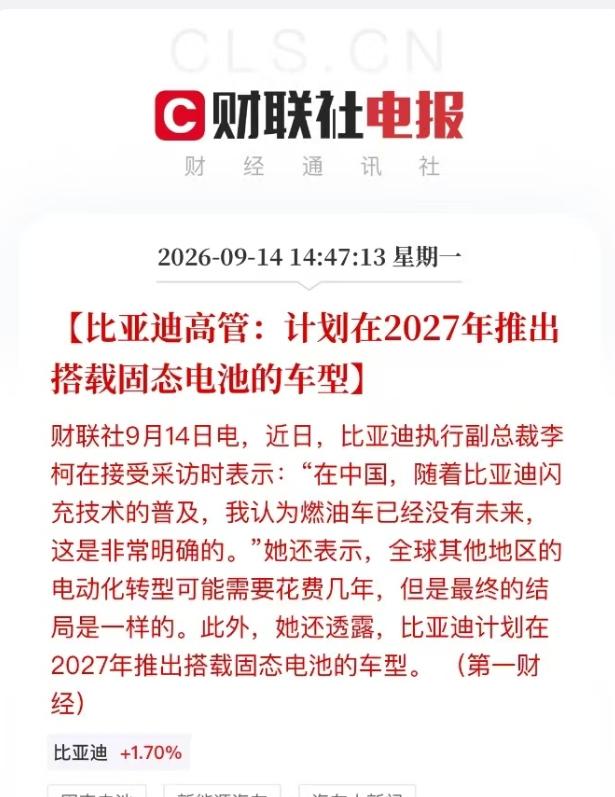
According to available information, the prototype vehicle has a CLTC range of 1218 km, can run 500 km after 10 minutes of charging, and will not catch fire after nail penetration test. 2027 is set for "small-batch demonstration vehicle installation" with an output at the level of thousands of units. Between the trial production line commissioning and full-scale mass production, there are three major obstacles to overcome: yield rate, cost and reliability.
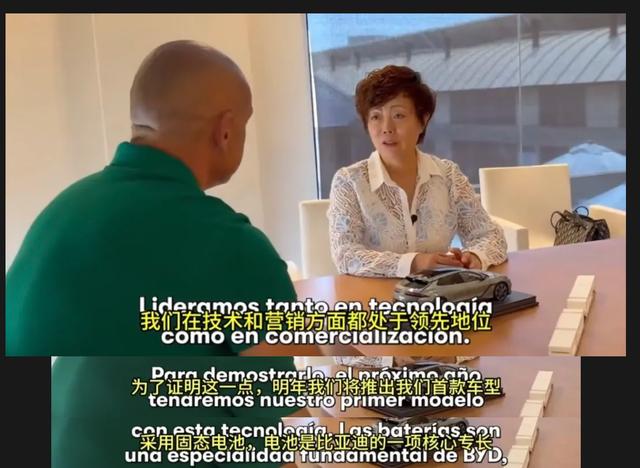
In liquid batteries, the electrolyte is in liquid state, which can penetrate into every pore of the electrode, fully contact the positive and negative electrodes, and ensure smooth ion transmission. However, liquid electrolyte is flammable, and the energy density has a hard ceiling.
All-solid-state batteries replace the liquid electrolyte with solid electrolyte, fundamentally solving the flammability problem and doubling the energy density.
But here comes the problem: when solid makes contact with solid, the interfacial impedance surges, and the cycle life plummets. This is the biggest technical bottleneck of all-solid-state batteries — the solid-solid interface contact issue.
In addition, the use of lithium metal anode will produce lithium dendrites, which pierce the electrolyte like needles and cause short circuits; sulfide electrolyte is extremely sensitive to moisture, and the humidity control requirements in the mass production workshop are more stringent than those of chip factories.
If any of these pitfalls is not resolved, all-solid-state batteries can only stay in the laboratory.
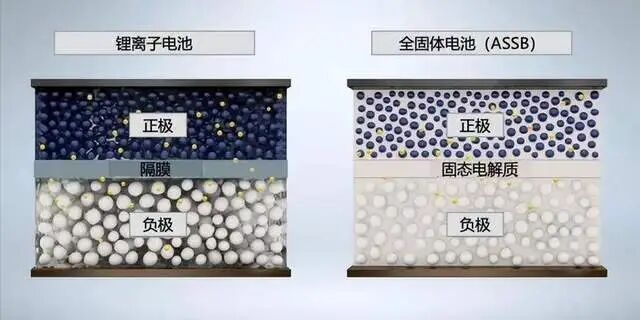
BYD adopts the sulfide technical route. Instead of using the mainstream lithium metal anode in the industry, it has independently developed a low-expansion design silicon-carbon anode, paired with a high-activity high-nickel ternary cathode accounting for more than 85%, avoiding the lithium dendrite pit, while the low-expansion design alleviates the contact degradation problem of the solid-solid interface.
The 2GWh pilot line in Pingshan, Shenzhen has been put into operation, indicating that it is not just making samples in the laboratory, but running the mass production process.
The long-term reliability of the solid-solid interface, the large-scale production cost of sulfide electrolyte, and the mass production yield need to be verified. The thousand-unit-level demonstration vehicle installation in 2027 is essentially to verify these problems under real road conditions.
Japan: The comeback card it has bet on for ten years is about to turn into a dead card
When BYD announced the news of the 2027 mass production of all-solid-state batteries, Japan may no longer be able to stay calm.
Japan is the first country in the world to go all-in on all-solid-state batteries. Toyota alone holds more than 1,300 patents for sulfide all-solid-state batteries, ranking first in the world. The Japanese government and enterprises have invested a total of 1.5 trillion yen, equivalent to about 96.5 billion RMB.
With the obvious downward trend of fuel vehicles, Japan wants to take all-solid-state batteries as its final chance for a comeback to regain its lost market position.
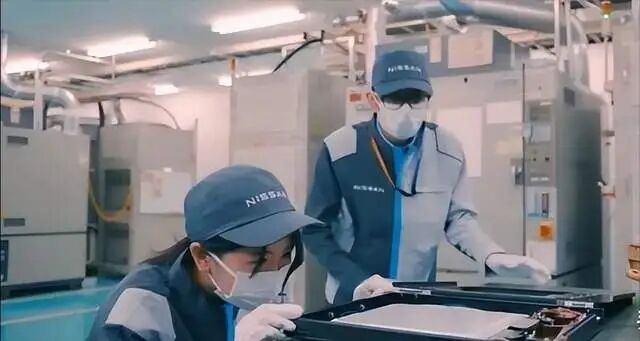
The ideal is plump, but the reality is skinny.
Toyota has repeatedly pushed back the mass production timeline of all-solid-state batteries, from the earliest announcement of vehicle installation in the early 2020s to 2026, and the latest statement in February 2026 adjusted the timeline to 2027 to 2028.
Idemitsu Kosan's pilot line in Chiba is already under construction, with the goal of producing hundreds of tons of sulfide electrolyte by the end of 2027 — the plan is to first equip Lexus flagship models from 2027 to 2028, with an annual production capacity only enough for 10,000 vehicles.
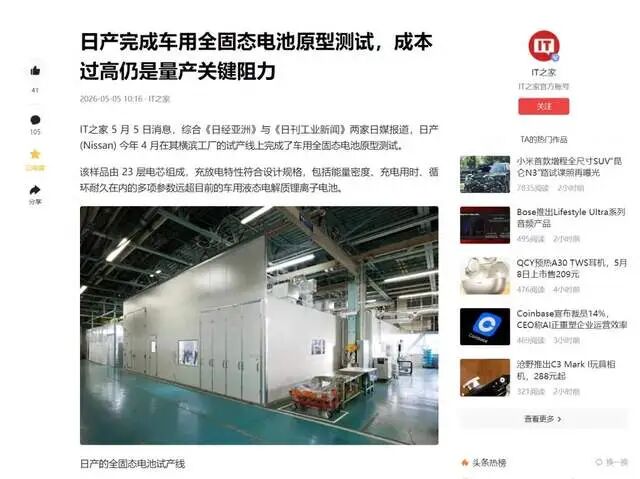
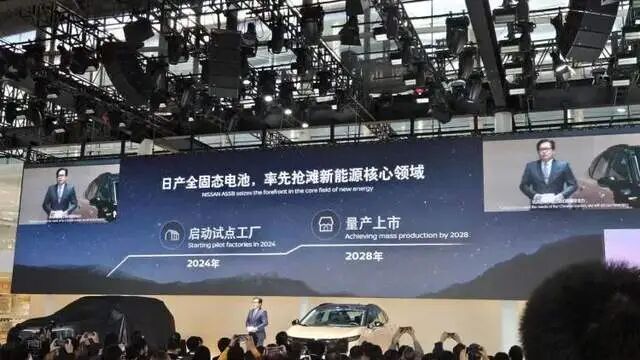
Nissan completed the sample test of 23-layer stacked cells on the trial production line at its Yokohama plant this April, with charge and discharge characteristics meeting the standards. It aims to realize vehicle installation in the 2028 fiscal year, more than one year later than China.
Honda launched its verification factory in Tochigi Prefecture last year, and signed a joint R&D agreement with the US-based QuantumScape this June, with no clear timeline for mass production yet.
The timelines of the three companies all converge around 2028, and all are at the "small-batch verification" level, with no one claiming to "achieve mass production and vehicle installation in 2027".
So where is Japan stuck? At the technical level, both Toyota and Nissan are obsessed with lithium metal anodes because they deliver higher energy density of over 500Wh/kg.
But the world-class problem of lithium dendrites has not been completely solved by Japanese enterprises after more than a decade of research — the cells can only cycle hundreds of times in the laboratory, while the vehicle-grade requirement is thousands of cycles, and short circuits will occur as lithium dendrites grow.
At the industrial level, Japan does not have a large-scale lithium battery manufacturing industrial chain, and it has already fallen behind China and South Korea in the liquid battery era. All production equipment, processes and supply chains for all-solid-state batteries need to be built from scratch.
Toyota's sulfide electrolyte capacity will only reach hundreds of tons in 2027, which shows that the large-scale production of materials itself is a bottleneck.
Coupled with the conservative pace of Japanese enterprises that prefer to apply for patents to claim territories first and then push forward industrialization slowly, as well as the huge base of fuel vehicle business that lacks driving force — trapped by three major obstacles in technology, industry and system, it is not surprising that the timeline has been delayed for four or five times.
Therefore, in the 2027 time window, Japan will most likely fail to keep up with BYD's pace. If BYD really equips vehicles with all-solid-state batteries in 2027, even if it is only a thousand-unit-level demonstration, it will directly declare the failure of Japan's "overtaking on curves via all-solid-state batteries" strategy.
Japanese fuel vehicles are already retreating steadily in the Chinese market. If it falls behind in all-solid-state batteries again, the future of Japan's automobile industry will become more and more passive.
It can be said that this step of BYD has pushed Japan to the corner.
CATL: Raking in huge profits from liquid batteries and reluctant to hurt its cash cow
The domestic enterprise that cannot sleep well is CATL.
CATL has not had an easy time in the past two years. Li Auto's new L8 uses self-developed cells manufactured by Sunwoda, excluding CATL from the supply chain.
BYD's FinDreams Battery has a self-supply rate of over 98%, with a production capacity of 210GWh by the end of 2025. It not only supplies its own vehicles, but also begins external supply. NIO has its own battery subsidiary, GAC has its own ENPOWER, Geely has VREMT... Automakers are all developing batteries independently.
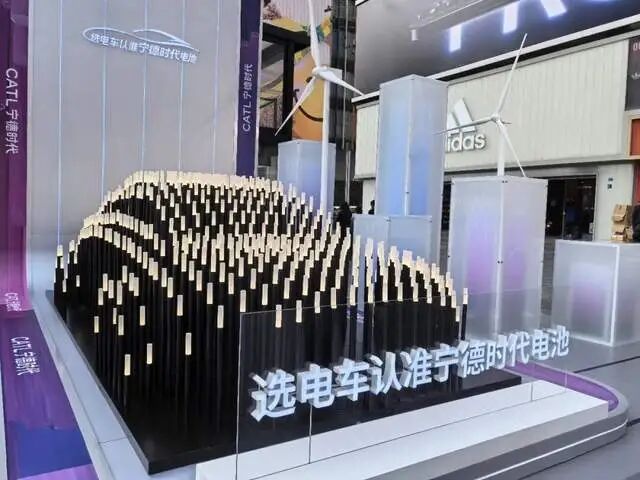
BYD's announcement of equipping vehicles with all-solid-state batteries in 2027 is adding insult to injury for CATL.
CATL has always adopted a "two-pronged approach" in the layout of all-solid-state batteries. One path is condensed-state batteries, which are essentially semi-solid/quasi-solid and can reuse the production lines and processes of existing liquid batteries, with low renovation costs.
The other path is sulfide all-solid-state batteries — truly zero-liquid content. On September 9, CATL confirmed on its Investor Interactive platform that "small-batch production is expected to be realized in 2027". Its laboratory cells have also achieved 500Wh/kg, ranking first in the world in the number of patents, and the 1GWh pilot line has also been built.
At the Davos Forum in June 2026, Zeng Yuqun only rated the technical maturity of all-solid-state batteries as TRL-4 (out of 9 levels in total), clearly stating that the possibility of realizing mass vehicle installation at the level of one million units before 2030 is very low.
What does TRL-4 mean? It refers to the laboratory verification stage, and there are at least 5 levels to climb before reaching mass production. No breakthrough can be expected before 2030.

Why is CATL so "pessimistic" about all-solid-state batteries?
All-solid-state batteries require brand-new production lines and brand-new processes, which means that the current hundreds of GWh of liquid battery production capacity will be completely overturned and rebuilt.
CATL's current liquid battery business has a global market share of 39.2%, with an annual shipment of hundreds of GWh, raking in huge profits.
All-solid-state batteries are a complete subversion of liquid batteries. If they are widely popularized, a large part of CATL's current hundreds of GWh of liquid battery production capacity, supply chain and technical accumulation will become sunk costs.
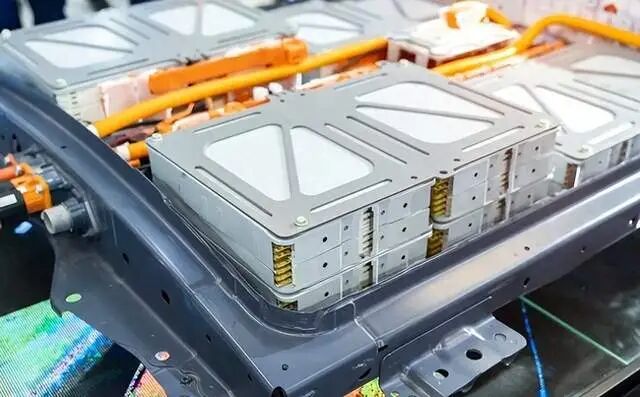
This is just like Kodak, which invented digital cameras but dared not promote them vigorously — because the film business was too profitable, who would have the incentive to revolutionize its own business?
Therefore, CATL's investment in all-solid-state batteries is more of a "defensive layout" — it cannot stop R&D, otherwise it will be subverted by others; but being too aggressive will kill its own cash cow.
Condensed-state semi-solid batteries are its "upgraded version of cash cow" — which can not only improve energy density and safety, but also reuse existing production lines without undermining its own existing business.
BYD is different. Most of BYD's batteries are for self-supply, and the external supply of FinDreams Battery has just started. The "burden" of liquid batteries is much smaller than that of CATL. Moreover, BYD has a vertical integration model, which independently develops and manufactures batteries, motors, electronic controls and complete vehicles. The all-solid-state batteries it develops can be directly installed on its own vehicles without relying on external customers.
This "self-production and self-sales" model allows BYD to promote new technologies faster and with greater determination.
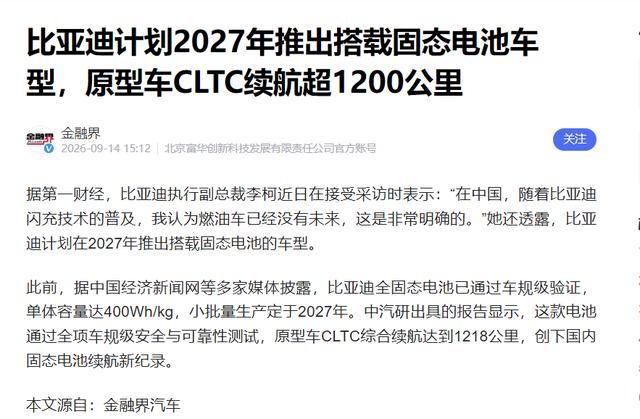
Of course, CATL is no pushover. Its technical reserves are not inferior to anyone's. The 500Wh/kg laboratory cells, the world's largest number of patents, and the 1GWh pilot line are all solid strengths.
But between technical reserves and mass production implementation, what is missing is determination and driving force, as well as the courage to revolutionize its own existing business.
For the several technical pitfalls including the solid-solid interface problem, lithium dendrite issue and sulfide mass production process, BYD has bypassed the lithium dendrite problem with silicon-carbon anode, and worked through the