Tea beverage franchising has entered the "era of dissuading potential franchise entrants".
Leading Tea Brands Update Franchise Policies, Catering Franchising Starts to "Discourage Investors in Reverse"
After 19 months, HEYTEA has reopened the door for franchising.
The "I Want to Become a Partner" application entry has recently been launched on the mini-program "HEYTEA GO". It is worth noting that HEYTEA also clearly reminds at the same time that new tea beverage is not a high-profit industry, and it is not suitable for investors who pursue "short-term quick returns, quick in and quick out".
HEYTEA has listed four types of "discouraged targets": investors pursuing short-term returns, people who lack the willingness to invest in operations, people who underestimate the operational difficulty of the fresh fruit model, and people who are unwilling to operate in accordance with higher service standards.
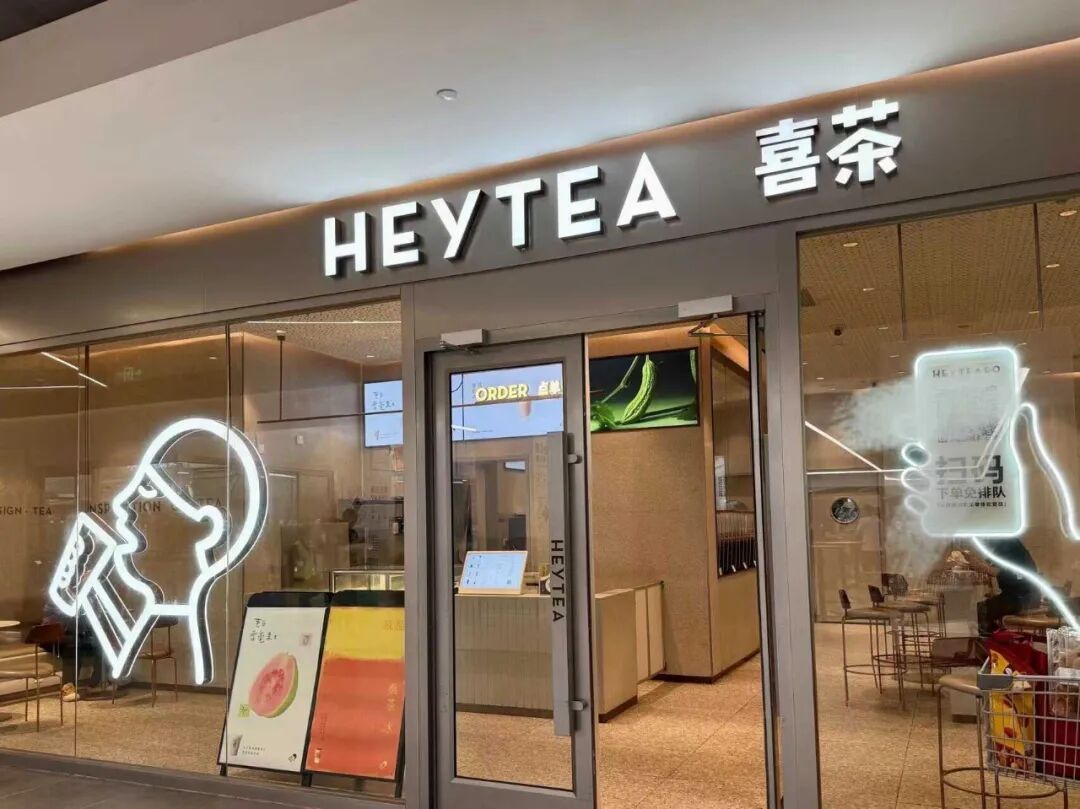
The first thing the re-opened franchise entry does is to discourage franchisees. Behind HEYTEA's advance warning, the goal is not to open as many stores as possible, but to select the right players to bring in, so that the stores can survive for a longer time.
Coincidentally, Guming also recently updated its franchise policy, covering multiple links including pre-opening investment, equipment payment, and store closure and exit.
"Franchise cooperation is not just about completing a single signing. More importantly, it is necessary to ensure the long-term operation and continuous profitability of the store, and gain a firm foothold in the local market." Guming pointed out that this policy adjustment is intended to substantially reduce the upfront investment, so that more funds can be used for store preparation and operation.
Including new stores signed from September 1, 2026, only 15,000 yuan needs to be paid in the first year. Compared with the original upfront payment of 98,800 yuan, the expenditure can be reduced by 83,800 yuan; if a store that has been signed for less than one year closes early, a maximum subsidy of 50,000 yuan can be obtained, and so on.
It can be seen that Guming's focus on franchisees is shifting from "helping franchisees get started" to "helping franchisees gain a firm foothold and develop steadily", and even when the store is struggling to survive, reduce the cost and price of exit, so that "franchisees can exit decently".
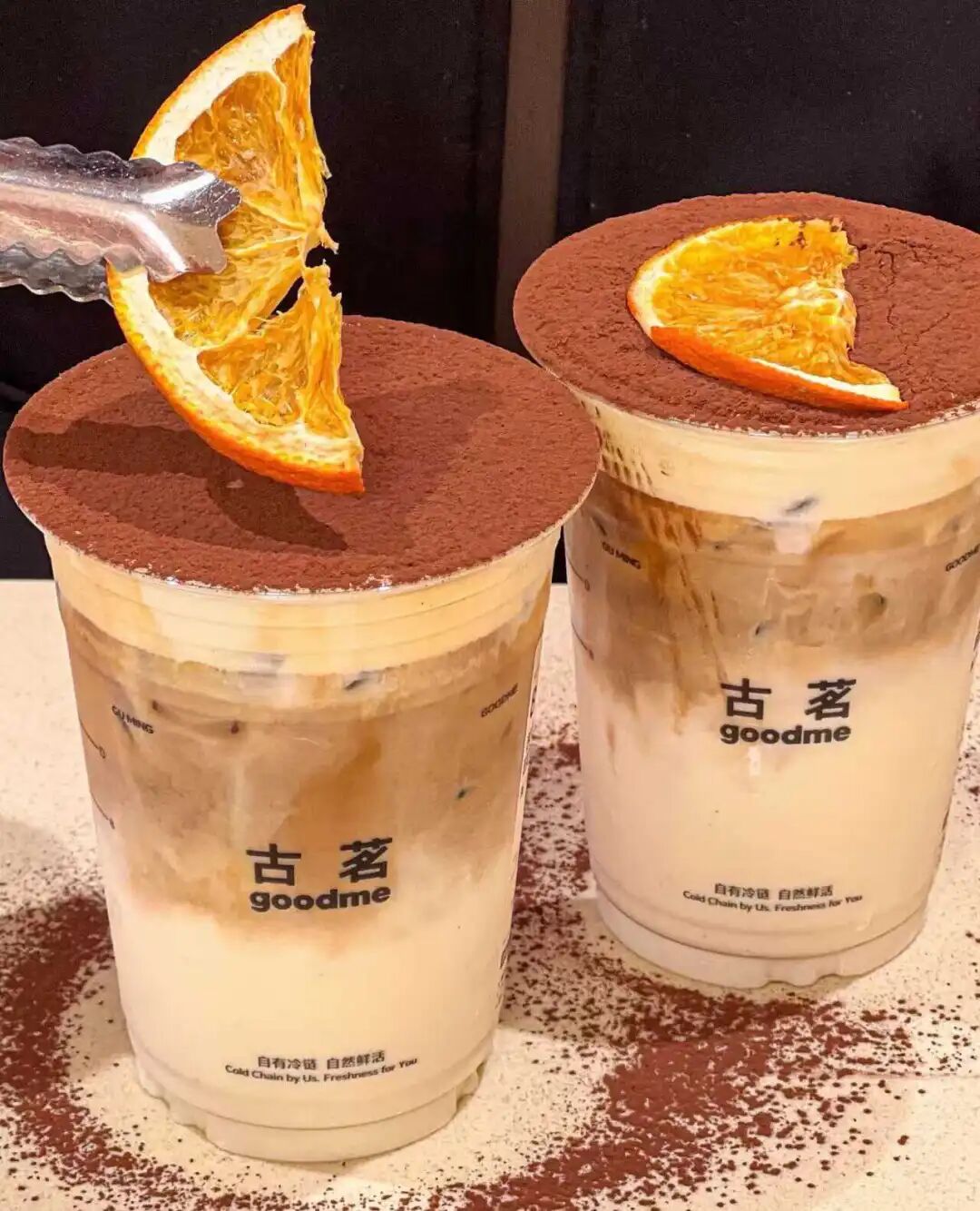
In fact, more and more brands are changing their minds, shifting from "let more people open stores" to "make the opened stores live longer".
In mid-July, Lucky Coffee sent a letter to its franchisees, which stated directly that the number of new stores added in 2026 will not exceed 2,000, and only 1,000 quotas will be allocated in the second half of the year. At the performance meeting in March, Pan Guofei, CEO of Lucky Coffee, also said that "in 2026, the priority will be the revenue growth of single stores, supplemented by scale expansion."
The larger the store scale, the higher the requirements for site selection, operation, supply chain and franchisee's operating capabilities. Lucky Coffee's "slowdown" after reaching 10,000 stores also shows that the brand is striving to find a balance between scale and quality.
Similar changes have also taken place in Grandpa Doesn't Make Tea.
In April this year, the new franchise policy covered the whole chain of entry-operation-exit: the franchise fee for a single store was directly reduced, and additional franchise fee reduction was offered for new franchisees, a stepped store expansion preferential policy was implemented, franchisees were allowed to use second-hand equipment of the same brand, operation management fees were deducted according to the actual operating days, and the rent pressure of high-quality core locations was shared in the form of goods subsidies, and so on.
All of the above is what we can feel from the brand side: opening a franchise store is becoming more cautious. For brands, new stores are still important, but how to manage the stores that have entered the market and how to make franchisees operate existing stores for a longer time has become another more realistic problem.
On the other side of this shift, after the "great leap forward" of franchising in the past few years, the stores, locations and franchisees accumulated in the market are ushering in a reshuffle.
The "Great Leap Forward" of Franchising in the Past Two Years Has Become the "Stock" That Is Difficult to Absorb at Present
In the past few years, franchising has been the strongest growth engine in the tea beverage industry. By continuously opening up franchising, brands quickly spread stores across the country; franchisees entered the market with the momentum of leading brands.
But when the number of stores is approaching the market carrying capacity, these increments are turning into "stock" that must be dealt with.
The franchise qualification that was once "scrambled for by franchisees" is now unattended; today's "10,000-store scale" is no longer just a glory, but also means that brands need to take greater responsibility for the operation of existing stores.
There Are More and More Stores, But Good Business Has Not Increased Simultaneously.
Public data shows that as of June 2026, the number of tea beverage stores in China is about 452,000. Among the mainstream brands, Mixue Bingcheng has about 46,000 domestic stores; Guming and Auntie Fu Shang each have opened 14,000 stores, Cha Baidao has about 8,800 stores, Bawang Chaji has about 7,600 stores...
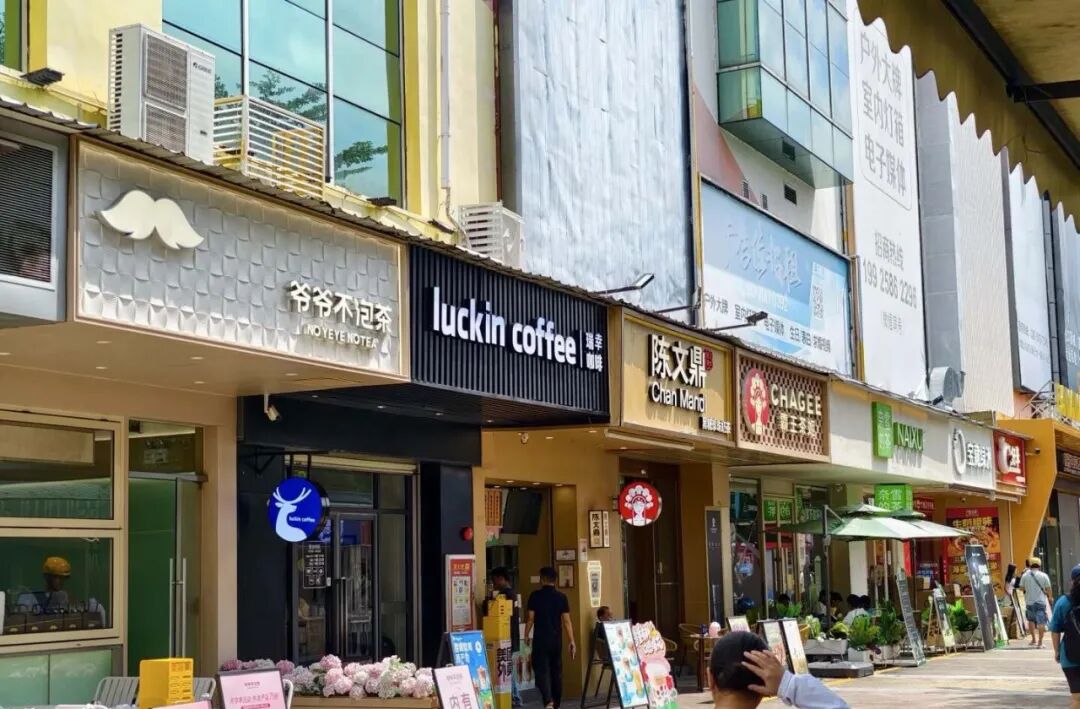
According to reports from many media, tea beverage brands have two or even multiple stores of the same brand within a 1-kilometer radius, and some core business districts even have the extreme situation of "three stores within 100 meters".
The competition in business districts is too fierce, and the same brand begins to divert customers from each other. The more stores are opened, the worse the business of a single store becomes.
Data released by Economic Daily in August 2026 shows that the growth rate of the new tea beverage industry dropped from 19.3% in 2023 to 6.4% in 2025; in 2025, the number of net reduction of ready-made tea beverage stores nationwide exceeded 30,000, and 71% of tea beverage brands stopped expanding stores;
At the same time, Economic Daily also clearly pointed out that with the rise of raw material, rent and labor costs, the profit margin of enterprises has narrowed and the operation difficulty has increased. Another public data shows that the payback period of most mature new tea beverage brands is continuously lengthening.
The current problem is not how many more stores can be opened, but how long the already opened stores can survive.
The Relationship Between Brands and Franchisees Is Getting Tenser.
According to reports, the profitability of a leading tea beverage franchisee has dropped to the lowest point in history. The "5.5-month payback period" that was once regarded as an industry myth has now been greatly extended to 18-24 months, and even more than 28 months for high-rent stores in core business districts.
Franchisees pursue single-store profitability, while brands pursue network scale and efficiency. The most fundamental contradiction in the tea beverage industry is gradually breaking out, and when the "cake" can no longer be expanded, this tension is sharply amplified.
If franchisees cannot make money, the foundation of the franchise model will be shaken. This is also the reason why more and more tea beverage brands have frequently released goodwill to franchisees in the past two years.
From reducing upfront investment and adjusting franchise fees, to installment payment, equipment policies, operation support, and then to store closure subsidies and exit mechanisms, brands have begun to get more and more involved in the affairs after franchisees open stores. In addition, brands such as Guming and Bawang Chaji have recycled stores from poorly operated franchisees, which to a certain extent provides a safety net for franchisees.
Franchising Is Shifting From "Investment-Oriented" to "Employment-Oriented"
The updates of franchise policies of multiple leading tea beverage brands reflect that leading tea brands are redefining franchising.
This mainly stems from the changes in the current catering franchise market: the overall market is still growing, but the way to make money has changed.
In the early stage, tea beverage franchising was more driven by capital and scale: brands rushed to reach 10,000 stores, the headquarters earned franchise fees, equipment and material fees, and professional franchisees bet on the brand momentum to make quick money and even earn transfer fees. In the incremental era, the profit logic of investment-oriented franchising is "seize locations + bet on brand momentum + resell stores".
In the stock era, the above logic fails. At present, new tea beverage stores are still opening new stores, but the dividend period is shorter, the payback is slower, and the profit is squeezed by both rent and headquarters materials.
In this context, brands need to re-examine their own profit model and health capabilities. In the future, only long-termist brands with risk resistance capabilities are suitable to survive in the clearance cycle. Based on this background, brands actively "discourage" franchisees, in addition to the rational reminder that "entrepreneurship has risks", they also hope to give themselves time to polish their internal capabilities.
In other words, the brand side is shifting from "recruiting investment" to "discouraging + reconstructing". The tea beverage franchise market has changed from "accepting everyone who comes" to "advising you to be cautious", which is even publicly reflected in the investment promotion policies. The clear attitude shown by leading brands essentially rejects pure financial investors from entering.
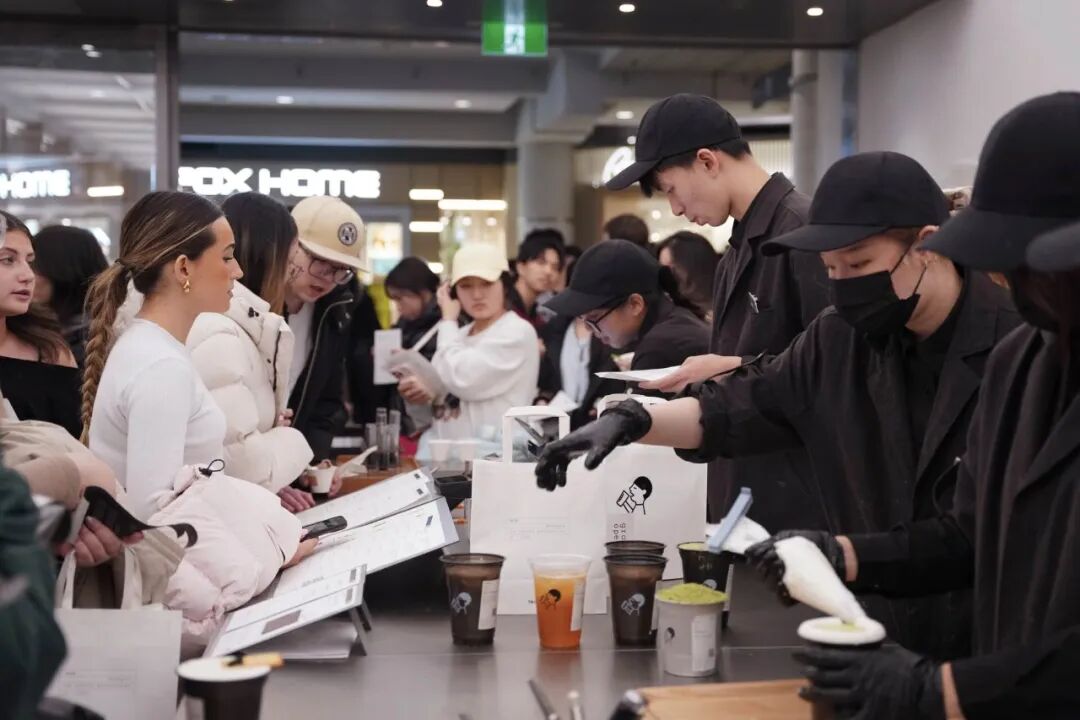
After talking about the brands, let's talk about the franchisees.
A subtle change is that franchisees are changing from "investing to be a boss" to "opening a store to become an employee". The boss personally goes to the front line. Behind this employment-oriented transformation, there is not only the "call of the times and policies", but also reflects the change of franchisees' mentality.
In terms of policies, more and more leading brands require the boss to go all-in on front-line operations: for example, Bawang Chaji requires franchisees to work full-time in the store, meet the monthly store stay duration standard, and "do not accept the pure investment model that does not participate in operation"; Guming requires the single-store franchisee himself to check in at the store, personally make drinks and take orders at the back kitchen, 1-2 stores must be operated solely by the franchisee or jointly by the couple, and "strongly do not recommend financial investment partnership"; the conditions of DIANDIAN are more straightforward: "You must do everything personally, and shall not entrust others to operate the store."
The subtext of these clauses is: the tea beverage industry is fiercely competitive, and the profit of the store is too thin to cover the double labor cost of "store manager + boss". The boss must work in the store himself so that the store can barely break even - this is exactly the definition of "employment".
A second-hand equipment recycler also admitted that combined with factors such as employment rate, in the current tea beverage franchise market, many people even buy a business cash flow - husband and wife store, personally guard the store, and take the store as the source of work and social security.
On the other hand, "employment-oriented" does not mean safer, which precisely indicates that risks are being transferred to the most vulnerable people. Financial investors spend their spare money, and can "operate when profitable, close when losing", while employment-oriented franchisees bet on the main family income and labor force, with higher exit cost and weaker risk resistance.
This is why brands must now provide store closure guarantees and installment payment - because franchisees have no way out. For entrepreneurs, the core indicators to consider whether to "enter" a brand have changed from "whether the franchise fee is low", "number of signed stores" and "store opening speed" to "single store net profit, store closure rate, regional saturation, and whether the headquarters' support is fulfilled".
The Next Step Is to Focus on Inspecting Franchise Quality
Where Will the Franchise Market Go?
The "2026 White Paper on China's Catering Chain Development" released by the China Chain Operation Association shows that the total number of restaurants in China reached 7.47 million in 2025, and the catering chain rate increased from 21% in 2023 to 25%. At the same time, the number of marked closed merchants in 2025 reached 3.39 million, a year-on-year increase of 9.4%.
The simultaneous occurrence of chain rate increase and massive store closures is not contradictory. This shows that a large number of single stores and weak chains have entered the "clearance cycle", and opportunities for expansion and growth are concentrating on brands that have already run through their operating models.
This state will continue to coexist in the future. The overall demand of the catering market will not be evenly distributed to all operators. Brands with existing scale, supply chain and franchise systems will still expand, on the contrary, stores with weak operating models will continue to exit.
Secondly, the industry has entered a period of model re-evaluation. The previously effective categories, stores and franchise models need to be re-tested in the current consumption environment. Whether a brand can survive the new cycle depends more and more on whether the single store model is feasible, whether the product structure can support profits, whether the stores have formed repurchase, and whether the headquarters can stably replicate its operating capabilities. Re-evaluation means breaking the old traditions and ushering in new creation.
Finally, the franchise relationship is changing from a "investment promotion - supply" contract to a "partnership - profit sharing" structure, which will be irreversible. In the future, whether a brand is healthy should be judged by combining the net increase of stores, store closure rate, same-store sales, franchisee renewal rate and the proportion of multi-store franchisees. The number of stores can only reflect the scale, and whether old franchisees are willing to continue investing can better test the single store model and the headquarters' capabilities.
For entrepreneurs, the profit concession from brands means that the negotiating position has shifted to franchisees, which is a rare "buyer's window". However, this cycle never rewards people who are bold and dare to bet, but those who "can calculate the accounts well".
This article is from the WeChat official account "Catering Enterprise Boss Internal Reference", author: Neicanjun, published with authorization from 36Kr.