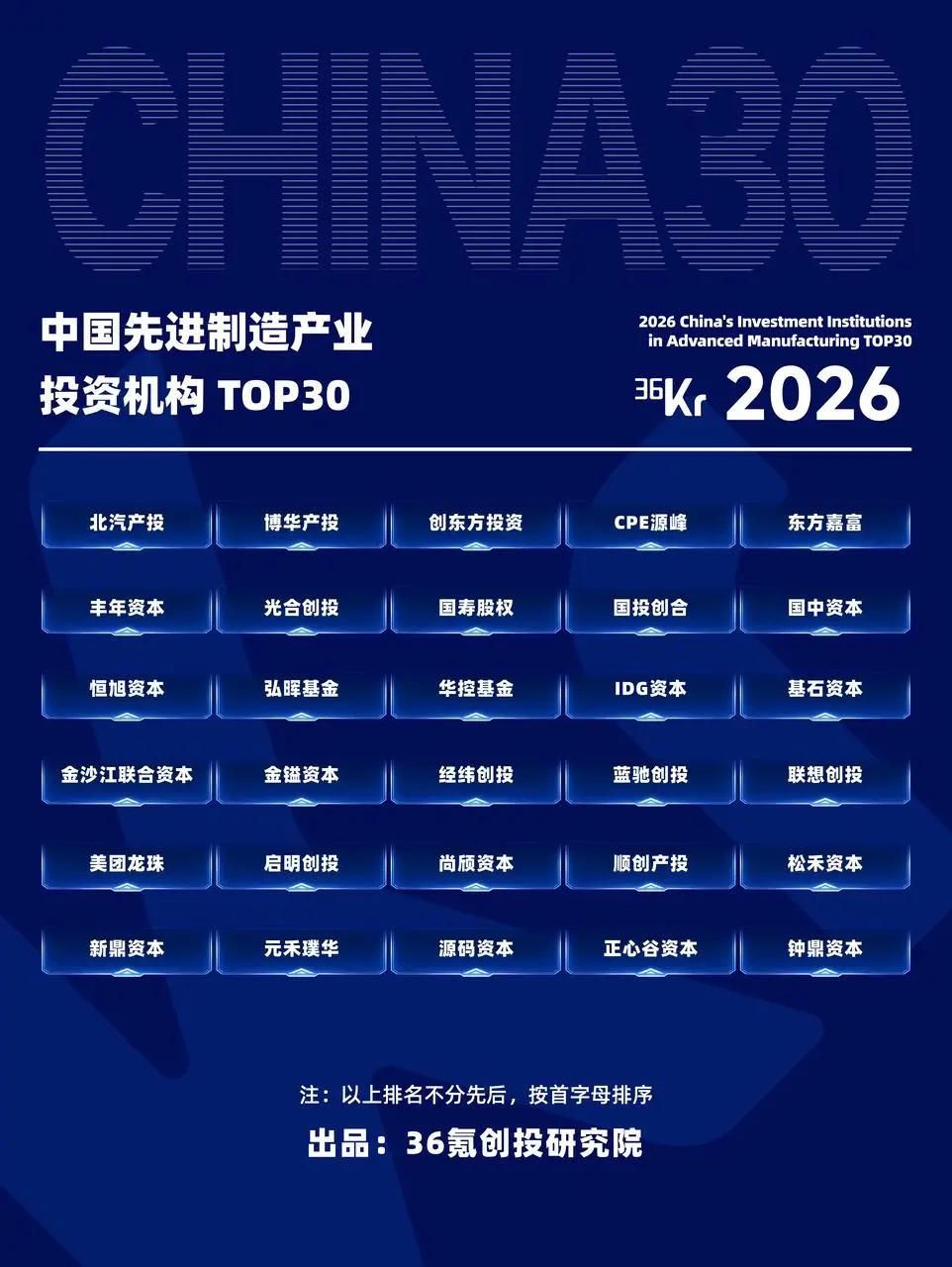
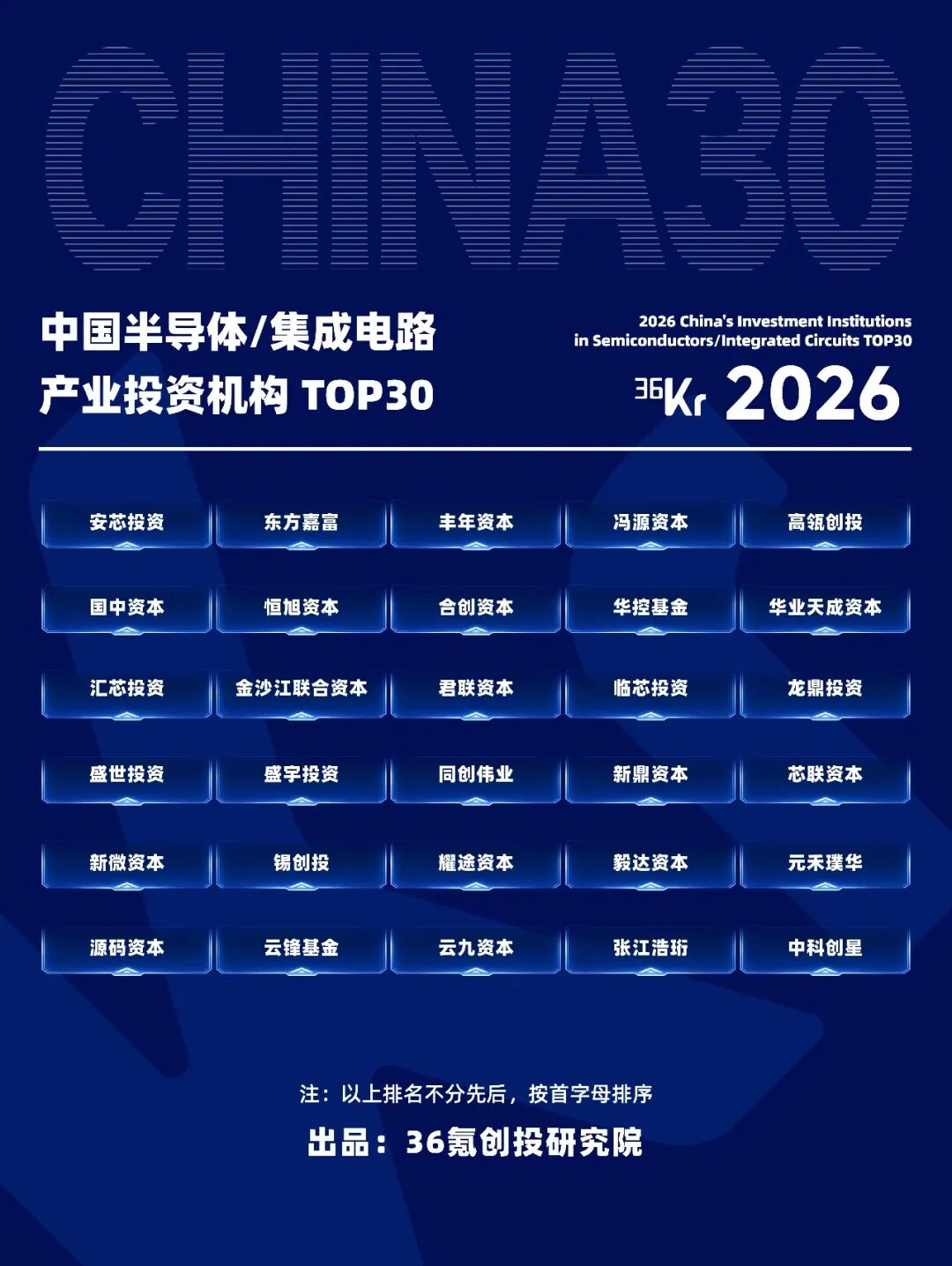
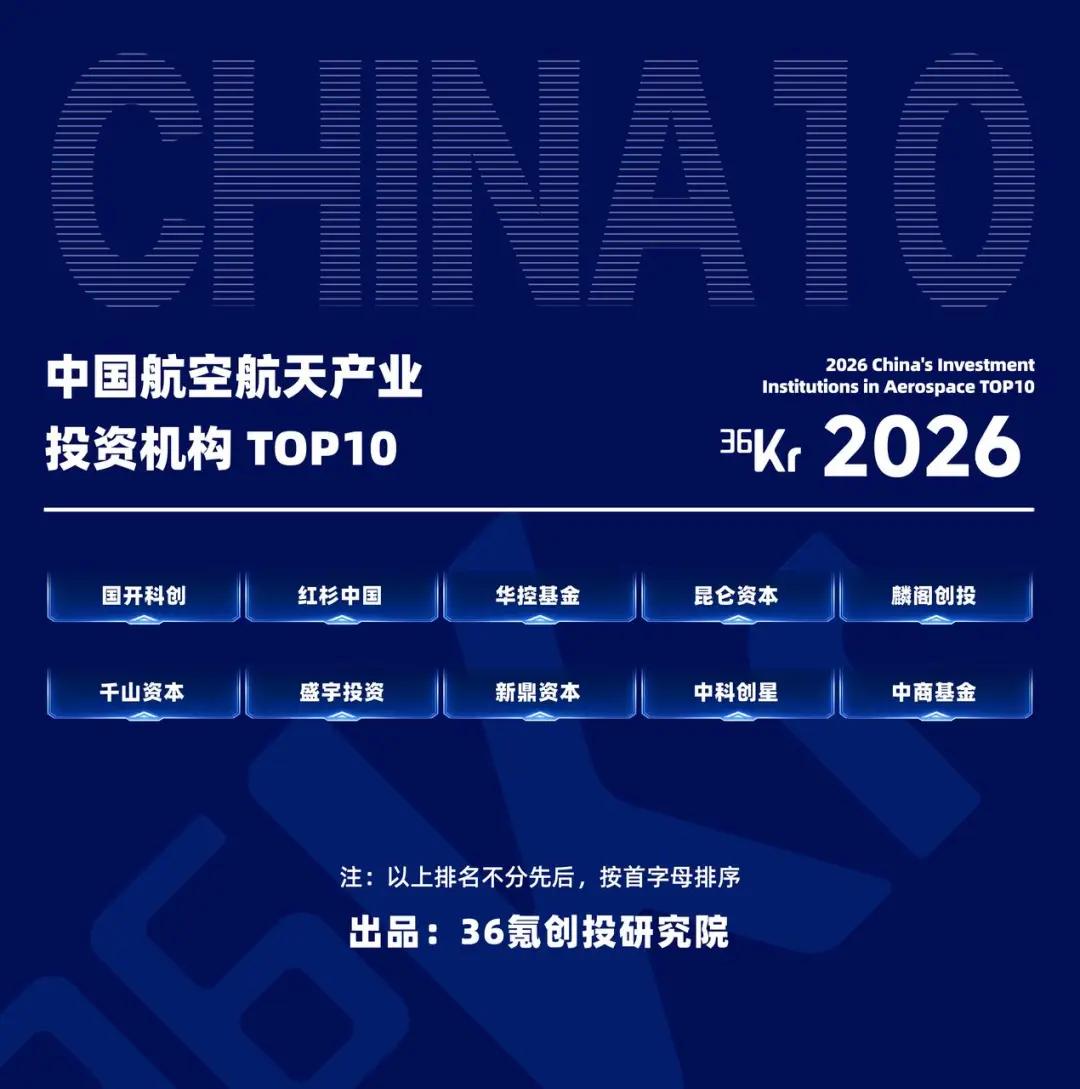
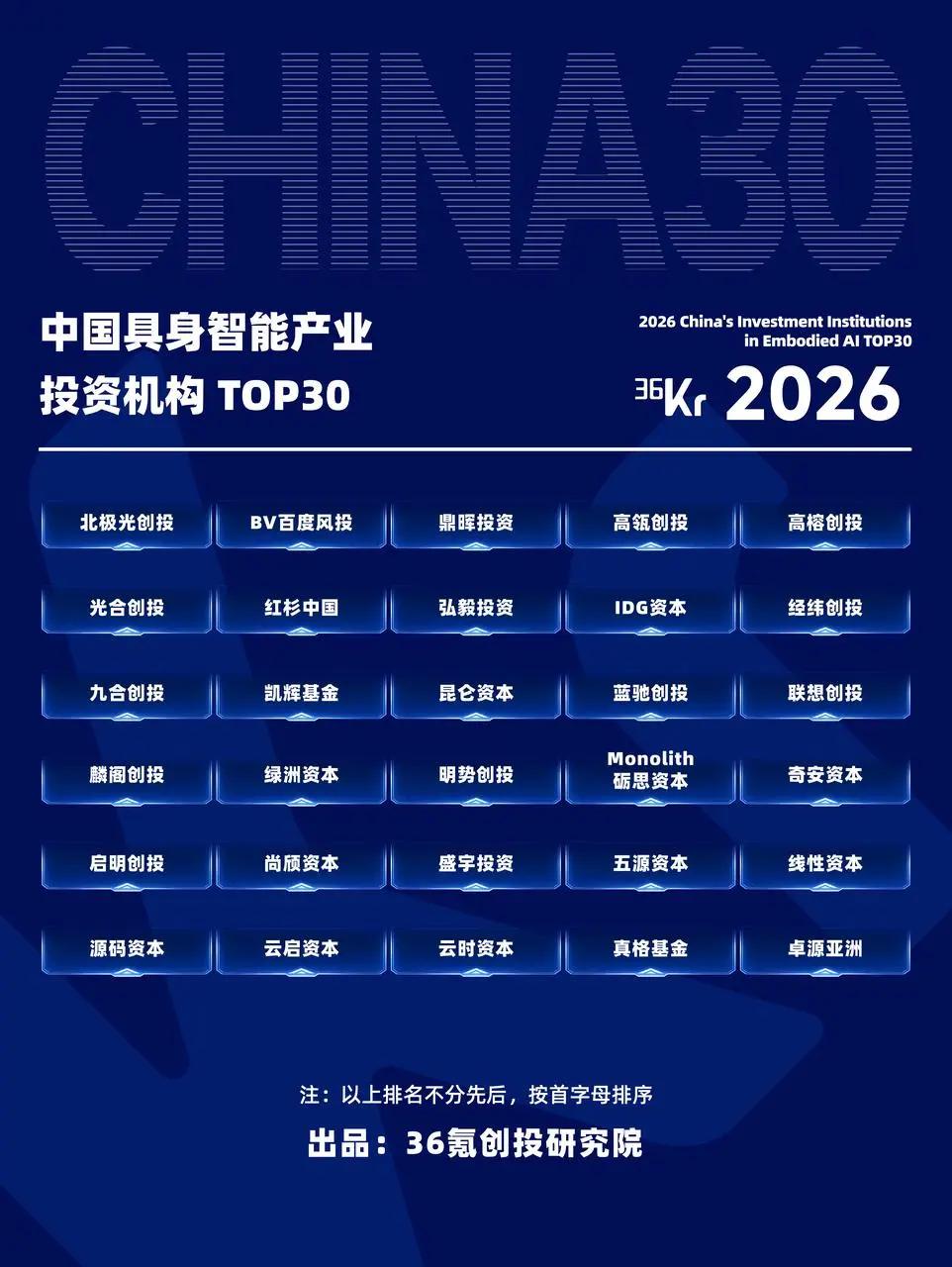
36Kr officially releases its 2026 "Industrial Investment Industry" series of directories.

Document the depth of industrial capital.



The deeper technology penetrates into the industry
the more capital needs to demonstrate capabilities beyond providing funds
The shareholder of a startup may also be its first batch of customers.
In 2025, industrial forces including Meituan, BYD, and TCL have appeared in the financing list of embodied intelligence enterprises. Entering the opening year of the 15th Five-Year Plan, technological competition in fields such as artificial intelligence, advanced manufacturing, and semiconductors continues to advance deeper into the industry. Startups need capital, as well as a production line that can carry out trial production, a group of customers willing to test new products, and the first order after the technology is out of the laboratory.
The weight of industrial capital is precisely reflected in these specific links.
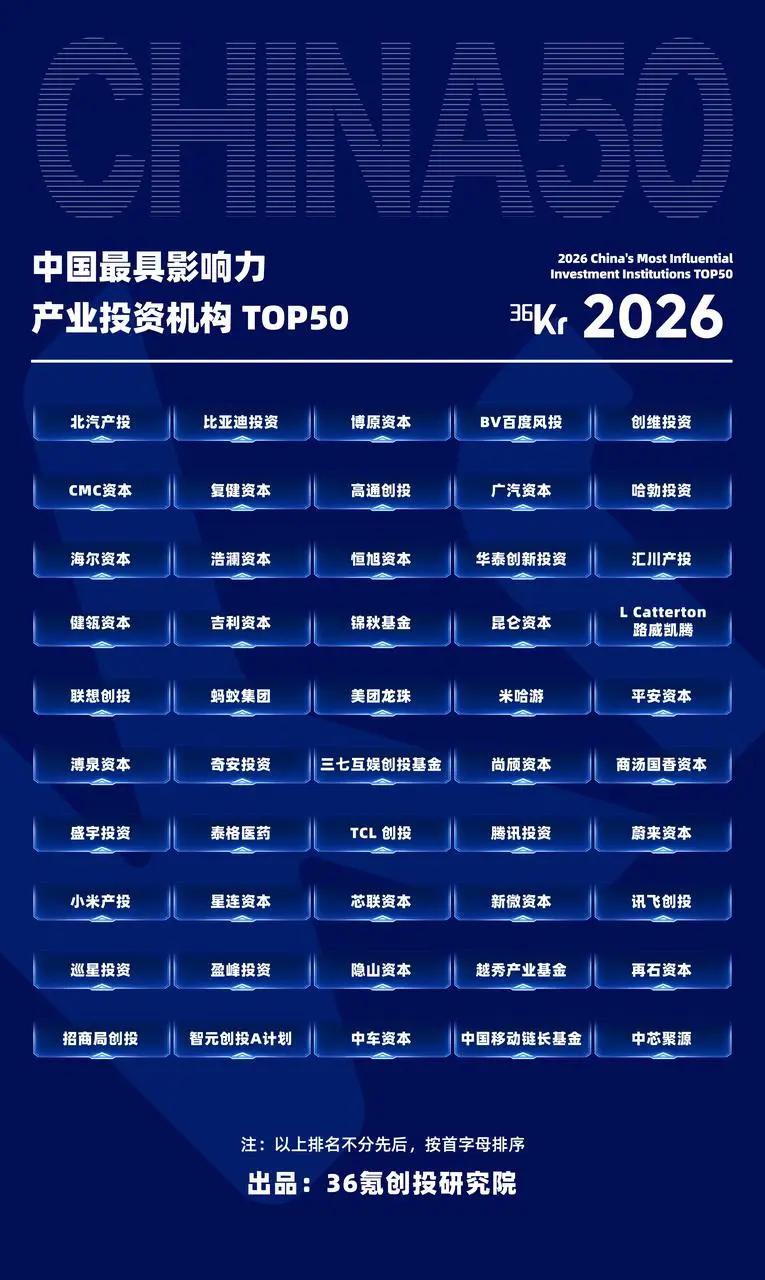
The most influential industrial investment institutions in China in 2026 outline a capital territory with the depth of the real industry. Behind BAIC Capital, GAC Capital, and Geely Capital is the manufacturing system accumulated by the automotive industry; Lenovo Capital, Haier Capital, and Xiaomi Industrial Investment are connected to a huge number of terminals and supply chains; institutions such as SMIC PE and Core Link Capital are close to the core links of the chip industry. Tencent Investment, miHoYo, and 37 Interactive Entertainment Venture Capital are also on the list, and the sources of industrial capital are far richer than "money from the manufacturing industry".
On this list, there is also the Zhiyuan Venture Capital Plan A. A still-growing robotics industry has already begun to provide capital for next-generation technologies. New companies that used to be financing targets also have the opportunity to become organizers of a new round of innovation.
Compared with simple capital supply, these investors are closer to the actual use scenarios of technologies. Whether robots can work continuously on the production line, whether chips can pass customer verification, and whether new materials can be delivered with stable yield, the answers are often mastered inside the industrial chain. Entering this scenario can not only help enterprises shorten the commercialization path, but also enable investment judgments to obtain bases beyond financial statements.
Of course, having industrial resources is only the starting point. Whether resources can be opened to invested enterprises, whether cooperation can be transformed into continuous orders, and whether enterprises can maintain their own technical routes while serving large customers also test the capabilities of investors. Industrial synergy is valuable, and it also requires proper sense of proportion.
Thus, patience is no longer just a virtue, it is a capability - which needs to be truly supported by the organizational structure, decision-making mechanism and assessment cycle.
And what supports this patience is not only the industrial capital side.
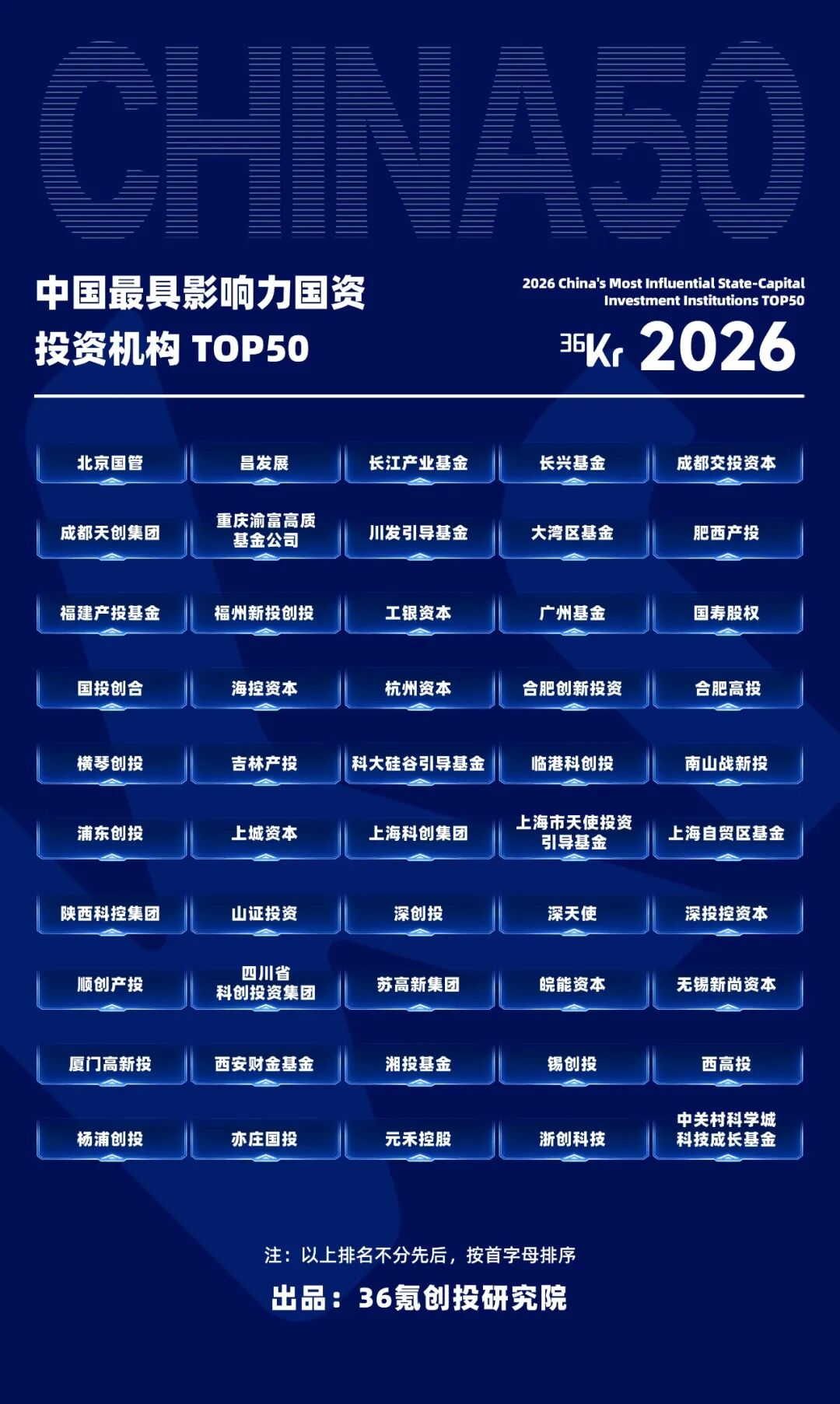
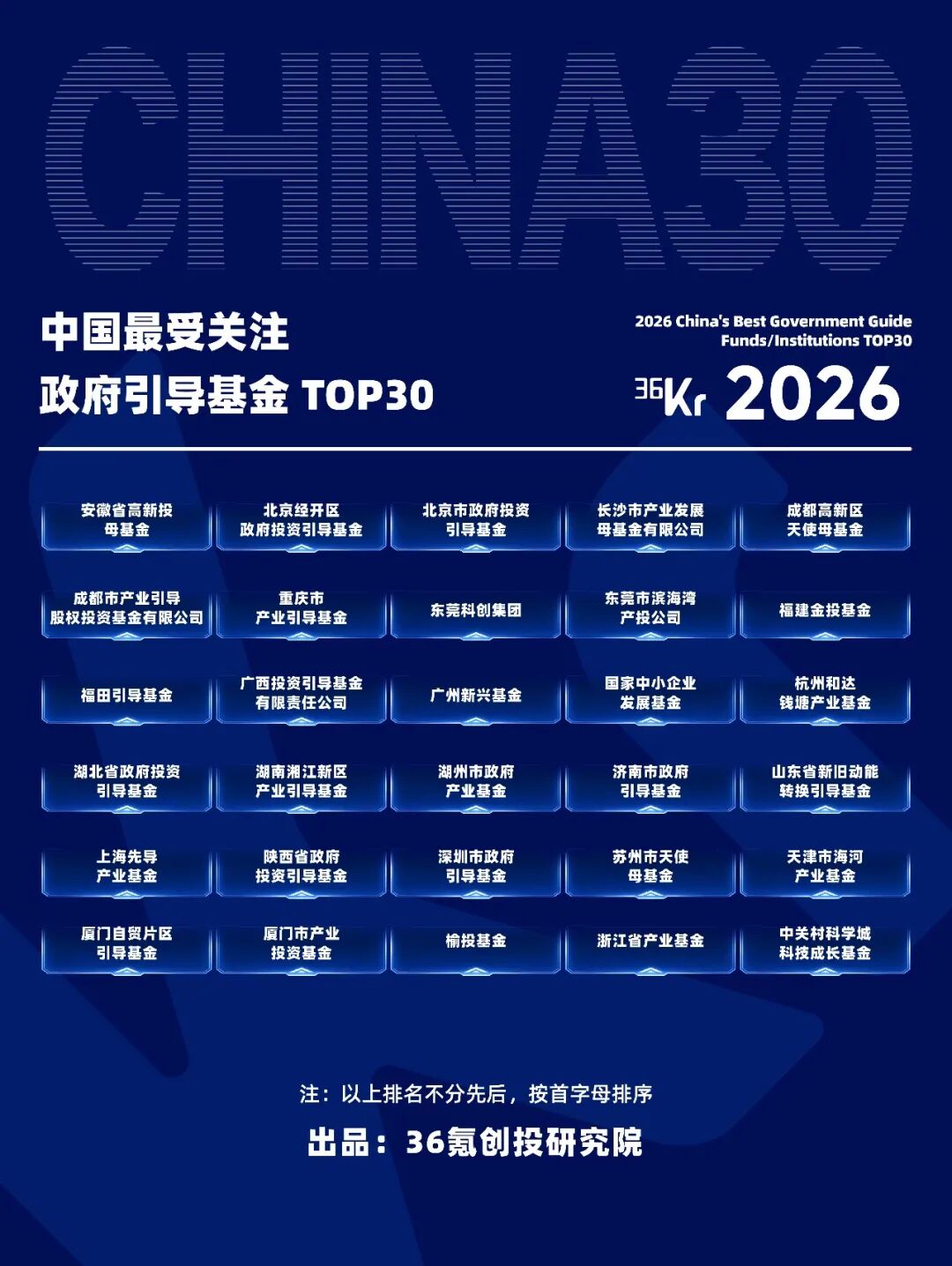
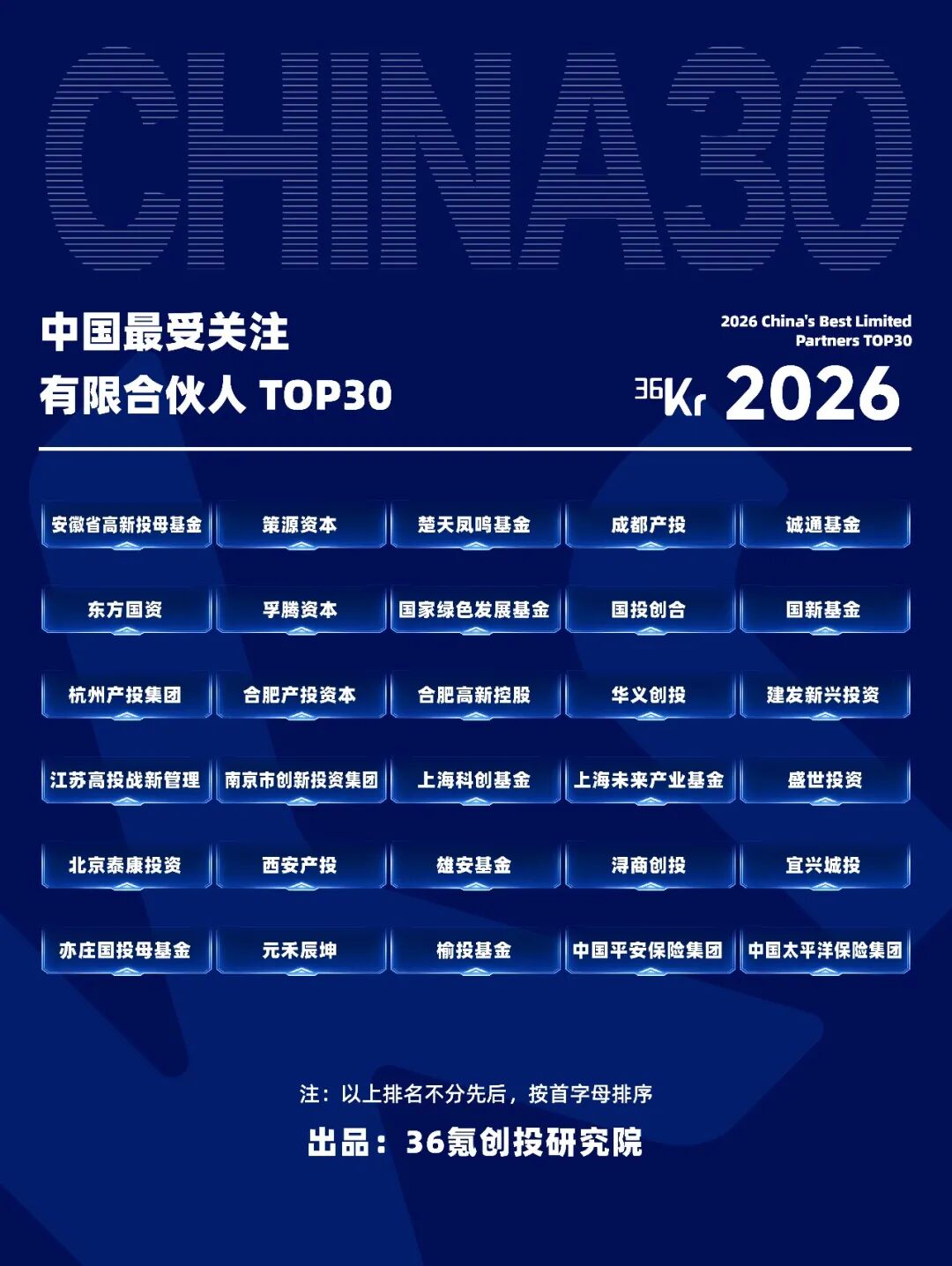
As technology moves from the laboratory to the production line, from prototypes to mass delivery, the structure of funds is also changing. National-level, provincial and municipal guidance funds such as SDIC Innovation and Guoxin Fund together form the cornerstone of the LP camp. They anchor on policy goals, leverage social capital into strategic emerging industries, and provide more patience in long-cycle tracks such as quantum computing, nuclear fusion, and biomedicine.
Local state-owned platforms such as Yizhuang National Investment Mother Fund, Xiong'an Fund, and Chengdu Industrial Investment have entered the market with land, factories, orders and industrial policies, becoming the "industrial interface" that startups first contact when they settle down.
The return of large insurance capitals such as Ping An Insurance, China Pacific Insurance, and Taikang Insurance, as well as the continuous empowerment of market-oriented mother funds such as CICC Capital and Yuanhe Chenkun, have injected huge and more patient long-term capital into the primary market, which means that the LP's screening criteria for GPs is shifting from "pursuing high returns" to "robust allocation".
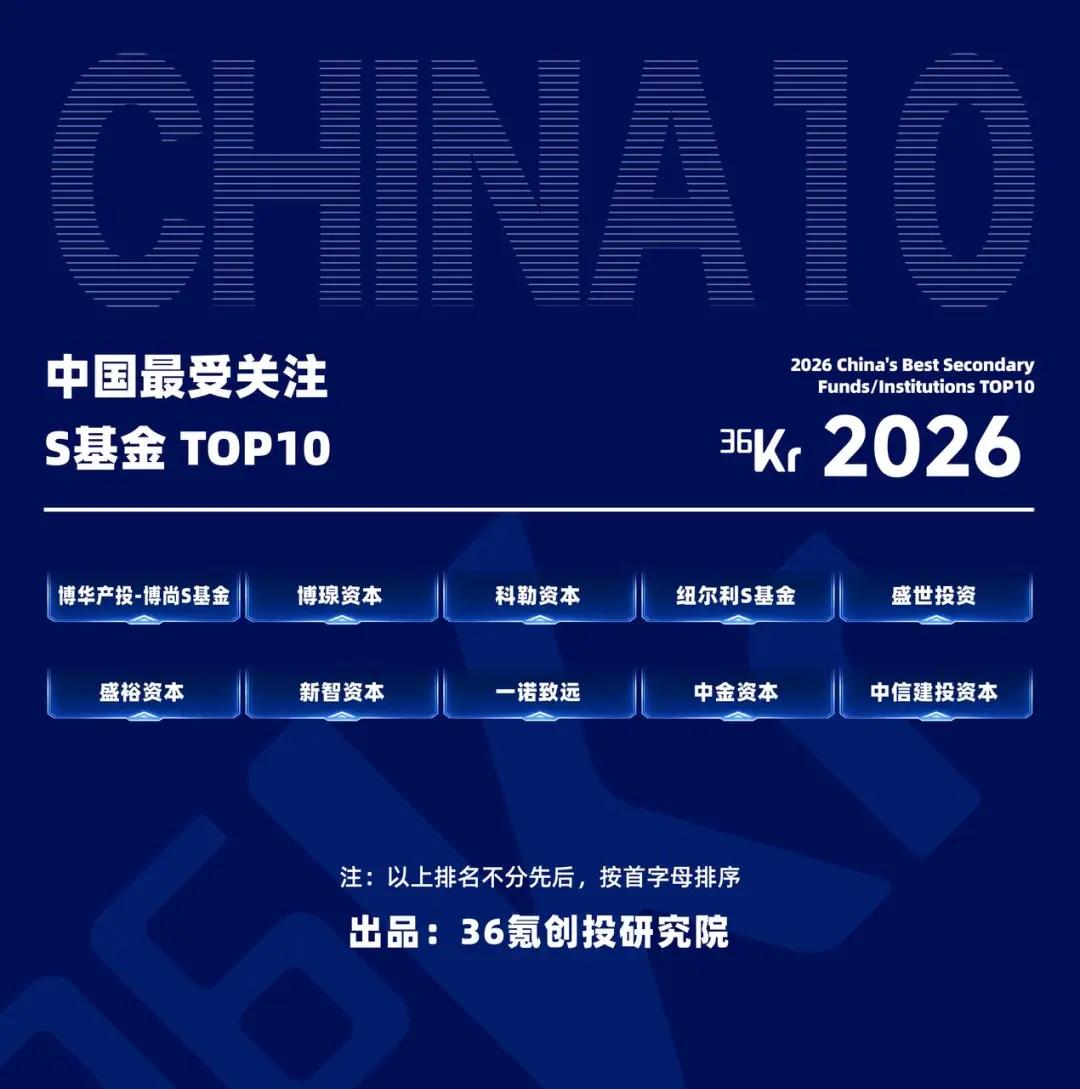
When the duration of the fund is approaching and the LP's demand for liquidity increases, the emergence of S funds provides a liquidity exit for the primary market. It gives "patient capital" a more flexible rhythm, and also gives startups more breathing space between financing rounds.
These forces together constitute the current capital ecosystem of China's primary market, which are intertwined and mutually restricted.
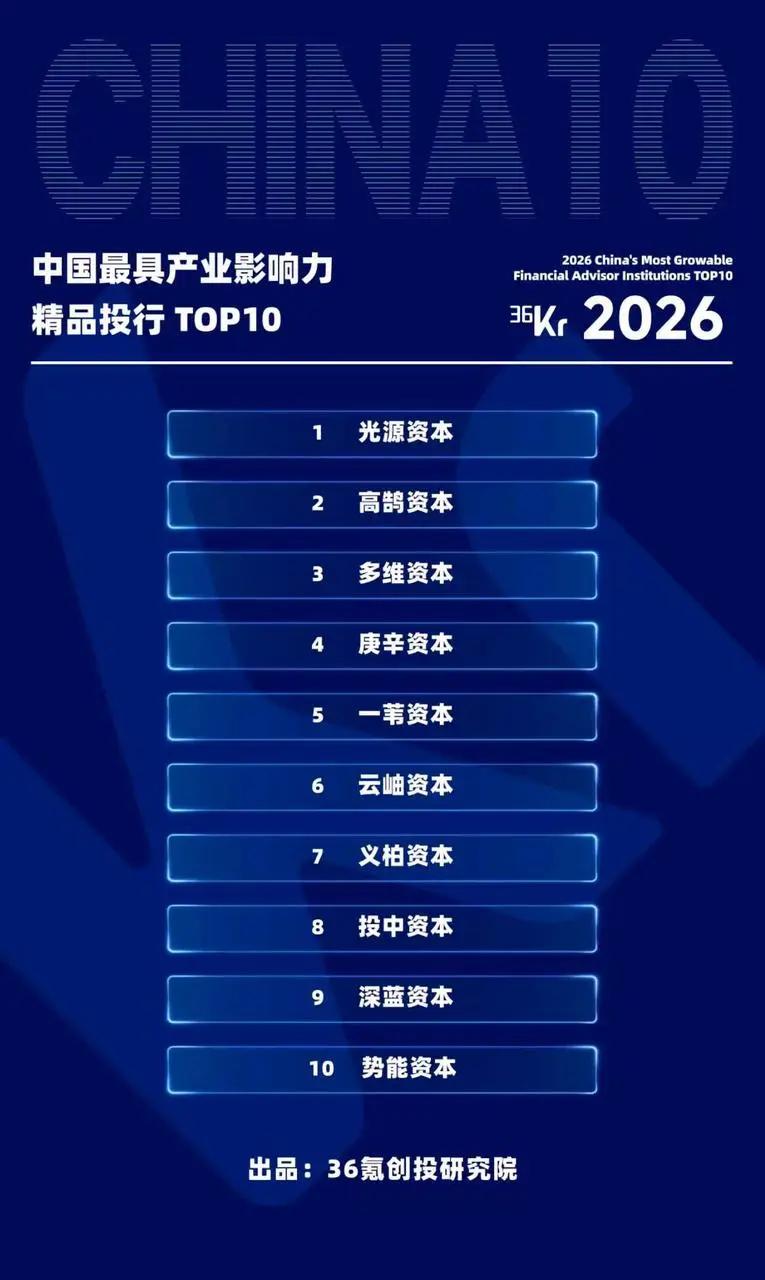
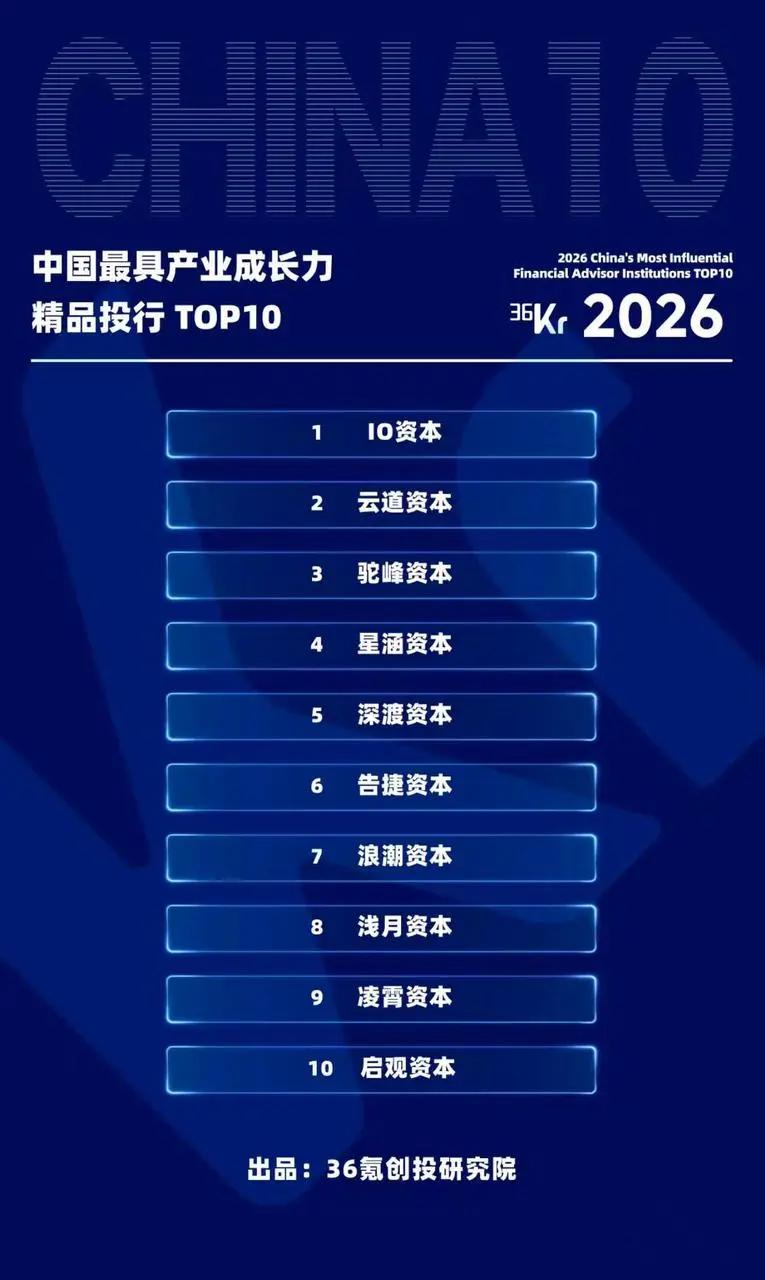
At the other end connecting technology and capital, boutique investment banks are also being tested by industrial capabilities. Lighthouse Capital, Gaohu Capital, and Duowei Capital rank top 3 in the industrial influence list, while IO Capital, Yundao Capital, and Tuofeng Capital rank top 3 in the industrial growth list. For FAs, understanding technical routes, matching capital demands, and promoting transaction completion constitute the basic skills of serving the industry.
This register records those who have turned this matter into an institutionalized practice. Based on the data of fundraising, investment, management and exit, combined with industrial implementation, technology empowerment and exit performance, 36Kr Venture Capital Research Institute officially releases "2026 Annual Industrial Investment Series Register". What this register focuses on is what is left after capital enters the industry.

The answers in one track
are increasingly hidden in another track
There are 19 overlapping institutions in the two TOP30 lists of artificial intelligence and embodied intelligence.
The intersection of more than 60% indicates a technical path that is being connected. The extension of large models to the physical world requires robots to undertake perception and action, as well as support from chips, materials, and precision manufacturing. A seemingly independent new track is often connected to the accumulation of multiple industries behind it. The research radius of investors has also crossed the original industry boundaries.
Among these 19 institutions, there are familiar names such as HSG, GL Ventures, and IDG Capital. A robot investment memo not only needs to answer questions about models and data, but also needs to answer questions about manufacturing costs, supply chains and customer procurement. The threshold of research precisely exists at the connection of these knowledges.
However, the ten tracks do not share the same commercialization timeline.
Artificial intelligence and embodied intelligence face technical choices in rapid iteration; semiconductors, new materials, and advanced manufacturing need to go through customer verification and large-scale delivery; new energy needs to re-find profit space in efficiency, cost and competition pattern; life sciences, aerospace and cutting-edge technologies often require longer R&D cycles. New consumption directly puts the problem in front of users: whether the product can obtain continuous purchases, and whether growth can leave profits.
Putting these industries into the same growth template can easily lead to misjudgment of the value of a company. The R&D cycle, customer needs and verification methods are different. Popular directions can quickly form a consensus, but specific projects still need to be tested by their respective industries.
The boundaries of technology are changing, and professional accumulation has not lost its effect. The backbone of industrial depth is not always the most famous names. Monolith Capital, Linge Venture Capital, and Yunshi Capital for embodied intelligence; Fengyuan Capital, Huixin Investment, and Zhangjiang Henghang for semiconductors; Futeng Capital, and Heda Investment for life sciences... Their management scale may not lead in the same track, but they are unavoidable presences in their respective sections of the industrial chain.
The tuyere rewards response speed, and professionalism rewards long-term accumulation. This selection relies on online surveys and offline visits, based on objective data of fundraising, investment, management and exit, combined with industrial implementation, technology empowerment and exit performance, to observe investment practices in different tracks. The scale and number of projects constitute part of the record, and whether institutions can understand the specific problems of the industry also affects the quality of investment.
36Kr Venture Capital Research Institute officially releases the "2026 Annual Series Register of Industrial Investment Institutions in Ten Tracks". Technology is reconnecting industries, and this list records the capital forces involved, the investors behind them, and the depth they have reached respectively.