Major negative factors are intensifying, can the A-share market turn positive today?
Today, the Asia-Pacific stock markets experienced a downward dip right after the opening bell.
Among them, South Korea's KOSPI index once plunged more than 3%, SK Hynix fell over 5%, Samsung Electronics dropped by more than 3%; Japan's SoftBank Group plummeted over 11% in early trading, Kioxia fell more than 7%; the Hang Seng Tech Index of Hong Kong stock market opened 0.69% lower, AI application stocks weakened, AInnovation fell over 9%, Zhipu AI and MINIMAX-W dropped more than 5%, Cambridge Technology related to optical communication concepts fell nearly 6%.
The three major A-share indices opened lower collectively, the ChiNext Index fell over 1%, the memory chip sector was under obvious pressure, Innolight fell nearly 5%, Yongding Co., Ltd. and Yangtze Optical Fibre and Cable fell over 5%, and high-profile popular stocks plunged one after another.
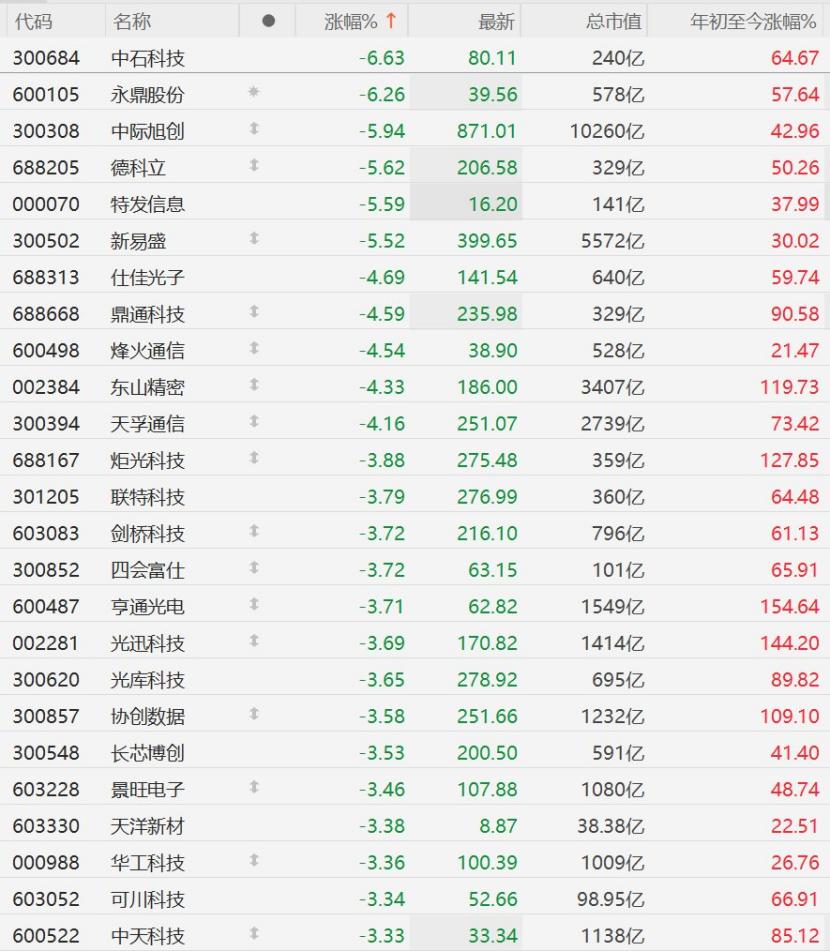
The direct trigger behind this is that Dario Amodei, the founder of Anthropic, publicly published an article, calling on the global AI industry to proactively slow down the development pace of cutting-edge models.
This news quickly triggered a chain reaction in the trading community, the market worried that the valuation foundation of high-growth AI would be shaken, leading to widespread pressure on related assets at the opening.
However, after the short-term sell-off in early trading, the major A-share indices began to stabilize and rise after 10 a.m., and finally turned positive.
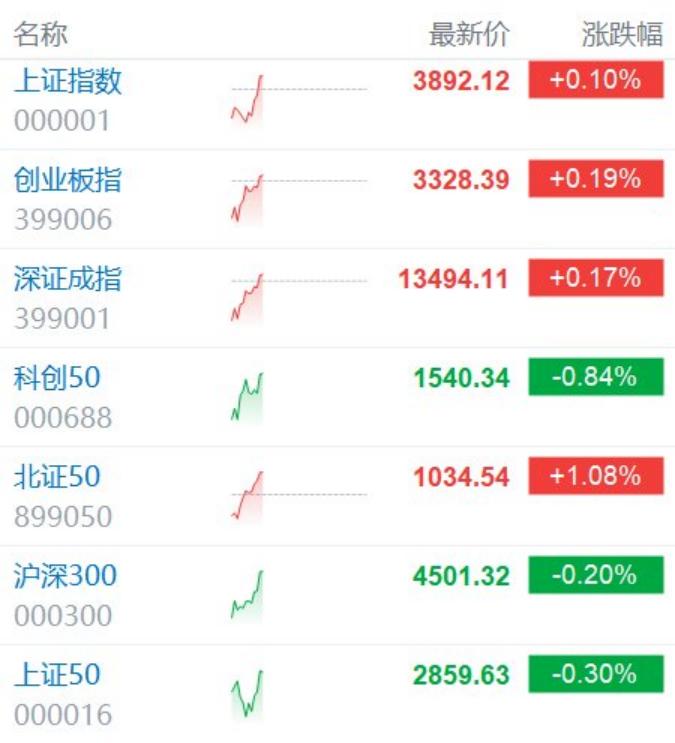
Nevertheless, the subsequent trend remains volatile: some sectors continue to rebound, while others show weak rebound momentum.
Investors are certainly very concerned about how to view this negative news.
In fact, it is not complicated, we can analyze it from two perspectives.
In the short term, it will indeed pour a basin of cold water on the red-hot AI market rally, but in the long run, it is just a small spray in the long history of AI development, and will not change its development direction.
The core of Amodei's initiative is to emphasize safety and alignment, calling for setting aside time to improve the regulatory framework and ethical boundaries while technology advances rapidly, rather than stopping R&D or cutting capital expenditure.
The decision of OpenAI to postpone its IPO is more out of prudent consideration for the current security situation and market environment, which is a kind of expectation management, rather than a denial of the industry's prospects.
From the perspective of industrial evolution, this marks that AI development is moving from the early cost-agnostic arms race to a mature stage that pursues commercial implementation and sustainable profitability.
Such rhythm adjustment is conducive to the healthy development of the industry in the long run.
More importantly, the underlying logic supporting the development of the AI industry has not changed.
Whether it is the continuous investment of global tech giants in computing power infrastructure, or the clear support from domestic policy level for the construction of computing power networks, it all shows that the demand for computing capacity remains strong, and even continues to grow driven by the explosion of inference applications.
The market sell-off is more of a short-term impact at the sentiment level, rather than a substantial deterioration of fundamentals.
The pattern of supply shortage in chips, energy and computing capacity still exists, and any sentiment-induced weakness is likely to be temporary.
This kind of event has occurred repeatedly in the past few years. For truly high-quality AI stocks, the pullback is not a risk, but a rare opportunity instead.
Without such negative shocks, it is difficult for high valuations to pull back, and it is impossible to provide a reasonable price level.
Only in the irrational panic, the short-term fall of valuations brings new opportunities with sufficient margin of safety. At the same time, the severe market differentiation will also accelerate the clearance of pseudo-concept stocks, which is conducive to capital gathering to the real high-quality concept stocks.
For investors, they can take risk avoidance or reduce positions in response to short-term fluctuations, but there is no need to deny the overall development direction of AI. Instead, the pullback should be regarded as a kind of "health check", to examine which AI investment logics and which AI stocks remain resilient, which have been falsified, and take the opportunity to check whether the stock price has fallen to a reasonable range and whether new opportunities have emerged.
This article is from the WeChat Official Account "Gelonghui APP" (ID: hkguruclub), written by Gejila, and authorized for release by 36Kr.