After the iPhone Duo enters the market, the profit margins, yield rates and bargaining power dynamics of the foldable display industrial chain have been restructured.
Starting from the Samsung Galaxy Fold launched in 2019, the form factor of foldable smartphones has been continuously evolving, with inner-folding, outer-folding, triple-folding, and wide-folding designs. These products either pursue a tablet-like experience when unfolded, or aim to behave like a regular bar phone when closed, essentially shifting back and forth between the form factors of phones, tablets, and computers.
Chinese domestic manufacturers, with an almost brutal iteration speed, are committed to turning foldable displays from a niche product for geeks into a formal, scalable business. Xiaomi cut the price to 9999 yuan, and OPPO pushed it down further to 7999 yuan. By 2025, China's foldable display shipment volume exceeded 10 million units, with Huawei alone accounting for 71.8% of the market share.
Everyone is asking: When will Apple enter this market?
Waiting for the market to be fully educated, waiting for the supply chain to mature, waiting for itself to find the right development path, and then entering the market as a definer — this has been Apple's most successful playbook in the past.
In fact, Tim Cook is interested in foldable smartphones. During his visits to China, he saw more and more consumers using Huawei and Samsung foldable devices. After wrapping up his Asia tour in 2020, he pushed to accelerate the related project as soon as he returned to the US.
However, the extremely strict hard indicators Apple set for its engineering team are far beyond ordinary levels: the crease depth must be less than 0.15 mm, the crease angle less than 2.5 degrees, and the yield rate of liquid metal hinges must break through the 85% mass production threshold. Since the actual yield rate of the supply chain has long been stuck at 60%-70% and failed to meet the standard, Apple paused the project first.
Seven years on, the foldable display category has never truly stepped out of the niche market. The penetration rate of foldable displays has remained at around 2% so far. In the first half of 2026, global shipment volume dropped 21.6% year on year, and the clamshell small foldable category even plummeted by 47%.
Are foldable smartphones a real consumer demand, or a pseudo-demand forcibly created by manufacturers?
In 2026, Apple finally stepped into this track and gave its own answer. At Apple's latest autumn launch event, new CEO Tim Tans presented the iPhone Duo, with a starting price of 15999 yuan and a top-tier configuration price of 26499 yuan, making it the most expensive iPhone in history.
With Apple entering the game, the foldable display market landscape is bound to change. Counterpoint estimates that the global shipment volume of foldable smartphone panels will increase by 23% year on year in 2026, with the shipment volume in the second half of the year rising 53% compared to the first half. Apple is expected to contribute 27% of the annual total shipment, all concentrated in the second half of the year. Therefore, Apple's entry is widely regarded as the inflection point for the foldable display market to move from niche to mainstream.
But what exactly will the new landscape look like? At least in the foldable smartphone track, Apple will no longer adopt a late-mover advantage strategy.
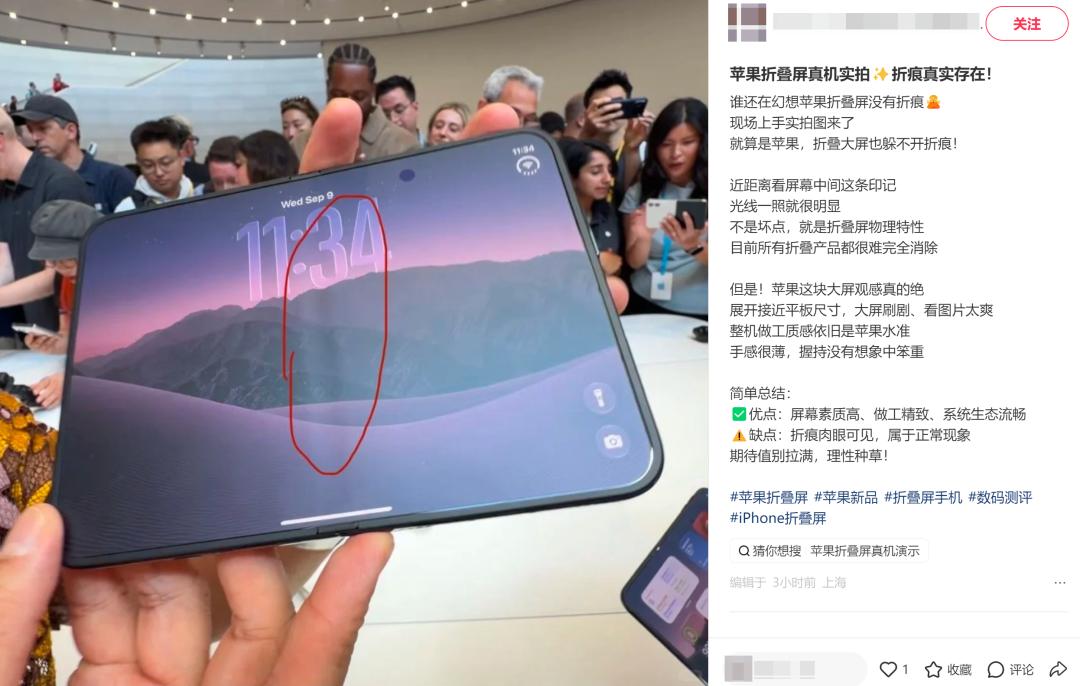
The iPhone Duo is 11.3 mm thick when folded and weighs 254 grams, which is significantly thicker and heavier than the Samsung Z Fold8 that measures 9.7 mm thick and weighs 201 grams. It removes the telephoto lens and Face ID, the crease is still tangible, and visible from certain viewing angles.
The iPhone Duo was not launched because it is perfectly made. Instead, it is more of a belated admission ticket backed by the new CEO's leadership. After all, if Apple did not enter the market any later, the high-end brand recognition of foldable smartphones would have been completely occupied by Huawei and Samsung.
To make up for the compromises on hardware, iOS 27 redesigned the split-screen and sidebar features for the foldable form factor, so that iPad applications can run on the Duo with a decent experience without additional adaptation from developers. However, the actual value of Apple's software and ecosystem moat in the foldable display scenario remains to be seen.
The competition in the foldable display industry has never been limited to competition between smartphone manufacturers.
I. The Diseconomies of Scale of Foldable Displays
The biggest cost variable in the 2026 smartphone industry is memory chips.
The price hike of memory chips has severely squeezed the supply of DRAM and NAND required for smartphones, driving up the cost of all mobile phones. Among all segments, the price increase of foldable displays far exceeds the industry average.
The general rule of the consumer electronics industry is that as production scale expands, costs and prices will decline. But foldable displays break this rule. Why are foldable smartphones becoming more expensive as their mass production volume grows?
An iPhone Duo is sold for 15999 yuan. What consumers see is Apple's pricing, but behind the price tag is a detailed BOM (Bill of Materials) list: panels, hinges, chips, memory, structural parts... every yuan of the cost goes to a specific component. In the cost structure of foldable displays, there are several links that do not exist at all for regular bar smartphones.
The situation of foldable displays is completely different from that of mid-to-low end smartphones. For a mobile phone priced at around 4000 yuan, if the memory cost increases by 1500 yuan, the manufacturer will choose to either raise the price or reduce the configuration, both of which will directly hit sales. However, since the original price of foldable displays is above 10000 yuan, the same 1500 yuan cost increment accounts for a much smaller proportion of the total price.
This is the profit haven effect of foldable displays: it is not that the cost of foldable displays is lower, but that they have a much larger price buffer space to absorb rising costs.
Source: Huawei Terminal
The memory price hike has unexpectedly given smartphone manufacturers a window to readjust the entire price system.
When all brands face the same cost curve, Huawei, Xiaomi and Honor take the lead in raising their product prices, which will reduce the incentive for other manufacturers to stick to low-price strategies. The industry-wide cost rise has unexpectedly completed a collective anti-involution that manufacturers could hardly take the initiative to achieve on their own.
So how do foldable displays reconstruct the profit pool of smartphone manufacturers?
The significance of foldable displays for smartphone manufacturers can be divided into two layers: hardware profit and ecosystem profit.
For hardware profit, the high BOM cost and high selling price of foldable displays mean a higher absolute value of gross profit per unit. IDC predicts that the global shipment volume of foldable smartphones will grow by 30% year on year in 2026, and Apple will occupy about 22% of the total shipment share in its first year of entry.
For ecosystem profit, the gross margin of Apple's service business is far higher than that of its hardware business. The significance of foldable displays for Apple is to keep users in the iOS ecosystem through larger screens and increase the long-term value of each user. As on-device AI evolves from simply answering questions to completing complex tasks, users need larger screens to view and process information and switch between applications, and foldable displays are particularly suitable for AI multi-tasking parallel scenarios.
But a profit haven does not equal pricing power. Having enough space to absorb costs is two completely different things from being able to pass the cost on to consumers.
Taking mainstream foldable smartphone manufacturers as examples, behind the pricing strategies of Apple, Huawei and Xiaomi are three completely different strategic intentions.
The iPhone Duo with a starting price of 15999 yuan is designed to protect Apple's high-end user base. QuestMobile data shows that 15.3% of Huawei's users flow to Apple, while 19.1% of Apple's users flow to Huawei, making the two companies each other's largest destination for high-end user outflow. At present, a number of high-end iPhone users have turned to domestic foldable brands to get the foldable experience.
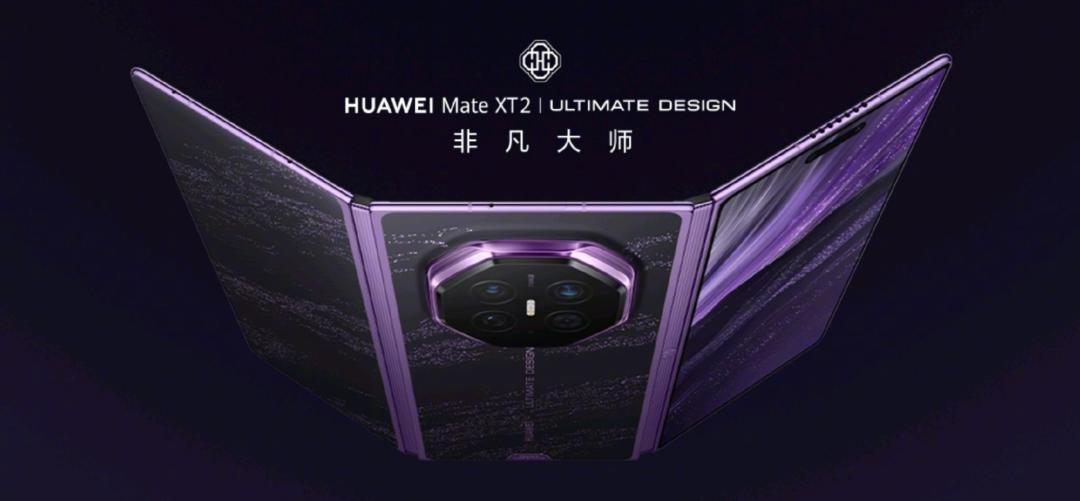
Huawei's triple-fold Mate XT2 with a starting price of 19999 yuan is aimed at securing the ultra-high-end price anchor. The scarce triple-fold form factor and strong brand premium together form its high added value. Its primary goal is not necessarily to expand the overall foldable display market, but to maintain Huawei's pricing power in China's ultra-high-end smartphone market.
Xiaomi's 18 Fold with a starting price of 10999 yuan is Xiaomi's first smartphone priced above 10000 yuan, which balances the need for high-end brand positioning and mass sales through a reasonable price gradient. The Xiaomi 18 Fold only accounts for 0.8% of the total shipment, but it can drive the overall ASP (Average Selling Price) to increase by 32 yuan. Its very existence is enough to lift the entire price system. For Xiaomi, the strategic significance of foldable displays is to establish a price anchor, and provide a carrier for its self-developed chips and high-end brand building narrative.
We can find that behind the three manufacturers' pricing strategies is a common judgment: foldable display is currently the only category in the smartphone industry that can still achieve high premium and whose competition pattern has not yet been solidified. The manufacturer that masters the pricing power will be able to define the price system of the entire high-end market.
II. The Development of Hinges from 0 to 1
A foldable smartphone is far more complex than simply putting two regular bar phones together with a hinge. Compared with bar phones, foldable displays have three additional core components: hinges, precision structural parts, and UTG ultra-thin glass.
Among them, the hinge is a completely new incremental component that does not exist in bar phones, and it is also the biggest industrial innovation created by foldable displays compared to traditional bar devices.
A single set of hinge contains 50 to 100 tiny functional parts, with MIM (Metal Injection Molding) parts accounting for 60% to 70% of the total, and the key dimensional tolerance is ±0.01 to ±0.03 mm. The hinge of the iPhone Duo is composed of more than 100 components, its hinge cover is made of 3D printed titanium metal, and titanium plates and ceramic fiber inserts are added inside to improve the structural rigidity of the device.
Why is the hinge considered the biggest industrial increment of the foldable display sector?
Traditional bar phones do not have hinges, so the brand-new core mechanical system created out of nothing by foldable displays has built an entirely new industrial track from scratch. In 2025, the global market size of consumer electronics foldable display hinges reached about 500 million US dollars, and it is expected to hit 1.3 billion US dollars by 2032, with a CAGR (Compound Annual Growth Rate) of about 15%.
The competition landscape of the hinge industry is different from that of traditional mobile phone components which have multiple suppliers. The first-tier suppliers of hinge assemblies, Amphenol and Sin Kwan, almost monopolize Apple's orders.
The highly concentrated supply landscape, with no alternative suppliers available in the short term, makes the hinge one of the links with the strongest bargaining power in the entire foldable display industrial chain.
The hinge supply chain of the iPhone Duo presents a clear hierarchical structure: the first-tier assembly is dominated by Amphenol and Sin Kwan, while domestic Chinese enterprises mainly participate in the supply chain as second-tier component suppliers.
This is a typical model where first-tier assemblers take orders, set standards and allocate part numbers, while second-tier suppliers process parts according to the drawings. Although Chinese enterprises have deeply embedded in Apple's foldable display supply chain, they are responsible for the processing links with the most procedures, rather than the highest value-added parts.
For example, Lingyi iMotion deeply participates in the stamping of hinge peripherals and the production of precision structural parts such as carbon fiber reinforcement brackets; Jinyan Technology focuses on the processing of MIM precision components; Yian Technology is responsible for supplying the liquid metal hinge spindle; Shanghai Fuchi, a subsidiary of Dongmu Co., Ltd., is also an important supplier in this link, and its MIM technology has been widely used in precision structural parts inside smartphones.
It is worth noting that since the original first-tier supplier Amphenol had a relatively low yield rate, the second-tier supplier Sin Kwan was promoted to the first-tier supplier to take over the main production. Moreover, Sin Kwan is currently only screening "golden sample" hinges that meet Apple's standards to supply the iPhone Duo, and the related production process is still unstable.
That means the supply bottleneck of hinges lies not only in production capacity, but more importantly in yield rate. The yield rate of hinges is restricting the development of the entire industry.
Yield rate economics is the most critical part to understand the profit distribution of the hinge industry, and it is also the most extreme case in the foldable display supply chain.

Source: Apple
In the mass production verification stage of Apple's liquid metal hinges, the yield rate was only 30%-65%, and after optimization it rose to 60%-70%, which is still lower than the 85% target. Assuming that 8.5 million sets of qualified components are required, with a median yield rate of 65%, about 13.08 million sets need to be put into production, while only 10 million sets are required when the yield rate reaches 85%, leaving a gap of about 3.08 million sets.
The material properties of liquid metal determine the difficulty of this challenge. The strength of zirconium-based liquid metal is about 2.5 times that of titanium alloy, its tensile strength reaches 1500 to 2000 MPa, and its opening and closing life test can exceed 300,000 times.
However, the processing difficulty of this material is extremely high, and the yield rate of some batches in the trial production stage is even less than 50%. After multiple rounds of optimization, the yield rate only increased to 60%-70%, and still cannot cross the 85% mass production threshold set by Apple.
This is the cruelty of yield rate economics: it is not just about parameter optimization in the laboratory, but directly determines which link in the industrial chain will precipitate the most profits.
The gap of 3.08 million sets means more raw material procurement, more processing hours, more testing costs, and more scrap losses. The resulting cost difference is essentially deducted directly from the profits of suppliers.
III. Do Panel Manufacturers Like BOE Still Have Opportunities?
Dig deeper, and you will find that the real battlefield of the foldable display industry is not in hinges, but in material stacking technology.
Apple's launch event drew the attention of the entire internet to the term "crease-free", because most ordinary consumers generally believe that a foldable smartphone without creases is a mature product.
The surface of a foldable display looks like a flexible plastic sheet, but in fact it is stacked with more than ten layers of materials: surface protective layer, flexible glass, OLED display layer, adhesive layer, support plate, and titanium metal backplane.
When the device is folded, each layer bends to a different degree. There is a middle layer called the neutral layer, which is neither stretched nor compressed, and acts as the safety line during the bending process.
Source: Xiaohongshu
If this safety line deviates from the key position, a certain layer of material will be pulled too much, which will generate micro-cracks over time, and even permanent deformation — this is exactly where