Is the "omnipotent robot" a false proposition? Swarm intelligence has become the new focal point of the embodied industry, and is regarded as the last hope of the whole sector.
At the CONFLUENCE Collective Intelligence Summit held during the 2026 World Robot Conference, more than 60 scientists and practitioners in the fields of robotics, drones and AI gathered to discuss the "Next Stop of Intelligence". These industry leaders frequently mentioned a term that many people may find unfamiliar — Collective AGI.
So what is Collective AGI? Literally, Collective AGI seems to refer to many robots placed in the same space, performing synchronized actions to complete tasks together, but this is only swarm control, not Collective AGI in the true sense, and there are essential differences between the two.
Leikeji (ID: leitech) believes that industry insiders are discussing the technical routes and scenario-based implementation of Collective AGI because robots are moving from laboratories and stages to industrial and household scenarios. The problems faced by the entire industry are not only how to make robots smarter, but more critically, how to make a group of robots cooperate with each other to complete more complex work.
From Individual All-Round Capability to Team Collaboration
Compared with humanoid robots, the design of wheel-legged robot + robotic arm does not need to consider dynamic balance, with lower energy consumption and cost, higher work efficiency, and is more suitable for the early popularization of industrial and household robots. However, robotics enterprises still insist that humanoid robots are the optimal solution, the main reason being that humanoid robots have stronger "generalization" capabilities.
Theoretically, the vast majority of tasks that humans can complete can be done by humanoid robots, and this versatility cannot be matched by the wheel-legged robot + robotic arm combination.
However, if one humanoid robot completes tasks such as inspection, transportation, assembly, and cleaning at the same time, the hardware and training costs will rise exponentially, and there is a marginal effect in the improvement of large model capabilities. Even with the continuous iteration of VLA and embodied large models, individual robots still have physical constraints.
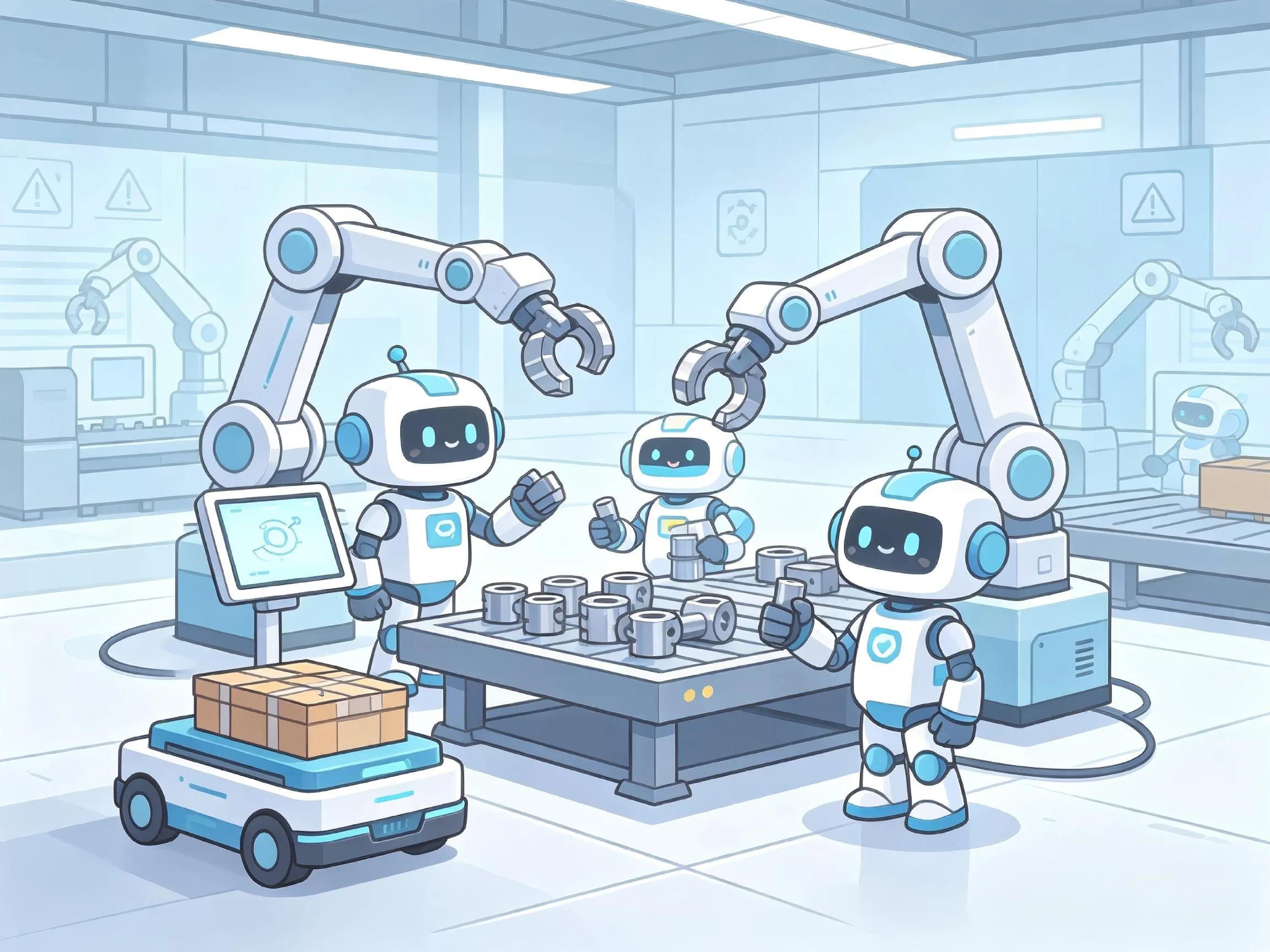
(Source: Generated by Doubao AI)
Collective AGI will splice different types of robots into a complete closed loop, assign complex tasks to corresponding types of robots, and do not require robots to be "all-rounders".
In addition, under the swarm control mode, where each robot needs to go and what work it needs to do are all instructed by the central system. The more devices there are, the greater the difficulty of scheduling and communication. Once the central system fails, the entire swarm may be affected.
Under the Collective AGI mode, humans are responsible for setting goals and rules, large models are responsible for information processing and decision-making, and robots are responsible for specific execution. During the execution process, robots will exchange information with each other and adjust the execution plan according to the actual situation.
Yu Huan, co-founder of Differential Intelligence Flight (Hangzhou), gave an example: multiple drones search different areas separately, and when encountering physical obstacles, they notify the mobile robotic arm to solve the problem. The drones and the mobile robotic arm form an operation team, with the drones responsible for observing the situation and the mobile robotic arm responsible for specific operations.
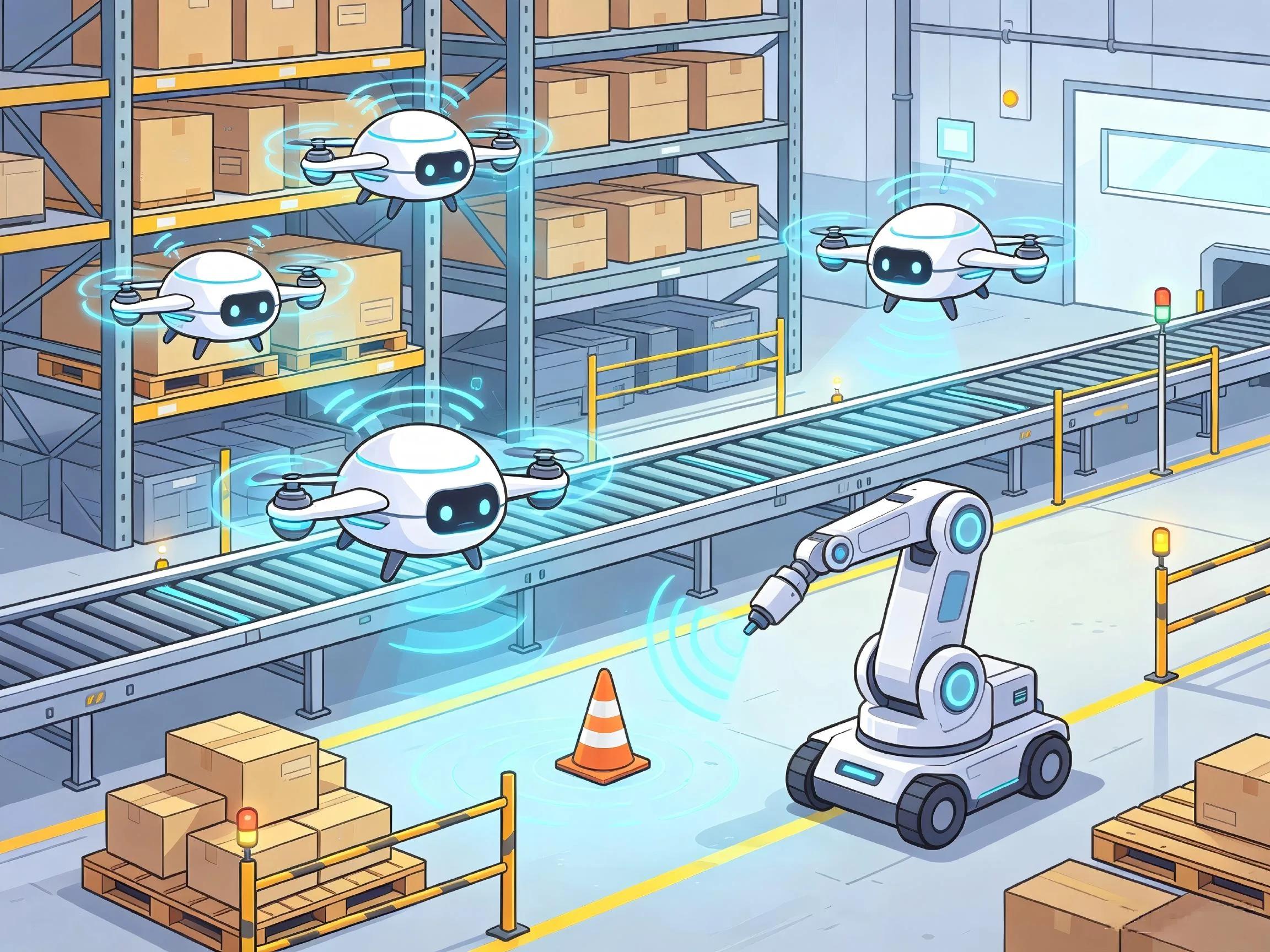
(Source: Generated by Doubao AI)
This working mode is similar to an ant colony, adopting a distributed architecture without a brain that coordinates the overall situation. Ants can transmit information to each other and complete tasks such as foraging, bridging, and fighting. Each individual can collect and process information, think and make decisions, instead of all individuals replicating the same set of behaviors.
Implemented in industrial scenarios, a batch of low-cost heterogeneous robots with specialized single capabilities can complete complex tasks through swarm collaboration, which can lower the hardware and AI large model threshold for a single robot. Even if some robots are damaged or communication is interrupted, the system will automatically migrate tasks to other idle individuals, and the tasks will not terminate directly. In high-risk scenarios such as mine inspection, power operation and maintenance, and disaster search and rescue, this feature is an advantage that individual robots cannot match.
Breaking the Implementation Deadlock, Has Collective AGI Become the Last Hope of the Industry?
On August 28, at the 2026 China International Big Data Industry Expo hosted by the National Data Administration, Dr. Wang Hao, Senior Vice President of Kaihong, released the M-Robots OS 3.0 Beta version.
As the first distributed heterogeneous multi-robot collaborative operating system built on the base of OpenHarmony across the country, the M-Robots OS 3.0 Beta version no longer emphasizes the improvement of capabilities, but focuses on Collective AGI.
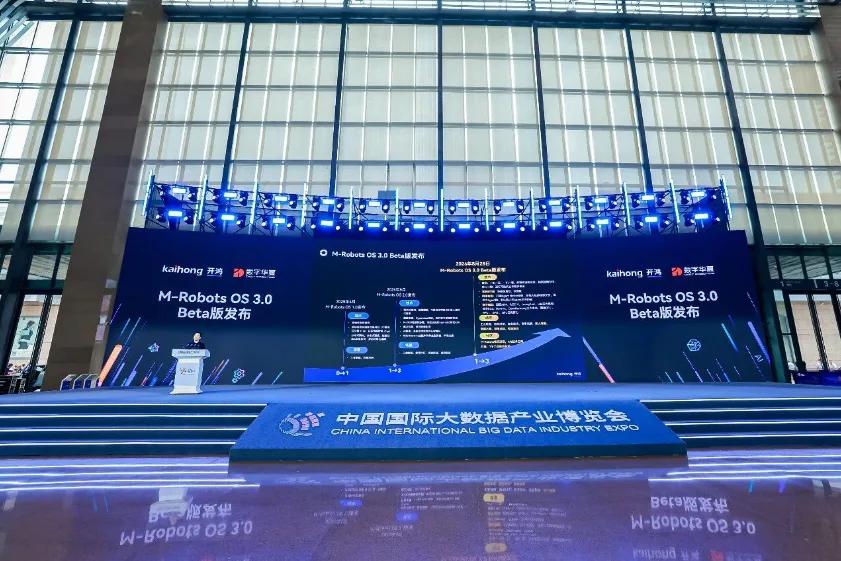
(Source: Official website of Kaihong)
The brand-new Agent Native framework and M-Claw built based on this framework support functions such as multi-robot ad-hoc network, distributed capability sharing, and dynamic task allocation, enabling autonomous Agent collaboration among robots.
Wang Hao also cited a number of actual implementation scenarios as examples. For instance, in the park inspection scenario, the Hain inspection robot equipped with M-Robots OS can link with drones to form an air-ground integrated park safety protection system. After detecting situations such as illegal intrusion and fire, the system will link with other surrounding devices to verify and analyze the information collected by multiple devices, and notify the nearest ground robot to deal with it.
However, there is still a gap between the demonstration scenarios and the real situation. The protocols and control interfaces of robots of different brands are not unified, making it difficult to directly understand task instructions with each other. The general collaboration base is not yet mature, and the decentralized self-architecture may lead to unpredictable collective behaviors. Therefore, the industry needs a unified standard system.
As a leading domestic robotics enterprise, UBTECH took the lead in applying for the "Specification for Control Interface of Embodied Collective Intelligence Collaboration System for Industry, a Key Basic Technology of Artificial Intelligence" (Project Approval No.: 2026-1078T-YD), which has been successfully approved. This is the first domestic industry standard for industrial scenarios, focusing on the field of embodied intelligence collaboration, and is under the administration of the Artificial Intelligence Standardization Technical Committee of the Ministry of Industry and Information Technology (MIIT/TC1).
Some time ago, a 10-minute robot demonstration video became a hit in the industry. The two robots appearing in the video are Unitree G1 and Fourier Intelligence Expedition A3 respectively. The reason why this video became popular is that the two robots are equipped with a mysterious large model, which not only can do housework, but also Unitree G1 and Fourier Intelligence Expedition A3 can cooperate to complete the operation of Fourier Intelligence Expedition A3 putting a scarf on Unitree G1.
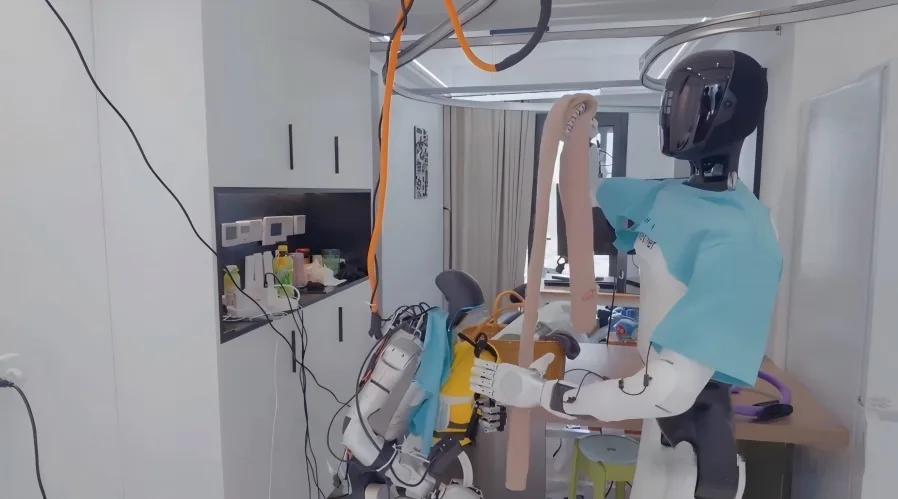
(Source: Screenshot from Bilibili)
No preset instructions are given, and no one assigns tasks to the two robots. They can understand each other, judge who is more suitable to complete a certain task, and when one robot encounters difficulties, the other will take the initiative to help. This collaborative work capability brings us far more shock than a group of robots dancing according to pre-set programs.
The new standard led by UBTECH is designed to adapt to robots of different brands and different architectures, so that data interconnection and collaborative work can be realized between them, instead of requiring them to run the same system or the same large model.
In terms of product implementation, UBTECH's full-size industrial humanoid robot Walker S2 has been equipped with BrainNet 2.0 and the Co-Agent agent technology, which can not only perform tasks independently, but also act as a dynamic node to collaborate with other robots.
In the past, robot collaboration was highly dependent on closed ecosystems with bound software and hardware, manufacturer self-developed architectures, and private protocols, resulting in multi-device collaboration being limited to a single brand system, and cross-brand and cross-model swarm operations were almost impossible to be commercialized, which limited the scenario reuse value of Collective AGI.
At present, the robot industry is at a delicate turning point. The hardware body, servo motors, and dexterous hands are continuously iterated, and the performance of single-machine prototypes is getting more and more amazing. However, large-scale commercial implementation is still slow, with high cost and difficult scenario adaptation becoming two major obstacles, and shortcomings will be exposed when entering real unstructured scenarios.
Collective AGI reduces the capability requirements for individual robots, which can not only reduce the robot deployment cost, but also improve the adaptability to complex scenarios. The decentralized feature can also enhance system stability. The new standard led by UBTECH is expected to break the barriers between different brands and different architectures, so that every robotics enterprise can give full play to its own advantages and integrate the advantages of all enterprises to accelerate the scenario-based implementation of robots.
Vertical Scenarios Take the Lead in Implementation, Large-Scale Commercialization Still Takes Time
The popularity of Collective AGI shows that the industry is no longer obsessed with building an all-powerful super robot, but instead relies on heterogeneous agent collaboration to adapt to the complex real tasks in the physical world.
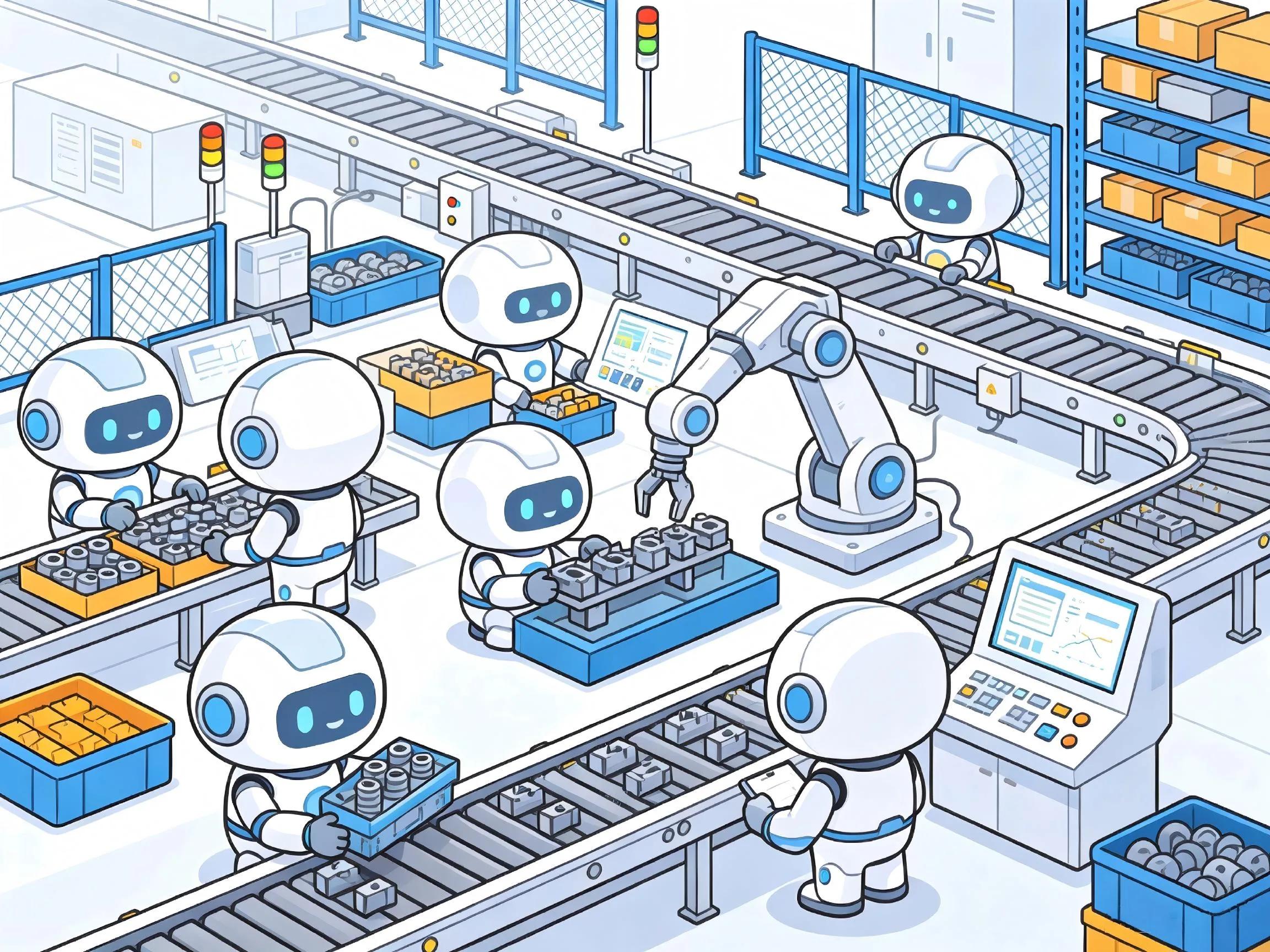
It should be noted that at this stage, most cross-model autonomous collaboration cases are still limited to small-scale laboratory demonstrations. When extended to real production lines and outdoor operation scenarios with more than dozens of devices, problems such as communication delay fluctuations, large model decision-making hallucinations, and simulation-to-reality migration deviations will be magnified exponentially.
(Source: Generated by Doubao AI)
The two-way advancement of the operating system base and industry standards exactly forms two wheels for the implementation of Collective AGI. Underlying systems such as M-Robots OS solve the engineering base problems of device networking and capability sharing, and the interface specifications led by UBTECH set a common language for heterogeneous device interaction from the standard level. Only by combining the two can we avoid Collective AGI from being trapped in the closed ecosystem of a single manufacturer.
However, Collective AGI does not conflict with individual all-round capability. The former is the preferred choice for current enterprises to improve the value of robots and accelerate scenario-based implementation, while the latter is the highest pursuit of the entire industry.
In the short term, large-scale generalized Collective AGI will not come soon, and the first to be implemented will be vertical scenarios with strong certainty such as mines, electric power, and factory inspections. Leikeji believes that in the future, Collective AGI will move towards a hybrid architecture of global constraint + local autonomy, finding a balance between autonomous emergence and controllable security.